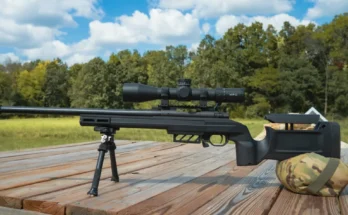
What should I look for in a rifle scope? Most shooters pick the wrong one by fixating on magnification alone. They ignore the specs that actually matter: turret tracking, glass quality, and reticle design.
The result is an optic that quietly makes every shot harder than it needs to be.
The National Shooting Sports Foundation reports that most new shooters overspend on magnification while underspending on glass quality and turret tracking. As of 2026, the mid-range price tier has never offered more optical capability per dollar. But only if you know which features to prioritize.
Let's walk through the decision process.

Image source: Web (Bing) / ebay.com (Web image (fair-use with source credit))
Quick Answer
What should you look for in a rifle scope? Match magnification range to your actual shooting distance. Prioritize glass quality over the magnification number.
Match the reticle type to your shooting discipline. Verify tube diameter, mounting compatibility, and turret tracking reliability.
The Wrong Scope Can Ruin Your Entire Setup
Most scope purchases fail for one reason. People buy based on the highest magnification number they can afford, not the one that fits their actual shooting. A 5-25x scope at 50 yards is a liability.
It narrows your field of view exactly when you need it most.
The damage goes deeper than just magnification choice. A scope with poor turret tracking means you'll never trust your dope. A scope with muddy glass at low magnification kills confidence during dawn hunts.
And if your reticle doesn't match your shooting style, you'll fight the optic on every shot.
Here's the core problem: scope specs interact with each other. Magnification affects field of view. Objective lens size affects weight and low-light performance.
Tube diameter affects mounting compatibility and turret range.
Every choice ripples into every other choice. If you pick one spec in isolation, you'll end up with a system that works on paper and fails in practice. The solution is treating scope selection as a connected decision tree rather than a checklist.
Think about what happens when someone buys a 10-40x target scope for deer hunting. At dawn, they can't find their target because the field of view is too narrow. At 200 yards, they're dialing turrets when a BDC reticle would have gotten them on target faster.
The scope isn't bad. It's just wrong for the job.
Aggregate reviews across major optic manufacturers show the same pattern repeatedly. Shooters who buy for their actual use case report higher satisfaction and longer service life. Shooters who buy for the highest magnification number they can afford almost always end up buying again within two years.
Before you spend a dollar, we need to nail down one critical variable. Everything else flows from it.
Start With Your Shooting Distance, Not the Magnification Number
Your shooting distance is the master variable. It determines magnification range, objective lens size, reticle style, and turret type all at once. If you get this wrong, no other spec choice will save you.
So answer this honestly. Where do you actually shoot most of the time? Not where you hope to shoot someday.
Where your rifle goes on the range and in the field today.
For most shooters, the answer falls into three or four distinct bands. Each band has its own ideal magnification range and scope profile.
| Engagement Distance | Typical Use Case | Recommended Magnification | Common Objective Size |
|---|---|---|---|
| 25 to 75 yards | Timber, brush, small game | 1-6x or 2-7x | 24-28mm |
| 75 to 200 yards | Open field, standard big game | 3-9x or 3-12x | 32-44mm |
| 200 to 400 yards | Western hunting, varmint | 4-14x or 5-15x | 44-50mm |
| 400+ yards | Precision rifle, competition | 5-25x or 6-24x | 50-56mm |
These are starting points, not gospel. Weather conditions, available light, and how quickly you need to acquire a target all shift the ideal range.
Manufacturer specifications confirm that exit pupil size follows a simple formula: objective lens diameter divided by magnification. A 44mm objective at 4x gives you an 11mm exit pupil, plenty of light gathering for dawn hunts. At 14x, that same scope drops to about 3.1mm, which still works but isn't ideal for very low light.
If you're a timber hunter in the Appalachians, a 3-9x scope with a 32mm objective gives you everything you need. You'll rarely need more than 6x or 8x. A 44mm objective would add weight without giving you an edge.
If you're chasing elk on the Wyoming prairie, that same 3-9x might leave you wanting more magnification at 300 yards. A 4-14x or 5-15x scope with a 44mm or 50mm objective gives you the flexibility without being excessive.
The mistake most people make? Buying a 4-16x scope for deer hunting in the South, then struggling at 75 yards because they can't find the target fast enough. Bigger isn't better.
The right size is better.
Practical tip: go to the range and find the maximum magnification you can actually use for your most common shooting distance. Most shooters overestimate what they need. They dial up to 12x at 150 yards when 6x or 8x is plenty.
Reticle Choice: This Is Where Most Shooters Get It Wrong

Image source: Bing (Web (fair-use with source credit))
The reticle is where your eye lands. It's the interface between your optic and your shot. Most shooters underestimate how much reticle design affects real-world performance.
There are two big forks in the reticle decision tree. First, do you want a simple reticle or one with holdover markings? Second, do you want First Focal Plane (FFP) or Second Focal Plane (SFP) scaling?
Simple Reticles vs Holdover Reticles
A duplex reticle uses two thick posts that taper to a thin crosshair. It's fast to acquire and easy to use at close to medium ranges. If you hunt timber or shoot under 200 yards, a duplex or similar simple reticle is hard to beat.
You'll need to dial turrets for any holdover beyond zero distance. For most deer hunters, that's perfectly fine since they shoot at consistent ranges.
BDC reticles include pre-calibrated markings for bullet drop at various distances. Instead of dialing turrets, you use the appropriate hash mark on the reticle. This is faster in the field and eliminates turret dialing errors.
Christmas tree style patterns add windage holdover lines for precision shooting at longer ranges. These are popular with competition shooters who run long-range dopes.
First Focal Plane vs Second Focal Plane
This choice changes how your reticle works across magnification settings.
Second Focal Plane (SFP): The reticle stays the same size regardless of magnification. Subtensions are only accurate at one specific magnification, usually the highest setting. If you use holdovers at 8x on a 3-9x SFP scope, the marks won't be calibrated unless 8x is the specified power.
First Focal Plane (FFP): The reticle scales with magnification. Subtensions stay accurate at every power setting. You can use holdover marks regardless of magnification.
At low magnification, the reticle can get very thin and harder to see.
The practical rule: FFP for precision and competition. SFP for most hunting situations where you're zeroed at 100 yards and shooting at similar distances.
Tube Diameter, Turrets, and Mounting: The Technical Specs That Actually Matter
Once you've locked in your distance and reticle preference, the next decisions are mechanical. Tube diameter, turret type, and mounting compatibility all need to work together.
Tube Diameter: 1 Inch vs 30mm vs 34mm
Tube diameter determines two things: internal adjustment range and weight.
| Tube Diameter | Weight | Turret Adjustment Range | Best For |
|---|---|---|---|
| 1 inch (25.4mm) | Lightest | Moderate (50-70 MOA) | Hunting, weight-sensitive builds |
| 30mm | Moderate | Higher (70-100+ MOA) | Versatile hunting and precision |
| 34mm | Heaviest | Highest (100+ MOA) | Long-range precision, competition |
A 30mm tube is the most popular choice as of 2026. It gives you more elevation travel without a major weight penalty. Most major manufacturers offer strong 30mm options across their lines.
If you're building a lightweight mountain rifle, a 1-inch tube saves real ounces.
Turrets: Capped vs Exposed
Capped turrets have protective covers that prevent accidental zero shifts. They're popular for hunting rifles where you rarely dial.
Exposed turrets are always accessible for quick adjustments. Precision shooters prefer these. The risk is accidental bumps that shift your zero.
Zero stop mechanisms are worth the upgrade on exposed turrets. They let you return to zero without counting clicks.
MOA vs MRAD: Pick One and Stick With It
MOA (Minutes of Angle) and MRAD (Milliradians) are two turret adjustment measurement systems. One MOA equals about 1.047 inches at 100 yards. One MRAD equals about 10 centimeters at 100 meters.
Neither system is objectively better. The key is consistency across your ballistics app, dope card, and turret clicks.
Most American hunters default to MOA. Most competition shooters prefer MRAD for its base-10 simplicity. Pick what matches what you already use.
Ring Height and Mounting Compatibility
Before buying, verify your tube diameter matches your rings. You also need the correct ring height to clear your rail and stock. A 50mm objective needs taller rings than a 24mm objective.
Check your action length and rail type (Picatinny vs Weaver) before ordering mounting hardware.
What to Expect at Every Price Tier
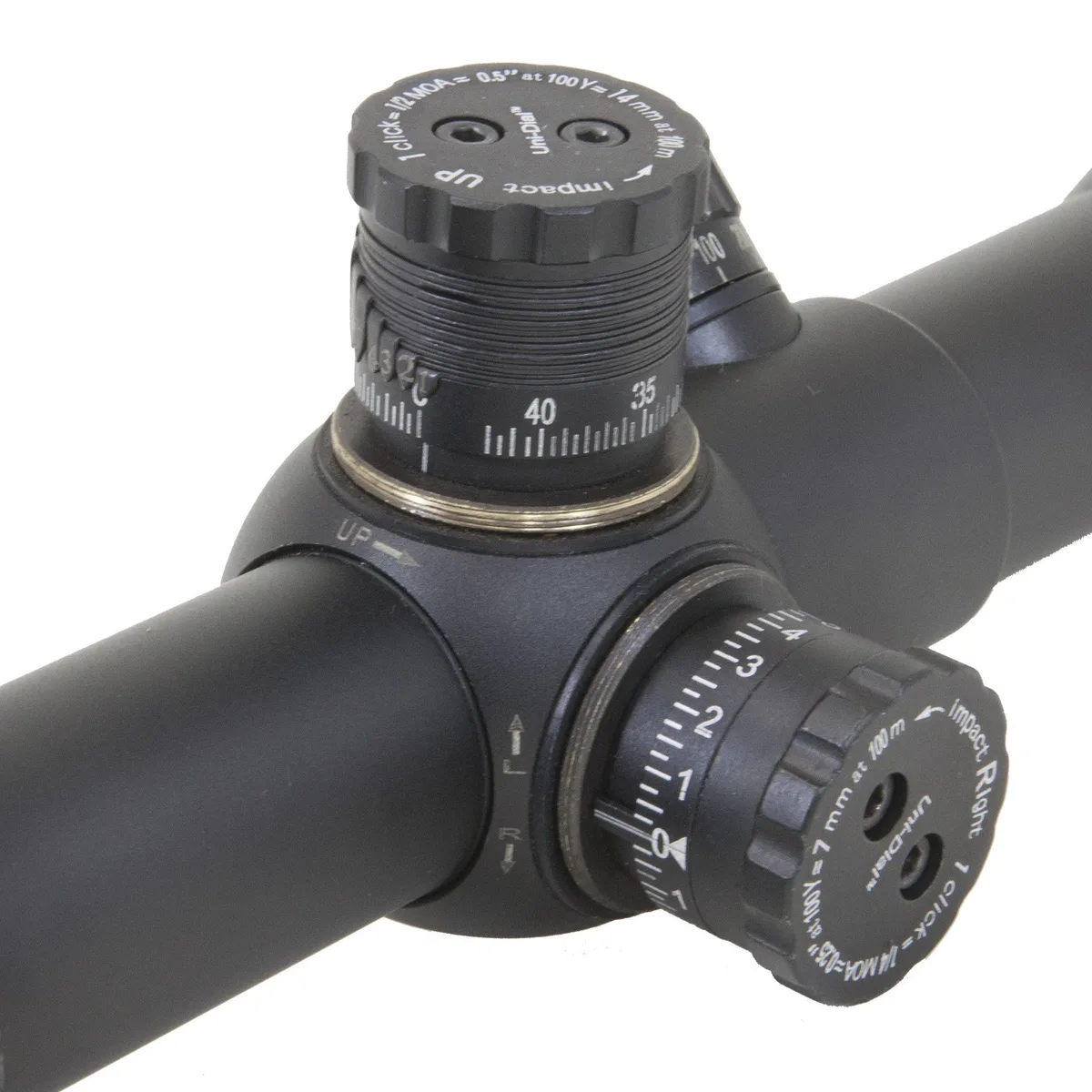
Image source: Web (Bing) / hi-luxoptics.com (Web image (fair-use with source credit))
Scope pricing falls into clear tiers, and each tier gives you genuinely different performance. Understanding what you're paying for at each level helps you avoid both overspending and underinvesting.
Budget Tier: $150 to $400
Budget scopes have gotten dramatically better in the last decade. Brands like Primary Arms, Bushnell, and Athlon Optics offer workable glass, decent reticles, and reasonable turret tracking at this price.
What you're giving up at this tier includes glass clarity in low light, turret tracking precision over the long term, and the durability to take hard knocks and stay zeroed.
For a deer rifle you shoot a few times a year, a solid budget scope works fine. Just don't expect it to match premium glass quality at dawn.
Mid-Range Tier: $400 to $1,200
This is where most experienced shooters land and where the value-to-performance ratio peaks. Vortex Optics, Leupold, and Athlon's higher-end lines live here.
At this tier, you get reliable turret tracking, good glass with multi-coated lenses, proper waterproofing and fog-proofing, and solid warranties. Many manufacturers offer lifetime warranties on scopes in this range.
If you shoot regularly and hunt in varied conditions, this tier is where you stop making meaningful compromises.
Premium Tier: $1,200 and Up
Nightforce, Swarovski Optik, Schmidt & Bender, and Leupold's top lines live here. You're paying for exceptional glass clarity, precision turret engineering, and build quality that shrugs off harsh conditions.
The law of diminishing returns kicks in hard at this tier. The jump from budget to mid-range is dramatic. The jump from mid-range to premium is noticeable but smaller.
Unless you're a competitive precision shooter or a professional who depends on the optic daily, mid-range optics cover the vast majority of real-world needs.
Frequently Asked Questions
What magnification do I need for deer hunting?
For most deer hunting scenarios, a 3-9x scope covers the range comfortably. If you hunt open country or shoot past 200 yards regularly, a 3-12x or 4-14x gives you more flexibility. For timber and brush hunting under 100 yards, a 1-6x LPVO or 2-7x scope is actually faster to acquire targets with.
Is FFP or SFP better for hunting?
SFP is better for most hunting situations because the reticle stays visually consistent regardless of magnification. FFP is better if you shoot at widely varying distances and need holdover marks that stay accurate at any power. For most deer and elk hunters who shoot at similar distances, SFP works well and typically costs less.
Does tube diameter really matter?
Yes, but only if your shooting distance demands more turret adjustment range. A 1-inch tube works for most hunting scenarios out to 300 yards. A 30mm tube gives you more elevation travel for longer shots.
A 34mm tube is primarily for competition shooters running extreme distance dopes.
What's the difference between MOA and MRAD turrets?
MOA and MRAD are two different measurement systems for turret adjustments. One MOA equals about 1.047 inches at 100 yards. One MRAD equals about 10 centimeters at 100 meters.
Neither is better than the other. Pick one system and stay consistent with your ballistics software and dope card.
Do I need a parallax adjustment dial?
If you shoot at varying distances, yes. Parallax adjustment keeps the reticle on target regardless of eye position relative to the scope. Without it, parallax error can cause you to miss at longer ranges.
For close-range hunting under 100 yards, it matters less.
Is a more expensive scope always better?
No. A $2,000 scope mounted on a rifle you shoot at 75 yards in timber won't outperform a well-chosen $400 scope matched to your actual use case. Match the optic to your shooting situation first, then invest as your needs demand.