What does 4-12×40 mean on a rifle scope? It tells you exactly how much magnification the scope offers and how big its objective lens is. The "4-12x" indicates the magnification range from 4x to 12x.
The "40" is the objective lens diameter in millimeters.
Those numbers matter more than most first-time buyers realize. The magnification range determines how close you can see your target and how much field of view you keep at each setting. The objective lens controls light gathering, which becomes critical in dawn and dusk hunting.
We've broken down what each number actually changes in real shooting conditions.

Quick Answer
4-12×40 means a rifle scope provides variable magnification from 4x to 12x. The objective lens diameter is 40 millimeters. At 4x you get a wider field of view for close targets.
At 12x you can see detail at longer distances. The 40mm lens gathers a moderate amount of light.
What "4-12×40" Actually Means on a Rifle Scope
The designation "4-12×40" appears on the scope body and follows a standard notation used by manufacturers like Leupold, Vortex, and Bushnell. It answers two questions at once: how much can I magnify my target, and how big is the lens that feeds light into the optic.
You'll see this format on other specs too. A 3-9×40 or a 6-24×50 all follow the same pattern: minimum magnification, maximum magnification, then objective lens diameter in millimeters.
The Magnification Range (4-12x)
The "4-12x" portion means this scope is a variable power optic. You can adjust the magnification anywhere between 4x and 12x by turning the magnification ring on the scope body.
- At 4x you see the target four times closer than with your naked eye.
- At 12x you get twelve times the magnification.
- Any setting in between is available, including 5x, 7x, 9x, or 11x.
Higher magnification gives you more detail at longer distances. Lower magnification gives you a wider field of view and helps with close, fast-moving targets. Most hunters find themselves shooting between 4x and 8x most of the time.
The Objective Lens Diameter (40mm)
The "40" tells you the front objective lens measures 40mm across. This is the piece of glass at the very front of the scope.
The objective lens does one critical job: it gathers light and sends it back through the scope to your eye. A 40mm lens is a common mid-range size. It provides solid light gathering without making the scope feel oversized or heavy.
Bigger objectives like 50mm pull in more light. They also add weight and require taller scope rings. Smaller ones like 32mm are lighter but sacrifice some low-light performance.
What's Not in the Number
A 4-12×40 designation doesn't tell you the tube diameter, reticle type, turret click values, or glass quality. Those specs matter just as much when choosing a scope.
Tube diameter (1-inch or 30mm) affects which rings you need. Reticle type (BDC, duplex, Mil-Dot) affects how you hold for distance and wind. Manufacturer spec sheets confirm that most 4-12×40 scopes ship in either a 1-inch or 30mm tube, depending on the product line.
Breaking Down the Magnification Range and Objective Lens
Knowing the numbers is one thing. Understanding what they do to your image is another. The 4-12×40 combination creates specific optical characteristics that affect your experience on the range or in the field.
Exit Pupil: Where Magnification Meets Light
Exit pupil is the diameter of the light beam that exits the back of the scope and enters your eye. You calculate it by dividing the objective lens diameter by the magnification setting.
| Magnification | Objective | Exit Pupil |
|---|---|---|
| 4x | 40mm | 10mm |
| 8x | 40mm | 5mm |
| 12x | 40mm | 3.3mm |

Here's the catch. Your own eye pupil dilates to about 7mm in full darkness and 2 to 3mm in bright daylight. At 4x with a 40mm objective, the 10mm exit pupil is larger than your eye can use.
That's wasted light.
At 12x the 3.3mm exit pupil is a closer match for a well-dilated eye in low light. So lower magnification settings can actually produce brighter images in certain lighting conditions.
Field of View at Each Magnification
Field of view (FOV) measures how wide an area you see at a given distance. It shrinks as magnification increases.
| Setting | Typical FOV at 100 Yards |
|---|---|
| 4x | 28 to 32 feet |
| 8x | 14 to 17 feet |
| 12x | 9 to 12 feet |
At 4x you can scan a wide area and pick up moving targets faster. At 12x you lose that scanning ability. But you gain the ability to read antler points or pick out a coyote hiding in brush.
Eye Relief and Why It Matters
Eye relief is the distance between your eye and the rear lens that still gives you a full, clear image. Most 4-12×40 scopes offer 3.3 to 3.9 inches of eye relief.
Short eye relief on a heavy-caliber rifle means the scope could strike your brow during recoil. Always check the manufacturer's stated eye relief and match it to your rifle caliber before buying.
When a 4-12×40 Scope Makes Sense (and When It Doesn't)
Not every rifle needs the same scope. The 4-12×40 works well for specific scenarios and falls short in others. Here's where it fits and where it doesn't.
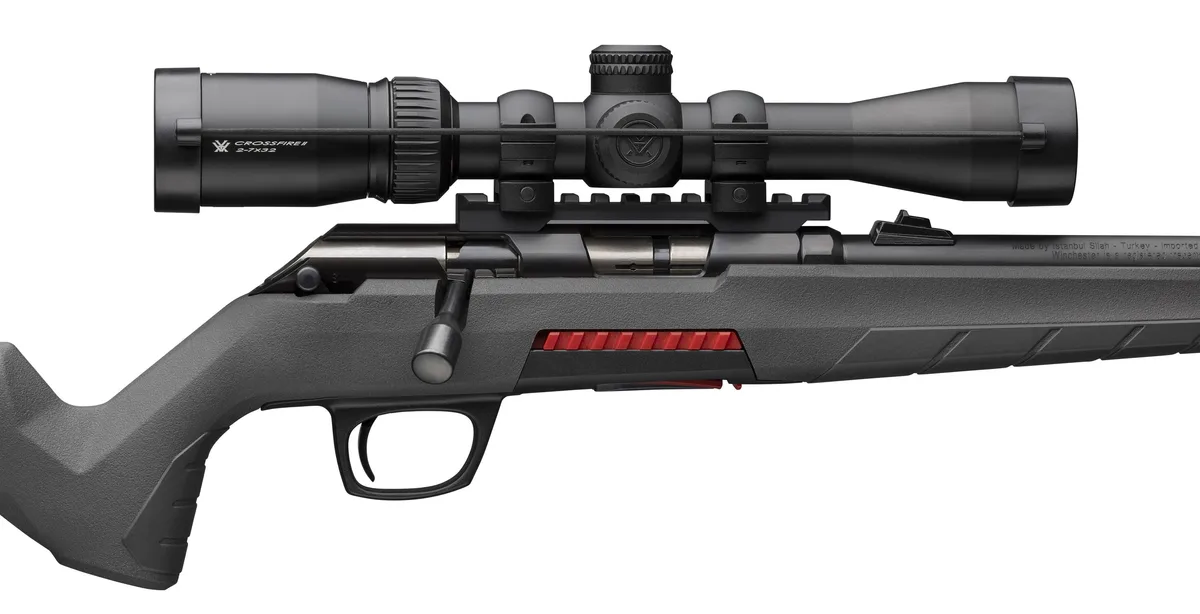
Best For
Whitetail deer hunting in wooded areas. Most deer hunting happens inside 200 yards. At 4x through 8x you have plenty of magnification for shot placement. The 40mm objective handles low light at dawn and dusk without feeling front-heavy on the rifle.
Varmint and predator hunting. Coyotes and groundhogs often sit at 200 to 400 yards. The 12x top end gives you the detail you need to identify the target and pick your shot.
Elk hunting in open country. Bull elk at 300+ yards are exactly where the 12x top end shines. You can judge antler length and pick a spot on the animal at a distance.
Mid-range target shooting. If you shoot 100 to 400 yards, the 4-12x range covers you comfortably at every distance.
Not Ideal For
Long-range precision beyond 600 yards. For extreme long range shooting, most shooters want 25x to 56x magnification with a 50mm to 56mm objective. A 4-12×40 doesn't give you the detail at those distances.
Close-quarters or home defense setups. If you need to shoot inside 50 yards with speed, an LPVO like a 1-6x or 1-8x gives you a true 1x option. A 4-12×40 can't go below 4x.
Competition precision shooting. PRS competitors typically want a 5-25×56 scope with an FFP reticle for dialing and holdovers across the entire range.
Quick Fit Guide
As of 2026, 4-12×40 remains one of the most popular mid-range configurations for hunting optics. Here's a quick guide to see if it fits your situation:
| Your Primary Use | 4-12×40 Fit |
|---|---|
| Deer hunting under 250 yards | Excellent |
| Varmint hunting (200-400 yards) | Very good |
| Elk in open terrain (300-500 yards) | Good |
| Long-range precision (600+ yards) | Poor |
| Close-quarters / LPVO role | Not suitable |
| Competition precision | Limited |
If your hunting mostly stays under 300 yards, a 4-12×40 is hard to beat for versatility and balance. If you regularly shoot past 400 yards, you'll likely want more magnification range.
Common Mistakes When Buying or Choosing a 4-12×40 Scope
Most scope mistakes happen before you even mount it. Here are the errors we see most often from first-time buyers.
Buying by Numbers Alone
Two scopes can both read "4-12×40" and deliver wildly different optical quality. A $100 scope with that designation might use lower-grade glass with basic coatings. A $400 scope with the same numbers will use ED or HD glass with fully multi-coated lenses.
The magnification and objective numbers don't tell you about glass quality, coatings, or mechanical precision. Always research the manufacturer's glass and coating specs before you buy.
Ignoring Tube Diameter
The 4-12×40 notation doesn't include tube diameter. Many mid-range 4-12×40 scopes come in a 1-inch tube, while tactical lines use a 30mm tube.
If you buy a scope without checking tube diameter, your existing rings might not fit. Swap from a 1-inch tube to a 30mm tube and you need new rings. That means re-zeroing the rifle.
Overestimating Magnification Need
Many new buyers assume higher magnification always equals better performance. That's not true at close range. At 100 yards, 12x magnification is more than enough for most tasks.
Most hunters find themselves shooting between 4x and 8x the vast majority of the time. The 12x top end is reserved for longer shots or careful animal identification.
Overlooking Eye Relief on High-Recoil Rifles
If you're pairing a 4-12×40 scope with a .300 Winchester Magnum or a .338 Lapua, eye relief becomes critical. A 3.3-inch eye relief on a .30-06 is workable. On a .300 Win Mag it might feel tight.
Check the manufacturer's eye relief spec and compare it against your rifle's recoil impulse. If it feels tight, look for a scope with longer eye relief or shoot with a muzzle brake.
Skipping the Low-Light Test
Most 4-12×40 scopes perform differently at dawn and dusk than they do at noon. The 40mm objective handles low light decently, but not all 40mm scopes are equal.
Aggregate reviews report that fully multi-coated lenses with HD glass hold up significantly better in low light than basic coated options. If you hunt primarily at dawn and dusk, this is where the extra investment pays off.
Safety, Mounting, and Eye Relief Basics
Mounting a scope wrong can ruin your zero and, in some cases, cause physical injury. Proper scope mounting is treated as a safety practice by firearms instructors and manufacturers, not just a performance step.
Proper Ring Torque Specs
Most scope ring manufacturers recommend 15 to 18 inch-pounds of torque on the ring screws. Over-torquing can crush the scope tube and distort your image. Under-torquing can cause the scope to shift under recoil.
Use a torque wrench. Hand-tightening feels consistent, but it isn't.
Eye Relief Safety
The distance between your eye and the rear lens is a safety issue. Too close and the scope can strike your brow during recoil. That's called scope bite, and it causes cuts and bruising.
Here's the safe approach:
- Mount the scope loosely on the rifle.
- Shoulder the rifle in your normal shooting position.
- Adjust eye relief until you see a full, clear image.
- Torque the ring screws to the manufacturer's specification.
- Fire a test shot and check that the image and zero hold.
If the scope moved or the image shifted during recoil, your ring torque is off. Remount and re-torque.
Legal and Safety Reminders
Firearms safety education is required in most states and provinces before you can hunt. Check your local regulations for current requirements. The ATF publishes state-level requirements and official safety resources.
Eye and ear protection are non-negotiable at any range. A rifle scope doesn't change the recoil impulse of the rifle behind it.
Zeroing a 4-12×40 Scope
Zeroing is the final step in scope setup. Here's the basic flow:
- Set the scope at a magnification that works for zeroing, usually the lowest or middle setting.
- Shoot a group at 100 yards.
- Adjust windage and elevation using the turrets.
- Fire a confirmation group.
- Repeat until the point of impact matches the point of aim.
Most 4-12×40 hunting scopes use quarter MOA turrets. Each click moves the point of impact about ¼ inch at 100 yards. Check your turret's click value before you start dialing.