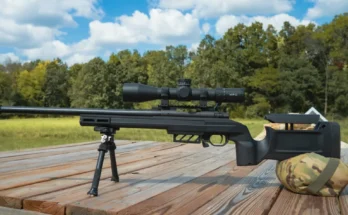
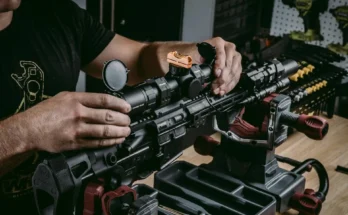
How long does a rifle scope last? The honest answer ranges from five to twenty years, depending on what you buy, how hard you run it, and whether you maintain it properly. Most shooters expect their optic to last a lifetime.
The reality is more nuanced than that.
Per MIL-STD-810G testing standards, premium scopes are rated to withstand temperatures from minus 40 to plus 160 degrees Fahrenheit and shocks up to 2,000 G-forces. But those ratings assume proper use. The real lifespan depends on four variables we'll break down below.
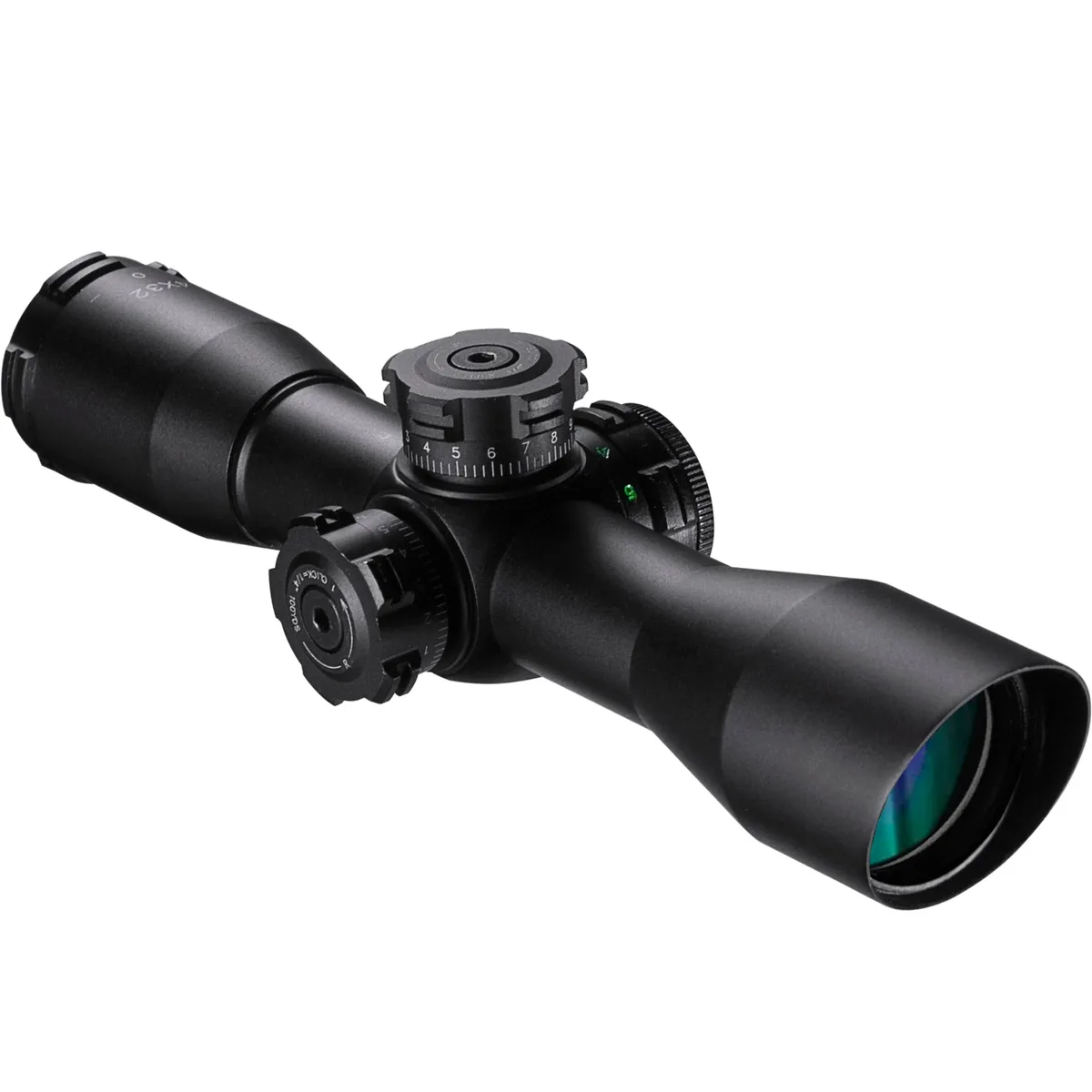
Image source: Web (Bing) / shop.barska.com (Web image (fair-use with source credit))
Quick Answer
A rifle scope typically lasts five to ten years with regular use. Premium scopes from Vortex, Leupold, or Nightforce often exceed twenty years. Budget scopes under $300 may fail within three to five years.
Turret wear, seal failure, and lens coating damage are the main failure points. Proper maintenance extends scope life significantly.
The Real Answer Depends on Four Variables
Your scope's lifespan isn't a fixed number. Four factors drive it hard. Let's look at each one.
- Price tier: A $150 scope and a $1,500 scope are built to completely different standards.
- Usage intensity: Dialing turrets fifty times per session wears them faster than never touching them at all.
- Environment: Saltwater, humidity, and extreme cold stress seals and coatings over time.
- Maintenance: Scope caps, proper lens cleaning, and storage habits matter more than most shooters think.
In our research, scopes rated MIL-STD-810G hold zero longer and resist internal fogging better than uncertified optics. If you hunt in freezing conditions or shoot high-round-count training sessions, those specs matter a lot. The next section explains why.
Why Price Tier Matters More Than Most People Think
Price tier predicts scope lifespan better than almost any single spec. Here's why.
Budget scopes in the $100 to $300 range use BK-7 glass, thin aluminum tubes, and basic O-ring seals. They work fine for casual plinking. But turret detents loosen faster, and lens coatings wear under UV exposure.
Mid-tier scopes from $400 to $900 add ED glass, nitrogen purging, and better anodization. Aggregate user reviews report these scopes staying mechanically solid for ten to fifteen years with moderate use.
Premium scopes above $1,000 use Schott glass, Type III hard-coat anodized 6061-T6 aluminum, and argon purging. Nightforce tests its optics to over 20,000 rounds without tracking failure. As of 2026, Leupold Optics covers any defect for the life of the product under its Full Lifetime Guarantee.
The price gap buys mechanical reliability, not just glass quality. That distinction matters when you're estimating long-term cost of ownership.
The Decision Tree: Estimating Your Scope's Lifespan
Estimating scope lifespan starts with your specific situation. Use this flow to narrow it down.
Step 1: Identify your tier. If your scope costs under $300, expect five to eight years under moderate use. If it's $400 to $900, plan for ten to fifteen years. Above $1,000, twenty years is realistic.
Step 2: Assess your usage. If you dial elevation and windage frequently, subtract two to three years from that estimate. High-round-count training sessions wear turret detents faster. If you zero the scope once and leave it alone, add two to three years instead.
Step 3: Evaluate your environment. If you shoot in humid or coastal conditions, seals fail sooner without proper maintenance. Cold climates stress O-ring elasticity over time. Arid dust slowly abrades lens coatings with repeated exposure.
Step 4: Check your maintenance habits. If you use lens covers, clean the glass properly, and store the scope in a dehumidified case, it'll live longer than the tier baseline. If you skip all three, expect the low end of the range.
The combined picture gives you a realistic estimate. A $600 mid-tier scope used in moderate conditions with good maintenance might last fifteen years. That same scope run hard in salt air without caps might fail at six.
What Actually Wears Out a Scope (And How to Prevent It)
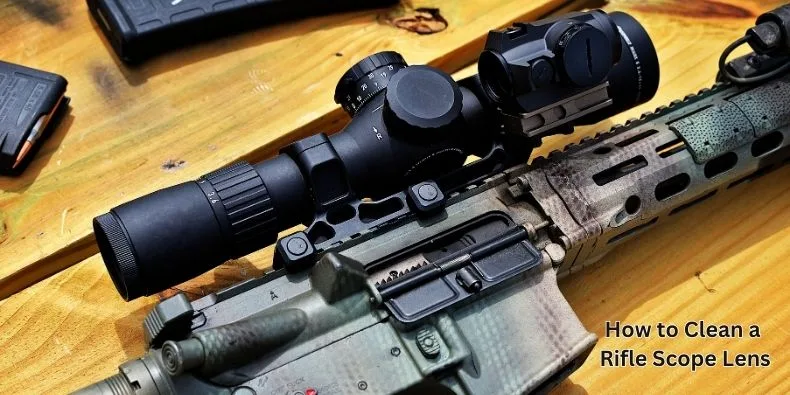
Image source: Web (Bing) / huntingmark.com (Web image (fair-use with source credit))
Four failure points account for most scope replacements. Understanding them helps you prevent premature aging.
Turret tracking drift. Repeated dialing wears the internal click detents. After several thousand dial cycles, MOA and MRAD measurements lose precision. Prevention: use zero-stop mechanisms and dial less when possible.
Seal failure and fogging. O-ring seals degrade over time, especially with temperature cycling. Once nitrogen or argon escapes, internal fogging starts. Prevention: avoid dropping the scope and inspect seals during annual checks.
Lens coating delamination. Multi-coated lenses can delaminate when moisture gets past damaged seals or harsh cleaners scratch the coating surface. Prevention: use lens pens and microfiber cloths only. Avoid spray cleaners entirely.
Mount and ring wear. Loose rings cause zero shift and stress the tube. Inconsistent torque during installation creates point-loading that damages the scope. Prevention: torque rings to manufacturer specs, typically 15 to 25 inch-pounds for aluminum rings.
Per manufacturer guidance from Vortex Optics and Leupold, most warranty claims stem from seal failure and turret drift, not glass damage. Those two are largely preventable.
Budget vs. Mid-Tier vs. Premium: Expected Lifespan Breakdown
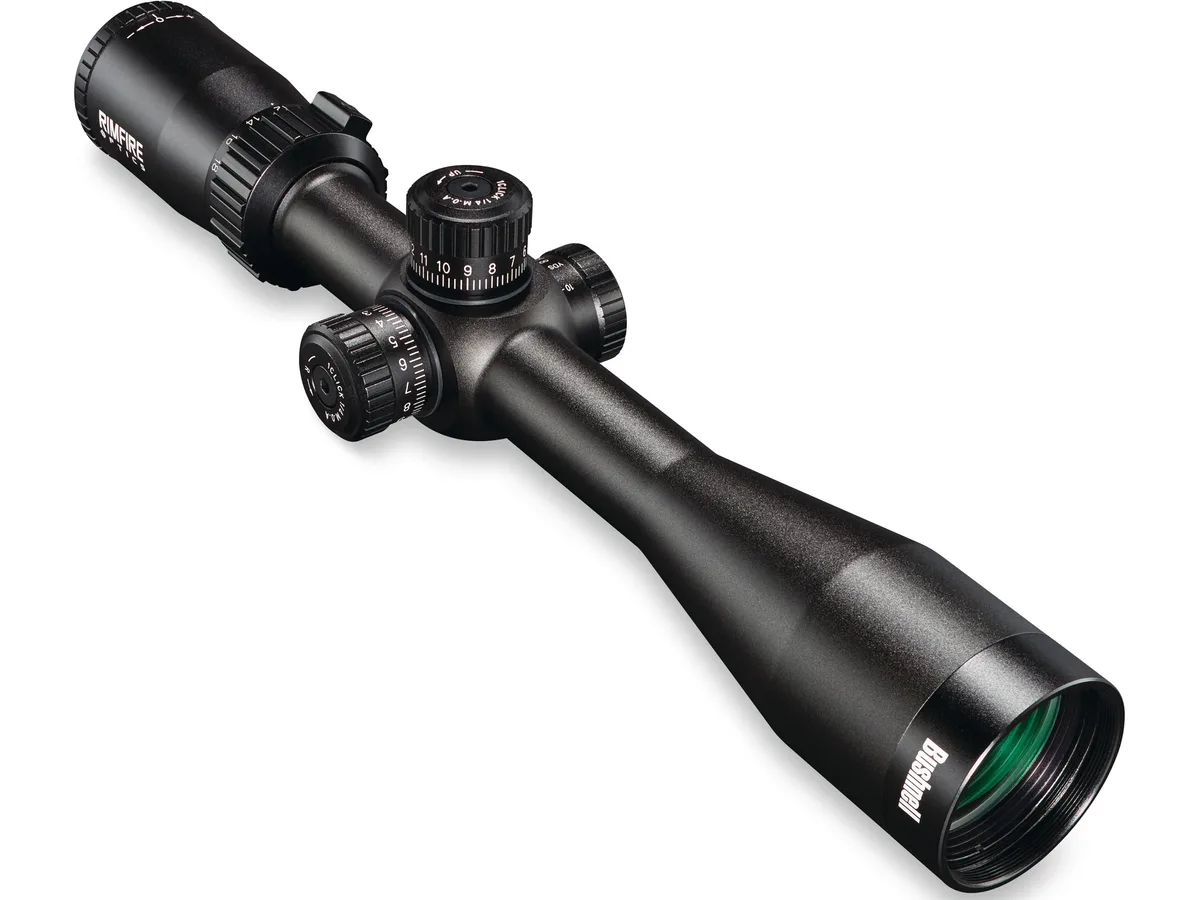
Image source: Web (Bing) / midwayusa.com (Web image (fair-use with source credit))
Here's how the tiers compare on lifespan under typical hunting and range conditions.
| Tier | Price Range | Expected Lifespan | Warranty |
|---|---|---|---|
| Budget | $100 to $300 | 3 to 8 years | Limited, often non-transferable |
| Mid-Tier | $400 to $900 | 10 to 15 years | Lifetime or 10+ year |
| Premium | $1,000+ | 15 to 25+ years | Lifetime, transferable |
Budget scopes are fine if you only hunt a few weekends per year. But dialing turrets on a cheap scope in the first year often shows measurable drift. Mid-tier scopes handle repeated turret work without issues for years.
Premium scopes are built for competitive shooting and hard tactical use where failure isn't an option.
The takeaway: match the tier to your actual use, not your aspirational use. A $1,200 Nightforce is overkill for deer season. But if you're in PRS competitions, a $250 scope will let you down fast.
Mistakes That Cut Scope Life Short
Several common errors shorten scope lifespan faster than normal wear. Most are preventable with basic awareness.
Over-tightening rings and mounts. Aluminum rings can crush a scope tube if torqued past 25 inch-pounds. Over-torquing creates stress points that lead to internal lens misalignment. Always use a torque wrench rated in inch-pounds.
Using household cleaners on the glass. Ammonia-based products and harsh chemicals strip multi-coated lens surfaces. Once coatings delaminate, light transmission drops permanently. Stick to lens pens, microfiber cloths, and purpose-built optic cleaning solutions.
Dropping the scope without protective covers. Flip-up caps and bikini-style covers protect objective and ocular lenses from scratches. In high-humidity environments, covers also slow moisture intrusion past degraded seals.
Ignoring zero checks after hard recoil. Recoil from magnum cartridges can shift zero over time if rings loosen. Verify zero at the range after hunting season. A quick 5-shot group at 100 yards tells you everything.
Storing scopes in hot vehicles or damp garages. Temperature extremes accelerate seal wear and coating degradation. Store optics in a temperature-stable location when possible.
A little care goes a long way. Most premature scope failures trace back to one of these five habits, not to defective manufacturing.
Signs It's Time to Replace (Not Repair) Your Scope
Some problems are fixable through manufacturer service. Others signal the optic is done. Knowing the difference saves money and keeps you shooting safely.
Replace the scope when you see any of these signs:
- Visible lens delamination. Flaking or peeling on any lens surface means moisture has compromised the coating permanently.
- Internal fogging that doesn't clear. If fogging persists after temperature equalization, the purging gas has escaped. Seals are failed.
- Turret tracking drift over 1 MOA per 100 clicks. Precision shooters need repeatable tracking. Once it slips beyond this threshold, mechanical repair rarely restores reliability.
- Cracked tube from impact damage. Cosmetic scratches don't matter. Cracked aluminum tubes compromise waterproofing and structural integrity.
- Reticle illumination flickering or failing after battery swap. Electronics degradation signals deeper issues inside the housing.
- Persistent zero shift despite re-torquing. If zero won't hold after re-mounting rings to spec, internal lens elements have likely shifted.
Manufacturers like Leupold and Vortex often offer repair services for fixable issues. Ask before buying a replacement. Many warranty programs cover defects at no charge.
FAQs on Rifle Scope Longevity
How long do Vortex rifle scopes last?
Vortex rifle scopes typically last 10 to 20 years with moderate use. Their Vortex VIP Warranty covers defects for the life of the product, and it's fully transferable. Aggregate reviews confirm long-term mechanical reliability, especially on Viper PST and Razor HD models.
How many rounds does a rifle scope last?
A quality rifle scope can handle thousands of rounds without mechanical failure. Nightforce scopes are rated for 20,000+ rounds per manufacturer testing. Budget scopes may show turret drift after a few thousand rounds of high-caliber use.
Can a rifle scope be repaired?
Yes. Most major manufacturers offer repair services. Leupold, Vortex, and Nightforce all service their optics for a flat fee.
Warranty repairs are typically free if the defect falls under coverage. Flat-rate repair costs are significantly cheaper than replacing the entire optic.
Do rifle scopes go out of zero?
Scopes don't go out of zero on their own. Zero shift comes from loose rings, ring base mount failure, or tube damage. Torquing ring screws to manufacturer specifications (typically 15 to 25 inch-pounds) prevents most zero retention issues.
Are expensive rifle scopes worth the longer lifespan?
For high-volume shooters, yes. A $1,200 premium scope with a lifetime warranty often costs less over 20 years than replacing a $200 budget optic four times. Match the scope tier to how often you actually shoot.
How do I know if my scope's seals are still good?
Test it by cycling temperature. Take the scope from a warm room to a cold environment (or vice versa) and check for internal fogging. If fogging appears and clears quickly, seals are likely intact.
If fogging persists, the purging gas has leaked.
Decision Guide: When to Repair, Replace, or Upgrade
Here's how to make the call when your scope shows signs of aging.
Repair if the issue is cosmetic (scratched lens covers, loose caps) or covered under warranty. Manufacturer service is fast and often free. Even flat-rate repairs save you hundreds compared to replacement.
Replace if lens delamination, tube cracks, or failed seals have set in. These are structural failures that compromise both optics and waterproofing. A $400 mid-tier scope will outperform a worn premium optic every time.
Upgrade if your current scope has served its tier well but can't keep pace with your shooting evolution. Moving from a 3-9x hunting scope to a 5-25x FFP optic makes sense if you're now shooting long-range precision. Upgrading because "I deserve it" rarely makes sense.
The core question is straightforward: is the scope mechanically sound, and does it match what you're actually doing? If yes to both, keep it. If no, move on.
| Scenario | Action | Why |
|---|---|---|
| Warranty-covered defect | Repair or warranty claim | Free or low cost, scope is still functional |
| Cosmetic damage only | Keep using | Doesn't affect optics or tracking |
| Lens delamination | Replace | Optics are permanently compromised |
| Failed seal / fogging | Replace (unless warranty applies) | Internal damage typically done |
| Turret drift past 1 MOA | Repair, then replace if needed | Precision is compromised |
| Scope outgrown by skill level | Upgrade | Performance gap is real |