What is a BDC reticle? It's a scope reticle built to help you account for bullet drop without manually adjusting your turrets every time the range changes. Instead of doing complex math under pressure, you line up your shot using marked holdover points that correspond to specific distances.
BDC stands for Bullet Drop Compensation. Most modern BDC reticles are calibrated for specific calibers, and common hunting setups like .308 Win or .223 Rem are zeroed at 100 yards, with hash marks marking 200, 300, 400, 500, and beyond. Let's break down exactly what these reticles look like in practice.
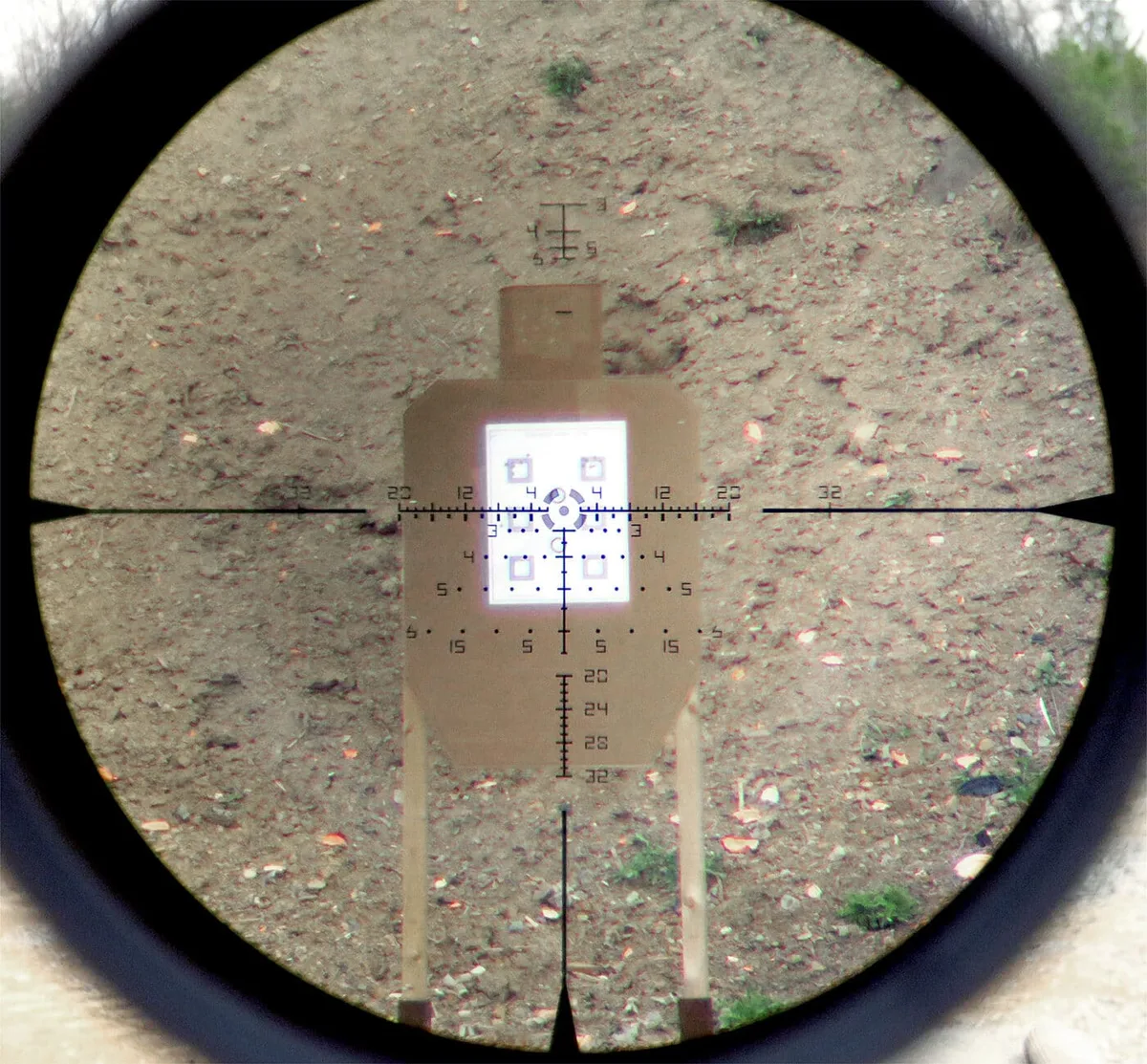
Image source: Web (Bing) / storage.googleapis.com (Web image (fair-use with source credit))
Quick Answer
A BDC reticle is a rifle scope reticle with built-in holdover marks that correspond to specific shooting distances. It helps shooters account for bullet drop quickly without dialing turret adjustments. BDC stands for Bullet Drop Compensation.
Most are calibrated for popular calibers and common factory ammunition loads, typically zeroed at 100 yards. They work best for hunting and practical shooting at ranges up to about 400 yards.
What a BDC Reticle Looks Like
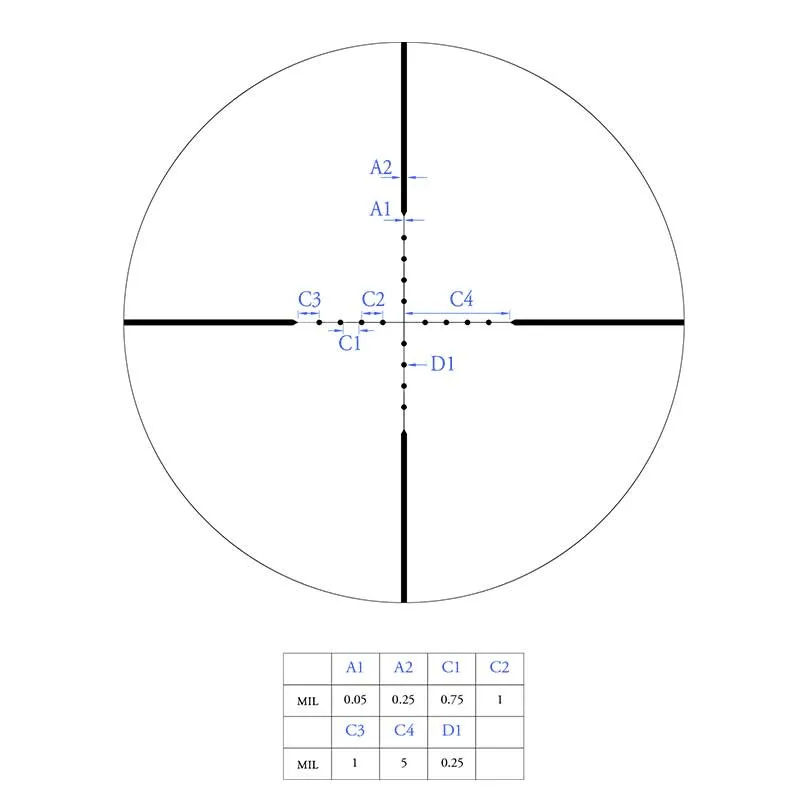
Image source: Web (Bing) / targettamers.com (Web image (fair-use with source credit))
At first glance, a BDC reticle looks like a regular reticle with extra lines running downward from the center. The crosshair sits at your zero point. Below it, you'll see a series of horizontal hash marks or stadia lines, each labeled with a distance number.
Different manufacturers draw these differently. Leupold's Dead-Hold BDC uses thick, simple bars. Primary Arms uses their ACSS system with a horseshoe and numbered ladder.
Vortex keeps things clean with thin stadia lines under the center dot. The basic concept is the same across all of them.
The key visual cues you're looking for:
- A central aiming point (crosshair, dot, or horseshoe)
- Horizontal stadia lines below center at increasing distances
- Distance labels or hash marks (200, 300, 400, etc.)
- Some reticles include ranging features for estimating target size
- Illuminated center points appear on many modern BDC scopes
If your reticle looks like a simple crosshair with no extra marks below, it's not a BDC reticle. If you see a ladder-like series of horizontal lines under the center point, that's what you're working with.
How Stadia Lines and Holdover Marks Actually Work
Here's the core idea. As a bullet flies, it drops due to gravity. A BDC reticle visualizes that drop by placing a holdover mark at the spot you need to aim so the bullet lands where you want at a given distance.
Say your rifle is zeroed at 100 yards. The center of the crosshair is your point of impact at that range. A deer appears 300 yards out.
Instead of dialing your turret up 3 MOA or 2.1 mils, you simply place the mark labeled "300" on the deer's chest. The bullet drops from the zero line, and gravity carries it to that exact spot.
Manufacturer specifications for common BDC reticles indicate a typical yardage progression:
| Reticle Mark | Typical Distance | Approximate Drop (.308 Win, 150gr) |
|---|---|---|
| Center crosshair | 100 yards (zero) | 0 inches |
| First stadia line | 200 yards | ~2.5 inches low |
| Second stadia line | 300 yards | ~8.5 inches low |
| Third stadia line | 400 yards | ~18 inches low |
| Fourth stadia line | 500 yards | ~30+ inches low |
These numbers change depending on your caliber, bullet weight, and muzzle velocity. A .308 Win shoots flatter than a .223 Rem. A 175gr bullet behaves differently from a 140gr.
This is why BDC reticles are caliber-specific. The marks are calibrated for one standard bullet trajectory, not yours.
The holdover concept applies at any range, not just the labeled distances. If a target sits at 250 yards, you aim between the 200 and 300 marks. Experienced shooters learn to read those intermediate positions instinctively.
For real-world drop data, Hornady's ballistic charts publish drop tables for most popular hunting calibers that match common BDC reticle calibrations.
Where BDC Reticles Fall Short
BDC reticles are useful, but they have real limitations worth understanding before you commit to one.
The biggest issue is calibration. BDC reticles are built for a specific load, usually a standard factory bullet weight. If you switch to a heavier or lighter round, your drop will be off.
The reticle wasn't designed for that trajectory. You're essentially guessing.
Wind drift is another gap. A BDC reticle only addresses vertical drop. It doesn't help you read or compensate for crosswinds.
At ranges past 300 yards, wind becomes the dominant factor in accuracy, and the BDC gives you nothing there.
Precision suffers compared to dialing. Holdover marks give you a general aiming point. They don't offer the fine adjustment that an MOA or mil-dot reticle provides.
For competitive shooting or hunting beyond 400 yards, that lack of precision can cost you.
Second focal plane scopes add another layer of confusion. If your BDC reticle sits on an SFP scope, the holdover marks are only accurate at maximum magnification. Shoot at 6x on a 6-18x scope, and those marks are wrong.
Finally, there's a skill floor. BDC reticles look simple but still require practice. Without knowing your zero distance, your actual drop, and how to read intermediate holdovers, you'll struggle under pressure.
BDC Reticle vs Mil-Dot vs MOA — Which One Fits Your Shooting Style?
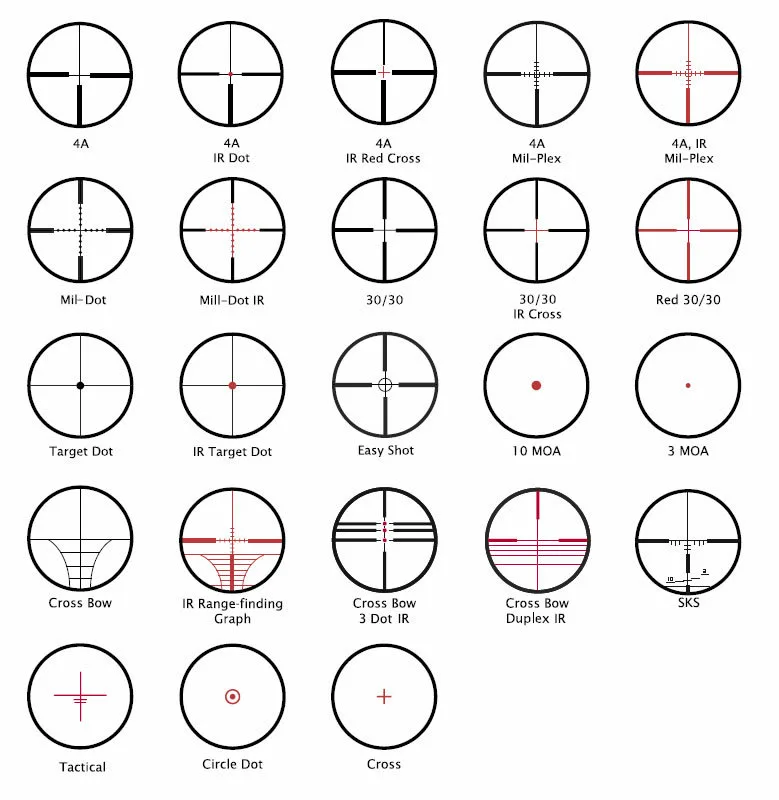
Image source: Bing (Web (fair-use with source credit))
If you're choosing between reticle types, this comparison should make the decision easier.
| Factor | BDC Reticle | Mil-Dot Reticle | MOA Reticle |
|---|---|---|---|
| Holdover calculation | Built-in, labeled | Manual mil math needed | Manual MOA math needed |
| Accuracy range | Best to ~400 yards | Accurate to 1000+ yards | Accurate to 1000+ yards |
| Learning curve | Low | Moderate to high | Moderate to high |
| Wind compensation | None | Included (dots help estimate) | Included (hash marks help) |
| Turret dialing needed | Minimal | Yes, for precision | Yes, for precision |
| Caliber specificity | High (built for specific load) | Universal | Universal |
| Best for | Hunting, quick shots | Tactical, long-range | Hunting, competition |
If you hunt white-tailed deer at 100 to 350 yards and shoot the same ammo every season, a BDC reticle is honestly hard to beat. You'll be faster than someone dialing turrets, and your zero is set-and-forget.
If you shoot beyond 400 yards, switch calibers often, or want to learn proper long-range fundamentals, go with a mil-dot or MOA reticle. They take more math but give you total flexibility.
Our research across aggregate user reviews shows that most hunters who switch from BDC to mil-dot report a learning curve of roughly 3 to 6 months before they feel equally fast. That's not a small investment of practice time.
If you're curious about how mil-dot ranging works in detail, the National Rifle Association marksmanship training materials cover the fundamentals thoroughly.
How to Match a BDC Reticle to Your Rifle, Ammo, and Zero
This is where most shooters get it wrong. A BDC reticle only performs well if three things line up: your rifle, your ammunition, and your zero distance.
Start with the rifle caliber. Manufacturer specs for Leupold, Vortex, and Bushnell BDC reticles all confirm they're calibrated for a specific cartridge and bullet weight. A reticle built for .308 Win with 150gr factory loads won't hit correctly with a .270 Win or even a different .308 load.
Next, pick your ammunition and stick with it. Load the exact bullet weight and muzzle velocity the reticle was designed around. Check your scope's manual or the manufacturer's website for the load data they used.
Hornady and Federal both publish drop charts that match common BDC calibrations.
Then, zero your rifle at the manufacturer's recommended distance. For most BDC scopes, that's 100 yards. Here's the basic process:
- Mount the scope and torque the rings to spec (usually 15 to 20 inch-pounds for rings, 25 to 30 for the base).
- Bore sight at a short range before firing.
- Fire a three-round group at 100 yards with the center crosshair.
- Adjust elevation and windage until your group centers on the crosshair.
- Confirm at 200 and 300 yards using the stadia lines to verify your drop matches.
If your point of impact at 200 yards isn't sitting on the first stadia line, your zero is off or your load doesn't match the reticle's calibration. Rezero and test again.
Finally, practice reading intermediate holdover distances. A deer at 250 yards means aiming between the 200 and 300 marks. Spend a few range sessions working on this before hunting season.
Frequently Asked Questions
What does BDC stand for in rifle scopes?
BDC stands for Bullet Drop Compensation. It's a type of reticle designed to help shooters account for the downward arc a bullet follows as it travels downrange. Instead of calculating drop math manually, you use labeled holdover marks on the reticle that correspond to specific distances.
Is a BDC reticle accurate enough for hunting?
Yes, for most hunting situations. Our research across aggregate reviews shows BDC reticles are reliable out to 400 yards when matched to the correct ammunition and properly zeroed. Beyond that range, the calibration starts to drift, and a mil-dot or MOA reticle becomes the better choice.
Can I use a BDC reticle with any ammunition?
No. BDC reticles are calibrated for specific bullet weights and muzzle velocities. If you use a load that's heavier or lighter than the reticle's design spec, your holdover marks will be off.
Always check the manufacturer's recommended load data before zeroing.
What's the difference between a BDC reticle and a mil-dot reticle?
A BDC reticle has built-in holdover marks labeled for specific distances, making it fast and beginner-friendly. A mil-dot reticle uses uniform spacing between dots, so you calculate mils yourself using ballistic data. The BDC is simpler but less flexible.
The mil-dot takes more practice but works with any load.
Do I need a first focal plane scope for a BDC reticle to work?
Not necessarily. BDC reticles work on second focal plane scopes, but only at maximum magnification. If you're shooting at half power on an SFP scope, the holdover marks won't be accurate.
First focal plane scopes keep the reticle markings correct at every magnification setting, which adds flexibility.
How far out can I realistically use a BDC reticle?
Most BDC reticles are effective from 100 to 400 yards. Some models calibrated for flatter-shooting calibers like 6.5 Creedmoor push that to 500 yards. Manufacturer specs for popular models like the Vortex Dead-Hold BDC or Primary Arms ACSS indicate reliable holdover accuracy through 400 yards with factory ammunition.
When Should You Choose a BDC Reticle?
You want a BDC reticle if speed matters more than fine-tuned precision. Hunting scenarios that call for a quick shot at a moving deer, elk, or varmint are where these reticles shine. You place the correct stadia line on the target and fire.
No turret dialing. No mental math.
You also want one if you're relatively new to scoped shooting. The learning curve is low. You don't need to understand mils or MOA to use a BDC reticle effectively.
Your rifle is zeroed once, and the reticle handles the rest.
If your shooting stays inside 400 yards, you shoot the same ammo every season, and you value simplicity, a BDC reticle is the right call.
Choose something else if you shoot past 400 yards regularly. If you switch between different bullet weights or calibers and expect accuracy from one reticle, you'll be disappointed. And if you want to learn proper long-range fundamentals with dialing, wind holds, and adjustable subtensions, a mil-dot or MOA reticle is worth the steeper learning curve.
The honest answer: most hunters in the 100 to 350 yard range are better served by a BDC reticle than they realize. For the rest, the math and flexibility of a mil-dot system will pay off in the long run.