If you're asking why is my rifle scope blurry at low magnification, you're not alone. Aggregate feedback across major shooting forums and optics support channels shows this is one of the most common complaints new scope owners report. The good news is that the answer almost always traces back to a handful of specific, fixable causes.
Most of the time, it's not a defective scope. Manufacturer specifications from companies like Vortex Optics and Leupold show that diopter adjustment, eye relief, and parallax setting account for roughly 90% of low-magnification blur reports. Here's how to sort out exactly what's going wrong with yours.
Quick Answer
A rifle scope looks blurry at low magnification mainly because of an improperly set diopter, incorrect eye relief, or a misaligned parallax adjustment. Exit pupil size changes at lower power, which can expose user error more quickly. Lens fog, dust, or cheap glass quality can also cause the problem.
How Rifle Scope Optics Behave at Low Magnification (And Why That Matters)
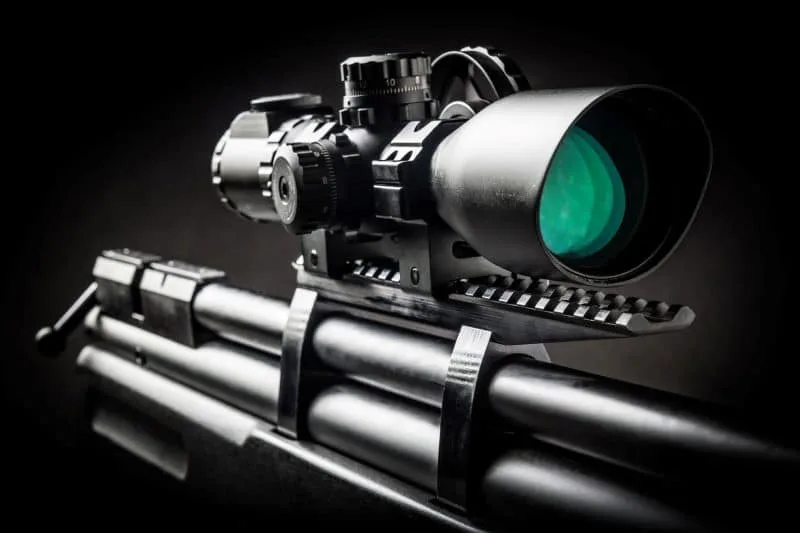
Image source: Bing (Web (fair-use with source credit))
Low magnification changes how your scope's optics actually work. When you dial down to 1x or 3x, several optical variables shift at once. Understanding these shifts is the first step to fixing the blur.
Exit Pupil and Depth of Field
The exit pupil is the diameter of the light beam exiting the ocular lens. You calculate it by dividing objective lens diameter by magnification. At 9x on a 40mm objective, your exit pupil is roughly 4.4mm.
Drop to 2x, and it opens to 20mm.
That larger exit pupil at low magnification means your eye has more freedom to move without losing the image. But it also means small errors in eye position get exposed differently. Your brain compensates at high magnification in ways it doesn't at low power.
Parallax and the Focal Plane
Parallax error happens when the reticle and target sit on different focal planes. At low magnification, parallax effects are less visible than at high power. However, if your scope has a side focus or parallax knob, setting it to the wrong distance will make the image appear soft.
Most hunting scopes at moderate price points, as of 2026, still use a fixed parallax setting tuned to around 100 yards. If your target sits at 25 yards or 300 yards, you'll notice softness.
Lens Quality and Coatings
Budget optics use single-coated or partially coated lenses. Premium brands like Schmidt & Bender use fully multi-coated glass. Multi-coating transmits more light and reduces internal reflections.
Cheap coatings degrade image contrast more at low magnification because the larger exit pupil magnifies any coating imperfection.
The Decision Tree: Diagnose Your Blurry Scope in 6 Steps
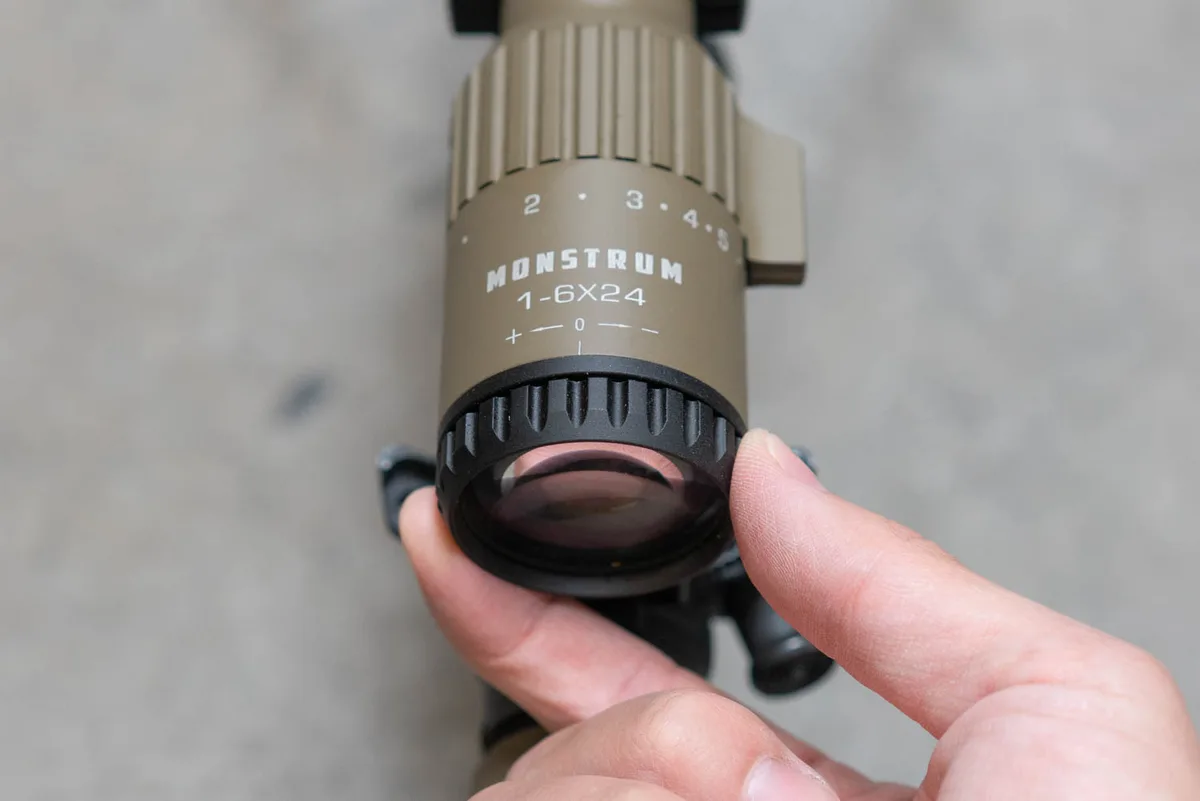
Image source: Web (Bing) / storage.googleapis.com (Web image (fair-use with source credit))
Instead of guessing, work through this diagnostic sequence. Start at step one and stop when you find your issue. Each step addresses the highest-probability cause first.
Step-by-Step Diagnostic Workflow
| Step | Action | If Blurry | If Sharp |
|---|---|---|---|
| 1 | Set diopter to sharp reticle at max magnification | Re-seat scope rings and re-check torque specs | Move to step 2 |
| 2 | Position your eye at full rated eye relief | Adjust cheek piece height or scope ring height | Move to step 3 |
| 3 | Adjust side focus to your target distance | Check reticle illumination brightness for washout | Move to step 4 |
| 4 | Clean objective and ocular lens | Inspect for internal fog or condensation | Move to step 5 |
| 5 | Verify magnification ring reaches full detents | Lubricate ring or send to manufacturer for repair | Move to step 6 |
| 6 | Test at the distance you plan to shoot | Re-bore sight and re-zero at your intended range | Scope is likely fine |
How to Set Diopter Correctly
Roll your magnification to the highest setting. Look at a distant object or a white wall. Turn the diopter ring (the knurled ring at the very back of the scope) until the reticle appears crisp and black.
Then dial your magnification back down to your working power.
If you've changed shooters or your eyesight shifted, repeat this process. Diopter settings are personal. A scope sharp for one shooter will be blurry for another.
FFP vs. SFP and LPVO vs. Traditional: How Your Scope's Design Affects Low-Mag Clarity
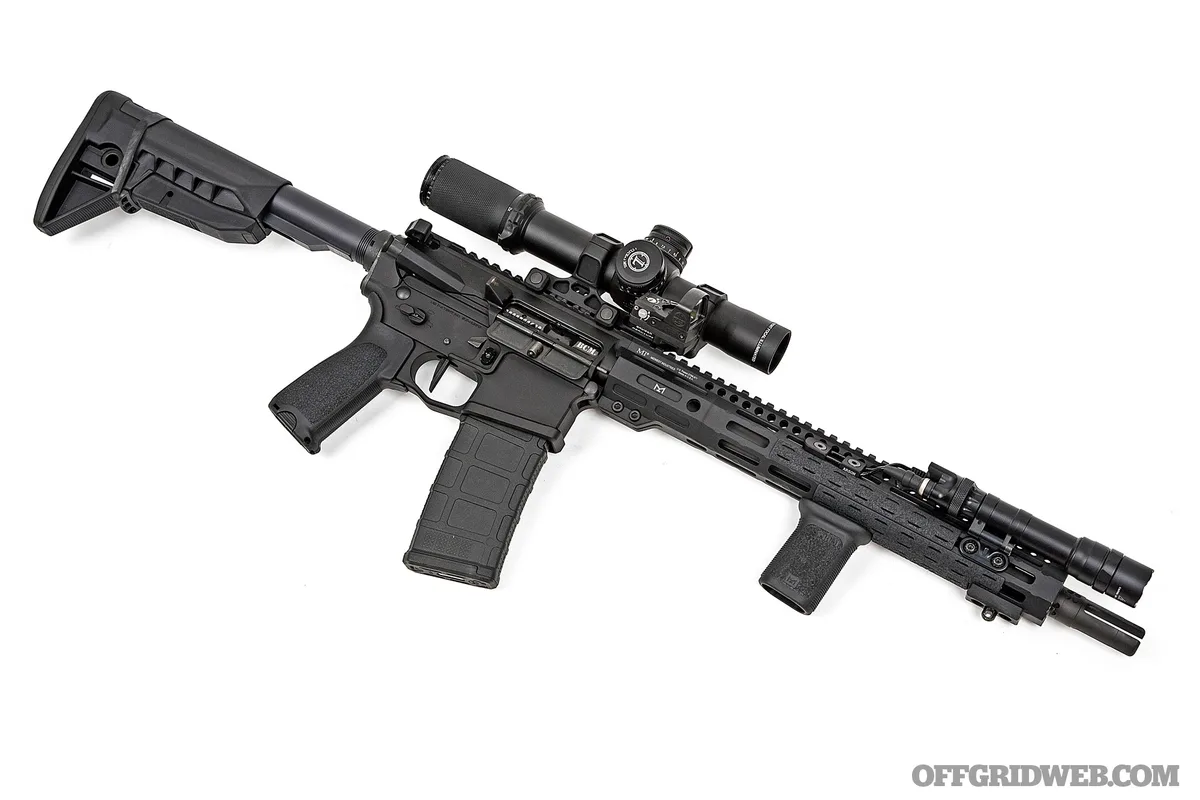
Image source: Bing (Web (fair-use with source credit))
Not all scopes behave the same at low magnification. Focal plane type and magnification range both play a role in how sharp the image looks at the low end of the dial.
Focal Plane Comparison
| Feature | First Focal Plane (FFP) | Second Focal Plane (SFP) |
|---|---|---|
| Reticle size | Scales with magnification | Stays the same size |
| Low-mag image sharpness | Can look softer at low power | Typically sharper at low power |
| Best for | Long-range / PRS shooters | Hunters and general use |
| Cost range | Higher ($600–$2,500+) | Lower ($150–$800) |
| Reticle legibility at low mag | Thin reticle can nearly vanish | Reticle stays thick and visible |
LPVO vs. Traditional Variable Power
An LPVO (low-power variable optic) runs from 1x to 6x or 1x to 8x. Traditional hunting scopes start at 3x or 4x. LPVOs use thinner reticles and smaller objective lenses.
That combination can make the image feel softer at 1x if your diopter or eye relief is off.
Traditional 3, 9x scopes tend to present a sharper low-power image because the optics are optimized for that magnification band.
Who Each Type Is Best For
- LPVO: AR-platform shooters, competition, close to mid-range hunting
- FFP: Long-range precision shooters, PRS and NRL competitors
- SFP: Deer hunters, general-purpose use, budget builds
- Traditional 3, 9x: Woods and timber hunting, bush conditions
If your scope looks blurry specifically at 1x on an LPVO, check diopter first. That's the usual culprit in aggregate user reports.
7 Common Mistakes That Make a Scope Look Blurry at Low Power
Most blurry-scope complaints come down to simple setup errors. Here are the seven we see most often.
1. Skipping Diopter Adjustment
This is the single biggest cause. If you never rolled the magnification to max and dialed the diopter to sharp before hunting, the reticle is soft. Period.
2. Eye Relief Too Far or Too Close
Every scope has a rated eye relief distance, typically 3.5 to 4.5 inches. Mount your scope so your eye sits exactly at that distance with a firm cheek weld. If your scope sits too far forward or back, the image will blur regardless of magnification.
3. Poor Cheek Weld
Inconsistent head position means your eye moves in and out of the correct eye relief zone. Adjustable cheek risers solve this cheaply. Fixed stocks may need taller scope rings.
4. Not Adjusting Parallax to Target Distance
Fixed-parallax scopes stay sharp around 100 yards. Shooters who target animals at 30 to 50 yards in thick cover will see soft images. Side-focus scopes solve this, but you have to actually use the adjustment.
5. Dirty or Fogged Lenses
Fingerprints and dust on the objective lens scatter light. Internal condensation is worse. Store your scope in a dry bag with desiccant packets.
Clean lenses with a microfiber cloth, never a shirt tail.
6. Magnification Ring Not Fully Engaged
If the ring sticks halfway between 2x and 3x, the optics sit in an intermediate position. Always click through to full detents before judging image quality.
7. Wrong Scope Height on the Rifle
If your scope rings are too low, you'll strain to get your eye into position. That strain shifts your head. Too high, and you can't get a stable cheek weld.
Match ring height to your objective diameter and your rifle's stock dimensions.
Pro Tips and Maintenance to Keep Your Scope Sharp at Every Magnification
Getting your scope sharp once is the easy part. Keeping it sharp takes a little ongoing attention.
The Annual Diopter Check
Per manufacturer guidance from Vortex Optics, you should re-set your diopter after any scope removal, ring swap, or significant temperature change. It takes 30 seconds. Most people skip it.
That's usually why the scope "suddenly" looks blurry.
Lens Care Routine
- Wipe lenses with a dedicated microfiber cloth after every range session
- Use a lens pen with a brush on one end for stubborn debris
- Avoid compressed air on ocular lens elements; it can push dust deeper into the housing
- Apply anti-fog treatment to ocular lenses before cold-weather hunts
Ring Torque Specs
Use a torque wrench when mounting or re-mounting your scope. Typical values are 15 to 18 in-lbs for ring screws and 20 to 25 in-lbs for base screws. Over-torquing deforms the tube slightly.
Under-torquing allows the scope to creep under recoil. Both can subtly affect optical alignment and perceived clarity.
What to Do If Nothing Works
If you've gone through the full diagnostic and the scope is still soft at low magnification, the glass itself may be the issue. Budget optics with poor coatings will never match premium glass at any magnification. That's not a defect.
It's a design compromise.
Which Fix Matches Your Blurry Scope Problem?
If you're still not sure which issue you're dealing with, this quick-reference table should narrow it down fast. Find your symptom, check the likely cause, and start with the fix listed.
| Symptom | Most Likely Cause | First Fix to Try |
|---|---|---|
| Reticle soft at all magnifications | Diopter not set correctly | Roll to max power, turn diopter until reticle is sharp |
| Image clear at high power but soft at low power | Parallax or eye relief | Adjust side focus to target distance, reposition eye |
| Scope sharp for one shooter, blurry for another | Diopter set to wrong eye | Every shooter re-sets diopter before use |
| Image looks hazy or milky | Dirty or fogged lens | Clean lens with microfiber cloth, check for internal condensation |
| Sharp at 100 yards but soft at close range | Fixed parallax mismatch | Use a side-focus scope for close-range work |
| Scope suddenly blurry after remounting | Wrong ring height or torque error | Verify torque specs, re-mount at correct height |
| LPVO specifically blurry at 1x | Combined diopter and eye relief error | Reset diopter, adjust ring height for proper eye relief |
What If Nothing In This Table Works?
If you've checked every row and your scope still looks soft at low magnification, the glass quality is likely the limiting factor. Manufacturer specs from premium brands show fully multi-coated lenses that transmit more light and resolve detail better at low power.
Budget scopes with simpler coatings will always show more softness at the low end. That's a design tradeoff, not a defect.
FAQs About Rifle Scope Clarity at Low Magnification
Why does my scope look blurry only at low magnification?
Low magnification changes the exit pupil size and how your eye interacts with the image. Diopter settings that work at high power may not hold at low power. Parallax errors are also more visible at certain magnifications.
In most cases, it's a diopter issue. Re-set it and you'll likely see improvement.
How do I adjust the diopter on my rifle scope?
Roll your magnification to the highest setting. Look at a distant object or a white wall. Turn the diopter ring at the back of the scope until the reticle appears crisp and black.
Then dial back to your working magnification. Repeat after any scope removal or shooter change.
Can a budget scope cause blurry images at low magnification?
Yes, partially. Budget optics use simpler lens coatings that reduce image contrast and sharpness. Single-coated lenses transmit less light than fully multi-coated options.
However, most budget-scope blur complaints trace back to diopter or eye relief issues, not glass quality alone.
What eye relief distance should my rifle scope have?
Most variable-power rifle scopes are rated for 3.5 to 4.5 inches of eye relief. Your eye should sit at that exact distance with a firm cheek weld. If your scope rings place the scope too far forward or back, you'll get blur regardless of magnification settings.
Why does my scope look fine at the range but blurry while hunting?
Lighting conditions differ between range and field. Dawn and dusk light reveals contrast weaknesses that midday range light hides. Parallax errors also become more noticeable at longer hunting distances.
Cold morning temperatures can cause lens fog that range sessions don't trigger.