What are the different types of rifle scopes? There are more options than most shooters expect, and picking the wrong one costs you money, accuracy, or both. Understanding the main categories helps you match the optic to your rifle, your shooting distances, and your budget.
Scopes range from 1x red dot sights to 25x long-range optics, with tube diameters from 1 inch to 35mm. Market data from 2026 shows the LPVO as one of the fastest-growing optic categories among US shooters. Let's walk through the main types so you know exactly what you're looking at.
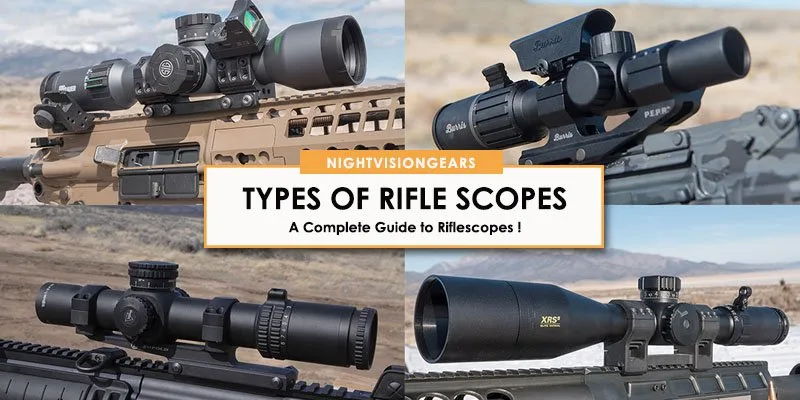
Image source: Bing (Web (fair-use with source credit))
The Different Rifle Scope Types: Your Quick Answer
Rifle scopes generally fall into five main categories. Close-range optics include red dot sights and prism scopes. Mid-range options include LPVOs and magnified scopes.
Thermal and night vision scopes handle low-light conditions. Your best choice depends on your shooting distances and rifle platform.
Red Dot Sights, Holographic Sights, and Prism Scopes: Close-Range and Compact Optics
These three optic types share a common trait. They prioritize speed and simplicity over magnification. If your shooting happens inside 200 yards, they're worth serious consideration.
Red Dot Sights: Speed and Simplicity
A red dot sight projects a small illuminated dot onto your target. You place the dot where you want the bullet to go and press the trigger. That's it.
- Typically 1x magnification (no zoom)
- Extremely fast target acquisition
- Both-eyes-open shooting for situational awareness
- Light, compact, and simple to mount
- Best for close range, home defense, and competitive shooting
The main downside is battery dependency. When the battery dies, you've got no aiming point. Manufacturer specs from brands like Aimpoint and Holosun report battery life between 100 and over 1,000 hours depending on brightness settings.
Reflex Sights and Holographic Sights
Reflex sights and holographic sights are close cousins of the red dot. A reflex sight uses a simple LED and curved lens to project a reticle. A holographic sight uses a laser to project a holographic reticle onto a window, as seen on EOTech products.
Both operate at 1x magnification. Holographic sights tend to have larger windows and wider field of view. Reflex sights are usually lighter and more compact.
Prism Scopes: When a Red Dot Isn't Enough
Prism scopes fill the gap between red dots and magnified optics. They offer 1x to 5x magnification with an etched reticle that stays visible even without battery power. The reticle is built into the glass.
This matters for reliability. If your battery dies in the field, you still have a usable aiming point. Aggregate buyer feedback suggests prism scopes strike a strong balance between speed and capability for home defense and close-to-mid-range hunting.
Variable Magnification Scopes: LPVOs, Hunting Optics, and Long-Range Systems
Variable magnification scopes cover the widest range of shooting applications. They let you zoom from a wide field of view at low magnification to precise aiming at high magnification.
LPVOs: The Do-Everything Optic
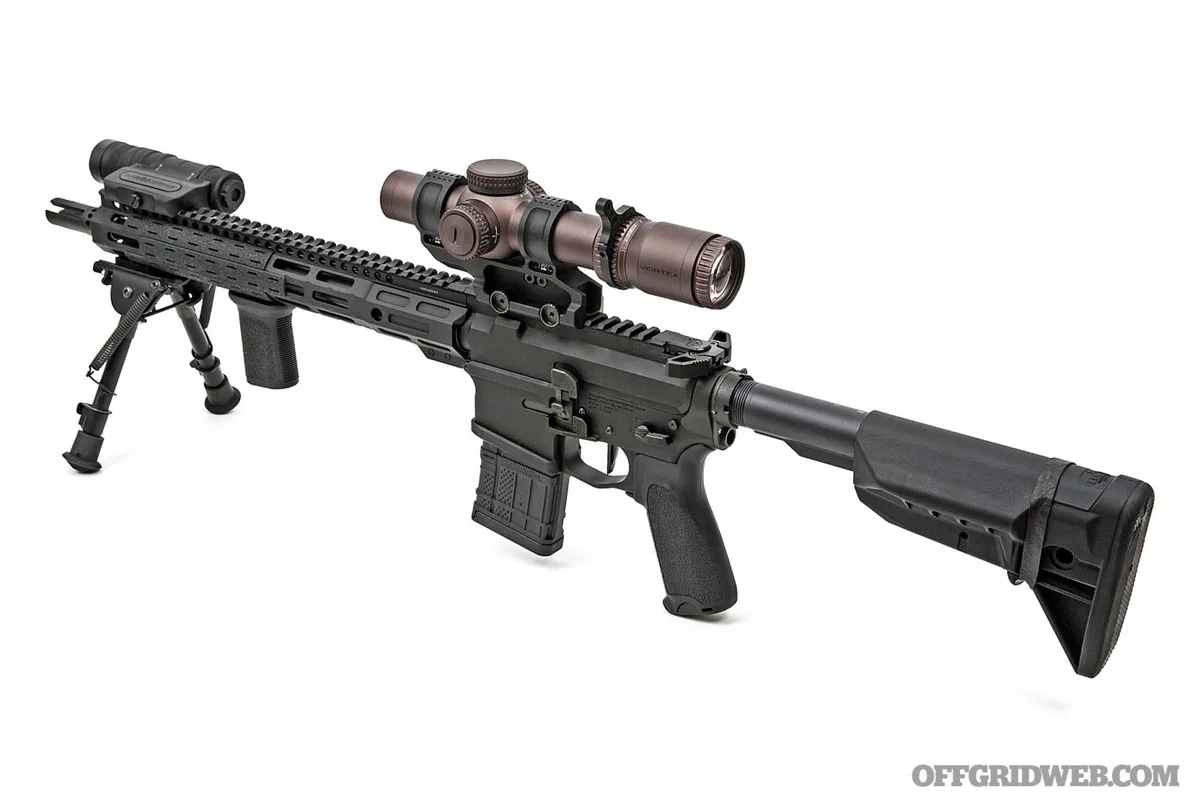
Image source: Bing (Web (fair-use with source credit))
A Low Power Variable Optic (LPVO) typically ranges from 1x to 6x or 1x to 8x magnification. At 1x, it works like a red dot for close-range speed. Cranked up to 6x or 8x, it gives you enough magnification for shots out to 300+ yards.
LPVOs have become the go-to optic for AR-15 owners. Market data from 2026 shows they're now the most common optic paired with AR-15 platforms in the US. They handle home defense, hunting, and competition with one optic.
The tradeoff: LPVOs aren't as fast as a dedicated red dot at 1x. They're also not as sharp as a dedicated long-range scope at high magnification. Manufacturer documentation from Vortex Optics confirms the 30mm tube diameter is the most common standard for LPVOs.
For many shooters, that compromise works.
Traditional Hunting Scopes: 3-9x and 2-10x
The 3-9x scope has been the gold standard for deer hunting for decades. It's light, versatile, and covers most hunting distances without overcomplicating things. The 2-10x range is increasingly popular because it offers more low-end magnification for thick brush.
These scopes typically use 1-inch or 30mm tubes. Most feature second focal plane (SFP) reticles, which keep the reticle the same size at all magnification levels. That makes holdovers easier at moderate ranges.
Long-Range and Precision Optics: 5-25x and Beyond
When you're shooting past 500 yards, you need more magnification and finer adjustments. Long-range scopes typically run 5-25x, 6-24x, or 8-40x with 34mm or 35mm tubes. They use first focal plane (FFP) reticles so holdover values stay consistent across magnification levels.
These scopes have exposed turrets calibrated in 1/4 MOA or 0.1 MRAD clicks. Side parallax adjustment is standard on most models. Per manufacturer specs, premium long-range scopes offer 60+ MOA or 15+ MRAD of elevation travel.
Fixed-Power Scopes: The Simpler Alternative
Fixed-power scopes offer a single magnification setting, like 4x, 10x, or 20x. They're lighter, more durable, and hold zero better than variable scopes. The reason is simple: fewer moving parts means fewer things that can go wrong.
Military-style ACOG optics are a well-known example of fixed-power scopes. They're designed for reliability under hard conditions. If you know the distance you'll typically shoot, a fixed-power optic is worth considering.
Thermal Scopes, Night Vision, and Digital Scopes: When Glass Isn't Enough
Glass optics have limits. They need light to work. When conditions go dark, foggy, or smoky, traditional scopes fall short.
These specialized systems use technology to see what glass can't.
Night Vision Scopes
Night vision scopes amplify ambient light (moonlight, starlight, IR illumination) to create a usable image. They work best when some light is present. Image intensification technology is mature, reliable, and widely used by military and law enforcement units.
Thermal Scopes
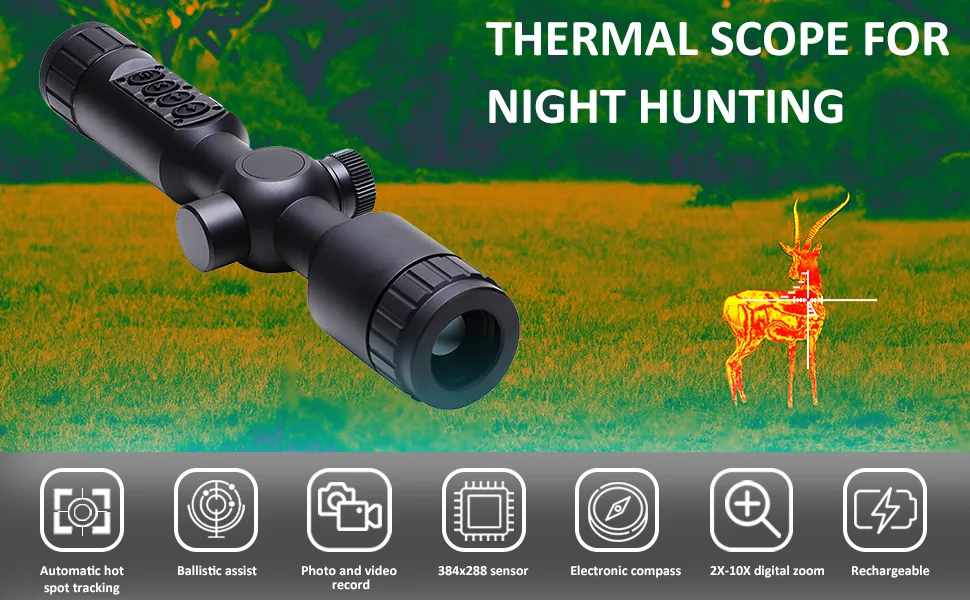
Image source: Web (Bing) / amazon.com (Web image (fair-use with source credit))
Thermal scopes detect heat signatures rather than light. They see through fog, smoke, brush, and total darkness. Every living thing produces heat, and thermal optics can pick up those signatures at significant distances.
Thermal scopes are widely used for predator control, hog hunting, and nighttime coyote hunting. The tradeoffs are real. Thermal scopes cost significantly more than glass optics.
Image detail is lower than what a good glass scope delivers in daylight. Prices as of 2026 range from $1,000 to $5,000+ depending on resolution and sensor quality.
Before buying, check your state's hunting regulations on thermal and night vision optics. The ATF covers federal guidelines, but your state wildlife agency has the final word on legal shooting hours and optic use.
Digital and Smart Scopes
Digital scopes combine traditional glass optics with onboard computing. They can display reticles with integrated ballistic calculations and record video. Some models show weather or range data directly in the display.
These scopes help shooters who want ballistics assistance without carrying a separate rangefinder and calculator. The tradeoff is increased complexity and battery dependence.
Side-by-Side Comparison: Which Scope Type Fits Your Shooting
Choosing the right scope type comes down to one question: what are you shooting, and how far away is the target? Here's a comparison to help you narrow it down.
| Scope Type | Magnification | Best Range | Key Strength | Main Tradeoff |
|---|---|---|---|---|
| Red dot sight | 1x | 0-100 yards | Speed | No magnification |
| Holographic sight | 1x | 0-100 yards | Wide field of view | Battery dependent |
| Prism scope | 1x-5x | 0-200 yards | Reliability | Limited magnification |
| LPVO | 1x-6x / 1x-8x | 0-300 yards | Versatility | Compromise optic |
| Hunting scope | 2-10x / 3-9x | 50-300 yards | Proven performance | Slower at close range |
| Long-range scope | 5-25x+ | 300-1,000+ yards | Precision | Heavy and bulky |
| Fixed-power scope | Single setting | Varies | Durability | No flexibility |
| Thermal scope | Varies | 100-800+ yards | Night capability | Cost, image detail |
| Night vision scope | Varies | 50-300 yards | Low-light shooting | Needs ambient light |
If your shooting distance is under 200 yards, a red dot, prism scope, or LPVO is the right starting point. For hunting with variable distances, a 3-9x or LPVO covers most scenarios. For precision long-range work, a 5-25x FFP scope with exposed turrets is the standard.
Common Mistakes When Choosing a Rifle Scope Type
Choosing the wrong scope type is easier than you'd think. Most buyers focus on magnification and price while ignoring the details that actually matter on the range.
Mistake #1: Buying more magnification than you need. A 5-25x scope sounds impressive on paper. In the field, high magnification narrows your field of view and makes target acquisition slower.
Most hunting shots happen inside 300 yards. If that's your range, you don't need 25x.
Mistake #2: Ignoring eye relief. Eye relief is the distance between your eye and the eyepiece at which the full image is visible. Manufacturer specs typically list 3 to 5 inches. If your scope sits too far back or too far forward, you'll either miss shots from discomfort or risk scope bite from recoil.
Shooters of heavy-caliber rifles should pay close attention here.
Mistake #3: Mismatching reticle type to shooting style. A BDC reticle is calibrated for one specific cartridge. If you switch calibers, your holdovers are wrong. First focal plane reticles solve this problem by scaling with magnification.
Second focal plane reticles keep the reticle the same size, which makes them harder to use for holdovers at high magnification.
Mistake #4: Underestimating mounting hardware. The scope is only as good as the rings and base holding it. Torque specs matter. Manufacturer documentation typically recommends 20 to 30 inch-pounds for ring screws and around 20 inch-pounds for base screws.
Over-torquing crushes the tube. Under-torquing causes the scope to shift under recoil.
Mistake #5: Skipping zero verification. Zeroing at 25 yards and calling it done is a common shortcut. You should confirm your zero at your intended zeroing distance, typically 100 yards for centerfire rifles and 50 yards for .22 LR. Then test it again after a range session to confirm the zero held.
Final Recommendation: Matching the Right Scope to Your Platform
The right scope depends on three things: your rifle platform, your shooting distances, and what you can realistically spend. Here's how it all comes together.
If you're setting up an AR-15 for general purpose use, an LPVO gives you the widest capability. The 1-8x LPVO handles close-quarters work at 1x and reaches out to 300+ yards at 8x. Pair it with a quality cantilever mount and you've got a solid multi-role setup.
For bolt-action deer hunters, a 3-9x or 2-10x SFP scope in a 1-inch or 30mm tube covers the majority of hunting scenarios. Capped turrets are a good choice here. You zero once and trust the reticle.
No dialing needed for typical hunting distances.
Long-range precision shooters need different optics. A 5-25x FFP scope with a 34mm tube, exposed turrets, and side parallax adjustment is the standard for PRS-style competition. Per manufacturer specs, premium models offer 100+ MOA of elevation travel.
If your hunting happens after dark, a thermal scope for predator control or a night vision scope for low-light conditions fills the gap that glass optics can't. Just verify your state's regulations first.
On a tight budget, don't sacrifice mounting quality for glass quality. A mid-range scope on solid rings will outperform a premium scope on cheap rings every time. Set realistic expectations and spend where it counts.
Frequently Asked Questions About Rifle Scope Types
What are the main types of rifle scopes?
The main types are red dot sights, holographic sights, prism scopes, LPVOs, variable magnification hunting scopes, long-range precision scopes, fixed-power scopes, thermal scopes, night vision scopes, and digital smart scopes. Each is designed for different shooting distances, conditions, and use cases. Choosing the right type starts with knowing how far you typically shoot.
What magnification do I need for deer hunting?
A 3-9x magnification range covers most deer hunting scenarios. It gives you a wide field of view at low magnification for close shots and enough zoom for longer distances. If you hunt in thick brush, a 2-10x or 1-8x LPVO offers better low-end visibility.
Most hunting shots happen inside 200 yards where 3-9x is more than enough.
What is the difference between first focal plane and second focal plane?
First focal plane (FFP) reticles scale with magnification. Holdover values stay correct at every zoom level. Second focal plane (SFP) reticles stay the same size regardless of magnification.
Holdover values on SFP reticles are only accurate at one specific magnification setting, usually the highest.
What tube diameter should I choose?
1-inch tubes are standard for most traditional hunting scopes and budget options. 30mm tubes offer more robust construction and better turret travel, and they're the most common size for LPVOs. 34mm and 35mm tubes are found on long-range precision scopes. Pick the tube size that matches your scope type rather than treating it as a standalone upgrade.
Can I use a thermal scope for daytime hunting?
Yes, thermal scopes work in daylight, but the image detail is lower than what a good glass scope delivers. Thermal optics excel in low light, fog, and dense cover where glass optics struggle. Most thermal scope buyers use them primarily for nighttime hunting and predator control rather than as a daytime primary optic.
Are expensive scopes worth it over budget options?
Premium scopes deliver better glass clarity, more reliable turret tracking, stronger warranties, and tighter quality control. Budget scopes have improved significantly, but they often trade optical quality for price. Manufacturer specs from companies like Leupold and Vortex confirm that higher-end models use better coatings and more precise adjustment mechanisms.
For long-range shooting and competition, the difference is measurable. For casual hunting, a mid-range scope often delivers enough performance for the money.




