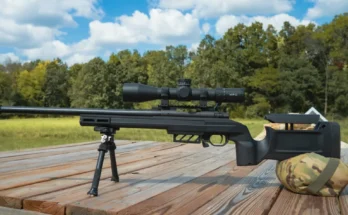
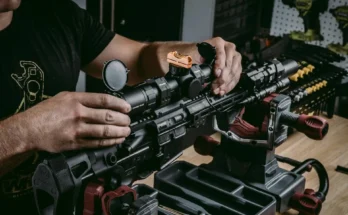
How does a rifle scope work? In simple terms, it uses a series of glass lenses inside a sealed metal tube to magnify distant light. A faraway target appears clear and much larger than it would with the naked eye.
It is not a magnifying glass, and the way it handles light is completely different.
Most variable-power rifle scopes magnify between 3x and 25x, depending on the model. As of 2026, common hunting setups use ranges like 3-9x for deer-sized game, while long-range precision shooters lean toward 5-25x models. Let's walk through the optics so the whole picture makes sense.
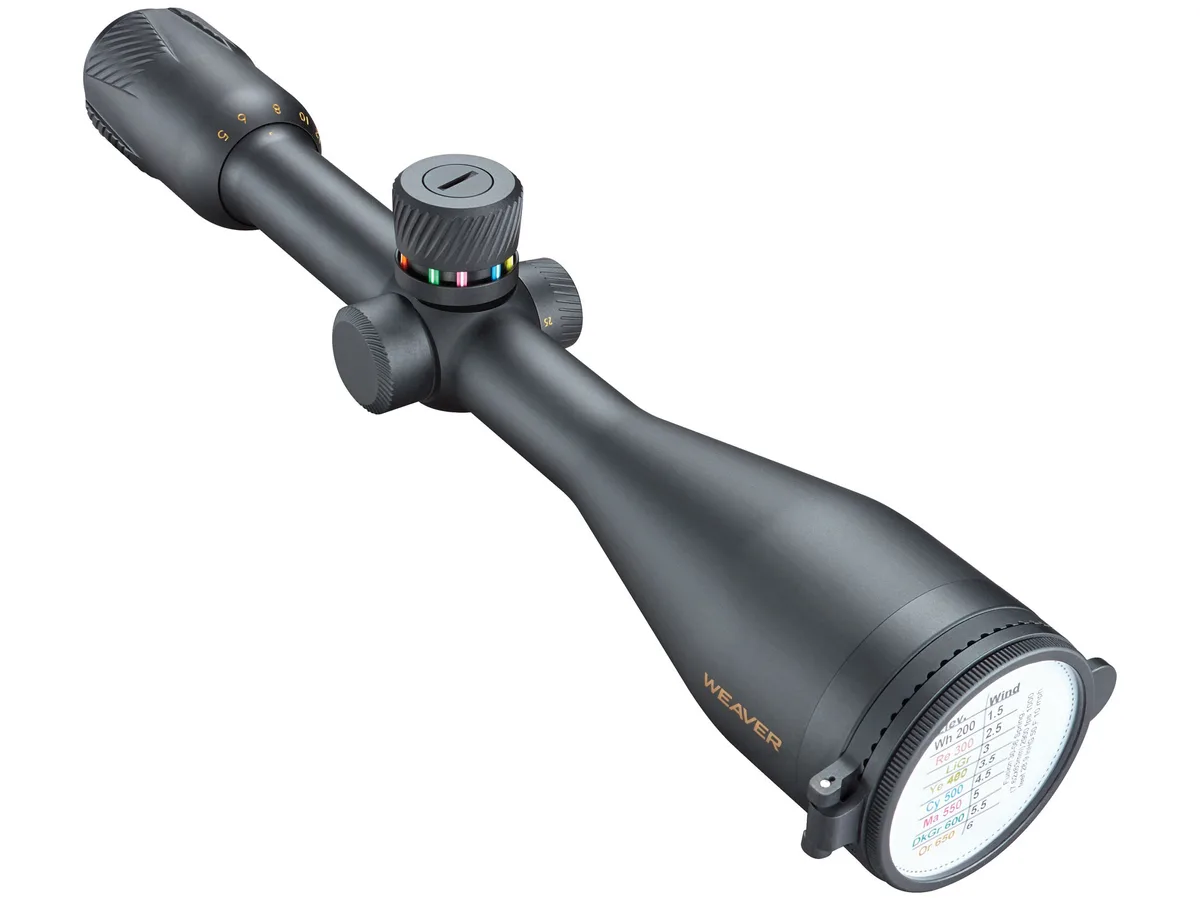
Image source: Bing
Quick Answer
A rifle scope magnifies distant light using glass lenses in a sealed tube. The objective lens gathers incoming light from the target. An internal erector system flips the image upright and scales it.
The reticle provides your aiming reference. Turret adjustments shift internal lenses to move your point of impact.
A Rifle Scope Is a Telescope, Not a Magnifying Glass
A rifle scope is not a magnifying glass. That distinction matters more than most shooters realize. A magnifying glass enlarges nearby objects through a single convex lens.
A rifle scope does something fundamentally different.
Think of a magnifying glass as a tool for objects you can almost touch. It takes the light from a nearby object and spreads it out so your eye perceives it larger. It works well for reading fine print or inspecting something in your hand.
A rifle scope handles light from distant targets instead. It collects faint light from objects hundreds of yards away. Then it compresses that light through multiple internal lens groups.
Finally, it expands the compressed light again through the ocular lens at the back. The result is a magnified image that sits at a comfortable viewing distance from your eye.
This is where the objective lens diameter becomes important. The objective lens sits at the front of the scope and measures its diameter in millimeters. A larger objective lens gathers more light from the distant target.
A smaller one collects less, which matters most in low-light conditions like dawn or dusk.
Most manufacturers offer objective lens sizes from 24mm on compact scopes up to 56mm on long-range precision models. The National Shooting Sports Foundation covers these optics fundamentals in their shooting education materials. Their guides explain how magnification and light transmission work together in practical shooting scenarios.
The key principle is straightforward. A rifle scope is a light-gathering machine. It takes the faint, spread-out light from a distant target and gives your eye enough of it to see that target clearly.
Magnification is one part of the equation. Light gathering is the other half.
What's Inside a Rifle Scope: The Parts That Do the Work
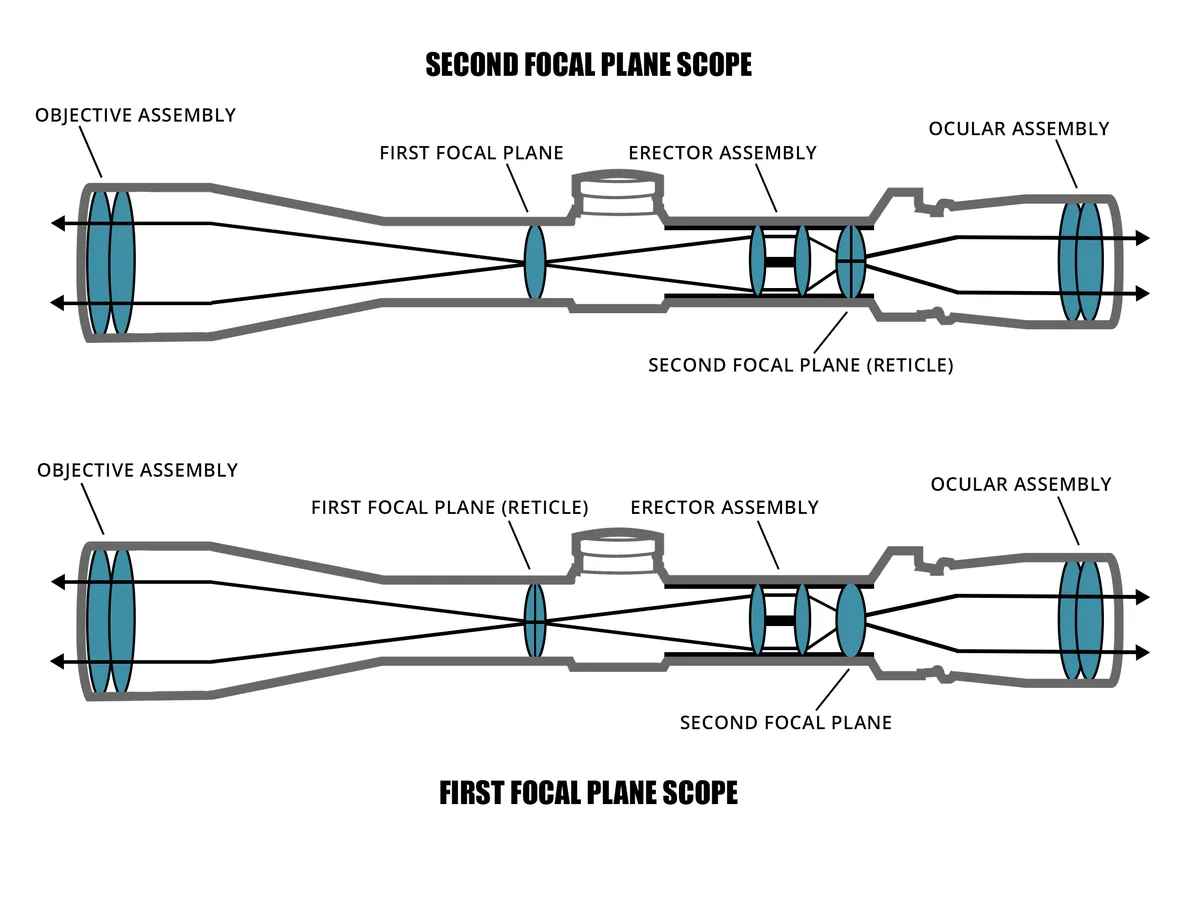
Image source: Web (Bing) / outdoorsmans.com
A rifle scope contains several optical and mechanical components, each with a specific job. It isn't just two pieces of glass. It's a precise arrangement of parts working together.
| Component | What It Does |
|---|---|
| Objective lens | Gathers light from the distant target |
| Erector lens system | Flips the image upright and scales it |
| Reticle | Provides the aiming reference |
| Turret mechanism | Moves internal lenses to adjust point of impact |
| Magnification dial | Changes the magnification level |
| Ocular lens (eyepiece) | Focuses the final image for your eye |
| Main tube | Houses and protects all internal components |
| Diopter adjustment | Adjusts reticle focus for your individual eye |
The objective lens is the first thing light hits when it enters the scope. Its job is to collect and focus that light. The bigger the lens diameter, the more light it can capture.
Once light enters the scope, it passes through the erector lens system. This is the heart of how the scope works. The erector system consists of one or more lenses that flip the incoming image 180 degrees vertically and horizontally.
Without it, you'd see an upside-down image. The erector system also helps determine the magnification level.
The reticle sits somewhere in the optical path, either in front of or behind the erector system. That depends on whether the scope is first focal plane or second focal plane. We'll cover that distinction in detail shortly.
The turret mechanism is where optics meets mechanics. Turrets control the internal erector tube, which holds the erector lenses. When you turn a turret, it moves the erector tube up, down, left, or right.
This physically shifts where your bullet will land relative to the reticle.
Manufacturer specs from brands like Leupold confirm that tube diameters of 1 inch and 30mm are the most common standards. The 34mm diameter is gaining popularity for long-range optics that need greater internal adjustment range.
The Reticle Explained: What You're Actually Looking At
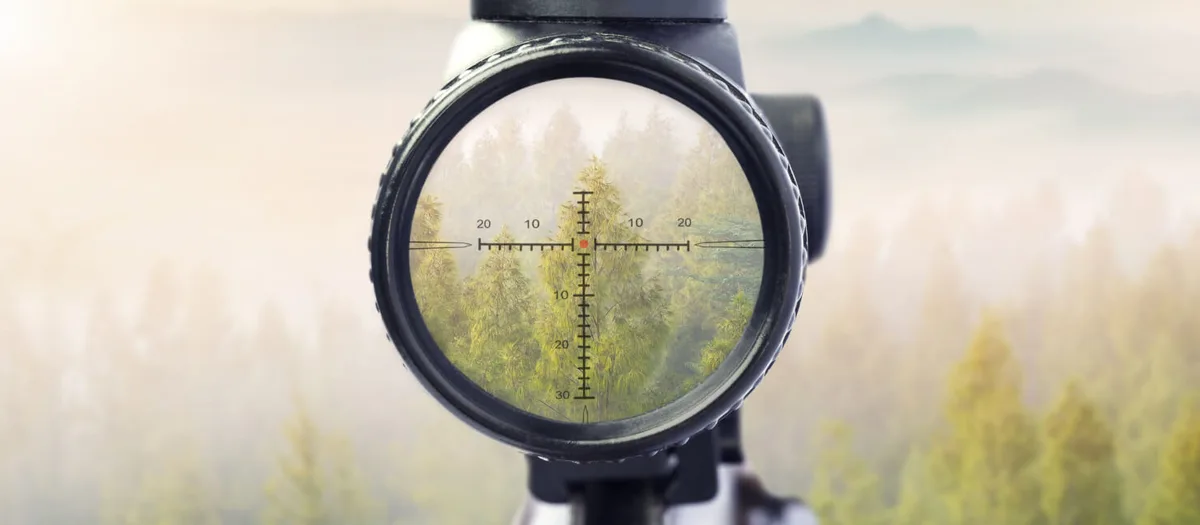
Image source: Web (Bing) / storage.googleapis.com
The reticle is the crosshair or aiming pattern you see when you look through the scope. It sits in the optical path and provides a fixed reference point for your target. But not all reticles are created equal.
There are several common reticle designs, and each serves a different purpose:
BDC (Bullet Drop Compensating) reticles have hash marks below the center crosshair that correspond to specific distances. If you know your rifle's ballistics, you can hold at the right hash mark for a given distance instead of dialing your turrets.
Mil-dot reticles use small dots spaced at 1 Mil intervals. The dot spacing lets you estimate range to a known-size target. It also provides holdover points for windage and elevation corrections.
MOA-hash reticles use hash marks spaced at 1 MOA intervals. Same idea as Mil-dot reticles, but the spacing is measured in minutes of angle instead of mils.
Ranging reticles are specifically designed for distance estimation. They often include reference brackets that let you estimate the range to a target of known size using the reticle's subtension.
A reticle's subtension is the angular measurement of the space between hash marks. In a first focal plane scope, the subtension stays constant relative to the target at all magnifications. In a second focal plane scope, the subtension is only accurate at one specific magnification setting, usually the maximum.
This is why understanding your reticle matters. If you're holding over using hash marks on a second focal plane scope, you need to know which magnification makes those marks match your actual holdover distances.
Manufacturers like Vortex, Leupold, and Schmidt and Bender design reticles with specific use cases in mind. The subtension spacing, illumination brightness, and reticle thickness all affect how well a reticle performs at range and in low-light conditions.
How Turret Adjustments Physically Move Your Point of Impact
Turrets are the knobs on the top and right side of your scope. They look simple, but what happens inside when you turn one is more interesting than most people think.
Most scopes have two turrets: an elevation turret on top and a windage turret on the right side. The elevation turret moves the point of impact up or down. The windage turret moves the point of impact left or right.
Under the hood, both turrets connect to the erector tube.
The erector tube is a small cylindrical assembly inside the main scope tube. It holds the erector lenses and is controlled by two sets of spring-loaded screws or pushrods. Each set corresponds to one turret direction.
When you turn the elevation turret clockwise, it pushes a threaded screw or cam inside the tube. That screw presses against the erector tube, tilting it upward. This shifts the entire optical path slightly, moving where your bullet strikes relative to the reticle.
Turret clicks are the standard unit of adjustment. Most scopes use either 1/4 MOA per click or 0.1 Mil per click. In real-world terms, one 1/4 MOA click at 100 yards moves your point of impact about a quarter of an inch.
One 0.1 Mil click moves it about 0.36 inches at that same distance.
Here's what matters practically. If your zero is off by 2 inches to the left at 100 yards with a 1/4 MOA scope, you turn the windage turret 8 clicks to the right. Eight clicks at 1/4 MOA equals 2 inches of correction.
On a Mil-based scope, that same 2-inch correction would be roughly 5 clicks, since 5 × 0.36 inches equals 1.8 inches.
The turret value is printed on most modern scopes and stamped on the elevation cap. If you're shooting a long-range setup, knowing your click value cold is the difference between first-round hits and missing the target entirely.
First Focal Plane vs. Second Focal Plane: Why It Changes Everything
This is one of the most misunderstood distinctions in all of optics. Whether your scope is first focal plane or second focal plane changes how the reticle behaves at different magnifications. The difference is significant.
Here's the simple version. In a second focal plane scope, the reticle stays the same size no matter what magnification you're set to. The reticle sits behind the magnification lenses, so it doesn't scale with the image.
In a first focal plane scope, the reticle grows and shrinks along with the target image. It sits in front of the magnification lenses, so it scales proportionally with whatever magnification you're using.
| Feature | First Focal Plane (FFP) | Second Focal Plane (SFP) |
|---|---|---|
| Reticle size at low magnification | Smaller, harder to see | Same as high magnification |
| Reticle size at high magnification | Larger, easier to see | Same as low magnification |
| Hash mark subtension | Accurate at all magnifications | Only accurate at one magnification |
| Best use case | Dialing and holdover at any magnification | Known-distance shooting at full power |
| Price range | Generally higher | Generally lower |
In a first focal plane scope, your holdover marks work the same way at 8x as they do at 16x. The subtension stays mathematically consistent. That's why precision rifle shooters and PRS competitors overwhelmingly choose FFP optics.
In a second focal plane scope, those same hash marks are only correct at one magnification, usually the maximum. Shoot at half magnification and your holdover marks are twice the angular spacing they should be. Shoot at 1.5 times magnification and they're off by half again.
This doesn't make SFP scopes bad. They work well for hunting scenarios where you're often at full magnification and need a clean, simple aiming point. If you're zeroed at 100 yards and using your BDC reticle only at your highest power setting, SFP does the job fine.
The choice comes down to how you shoot. If you dial your turrets and use the reticle as a holdover reference at varying magnifications, FFP is the right tool. If you shoot mostly at one magnification and want a crisp reticle at low power, SFP makes sense.
Manufacturer specifications from Vortex Optics and Leupold both note this distinction clearly in their technical documentation. FFP models in their precision lines are marketed specifically for shooters who adjust magnification during a shot sequence and need their holdover points to remain valid throughout.
As of 2026, FFP has become the dominant choice for long-range shooting optics. SFP remains popular for hunting scopes where simplicity and low-magnification clarity matter more than reticle subtension accuracy.
Common Mistakes People Make When They Don't Understand Scope Mechanics
Knowing how the scope works prevents a surprising number of errors at the range. Here are the ones that trip up shooters most often.
Ignoring parallax. Parallax occurs when the reticle and the target image don't sit on the same focal plane. If you move your eye slightly off-center behind the scope, the reticle appears to shift against the target. This throws off your shot without you realizing it. Most modern scopes include a parallax adjustment turret or side focus dial. Use it for your shooting distance.
Using the wrong reticle holdover at the wrong magnification. On a second focal plane scope, hash marks are only correct at maximum magnification. If you shoot at 6x with holdover marks designed for 9x, you'll miss high or low depending on the distance.
Over-torquing mount rings. Scope rings clamp the scope tube to the mount. Tightening them too much can crush the internal erector system and throw the point of impact off permanently. Use a torque wrench and follow manufacturer specs.
Confusing MOA and Mil click values. Each click on a 1/4 MOA scope moves the point of impact about 0.25 inches at 100 yards. Each click on a 0.1 Mil scope moves it about 0.36 inches at 100 yards. Treating them as the same thing results in double or half the correction you need.
Skipping diopter adjustment. The diopter, located at the back of the scope near the eyepiece, adjusts focus for your individual eye. If the reticle looks blurry, the problem isn't the target. It's your diopter setting.
Bore sighting before proper scope mounting. Bore sighting aligns the rifle barrel with the scope, but it's only a starting point. A true zero requires live-fire confirmation at your chosen distance.
Scope Specs and Numbers That Actually Matter
When you're shopping for a scope or just trying to understand what you own, these are the specs that matter most. Each one affects real performance.
| Spec | What It Means | Why It Matters |
|---|---|---|
| Magnification range | E.g., 4-16x, 3-9x, 5-25x | Higher magnification helps at distance but reduces field of view |
| Objective lens diameter | E.g., 40mm, 50mm, 56mm | Larger diameter gathers more light, especially at dawn or dusk |
| Main tube diameter | 1 inch, 30mm, or 34mm | Larger tube allows more internal adjustment range for turrets |
| Eye relief | 2.5 to 4.5 inches typically | Determines how close your eye sits to the eyepiece, critical for recoil management |
| Field of view | Measured in feet at 100 yards | Wider FOV means easier target acquisition at lower magnifications |
| Exit pupil diameter | Objective diameter ÷ magnification | Higher exit pupil equals brighter image, especially in low light |
| Click value | 1/4 MOA or 0.1 Mil per click | Determines how much each turret click moves the point of impact |
| Light transmission | 80 to 95% depending on glass quality | Higher transmission equals a brighter, clearer image |
| Parallax adjustment range | Yardage markings on side focus dial | Matches the scope's focus to your shooting distance |
| Reticle subtension spacing | MOA or Mil between hash marks | Determines what each hash mark actually represents at range |
A practical example: a 4-16x scope with a 50mm objective lens has an exit pupil of about 12.5mm at 4x and about 3.1mm at 16x. That tells you the scope performs best for light gathering at the lower end of its magnification range.
Tube diameter affects more than just looks. A 1-inch tube typically offers about 70 MOA of total elevation adjustment. A 30mm tube can offer 100 MOA or more.
That extra travel matters if you're dialing for long-range shots with steep bullet drop.
Manufacturer documentation from companies like Nightforce and Vortex confirms these ranges across their product lines. Choosing the right specs depends on what you shoot, where you shoot, and what time of day you're most likely to be behind the rifle.
Frequently Asked Questions
How does a rifle scope magnify a distant target?
A rifle scope uses a series of lenses to compress light gathered by the objective lens, then expand it through the ocular lens. This gives the appearance of a larger, closer image. The magnification level determines how much larger the target appears compared to the naked eye.
What is the difference between first and second focal plane scopes?
First focal plane scopes keep the reticle subtension accurate at all magnifications because the reticle scales with the target image. Second focal plane scopes maintain a constant reticle size, so holdover marks are only correct at one magnification, usually maximum power.
How does a turret adjust the point of impact on a scope?
Turrets control the erector tube inside the scope. When you turn a turret, it presses against a spring-loaded mechanism that tilts the erector tube. This physically shifts the optical path, moving where your bullet lands relative to the reticle.
What is parallax and why does it matter in a rifle scope?
Parallax is when the reticle and the target image don't align on the same focal plane inside the scope. If you move your eye slightly off-center, the reticle appears to shift against the target, causing shot placement errors. A parallax adjustment dial corrects this for your shooting distance.
What does the reticle hash mark spacing represent?
Each hash mark on a reticle represents a specific angular measurement, usually in MOA or Mil. At 100 yards, one MOA equals about 1.047 inches, and one Mil equals about 3.6 inches. These values let shooters estimate holdover and range to target.
Is a bigger objective lens always better?
Not always. A larger objective lens gathers more light, which helps in low-light conditions. But it also adds weight and raises the scope height over bore.
Most hunters find 40mm to 50mm objective lenses strike the right balance between light gathering and practical shooting comfort.