What is the best rifle scope for target shooting? That answer shifts depending on your discipline, your target distance, and your budget. A scope that works brilliantly for F-Class competitions at 1,000 yards won't necessarily suit rimfire shooters working at 100 yards.
We've reviewed manufacturer specs, aggregate user feedback, and competition shooting data to map out what matters most. F-Class shooters typically run 15x to 25x magnification with first focal plane reticles. Benchrest competitors push past 36x for extreme precision at short range.
Quick Answer
The best rifle scope for target shooting depends on your discipline, distance, and budget. F-Class shooters favor first focal plane scopes at 15x to 25x magnification. Benchrest and long-range shooters prefer variable scopes reaching 40x or higher.
Rimfire and air rifle disciplines need different magnification ranges entirely.
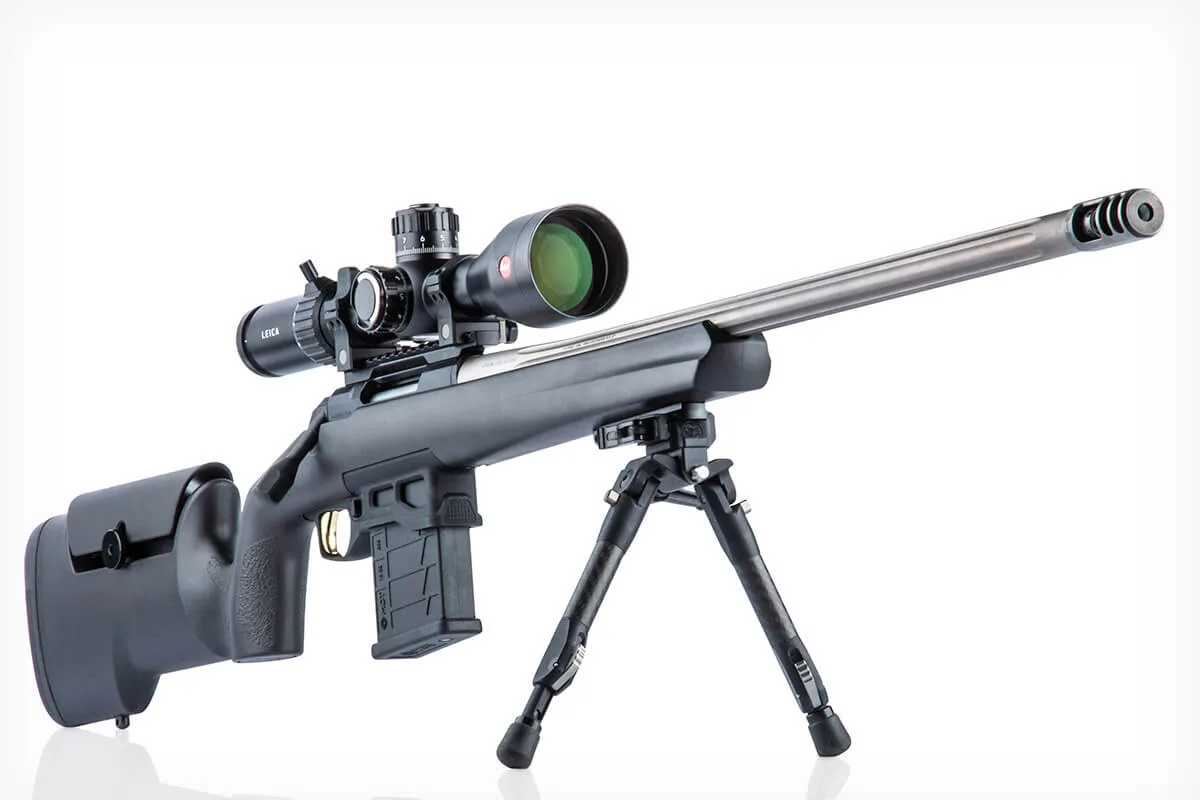
Image source: Web (Bing) / rifleshootermag.com (Web image (fair-use with source credit))
Why There's No Single Best Scope, And How to Find Yours
The phrase "best rifle scope for target shooting" gets tossed around constantly in forums and buying guides. But in our research across competition shooting communities and manufacturer specifications, one consistent finding keeps showing up. The right scope depends entirely on what you shoot and how far you shoot it.
A benchrest competitor chasing half-MOA groups at 100 yards needs something very different from a PRS (Precision Rifle Series) shooter dialing windage holds at 800 yards. Air rifle competitors shooting 10-meter ISSF matches have yet another set of requirements altogether.
Three factors decide everything:
- Your discipline: F-Class (long-range prone), benchrest, PRS, rimfire, and air rifle each demand different magnification ranges, reticle types, and turret systems.
- Target distance: A 100-yard rimfire match and a 1,000-yard F-Class match are fundamentally different sports.
- Budget range: The mid-price segment has narrowed the gap with premium optics significantly in recent years.
As of 2026, scopes in the $300 to $800 price bracket deliver edge clarity and turret tracking that were once exclusive to models costing $1,500 or more. Modern ED (extra-low dispersion) glass has made premium optical quality far more accessible to everyday competitive shooters.
Consider what F-Class shooters actually do. They dial precise elevation corrections between shots. That demands consistent turret tracking within a fraction of a click.
Benchrest shooters need glass that stays sharp when magnification maxes out. Different needs, different tools.
Governing body rules also matter. USA Shooting, the national governing body for Olympic-style shooting in the United States, enforces specific optic regulations for certain disciplines. Always check your governing body's restrictions before investing.
The practical takeaway: Define your discipline first. Then match the scope to what you actually need. An expensive F-Class optic won't help if you're competing in a discipline where magnification caps apply and low-magnification glass clarity matters most.
What Separates a Target Scope from a Hunting Scope
A hunting scope and a target scope may look similar on the rack, but they are built for completely different jobs. Understanding that difference is the first real step toward picking the right optic.
| Feature | Target Scope | Hunting Scope |
|---|---|---|
| Magnification range | 10x to 40x+ for precision work | 2x to 10x for close to mid-range |
| Turret system | Exposed, repeatable tracking, zero stop | Capped windage, minimal turrets |
| Glass quality | Premium ED or apochromatic glass | Good glass, less emphasis on edge sharpness |
| Reticle design | MIL/MOA hash marks for holdovers | Simple crosshair or duplex |
| Parallax adjustment | Side focus standard | Often absent or limited |
| Weight | Heavier, built for stability | Lighter, built for portability |
Hunting scopes prioritize speed and simplicity. You need to get on target fast in low light, take a quick shot, and carry the rifle all day. Target scopes prioritize precision above everything else.
The turret system is probably the biggest difference. Target scopes expose fully graduated elevation and windage turrets that track precisely. Hunting scopes typically cap the windage turret to prevent accidental adjustment in the field.
Glass quality matters more on target scopes too. When you're shooting 30x magnification at 600 yards, every imperfection in the lens shows up as distortion or chromatic aberration. Premium target scopes use ED glass and multi-coated lenses to keep the image sharp edge to edge.
Weight-wise, target scopes are generally heavier. That's not a flaw. Extra mass adds stability to the rifle platform, which helps during long strings of fire.
If you're building a dedicated target rifle, don't compromise by buying a hunting scope. The features that makea great hunting optic are the wrong features for precision competition work.
Side-by-Side: Top Rifle Scopes for Target Shooting by Price Tier
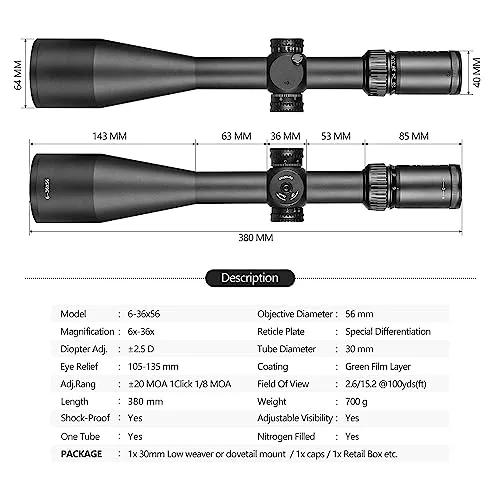
Image source: Web (Bing) / ypc.co.uk (Web image (fair-use with source credit))
As of 2026, the target scope market spans from entry-level models under $300 to premium optics exceeding $2,000. The gap between tiers has narrowed, but real differences remain.
| Tier | Price Range | Magnification | Turret Quality | Best For |
|---|---|---|---|---|
| Budget | $100 to $300 | 4x to 16x | Basic clicks, limited tracking | Casual benchrest, rimfire target shooting |
| Mid-Range | $300 to $800 | 6x to 24x | Solid tracking, zero stop available | Club competitions, PRS entry, F-Class amateur |
| Premium | $800 to $2,000+ | 10x to 40x+ | Exposed turrets, exceptional tracking | F-Class, professional PRS, benchrest |
Budget tier: Scopes in the $100 to $300 range deliver surprising optical quality for the price. They suit rimfire target shooting and casual 100-yard benchrest work. Turret tracking is serviceable but won't hold up under heavy competition use.
Mid-range tier: This is where most competitive shooters land. Brands like Vortex Optics and Burris deliver first focal plane reticles, reliable turrets, and solid glass in this bracket. Built for PRS and F-Class competitors who shoot regularly.
Premium tier: Models from Nightforce, Schmidt and Bender, and Swarovski Optik deliver turret tracking that's essentially flawless. Glass clarity at maximum magnification stays sharp even at the edges. These are built for shooters competing at the highest levels.
Our recommendation for most target shooters: Start in the mid-range tier. The quality jump from budget to mid-range is the biggest one you'll get per dollar spent. Premium optics matter most if you compete regularly at 600 yards and beyond.
Best Scope for Each Target Shooting Discipline
Different shooting disciplines demand different scope characteristics. Here's what works best for each major type of target shooting.
F-Class (Long-Range Precision)
F-Class shooting involves 800 to 1,000-yard targets with prone or bipod-supported positions. You need reliable elevation turret tracking, first focal plane reticles, and magnification in the 15x to 25x range. Side parallax adjustment is critical at these distances.
Premium glass is worth the investment because you're reading small targets at extreme range.
Benchrest
Benchrest shooters work at 100 to 600 yards from a stable rest. High magnification (20x to 40x) helps read tiny groups on paper. Glass quality at maximum magnification matters most here.
Turrets are less critical because benchrest shooters typically dial in once and hold. First focal plane is not necessary.
PRS (Precision Rifle Series)
PRS-style competitions combine close-range speed with long-range precision, often 200 to 1,000 yards. You need versatile magnification ranges (5x to 30x), fast target acquisition, and turrets that track accurately for quick dial-ups. Exposed tactical-style turrets are essential.
Reticles with windage holdover marks are highly valued.
Rimfire Target Shooting
.22 LR competitions at 50 to 100 yards need moderate magnification (10x to 24x), clear glass, and reliable parallax adjustment. Turret precision is less critical because distances are shorter. Look for scopes with fine reticles suited to small targets.
Air Rifle (10-Meter)
ISSF-style air rifle shooting happens indoors at 10 meters. Specialized match scopes or apochromatic target rifle sights are standard. Magnification ranges from 10x to 40x depending on the model.
Image quality is everything since targets are extremely small at close range.
| Discipline | Ideal Magnification | Key Feature Priority |
|---|---|---|
| F-Class | 15x to 25x | Turret tracking, FFP reticle |
| Benchrest | 20x to 40x | Glass quality at max magnification |
| PRS | 5x to 30x | Versatility, fast acquisition |
| Rimfire | 10x to 24x | Parallax adjustment, clarity |
| Air Rifle | 10x to 40x | Apochromatic optics |
Match your scope to your discipline and you'll see results at the range.
Scope Specs That Actually Matter
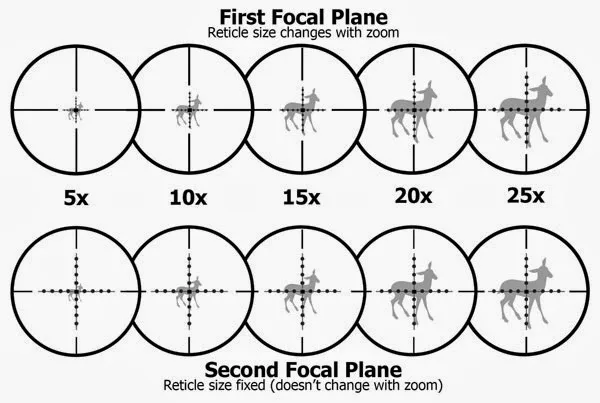
Image source: Bing (Web (fair-use with source credit))
When comparing target scopes, four specs matter more than everything else. Get these right and you'll be ahead of most shooters.
Magnification Range
Higher magnification isn't always better. Excessive magnification reduces field of view and makes it harder to find targets. For most target shooting, 6x to 24x covers everything from 100-yard rimfire to 1,000-yard F-Class.
Benchrest shooters push to 40x for reading tiny groups.
Reticle Type (FFP vs. SFP)
First focal plane (FFP) reticles scale with magnification, so holdover marks stay accurate at any power setting. Second focal plane (SFP) reticles only hold true at one specific magnification. For competition shooting, FFP is almost always the better choice.
Turret System
Turrets control your scope's elevation and windage adjustments. Look for these features:
- Click value: 0.1 MIL (milliradian) or 0.25 MOA (minute of angle) per click. Both are standard.
- Turret travel: Total adjustment range in MIL or MOA. More travel means more flexibility at long range.
- Zero stop: A mechanical limit that lets you return to zero quickly after dialing adjustments.
- Tracking accuracy: Turrets must move the point of impact exactly as labeled. Shooters test this with a tall target test.
Glass Quality
Glass quality determines how sharp your image looks, especially at high magnification. Premium scopes use ED glass and fully multi-coated lenses. These coatings reduce light loss and minimize chromatic aberration.
In our research, edge distortion is the most visible difference between budget and premium optics.
| Spec | Budget Scope | Mid-Range Scope | Premium Scope |
|---|---|---|---|
| Magnification | 4x to 16x | 6x to 24x | 10x to 40x+ |
| Turret clicks | Basic, mushy feel | Clean, defined clicks | Precise, repeatable |
| Glass | Standard coated | ED glass, multi-coated | Apochromatic, multi-coated |
| Zero stop | Rare | Common | Standard |
Get these four specs right and your scope will perform reliably at the range.
Common Mistakes When Buying a Target Rifle Scope
Even experienced shooters make scope-buying errors that cost them accuracy and money. Here are the most common ones to avoid.
Buying too much magnification
Shooters assume more magnification means better precision. It doesn't. Excessive magnification at short ranges narrows your field of view without helping you hit smaller targets.
Start with your actual shooting distances before choosing magnification.
Ignoring turret tracking quality
Turret tracking is the most important spec many buyers overlook. A scope that dials 5 MOA up but only moves 4.5 MOA will throw your shots off consistently. Ask retailers to verify turret tracking on tall targets before purchase.
Choosing SFP for competition
Second focal plane reticles are fine for hunting at fixed magnification settings. But competition shooting involves constant magnification changes. An SFP reticle holds true at only one magnification.
If you dial magnification between stages, FFP is essential.
Mounting scope rings incorrectly
Incorrect ring height or uneven torque causes more accuracy problems than the scope itself. Use a torque wrench for mounting. Follow manufacturer specifications for ring and base screw torque.
Uneven ring pressure can flex the scope tube and shift your point of impact.
Overlooking parallax adjustment
Parallax error causes apparent reticle movement when your eye shifts behind the scope. At long range, this shifts your point of impact. Scopes without side parallax adjustment limit your accuracy.
Always test for parallax at the distances you plan to shoot.
Buying based on brand reputation alone
Brand names don't guarantee performance for your specific discipline. Some premium brands dominate in hunting optics but lack competitive target scopes. Match the brand's reputation to your actual shooting discipline.
Neglecting the tall target test
After mounting any new scope, verify turret adjustments with a tall target test. Place a target at a known distance. Dial a specific elevation.
Shoot. Confirm the point of impact moved the expected distance. This 15-minute test catches tracking problems early.
Final Verdict: How to Pick the Right Scope for Your Shooting
Choosing the best rifle scope for target shooting comes down to discipline, distance, and budget. There's no universal winner, and that's actually good news. It means you can find exactly what you need without overpaying.
Start here:
- Identify your primary discipline. F-Class, benchrest, PRS, rimfire, or air rifle. Everything else follows from this.
- Match magnification to your longest target distance. Don't buy 40x if you never shoot past 100 yards.
- Prioritize turret tracking for competition. Turrets must return to the same spot reliably.
- Choose FFP if you change magnification often. SFP is fine only at fixed settings.
- Invest in the best glass you can afford. Image clarity directly affects your ability to read targets and call shots.
For most competitive target shooters, the mid-range tier delivers the best value. Scopes in the $300 to $800 range offer first focal plane reticles, reliable turret tracking, and solid optical quality. You'll get the features that matter without paying premium prices for features you don't need.
If you're shooting F-Class or professional PRS, step up to the premium tier. The turret tracking and glass quality at $800+ make a real difference at 600 yards and beyond.
For rimfire and air rifle disciplines, stay in the budget-to-mid-range bracket. These sports need clear glass and good parallax adjustment, not extreme magnification or heavy-duty turrets.
Whatever scope you choose, mount it correctly, zero it properly, and test your turret tracking with a tall target test. Those three steps separate shooters who trust their equipment from those who don't.
Frequently Asked Questions
What is the best rifle scope for target shooting for a beginner?
For beginners, a mid-range scope with 6x to 24x magnification and a first focal plane reticle offers the best balance of performance and price. Scopes in the $300 to $800 range provide reliable turret tracking and clear glass. You'll get features that support growth as your skills improve.
How much magnification do I need for 100-yard target shooting?
For 100-yard target shooting, 10x to 24x magnification is ideal. Rimfire shooters often use 12x to 16x. Centerfire shooters benefit from 16x to 24x for precise shot placement.
Beyond 24x, field of view shrinks without meaningful accuracy gains at this distance.
What is the difference between MIL and MOA turret systems?
MIL (milliradian) and MOA (minute of angle) are both angular measurement systems for scope adjustments. One MIL equals approximately 3.6 inches at 100 yards. One MOA equals approximately 1 inch at 100 yards.
Both systems work equally well. Choose based on what your local competition rules or personal preference favor.
Do I need a first focal plane scope for target shooting?
If you change magnification frequently during competitions, yes. First focal plane reticles scale with magnification so holdover marks stay accurate at any setting. If you shoot at a fixed magnification, a second focal plane scope works fine and typically costs less.
How do I test scope turret tracking?
Place a tall target at 100 yards. Start at zero. Dial 10 MOA up.
Shoot. The impact should move up exactly 10 MOA. Repeat for windage.
If the point of impact doesn't match the turret adjustment, the scope has tracking problems.
What eye relief is safe for large-caliber target rifles?
Most rifle scopes provide 3.0 to 4.5 inches of eye relief. For large-caliber rifles generating heavy recoil, aim for 3.5 inches or more. Insufficient eye relief causes scope bite, where the scope recoils into your eye during firing.
Always verify eye relief with your specific rifle before shooting.




