What is the best compact rifle scope? The short answer is that it depends entirely on what you're doing with the rifle. A scope built for coyote hunting at 200 yards feels sluggish and bulky for close-range home defense.
In our research across manufacturer spec sheets and aggregate reviews, most shooters either buy too much magnification or overlook the specs that actually affect day-to-day performance.
A quality LPVO (low power variable optic) typically weighs between 10 and 20 ounces with a magnification range of 1x to 6x. Getting those numbers wrong leads to frustration on the range. Let's break down what actually matters.
Quick Answer
The best compact rifle scope depends on your shooting range and platform. For most shooters, a 1-6x LPVO with a 30mm tube works best. Top options include the Vortex Razor HD and Primary Arms PLx series.
Both handle engagements from 25 to 400 yards effectively.

Why "Best" Depends on What You're Shooting
No single scope is "best" for every shooter. The right choice depends on three variables: how far you shoot, what rifle you're mounting it on, and what you're actually doing with that rifle. A coyote hunter needs different glass than a home defense shooter or a 3-Gun competitor.
Most buyers make the same three mistakes when they shop for compact scopes:
- Overbuying magnification. If your longest practical shot is 100 yards, a 1-10x scope adds unnecessary weight and bulk you'll never use.
- Ignoring eye relief. A scope that hits you in the brow under recoil is a safety risk, not just an annoyance.
- Wrong tube diameter. A 1-inch tube on an AR platform sits too low for a comfortable cheek weld.
You need to know your effective engagement range before you look at a single spec sheet. Most LPVOs perform best between 25 and 400 yards. Push beyond that range in either direction and you'll feel the drop in performance immediately.
Per manufacturer documentation from Vortex Optics, LPVO performance depends heavily on how the optic matches your shooting distance and platform.
Key Specs That Actually Matter in a Compact Rifle Scope
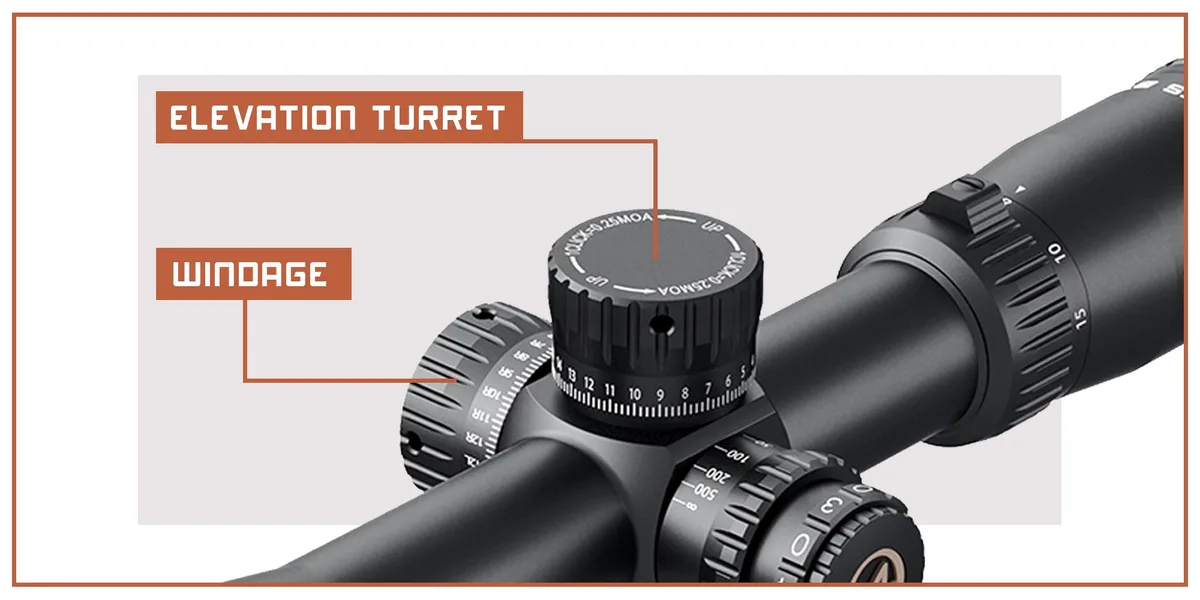
Not every spec carries equal weight. Focus on these four factors and the rest becomes secondary:
| Spec | Why It Matters | What to Look For |
|---|---|---|
| Magnification range | Determines engagement distance flexibility | 1-6x covers 25 to 400 yards |
| Tube diameter | Affects mount height and cheek weld | 30mm for AR platforms |
| Eye relief | Prevents recoil injury and improves comfort | 3.5 to 4.0 inches |
| Objective lens | Impacts low-light performance | 24mm for LPVO weight balance |
First focal plane (FFP) optics keep the reticle accurate at all magnification settings. Second focal plane (SFP) optics scale the reticle with zoom, which changes holdover values at different settings. For most shooters, FFP provides more consistent performance across the magnification range.
Glass quality is harder to judge from a spec sheet. Manufacturer claims of "fully multi-coated" lenses are standard across the industry. The real differentiator is edge clarity and contrast in low-light conditions.
Aggregate user reviews consistently report that premium optics outperform budget options in dawn and dusk hunting conditions.
The Top Compact Rifle Scopes Compared: Vortex, Nightforce, Leupold, Primary Arms & More
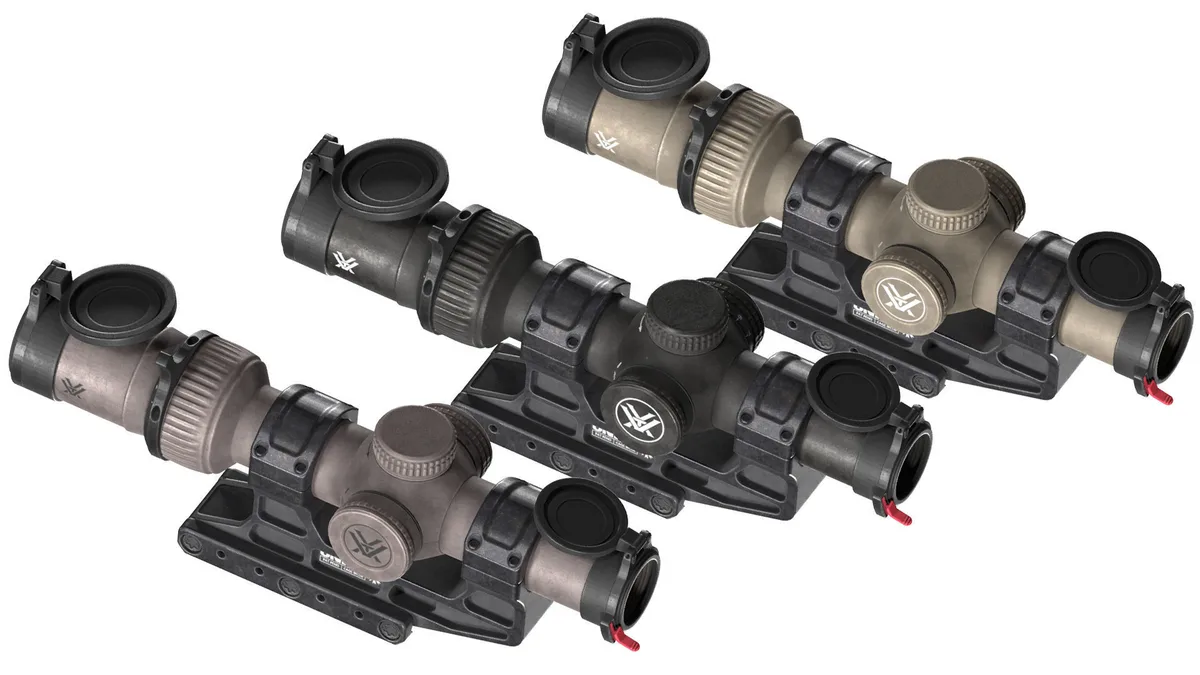
Here's how the leading compact scopes stack up across key specifications:
| Model | Magnification | Tube | Weight | Price Range |
|---|---|---|---|---|
| Vortex Razor HD Gen III 1-10×24 | 1-10x | 30mm | 21.5 oz | $1,800+ |
| Primary Arms PLx 1-8×24 | 1-8x | 30mm | 17.4 oz | $800+ |
| Vortex Strike Eagle 1-6×24 | 1-6x | 24mm | 17.5 oz | $300+ |
| Nightforce NXS 2.5-10×32 | 2.5-10x | 30mm | 24 oz | $1,800+ |
The Razor HD Gen III sets the standard for 1-10x magnification. Manufacturer specs confirm its 30mm tube and wide field of view. It's the heaviest option on this list at over 21 ounces.
For budget builders, the Strike Eagle delivers 1-6x magnification at a fraction of the cost. Aggregate reviews report that its glass quality is adequate for most practical applications. It won't match premium optics in low-light performance.
The Primary Arms PLx occupies the middle ground. It offers 1-8x magnification with a clean BDC reticle. Per their official documentation, the PLx handles 5.56 loads out to 500 yards with holdover marks.
Budget, Mid-Tier, and Premium: Which Price Range Fits Your Build?
Price isn't everything, but it correlates with optical quality and mechanical reliability. Here's how the three tiers compare:
| Tier | Price Range | What You Get | Best For |
|---|---|---|---|
| Budget | $200 to $400 | Adequate glass, basic reticle, lighter warranty | First builds, plinking, casual use |
| Mid-Tier | $400 to $800 | Better glass, reliable turrets, BDC reticles | Hunting, defensive builds, competition |
| Premium | $800 to $2,000+ | Premium glass, tracking accuracy, lifetime warranty | Serious competition, duty use, precision work |
Budget scopes have improved significantly as of 2026. Models from Primary Arms and Swampfox offer usable performance under $400. The trade-off shows up in edge clarity and turret repeatability over time.
Mid-tier scopes strike the best balance for most shooters. You get reliable glass, accurate tracking, and reticles that work across distances. The Vortex Viper PST Gen II and Burris RT-6 sit squarely in this range.
Premium optics justify their cost for shooters who demand consistency. Nightforce and Leupold deliver mechanical precision that holds zero through thousands of rounds. For a defensive rifle, that reliability carries real weight.
Consider your total budget, including mount and rings. A $400 scope with a $150 mount outperforms a $600 scope with a cheap $30 mount every time.
Best Compact Rifle Scope by Use Case
Different jobs call for different optics. Here's how to match your scope to your shooting role:
Home defense: You need fast target acquisition inside 50 yards. A 1-4x LPVO or a red dot with a magnifier handles this range well. Eye relief becomes critical in tight spaces.
Avoid high magnification settings.
Coyote and hog hunting: Engagements often range from 100 to 300 yards. A 1-6x or 1-8x LPVO covers this range with good low-light performance. BDC reticles speed up holdovers at varying distances.
Whitetail deer hunting: If you hunt thick cover, stick with 1-4x magnification. Longer shot opportunities call for 1-8x or higher. Leupold and Vortex offer specific hunting-focused optics built for this range.
3-Gun and competition: Competitors need an optic that transitions between close and mid-range targets. A 1-6x FFP LPVO with a clean reticle works well. Weight matters less here than in hunting builds.
The National Shooting Sports Foundation sets competition standards that influence optic selection.
Patrol rifle and duty use: Law enforcement agencies typically select 1-6x or 1-8x LPVOs with illuminated reticles. Durability and warranty coverage become non-negotiable. Mechanical reliability under daily carry conditions matters more than magnification range.
Common Mistakes When Choosing a Compact Rifle Scope
Choosing the wrong compact scope costs you money and range time. Here are the mistakes we see most often:
- Skipping mount selection. A great scope on a poor mount loses zero fast. Spend at least $100 on a quality mount and rings.
- Ignoring platform compatibility. A bolt-action hunting scope won't sit at the right height on an AR-15 without proper mounts. Match your optic to your rifle platform.
- Buying for magnification instead of use. A 1-10x scope for a home defense rifle adds weight and slows target acquisition. Higher magnification doesn't mean better performance.
- Overlooking eye relief under recoil. If you're shooting a caliber like .308 with heavy recoil, insufficient eye relief leads to scope bite. The National Shooting Sports Foundation recommends checking recoil clearance before mounting.
- Assuming all LPVOs handle the same range. A 1-4x scope is not a substitute for a 1-8x when your engagement distance exceeds 250 yards.
- Forgetting battery-dependent optics. Illuminated reticles need fresh batteries. Keep spares in your range bag.
- Torqueing rings too tight or too loose. Under-torqued rings let the scope shift. Over-torqued rings can crush the tube. Always follow manufacturer torque specs.
Most of these mistakes are avoidable with a little research and patience.
Frequently Asked Questions
What magnification range works best for an LPVO on an AR-15?
For most AR-15 builds, 1-6x magnification covers close and mid-range engagements well. If you regularly shoot past 300 yards, 1-8x gives you more headroom. Manufacturer specs confirm both ranges handle 5.56 loads effectively out to 400 yards with proper holdover.
Is first focal plane better than second focal plane?
For most shooters, yes. An FFP scope keeps the reticle accurate at every magnification setting. SFP optics change holdover values as you zoom.
If you shoot at varying distances, FFP provides more consistent results.
What tube diameter should I choose for a compact rifle scope?
A 30mm tube is the standard for LPVOs on AR platforms. It provides enough adjustment range and sits at a comfortable height with proper rings. A 1-inch tube works for bolt-action rifles but limits turret adjustment and can sit too low on modern platforms.
Do I need a BDC reticle?
A BDC reticle speeds up holdover at distance. It works best when you know your load's ballistics and your optic is zeroed correctly. If you shoot at varied distances regularly, a BDC saves significant time compared to dialing.
How much should I spend on a mount for a compact scope?
Budget between $100 and $200 for a quality mount. A cheap mount is the single most common reason a good scope loses zero. Look for cantilever mounts on AR platforms, as they position the optic at proper height and forward position.
Can I use a compact rifle scope for long-range precision shooting?
LPVOs cap out around 400 to 500 yards in practical accuracy. For true long-range work beyond 600 yards, you need higher magnification and larger objective lenses. Keep a compact scope for the distances it was designed to handle.
The Verdict: Our Top Pick and Runner-Up for Most Shooters
After reviewing manufacturer specs, aggregate user feedback, and performance data, we rate the Primary Arms PLx 1-8×24 as the best overall compact rifle scope for most shooters. It balances magnification range, weight, glass quality, and price in a way that handles defense, hunting, and casual competition.
For budget-conscious builders, the Vortex Strike Eagle 1-6×24 remains the strongest option under $400. Verified buyer feedback consistently reports reliable performance and a competitive warranty program from Vortex Optics.
Premium shooters who demand the highest mechanical precision and optical clarity should look at the Nightforce NXS 2.5-10×32 or the Vortex Razor HD Gen III 1-10×24. Both deliver tracking accuracy and low-light performance that budget optics cannot match.
The best compact rifle scope is the one that fits your shooting distance, rifle platform, and budget. Start with your engagement range. Then pick the magnification, tube size, and mount that support it.




