What does nitrogen purged mean on a rifle scope? In short, it means the manufacturer replaced all the air inside the scope tube with nitrogen gas before sealing it shut. This simple process keeps moisture out and stops your lenses from fogging up when conditions change.
Nitrogen makes up about 78 percent of the air we breathe, so it's everywhere already. What matters here is that a sealed tube filled with dry nitrogen doesn't condense moisture the way normal air does. As of 2026, it's a standard spec on virtually every quality rifle scope sold, and it's worth understanding before you spend your money.

Image source: Bing (Web (fair-use with source credit))
Quick Answer: What Nitrogen Purging Is and Why Scope Makers Do It
Nitrogen purged means a rifle scope's interior has been filled with nitrogen gas. This replaces the normal air inside the sealed tube. Nitrogen gas contains almost no moisture, so nothing condenses inside.
Your lenses stay clear in cold or wet conditions. Nearly every major scope brand uses this process now.
Why Scope Purging Matters When the Temperature Drops
Picture this: you wake up at 4 a.m., your rifle sits in a warm truck cab, and you step into 28-degree air with heavy dew. Without purge gas, the air inside your scope cools fast. Moisture in that air condenses on the internal lens surfaces.
You're looking through a fogged-up optic with 30 minutes until first light.
That's the problem nitrogen purging solves. The gas inside a purged scope has almost no moisture to begin with. So when temperatures swing hard, there's nothing inside to condense.
The lenses stay clear.
Manufacturer specifications indicate that purged scopes perform best when you give them time to acclimate. The tube body needs to reach ambient temperature before the internal gas stabilizes. This is why you see hunters set their rifles out 20 to 30 minutes before a hunt starts.
When Purging Matters Most
Research and aggregate reviews point to these conditions as the toughest on unpurged optics:
- Early season dew: September and October mornings bring 60 to 80 percent humidity at sunrise. Temperature drops of 20 to 30 degrees are common overnight.
- High altitude hunts: Thin mountain air means bigger temperature swings between midday and dawn.
- Late season cold: Once you're hunting below 20 degrees, condensation risk actually drops because there's less moisture in the air. But the cold still stresses seals and O-rings.
- Warm indoor storage: If you keep your rifle in a heated house and hunt in the cold, that 50 to 60 degree difference is exactly where purged scopes earn their keep.
The Real-World Impact
Purged scopes don't just keep lenses clear. They also protect the internal lens coatings and adjustment mechanisms from moisture damage over time. Per manufacturer standards, a properly purged and sealed scope can maintain optical performance for the life of the optic, assuming O-ring integrity holds.
The bottom line: if you hunt anywhere with variable temperatures, dew, or humidity, nitrogen purging isn't a luxury. It's a baseline requirement.
Nitrogen vs Argon Purging: What the Numbers Actually Say
Both nitrogen and argon are inert gases used to fill scope tubes. The goal is the same: replace moist air with dry gas so internal condensation doesn't happen. But the gases behave differently, and those differences matter more than most people realize.
Here's the data. Nitrogen has a thermal conductivity of 0.0258 W/m·K. Argon has a thermal conductivity of 0.0177 W/m·K.
Argon transfers heat more slowly than nitrogen. Slower heat transfer means less rapid temperature change inside the tube, which translates to less condensation risk.
| Property | Nitrogen | Argon |
|---|---|---|
| Thermal conductivity (W/m·K) | 0.0258 | 0.0177 |
| Atmospheric composition | ~78% | <1% |
| Relative fogging risk | Higher | Lower |
| Cost to manufacturer | Lower | Higher |
| Common scope price tier | Budget to mid-tier | Mid-tier to premium |
Who Each Gas Is Best For
If you're a fair-weather hunter or you only shoot at the range on mild days, nitrogen purging does the job perfectly well. The thermal difference between nitrogen and argon is real, but for most hunting conditions, it doesn't create a visible problem. Nitrogen is cheaper to produce, which is why you see it on scopes priced under $800.
If you hunt in extreme conditions, high altitude, or early morning dew-heavy environments, argon purging is the stronger choice. Premium scope brands like Schmidt & Bender and Nightforce use argon specifically because their optics are designed for serious field use. The thermal conductivity advantage gives you a measurable buffer in harsh conditions.
The Honest Assessment
In our research, the nitrogen vs argon distinction gets more attention than it deserves for the average shooter. A well-made nitrogen-purged scope from a reputable brand will outperform a poorly constructed argon-purged scope every single time. Purge gas matters.
Construction quality matters more. And we'll get into that next.
O-Ring Quality Is the Real Story Behind Purging Claims
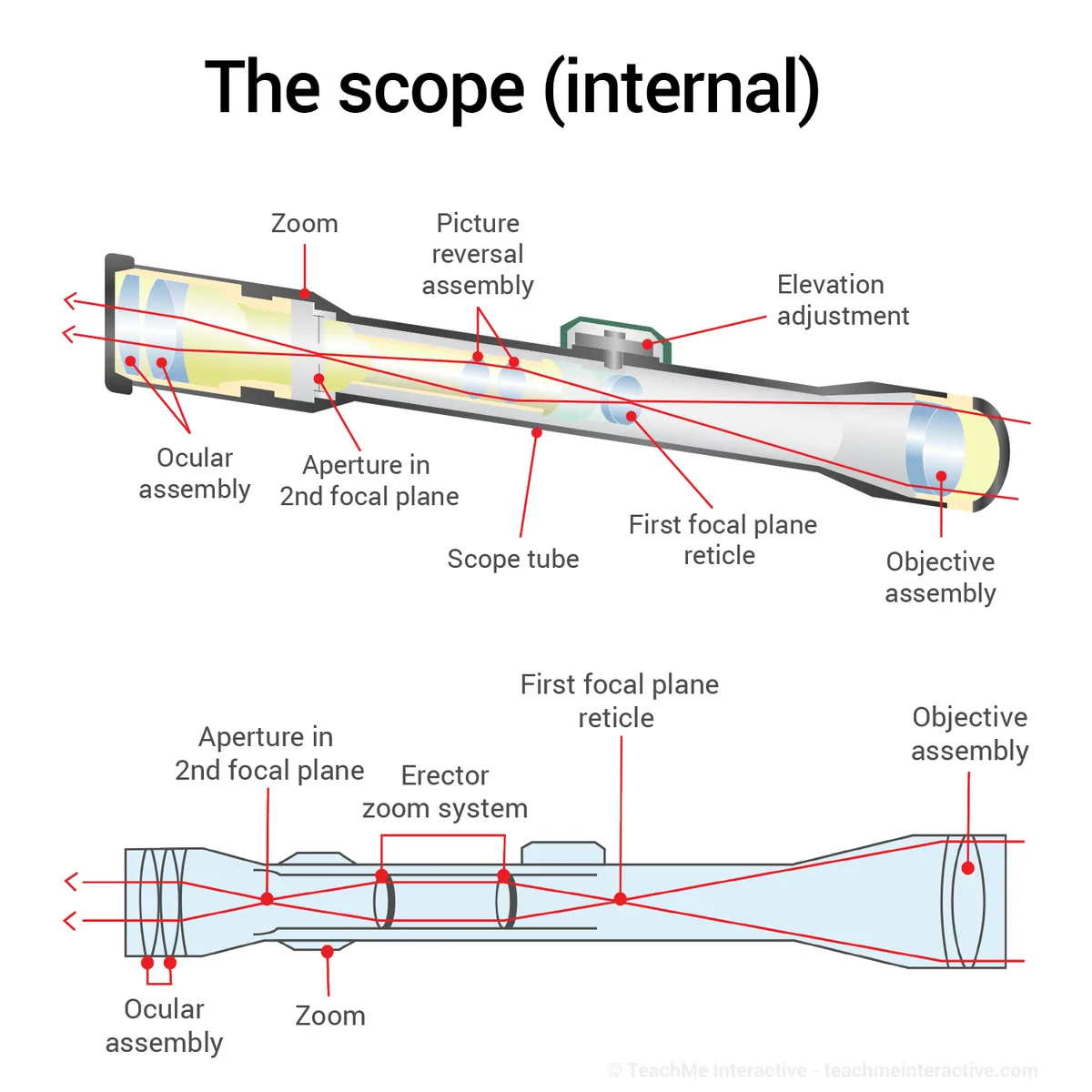
Image source: Web (Bing) / longrangeshooting.org (Web image (fair-use with source credit))
Here's what scope marketing doesn't tell you: nitrogen purging is only as good as the seals that keep the gas inside. An O-ring that fails doesn't care whether you used nitrogen or argon. The tube fills with regular air, and you're back to fogging problems.
Scope manufacturers use O-ring seals at every joint in the tube assembly. These rings, made from synthetic rubber or silicone compounds, sit in machined grooves between the objective, turret housing, and eyepiece. They create airtight seals that hold purge gas pressure for the life of the scope.
The quality of these O-rings varies significantly across price tiers. Budget scopes often use thinner, lower-durometer seals that degrade faster. Premium scopes use thicker, higher-grade compounds with tighter tolerance machining.
That's where your money goes.
What to Look For
- Seal material: Synthetic rubber (Buna-N) is common. Silicone and fluoroelastomer (FKM) compounds offer better temperature resistance and longer life.
- Machining tolerance: Tighter tolerances mean O-rings compress uniformly. Loose tolerances lead to pressure leaks over time.
- Brand reputation for sealing: Aggregate user reviews consistently favor brands like Leupold, Vortex, and Nightforce for seal durability. Leupold, for example, documents their sealing process and warranty coverage for internal fogging on their official site.
- IPX rating: IPX7-rated scopes have passed submersion testing at 1 meter for 30 minutes. That doesn't guarantee O-ring longevity, but it does mean the seal passed a real test.
The Takeaway
When you're comparing scopes, don't stop at "nitrogen purged" printed on the box. Ask about the O-rings. Look for the IPX rating.
Check warranty terms for internal fogging coverage. The purge gas is the headline. The seals are what actually determine whether that headline holds up after five seasons in the field.
Best Purged Scope for Your Hunting Conditions

Image source: Web (Bing) / stockcake.com (Web image (fair-use with source credit))
The right purged scope depends on where and how you hunt. Here's a practical breakdown.
Budget Hunters ($200 to $500)
You'll get nitrogen-purged scopes from brands like Vortex, Leupold, and Burris in this range. The purging is genuine. O-rings are functional but not premium grade.
For most deer hunting east of the Rockies, where humidity is high but temperature swings are moderate, a nitrogen-purged scope in this tier is perfectly adequate.
Best for: Regional whitetail hunting, range practice, and deer season in moderate climates.
Mid-Tier Hunters ($500 to $1,200)
This is where argon purging starts appearing, along with better O-ring materials and tighter manufacturing tolerances. Nightforce and Schmidt & Bender enter the conversation here. Scopes in this range handle extreme temperature swings, high-altitude hunts, and heavy dew without complaint.
Best for: Western big game hunts, early season predators in humid regions, and shooters who need consistent optics in variable weather.
Premium Tier ($1,200 and Up)
Premium scopes use both nitrogen and argon depending on the manufacturer, combined with the highest-grade O-ring compounds and the tightest machining tolerances available. The purging claims here are backed by more rigorous manufacturing standards and longer warranties.
Best for: Professional guides, competitive shooters, and anyone who hunts across multiple climate zones and can't afford an optical failure.
The Decision Guide
| Your hunting conditions | Purge gas recommendation | Price tier |
|---|---|---|
| Moderate temps, some humidity | Nitrogen purged | $200 to $500 |
| Cold mornings, early dew | Nitrogen purged, good O-rings | $500 to $800 |
| High altitude, extreme temp swings | Argon purged | $800 to $1,500 |
| Coastal humidity, heavy dew | Nitrogen or argon, IPX7 rated | $500 and up |
| Late season only (below 20°F) | Nitrogen purged is fine | $200 and up |
The key insight: you don't need the most expensive purge gas on the market if you buy a scope with quality seals. Match the purge to your actual hunting conditions, not to a marketing spec sheet.




