Can a rifle scope withstand recoil? The short answer is yes, but only when the caliber, the scope build, and the mounting system are all matched correctly. Get any one wrong and you'll see zero drift, reticle shift, or even tube failure.
Recoil energy varies dramatically between rifles. A .22 LR produces roughly 1 foot-pound of energy. A .300 Win Mag exceeds 35.
Mounting quality matters just as much as the scope itself.
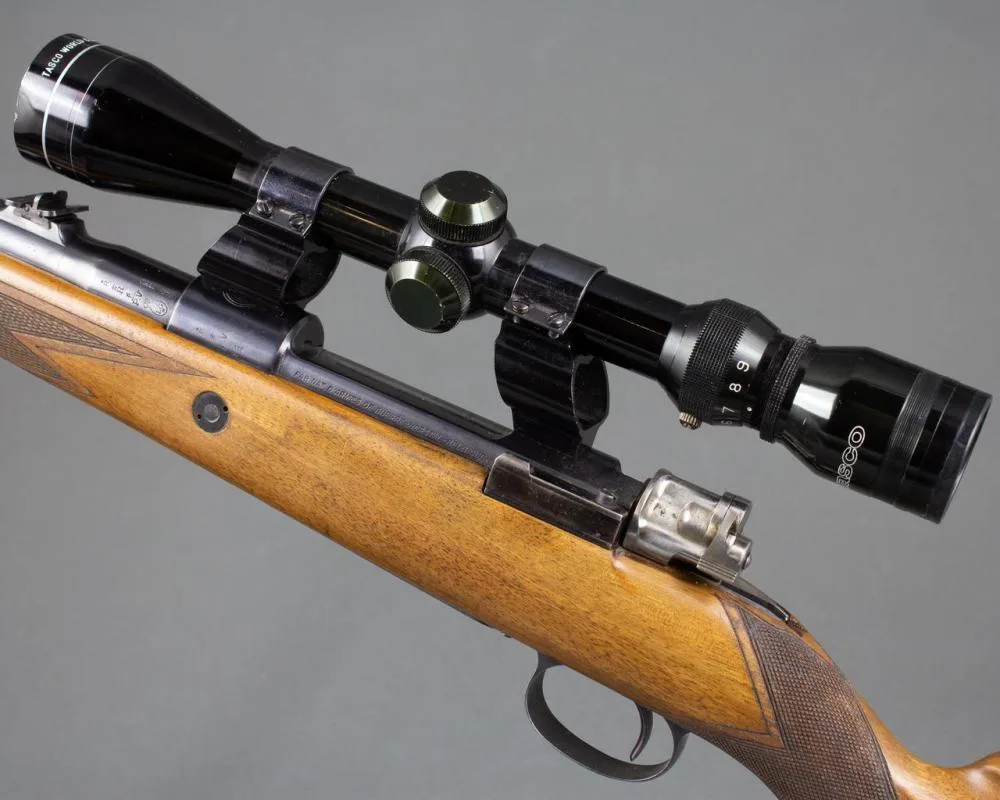
Image source: Bing (Web (fair-use with source credit))
Quick Answer
Can a rifle scope withstand recoil? Yes, when properly matched. Recoil energy must stay within the scope's rated tolerance.
Proper mounting and correct torque prevent shifting. Premium scopes handle heavy recoiling calibers more reliably. Budget scopes may fail under magnum recoil.
The Problem With Recoil and Rifle Scopes
Recoil isn't just a kick in your shoulder. It's a shockwave that runs through the entire rifle, scope included. Every shot sends a jolt through your optic.
The real problem is gradual. Scopes rarely fail on the first magnum round. The erector assembly shifts slowly.
Your zero creeps before you notice.
By the time your groups open up, the damage is already done.
As of 2026, premium scope manufacturers publish recoil energy ratings on their spec sheets. Budget brands rarely disclose this. And even when they do, the fine print often excludes mounting errors, which cause a huge share of failures.
Here's what matters: recoil alone rarely kills a scope. It's the combination of recoil, mounting quality, and caliber choice that determines whether your optic survives.
Can Your Scope Withstand Recoil? Three Variables That Decide It
Yes, but only if three variables align. Change any one and the answer flips.
Variable 1: Recoil energy.
Your caliber's recoil energy, measured in foot-pounds (ft-lbs), determines the shock hitting your scope.
| Caliber | Recoil Energy (ft-lbs) | Stress Level |
|---|---|---|
| .22 LR | ~1.0 | Minimal |
| .223 Rem | ~13.7 | Low |
| .308 Win | ~20.2 | Moderate |
| .30-06 | ~27.5 | High |
| .300 Win Mag | ~35 | Very high |
| .338 Lapua Mag | ~60+ | Extreme |
Below 20 ft-lbs, most quality scopes cope fine. Above that line, everything matters.
Variable 2: Scope construction.
Tube diameter, internal spring quality, and build materials determine how well a scope absorbs shock. A 30mm alloy tube resists deformation better than a 1-inch budget tube. Nitrogen-purged optics with tight O-ring seals hold up best under repeated impact.
Variable 3: Mounting system.
This is where most failures happen. Cheap rings, wrong torque specs, or poor rail alignment shift your scope under recoil no matter how good the optic is.
How Recoil Energy Actually Damages a Scope Internally
The damage happens inside the scope. Most shooters don't see it until accuracy falls apart.
The erector assembly is the main casualty. It's the internal spring-loaded tube that holds your reticle and allows zeroing. Under repeated recoil, the internal springs compress or shift.
Your reticle slowly drifts off zero, shot after shot.
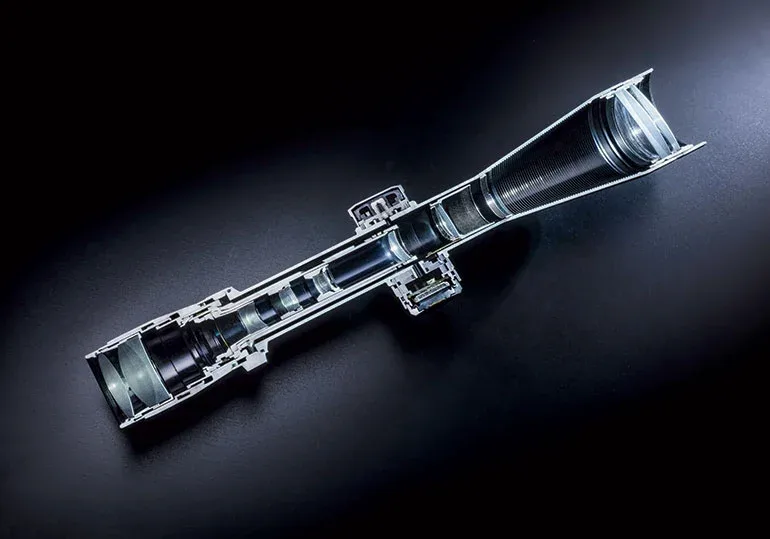
Image source: Bing (Web (fair-use with source credit))
Turrets are a second failure point. When recoil stresses the internal gears, your clicks track incorrectly. You dial 2 MOA of elevation, but your impact moves only 1.5 MOA.
Subtle, but it compounds.
Lens displacement is a third risk. Under extreme recoil, internal lenses can shift slightly. This degrades optical clarity without any visible damage on the outside.
Manufacturer documentation confirms that properly mounted premium optics survive thousands of rounds under recoil. The key phrase is "properly mounted."
The Recoil Decision Path: Caliber, Scope, and Mount
Use this if/then logic to evaluate your specific setup.
If recoil energy is under 20 ft-lbs:
A quality 1-inch or 30mm tube scope with standard rings handles it. Budget scopes between $200 and $400 often perform well here. Standard ring torque of 18 to 25 in-lbs is usually enough.
If recoil energy falls between 20 and 35 ft-lbs:
Upgrade your scope or your mounting system. Look for 30mm tubes with documented recoil ratings. Use quality rings.
Torque all ring screws to exact manufacturer specs. No guessing allowed.
If recoil energy exceeds 35 ft-lbs:
Premium scope required. Target 34mm tubes, reinforced erector assemblies, and scopes explicitly rated for magnum calibers. One-piece mounts beat two-piece ring sets in this range.
Torque specifications become non-negotiable.
In every scenario:
The mounting system is the number-one cause of scope failure under recoil. A premium scope on a cheap rail shifts. Always match mount quality to your recoil class.
Setting Up a Scope to Survive Recoil the Right Way
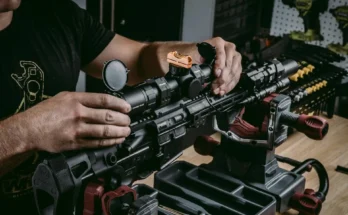
The mounting process is where you prevent almost every recoil-related failure. Follow these steps in order.
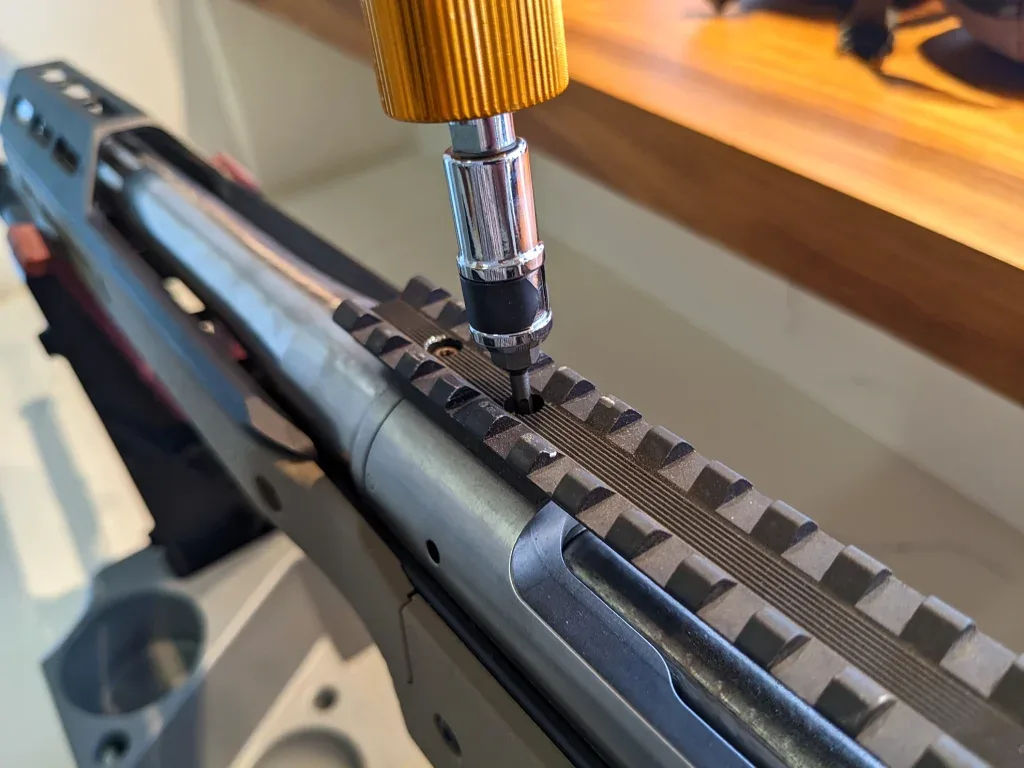
Image source: Bing (Web (fair-use with source credit))
Step 1: Seat your rail and base.
Check that everything is tight and properly aligned. Apply threadlocker to base screws if the manufacturer recommends it.
Step 2: Position the scope and set eye relief.
Adjust the scope fore and aft before tightening anything. Eye relief should be 3.0 inches minimum for light calibers. Heavy-recoil rifles need 3.5 to 4.5 inches.
Step 3: Level the scope.
Use a bubble level on the reticle or a scope-leveling tool. An unlevel scope causes point-of-impact shift under recoil.
Step 4: Torque the screws.
Use a calibrated torque wrench in a cross pattern. Ring screws typically take 15 to 25 in-lbs. Base screws take 25 to 65 in-lbs depending on the manufacturer.
Scope manufacturers publish torque specs on their product pages. Always check those numbers first.
Step 5: Apply threadlocker.
Add a small drop of medium-strength threadlocker to ring screws if specified. This prevents backing out under repeated recoil.
Step 6: Test and verify.
Fire 20 to 30 rounds, then re-check zero. If the scope shifted, the mounting system needs attention. The scope is probably fine.
Mistakes That Kill Scopes Under Recoil
Most recoil-related scope failures trace back to a handful of avoidable errors. Here's what breaks optics the fastest.
Over-torquing ring screws.
This deforms the scope tube, pinching the erector assembly inside. You'll see tracking errors long before any visible damage appears on the outside. A calibrated torque wrench is not optional at this point.
Under-torquing the same screws.
The opposite problem. Screws back out under recoil, and the scope shifts in its rings. Every shot lands differently.
Check torque specs after your first range session and again after 100 rounds.
Mismatched mount quality.
A budget scope on a premium rifle, or a premium scope on a cheap rail. Both create failure points. If your rifle produces over 20 ft-lbs of recoil energy, mount quality must match the optic.
Ignoring eye relief.
Short eye relief under heavy recoil sends the scope tube into your eye. It's painful, and it damages the optic. Set proper eye relief before tightening anything.
Heavy-recoil calibers need 3.5 inches minimum.
Skipping the zero check after shooting.
Fire 20 rounds, then verify zero. If it shifted, stop shooting and diagnose the mount. Continuing to shoot through a shifting scope just deepens the problem.
Scope Recoil FAQs
Can a rifle scope handle continuous shooting?
Yes, but only within its rated recoil tolerance. Most premium scopes handle 5,000 to 20,000+ rounds when properly mounted. Budget scopes often fail below 500 rounds of .300 Win Mag.
Always verify the scope's recoil rating matches your caliber before shooting.
Does tube diameter affect recoil resistance?
Yes, it matters significantly. A 30mm tube resists deformation better than a 1-inch tube under heavy recoil. For calibers above 35 ft-lbs, 34mm tubes provide the best structural resistance.
Larger diameter means more material to absorb shock.
How do I know if my scope is shifting?
Watch your zero at the range. If your point of impact drifts after consecutive sessions, something is shifting internally. Tracking errors on turrets are another sign.
If you dial 1 MOA and impact moves 1.5 MOA, the erector assembly is failing.
Is it safe to use threadlocker on scope rings?
Yes, medium-strength threadlocker is standard practice. It prevents ring screws from backing out under recoil without making future disassembly impossible. Check your scope manufacturer's recommendations first.
Some rings come pre-treated with threadlocker compound.
Can a budget scope really fail under recoil?
Yes, aggregate reviews show budget scopes failing quickly on magnum calibers. Internal springs in cheap optics compress faster under sustained recoil. If you shoot .300 Win Mag regularly, investing in a recoil-rated scope saves money long-term.
What's the most common reason scopes fail?
Poor mounting. Wrong torque specs, cheap rings, and loose base screws cause the vast majority of recoil-related failures. The scope is rarely the weak link.
Fix the mounting system first, then evaluate the optic.
The Final Verdict: Will Your Specific Setup Survive?
Here's how to lock in your decision in three moves.
First, look up your rifle's recoil energy. If it's under 20 ft-lbs, most quality scopes with proper mounting will hold zero indefinitely. Move forward confidently.
If recoil energy lands between 20 and 35 ft-lbs, the mounting system becomes the deciding factor. Use a 30mm tube scope with quality rings. Torque everything to manufacturer specs.
Then verify zero after the first session.
If you're shooting above 35 ft-lbs, premium scope and mounting system are non-negotiable. A 34mm tube with documented recoil ratings, one-piece mounts, and exact torque specs protect your investment. Don't cut corners here.
In our research, scope failures under recoil rarely come down to the optic alone. They come down to mismatched components and skipped setup steps. Match your caliber, scope, and mounting system correctly, and your optic will hold zero through thousands of rounds.