Why do I see shadows through my rifle scope? The answer is almost always the same: something about your eye position, mounting setup, or scope geometry is blocking part of the light path. It's frustrating, but it's rarely a broken scope.
Manufacturer specifications indicate that proper eye relief for most rifle scopes sits between 2.5 and 4.5 inches, depending on caliber and magnification range. If your setup falls outside that window, shadows show up fast. Here's how to pinpoint what's causing yours.
Quick Answer
You see shadows through your rifle scope because your eye isn't aligned with the scope's optical center. This usually happens when eye relief is wrong, cheek weld is off, or the rings are mounted at the wrong height. The shadow position tells you which problem to fix.
A crescent at the bottom means your eye is too far back. A dark edge on top means you're too close.
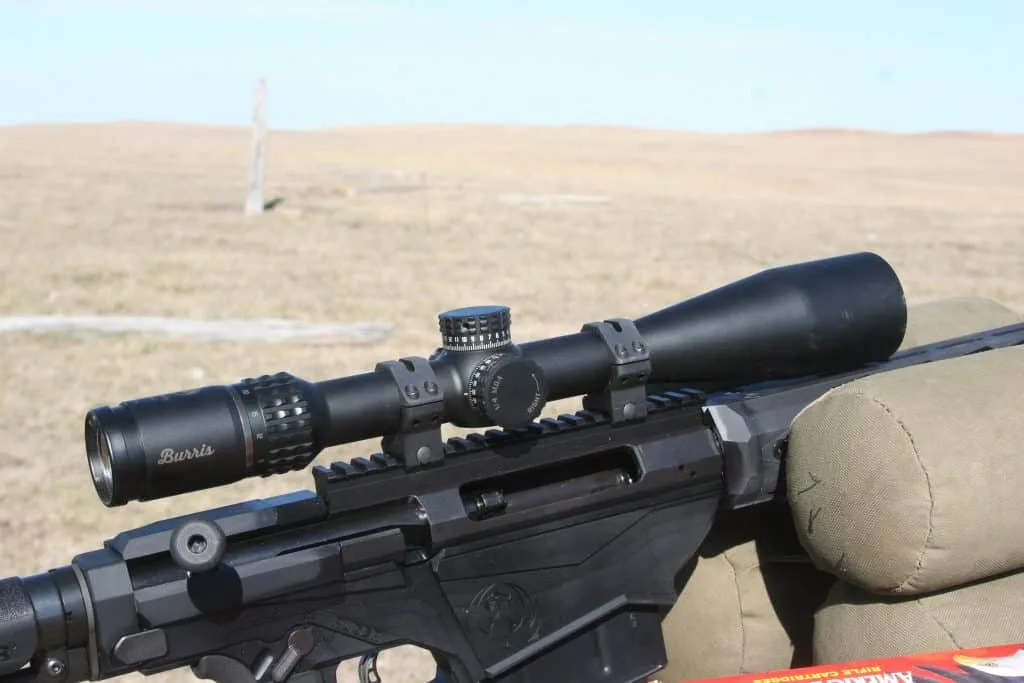
Image source: Bing (Web (fair-use with source credit))
How to Diagnose the Shadow: A Step-by-Step Troubleshooting Walkthrough
Diagnosing scope shadow is a process of elimination. Start with the rifle unloaded, the action open, and pointed in a safe direction. Then walk through these checks in order.
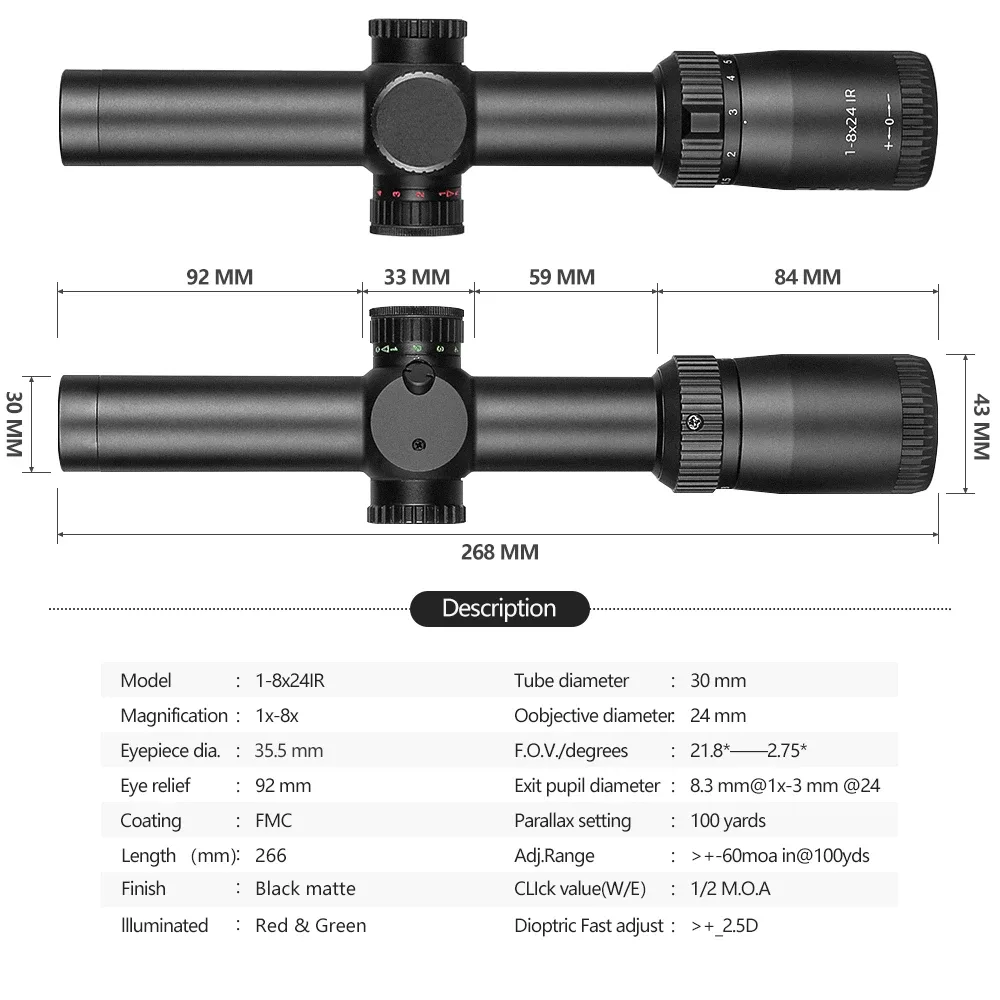
Image source: Web (Bing) / fity.club (Web image (fair-use with source credit))
Check the shadow shape and position. Is it a crescent at the bottom, a dark edge on one side, or a full ring around the view? The shape points to the cause.
Test your eye relief. Bring your eye as close as possible to the ocular lens. If the shadow disappears, your eye relief is too far. If you're already pressed against the scope, the relief is too short.
Check your cheek weld. Lower your head to the stock naturally. If you have to crane your neck or lift your head, the ring height is likely wrong for your face geometry.
Inspect the rings. Are both rings fully seated on Picatinny slots? Is the scope tube centered in both rings, or does it sit slightly off to one side?
Check for canted bases. Lay a straightedge or level against the scope tube. If the tube isn't parallel to the rail, your base is canted.
Test at different magnifications. If the shadow worsens as you zoom in, your eye box is tightening. This is normal, but a proper mounting setup minimizes it.
Each check rules out a specific cause. Work through them before spending money on parts you don't need.
What's Actually Causing It: The Six Main Culprits
Once you've checked your setup, the problem almost always falls into one of six categories.
| Cause | What You See | Likely Fix |
|---|---|---|
| Eye relief too short | Shadow at the bottom or full blackout | Move scope closer or use long-eye-relief model |
| Eye relief too far | Crescent at the top or bottom edge | Move scope closer to your eye |
| Wrong ring height | Shadow shifts when you move your head | Swap to lower or higher rings |
| Improper cheek weld | Shadow changes with head position | Use a cheek riser or re-adjust stock |
| Canted scope base | Consistent shadow to one side | Re-seat or replace the base |
| Small eye box | Shadow tightens at high magnification | Mount scope higher or use larger eye box |
Eye relief errors account for the majority of scope shadow complaints across hunting and target shooting forums. But ring height and cheek weld issues are just as common, especially when you switch between rifles or change your stock.
Fixing the Shadow: How to Re-Mount and Adjust Your Scope Properly
If diagnosis points to a mounting problem, re-mounting the scope is usually the fix. Here's how to do it right.
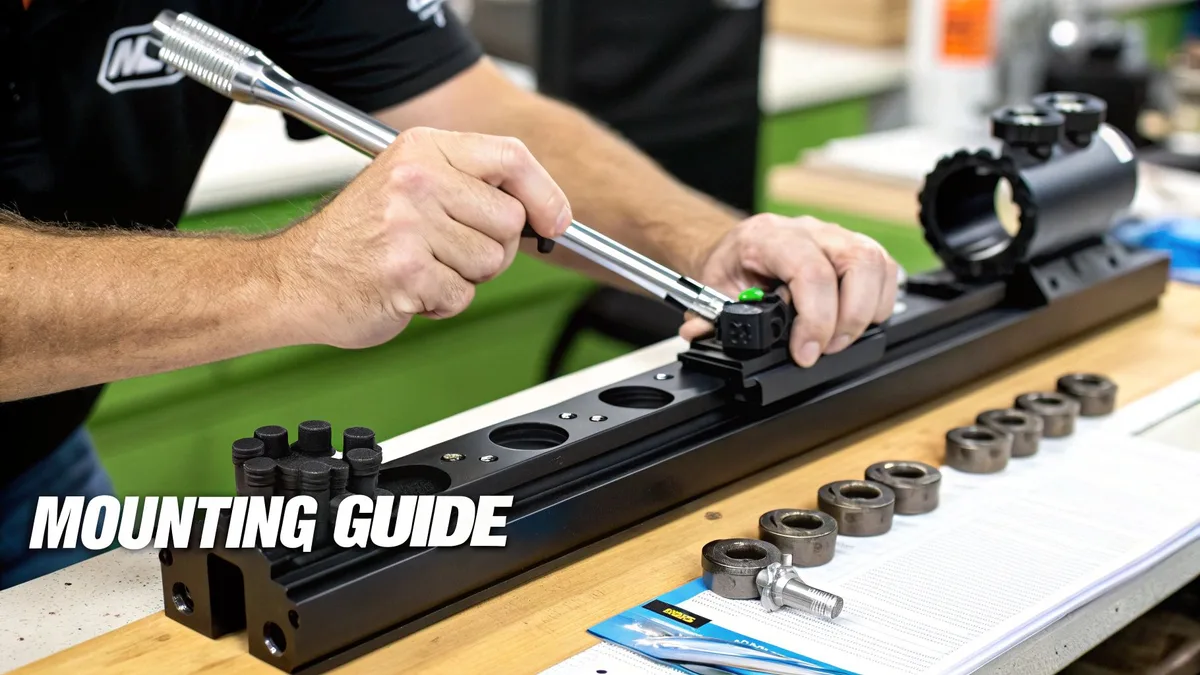
Image source: Bing (Web (fair-use with source credit))
Step 1. Confirm the rifle is unloaded. Open the action and visually inspect the chamber before anything else.
Step 2. Loosen the ring screws evenly. Don't crack the top ring completely before loosening the bottom one. Back off screws alternately to prevent the scope from binding.
Step 3. Check eye relief with the scope loose. Move the scope forward or backward until your eye sits comfortably at full magnification without seeing shadow. Most setups put this at 3 to 3.5 inches for bolt-action rifles and 2.5 to 3 inches for AR platforms.
Step 4. Verify ring height matches your platform. AR-15 rifles typically need mounts between 1.37 and 1.93 inches from rail to optical centerline. Bolt-action hunting rifles usually work with medium or high rings, depending on objective lens size and your face shape.
Step 5. Torque to manufacturer spec. Scope rings are typically torqued to 15 to 18 inch-pounds. Base screws often run 20 to 25 inch-pounds.
Check the specific values for your scope brand.
Step 6. Re-zero after re-mounting. Any change in ring position shifts the point of impact. Bore-sight first, then fine-tune at the range.
Step 7. Test at every magnification level. Zoom from lowest to highest and confirm the sight picture stays clear. If shadow appears only at high magnification, the eye box is the limiting factor.
Common Mistakes That Create Scope Shadow
Even experienced shooters make these errors when mounting a scope.
Mounting rings on the wrong rail slots. Picatinny rings must sit fully within a slot, not hanging over an edge. Misalignment causes inconsistent shadow that's hard to diagnose.
Overlooking tube centering. If the scope tube sits off-center in one ring, the optical axis shifts. Shadow appears on one side and won't go away with head-position changes alone.
Using the wrong ring height for the platform. AR-height mounts on a hunting rifle push the scope too high. Low rings on an AR force you to crane your neck. Both create shadow.
Ignoring base canted alignment. Cheap or worn rail bases can sit at a slight angle. The scope looks mounted fine, but the optical center is tilted. A level check catches this quickly.
Confusing parallax with scope shadow. Parallax makes the reticle shift off-center when you move your head. Scope shadow is a static dark edge. If your scope has an adjustable objective lens or side focus turret, adjust that to fix parallax. Re-mounting handles shadow.
Skipping re-zero after re-mounting. Moving the scope even a quarter inch shifts impact. Shooters who skip re-zeroing chase shadow and accuracy problems at the same time.
If you've ruled out every mounting variable and still see persistent shadow, bring the setup to a certified gunsmith. They can measure the optical centerline against your rail height and spot issues invisible to the naked eye. Expect to pay $50 to $120 for a professional mount-and-check depending on your area.
Ring Height, Eye Relief, and Mounting Specs You Need to Know
Getting these numbers right up front prevents shadow problems before they start. Here are the key specs to have on hand.
| Spec | Bolt-Action Rifle | AR-15 Platform |
|---|---|---|
| Eye relief | 3 to 3.5 inches | 2.5 to 3 inches |
| Ring height | Low to medium (small objective) or medium to high (50mm+) | High to extra-high (1.37 to 1.93 inches) |
| Ring torque | 15 to 18 in-lbs | 15 to 18 in-lbs |
| Base screw torque | 20 to 25 in-lbs | 20 to 25 in-lbs |
| Tube diameter | 1 inch or 30mm | 30mm or 34mm |
Manufacturer specs confirm that these values vary by brand. Nightforce and Vortex publish torque guides specific to their rings and bases. Always check your scope's manual before applying force.
One quick calculation helps too. Multiply your magnification by your objective lens size. A 4-12x50mm scope gives you a 50mm exit pupil at 1x and a 4.1mm exit pupil at 12x.
Smaller exit pupils at high magnification mean a tighter eye box, which makes shadow more noticeable if your head isn't perfectly positioned.
Eye Box, Magnification, and Why Shadow Worsens at High Power
The eye box is the volume of space behind your scope where your eye can sit and still see the full image. Think of it as a cone that widens at low magnification and narrows at high magnification. At 4x you have room to move your head.
At 16x you don't.
As of 2026, most scope manufacturers publish eye box dimensions on their product pages. The trend is consistent across every brand. Exit pupil shrinks as magnification increases, and your head has to find a tighter sweet spot at full power.
If shadow only appears at high magnification, your mounting setup might be fine. You may simply need to adjust your head position when you zoom in. A cheek riser or stock adjustment helps you find that tighter position at high power.
Pro Tips for a Shadow-Free Sight Picture
These practical tips come from what competitive shooters and firearms instructors consistently recommend.
Find your natural cheek weld first. Close your eyes. Bring the rifle to your shoulder naturally. Open your eyes. Where does the scope land? Adjust ring height to match that position.
Use a rear bag or sandbag for setup. When adjusting eye relief, don't hold the rifle by hand. A stable rest removes shake so you're adjusting optics, not fighting muscle fatigue.
Check shadow at every magnification. Eye box tightens as you zoom in. A setup that looks clean at 4x might show shadow at 16x. Test the full range.
Match ring height to objective size. A 56mm objective lens needs clearance. Low rings won't clear the barrel, forcing the scope down and causing cheek weld problems.
Consider a cantilever mount for AR platforms. Cantilever mounts push the scope forward, giving proper eye relief on a flat-top upper without buying extra rings.
Choosing the Right Mount: Picatinny, Weaver, and Dovetail Options
The mount you pick determines how cleanly your scope sits on the rifle. Three main systems dominate the market, and each interacts with shadow differently.
| Mount Type | Clamping Strength | Shadow Risk | Best For |
|---|---|---|---|
| Picatinny | Very strong | Low | AR platforms, modern bolt rifles |
| Weaver | Moderate | Medium | Older bolt rifles, budget setups |
| Dovetail | Low to moderate | Medium to high | Rimfire rifles, light-recoil hunting rifles |
Picatinny rails (MIL-STD-1913) are the modern standard. Rings lock into the slots with minimal movement, keeping the scope tube centered and level. If you're mounting a new scope and have a choice, Picatinny is the safer bet.
Weaver rails are older and less standardized. Weaver rings can work on Picatinny rails, but the fit is looser. This causes subtle misalignment that shows up as shadow to one side.
Dovetail mounts don't clamp with the same rigidity, so they're more prone to shifting under recoil. Dovetail setups can develop shadow over time as the rings settle.
Frequently Asked Questions
Why is there a black crescent on the top of my scope view?
A dark crescent at the top means your eye sits too far back from the ocular lens. Your eye relief is too long for the current scope position. Move the scope forward until the crescent disappears at full magnification, then re-zero.
Can a canted scope cause a shadow that moves with my head?
Yes. A canted base or improperly torqued rings can shift the optical axis slightly. When your head moves, the shadow appears to shift because the scope's center line is no longer aligned with your eye.
Re-seat the scope on a level base to fix this.
Does a shadow mean my scope is broken?
Almost never. Scope shadow is a mounting and eye-position problem, not a defect in the optics. Even a brand new $2,000 scope will show shadow if mounted at the wrong height for your face.
Rule out mounting issues before considering a warranty claim.
What is the difference between scope shadow and parallax?
Scope shadow is a dark edge caused by improper eye alignment. Parallax makes the reticle appear to shift when you move your head. Parallax gets fixed with an adjustable objective lens or side focus turret.
Shadow gets fixed with proper mounting and eye relief.
Do more expensive scopes have less shadow?
Expensive scopes tend to have larger eye boxes, making shadow less likely at moderate magnifications. But even a premium scope shows shadow if mounted at the wrong height. Mounting quality matters more than price tag.
The Right Fix Depends on Your Shadow: Here's How to Decide
Now you have the full picture. Use this guide to match your shadow to the right fix.
| Shadow Position | Most Likely Cause | Your Action |
|---|---|---|
| Crescent at the bottom | Eye relief too far | Move scope forward on the rail |
| Crescent at the top | Eye relief too short | Move scope back or switch to long-eye-relief model |
| Dark edge on one side | Tube off-center or base canted | Re-center in rings, check base alignment |
| Full blackout at high mag | Eye box too tight | Raise ring height or use lower magnification |
| Shadow shifts with head | Cheek weld or eye box issue | Add cheek riser or adjust stock height |
| Shadow after dropping rifle | Rings or base loosened | Re-torque all screws to manufacturer spec |
Scope shadow is almost always a mounting problem, not a scope problem. Once you identify the shadow position, the fix is usually straightforward. Proper eye relief, correct ring height, and a well-torqued base solve it for the vast majority of shooters.




