What does 10x magnification mean on a rifle scope? At its simplest, it means your target appears ten times larger through the scope than it would with your naked eye. But that headline definition skips over the things that actually matter when you're deciding whether 10x is right for you.
In our research across manufacturer specs and aggregate shooter feedback, we found that 10x is one of the most misunderstood magnification levels out there. As of 2026, variable power scopes dominate the market, and 10x sits right at the crossroads between hunting and precision shooting. Understanding what 10x really delivers will save you time, money, and a lot of range frustration.
Quick Answer
10x magnification means a rifle scope makes your target appear ten times closer than it would to your naked eye. It's a common mid-range power level on variable scopes. At 10x, you can see fine detail at 200 to 500 yards.
Your field of view shrinks noticeably at this power. Hand tremor and image shake also become more visible.
What 10x Magnification Means on a Rifle Scope (And Why People Get It Wrong)
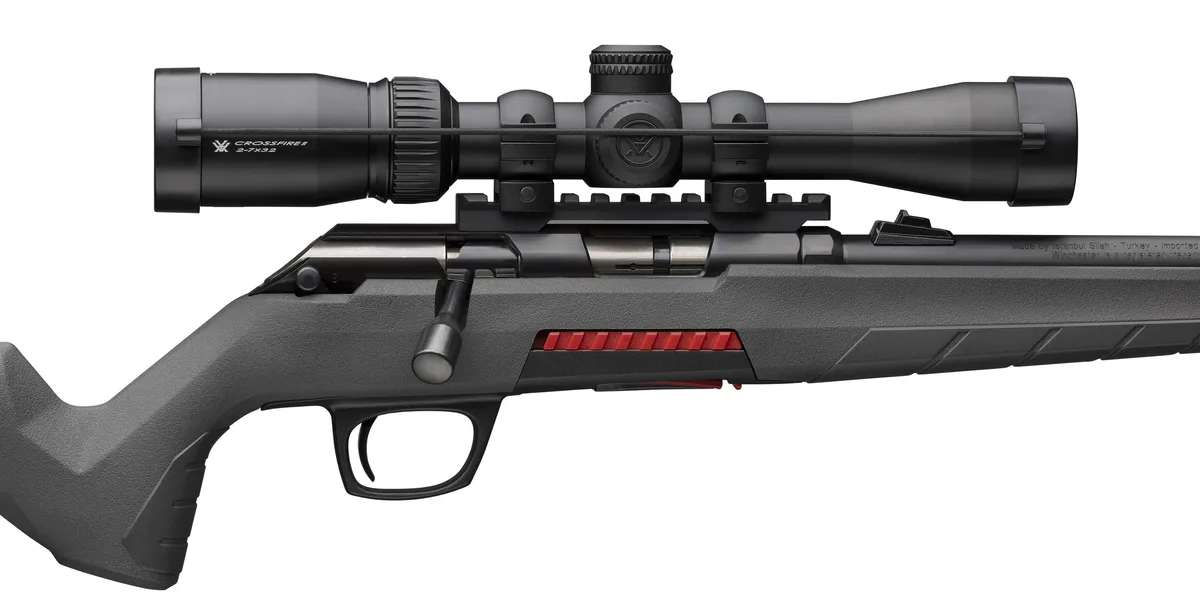
When a scope says 10x, the target appears ten times larger than it would with your bare eyes. That's the optical magnification factor in plain terms. But the real question is what 10x gives you at the range, and what it costs you in other areas.
Most people assume more magnification equals more accuracy. Research from the U.S. Army Marksmanship Unit suggests otherwise.
Higher magnification only helps if you can stabilize the rifle and hold a clean sight picture. If your eye can't find the right position behind the ocular lens, 10x just amplifies your mistakes.
The number printed on the scope is only one part of the equation. You also need to consider the objective lens diameter, eye relief, and tube size. A 10x scope with a 24mm objective feels very different from one with a 42mm objective.
Bigger objective lenses gather more light, which matters when you're cranked up to high power.
If you're looking at a variable power scope like a 2.5-10x or 3-10x, the 10x setting is your maximum zoom. You'll use lower power for quick target acquisition and move up to 10x when you need precision. That's the whole point of variable magnification.
You're not locked into 10x for every shot.
How Rifle Scope Magnification Actually Works: The Optics Behind 10x
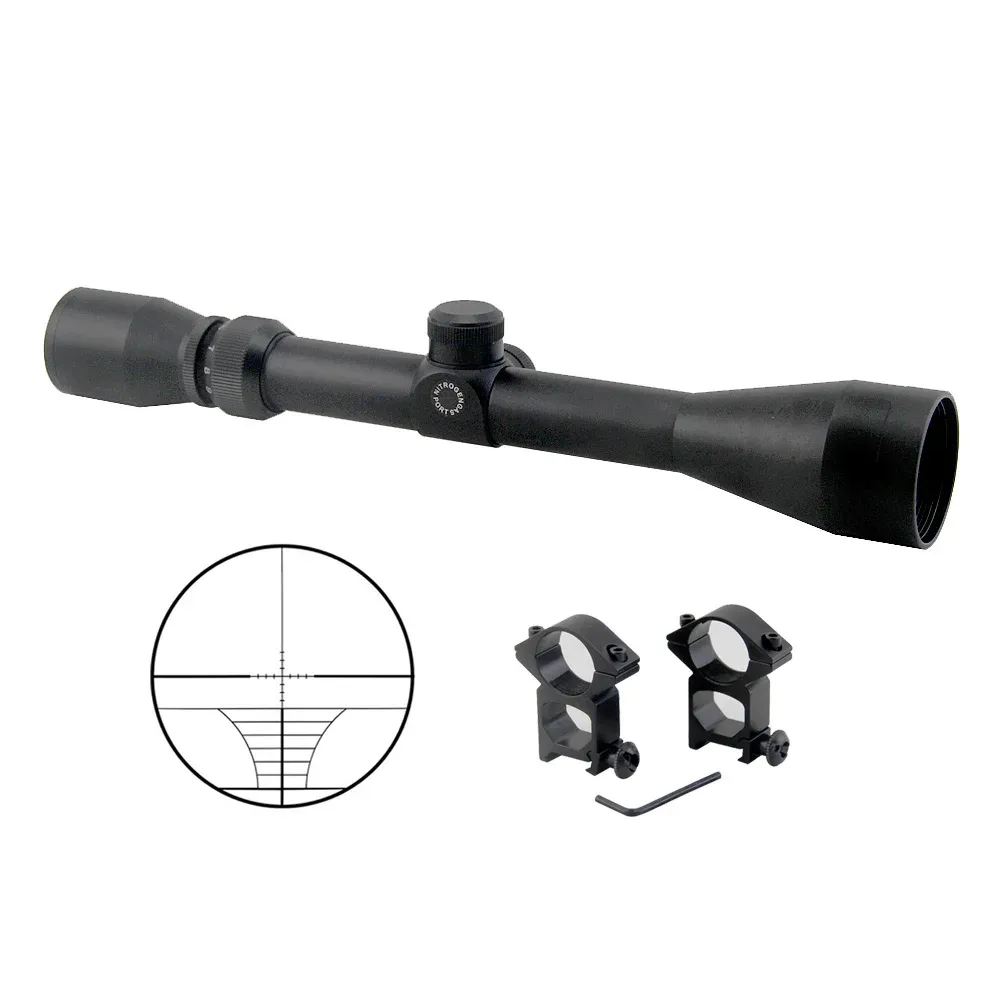
A rifle scope uses a system of lenses to bend light and magnify the image. Think of it like a telescope for your rifle. The magnification number tells you how much larger the target appears compared to looking at it directly.
Inside any scope, you've got an objective lens at the front, an ocular lens at the rear, and a reticle in between. The objective lens gathers light. The ocular lens focuses that light into your eye.
The magnification number describes the ratio between what you see at the objective and what reaches your eye.
Here's where it gets interesting. When you zoom from 4x up to 10x, two things change at once. Your target gets bigger.
Your exit pupil shrinks. The exit pupil is the diameter of the light beam that reaches your eye. A larger exit pupil means a brighter, more comfortable image.
Manufacturers calculate exit pupil by dividing the objective lens diameter by the magnification. So a 42mm objective at 10x gives you a 4.2mm exit pupil. That same scope at 4x gives you 10.5mm.
That's why images get dimmer as you crank the power higher.
For deeper technical reading on scope optics and magnification, Vortex Optics publishes detailed educational guides that walk through these concepts with clear diagrams. It's one of the more helpful manufacturer resources available to shooters today.
What 10x Magnification Looks Like in Real-World Shooting
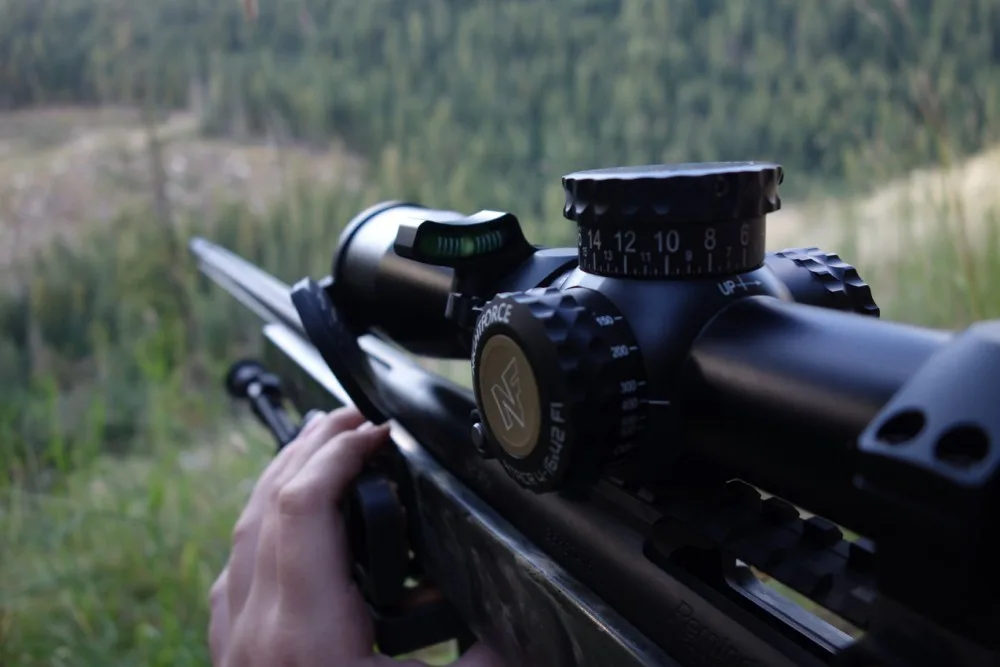
At 10x, a deer at 300 yards looks like it's sitting 30 yards away. That's the power of 10x in a nutshell. But what you actually see through the scope depends on distance, target size, and the quality of glass in your optic.
Let's say you're hunting whitetail deer at 150 yards. At 10x, you can see the animal clearly. You can tell a buck from a doe.
You can pick your shot placement with confidence. This is where 10x genuinely shines for mid-range hunting.
Push out to 400 yards and the picture changes. Heat shimmer, also called mirage, starts to interfere. Your reticle subtensions become more important than a clean, zoomed-in view.
You'll rely on holdover points rather than detailed visual confirmation.
What 10x magnification looks like depends heavily on glass quality. Aggregate user reviews confirm that budget 10x scopes often feel dim and fuzzy at high power. Premium scopes with high-definition glass hold up much better across the magnification range.
Here's a quick breakdown of what to expect at different distances with a 10x setting:
| Distance | What You'll See at 10x | Practical Feel |
|---|---|---|
| 75 to 150 yards | Crystal clear, full detail | Easy shot placement |
| 200 to 300 yards | Clear with good detail | Solid confidence for hunting |
| 400 to 600 yards | Usable but mirage creeps in | Precision shooting territory |
| 700+ yards | Dim and shaky without good technique | Long-range specialists only |
The National Shooting Sports Foundation notes that matching magnification to your actual shooting distance is the single biggest factor in scope satisfaction. Most shooters buy too much magnification and not enough glass quality.
When 10x Is the Right Magnification (and When It Isn't)
The short answer: 10x works best when your shooting distances regularly fall between 150 and 400 yards, and you need to read small details like scoring rings or bullet holes at distance. If your shots rarely exceed 150 yards, 10x is probably too much.
For precision rifle competition, 10x is a popular sweet spot. Most PRS and long-range shooters in the 600 to 900-yard range find that 10x gives enough magnification to spot impacts without making mirage unbearable. Many competition shooters spend most of their time between 8x and 12x.
For hunting, the answer changes. If you're hunting in thick timber or driving game in enclosed spaces, 10x is overkill. You'll want lower magnification for quick, close shots that give you a wider field of view.
The NRA's marksmanship education programs emphasize matching magnification to your real-world distances, not your aspirations.
If you're a new shooter, here's a simple decision guide:
- If your average shot is under 150 yards, choose 4x to 6x.
- If your average shot is 150 to 300 yards, 10x is a strong pick.
- If you regularly shoot past 400 yards, 10x is your minimum starting point.
- If you're unsure, a variable scope like 2.5-10x covers both ends of the range.
10x vs Other Magnification Options: A Side-by-Side Look
Here's how 10x stacks up against the magnification levels you're most likely to compare it with. This covers the common variables you'll see at a gun shop or in online spec sheets as of 2026.
| Feature | 4x | 6x | 10x | 12x and Above |
|---|---|---|---|---|
| Best for | Close-range hunting | General purpose, plinking | Mid-range precision | Long-range precision |
| Field of view | Very wide | Wide | Moderate | Narrow |
| Image brightness | Bright | Good | Dimmer | Dimmest |
| Hand tremor visibility | Minimal | Minor | Noticeable | Significant |
| Detail at 300 yards | Low | Moderate | Good | Very good |
| Mirage interference | Minimal | Minor | Noticeable | Significant |
If you're choosing between 6x and 10x, the right pick depends on your most common shooting distances. If your average shot is under 200 yards, 6x gives you a wider field of view and a brighter image. You won't miss the extra power.
If you're deciding between 10x and 12x, you're probably already a serious precision shooter. At that point, the decision comes down to mirage conditions in your environment. If your range heats up in summer, 10x gives you a more forgiving picture.
The best variable power scopes cover these ranges in a single package. A 2.5-10x or 3-10x lets you dial down for quick shots and dial up to 10x when you need the detail. This flexibility is why variable scopes dominate the market right now.
Mistakes People Make When Choosing a 10x Scope
The most common mistake is buying 10x for the wrong reason. People see the number, think it sounds impressive, and assume they'll always need it. Aggregate user reviews show that scope returns spike when shooters choose magnification based on aspiration rather than real shooting distances.
Here's what trips most buyers up:
- Buying too much magnification for close-range hunting. If your average shot is under 150 yards, 4x to 6x gives you a wider field of view and a brighter image.
- Ignoring glass quality to hit a price point. A $150 scope at 10x often looks murky. Premium glass from manufacturers like Swarovski Optik delivers clear images at the same magnification.
- Skipping the objective lens math. A 24mm objective at 10x gives you a 2.4mm exit pupil. That's a dark, eye-straining image.
- Overlooking first vs second focal plane. On an FFP scope, the reticle scales with magnification. On an SFP scope, reticle subtensions are only accurate at one specific power.
- Mounting the scope wrong. Loose rings or an incorrect torque spec will shift your zero regardless of magnification.
Each of these mistakes is avoidable with a bit of homework before you buy.
How to Pick the Right Magnification for Your Shooting Situation
Start by identifying your most common shooting distance. That single data point narrows your choices faster than any spec sheet can. Once you know your range, you can pick the magnification that fits.
If your shots are mostly under 150 yards, you don't need 10x. A 1-6x LPVO or a 2.5-10x set at the low end will serve you better. You'll have a wider field of view and a brighter image when time matters.
If your shooting falls in the 150 to 400 yard band, 10x is a strong choice. A 3-10x scope gives you both the close-range speed and the precision you need at distance. Manufacturer specs from Leupold Optics confirm that 3-10x covers the widest practical range for most North American hunting.
If you regularly shoot past 400 yards, 10x becomes your baseline. Pair it with a large objective lens, 40mm or bigger, to keep the image bright at high power. A 2.5-10×24 gives you flexibility.
A 3-10×44 or 4-12×40 gives you better low-light performance.
Here's the decision checklist:
- Write down your most common shooting distance.
- Match the magnification to that distance.
- Choose an objective lens large enough for your magnification range.
- Pick first focal plane if you're doing precision work.
- Pick second focal plane if you're doing mostly hunting.
Frequently Asked Questions About 10x Scope Magnification
Is 10x magnification good for hunting?
Yes, 10x is a solid choice for hunting at 150 to 400 yards. It gives you enough detail for shot placement at medium range. For close-range hunting in thick timber, lower magnification like 4x to 6x gives you a wider field of view and faster target acquisition.
Does higher magnification always mean better accuracy?
No. Higher magnification only helps if you can stabilize the rifle and hold a clean sight picture. At 10x, hand tremor and mirage become more visible.
If you can't hold steady at 10x, shooting at 6x will produce better groups because you'll see your sight picture more clearly.
What is the difference between first focal plane and second focal plane at 10x?
On a first focal plane (FFP) scope, the reticle grows and shrinks with the magnification, so reticle measurements stay accurate at every power. On a second focal plane (SFP) scope, the reticle stays the same size, so its measurements are only correct at one specific magnification level, often 10x or 12x.
Can you use 10x magnification at close range?
You can, but it's not ideal. At 50 to 75 yards, 10x gives you a narrow field of view and the image will look unnecessarily zoomed in. Most shooters at close range find it easier to acquire targets quickly at 4x to 6x.
What objective lens size works best with 10x magnification?
A 32mm to 42mm objective lens works well with 10x. Larger objectives gather more light, which keeps the image bright at high magnification. As of 2026, the most popular pairings are 3-10×40 and 2.5-10×42 scopes, both of which deliver good brightness at the 10x setting.




