Is higher magnification better on a rifle scope? That's the question almost every scope buyer faces at some point. The simple answer isn't "just buy the biggest zoom you can afford." More magnification can actually work against you when it doesn't match your shooting scenario.
Manufacturer specifications tell us something useful here. A standard 3-9×40 scope delivers roughly 34 feet of field of view at 3x and 12 feet at 9x, both measured at 100 yards. That wider view at low power is why deer hunters have defaulted to the 3-9x format for decades.
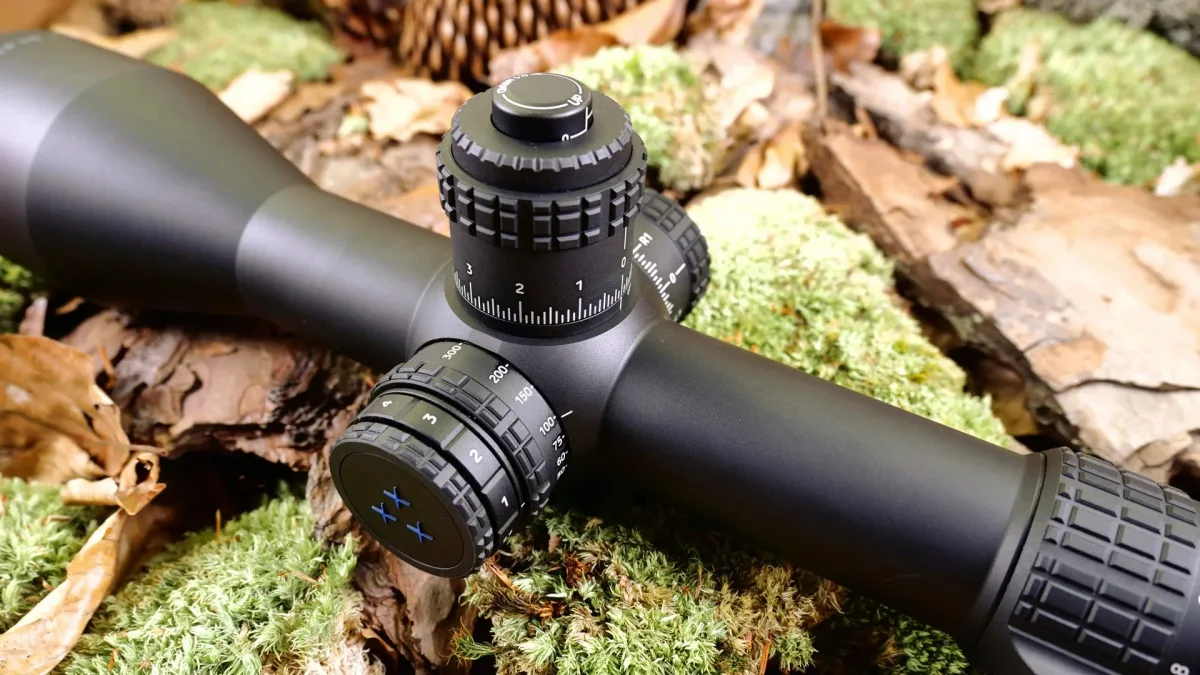
Image source: Web (Bing) / billingsoptics.com (Web image (fair-use with source credit))
Quick Answer: Is Higher Magnification Better on a Rifle Scope?
Is higher magnification better on a rifle scope? Not always. It depends on your shooting distance, target, and environment.
Higher zoom shrinks your field of view and cuts light through the optics. For close-range hunting, a 3-9x scope often outperforms a 6-24x.
Why More Magnification Doesn't Automatically Mean Better Accuracy
The biggest optical law working against high magnification is exit pupil diameter. Exit pupil equals objective lens diameter divided by magnification. At 4x on a 40mm objective scope, the exit pupil is 10mm.
At 20x, it drops to just 2mm. Human pupils open to roughly 7mm in low light. A 2mm exit pupil means a darker, harder-to-read image.
Parallax error compounds the problem. Higher magnification amplifies the angular shift between the target image and the reticle. At 3x, this shift is barely noticeable.
At 18x, it can shift your point of impact several inches at 100 yards if parallax isn't properly adjusted.
Field of view shrinks sharply as you zoom in. At 12x, you might see a 12-foot-wide window at 100 yards. At 3x, that opens to 34 feet.
The narrower view means slower target acquisition, harder tracking, and more missed follow-up shots.
Light transmission also drops with magnification. The more you zoom in, the more glass the image passes through internally. On premium optics with multi-coated lenses, you might lose a few percent of light.
On budget optics, the loss is bigger. That's why a cheap 24x scope often looks dimmer at max power than a mid-priced 9x scope does at 9x.
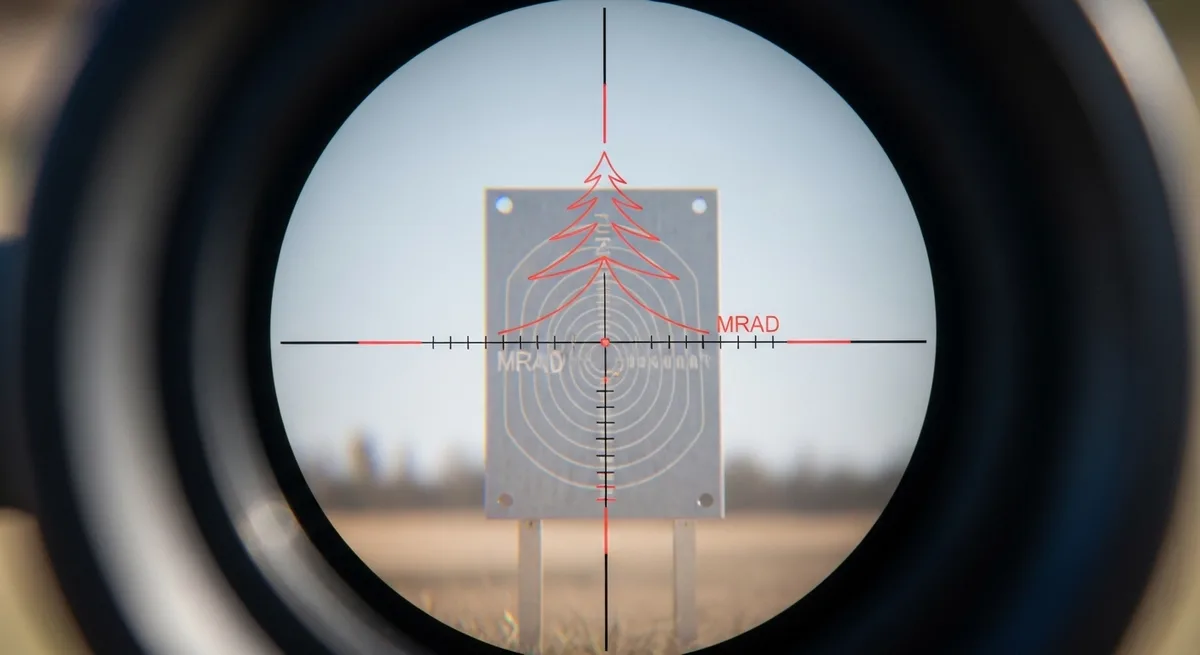
Image source: Bing (Web (fair-use with source credit))
Magnification Ranges Compared: LPVO vs. Hunting vs. Long-Range Scopes
Every magnification range has a practical sweet spot. Here's how the three main categories stack up.
| Magnification Range | Best Use | Typical Shooters |
|---|---|---|
| 1-4x (LPVO) | Close-range, fast shooting, competition stages | Tactical, AR-15 shooters |
| 3-9x | Deer hunting, general field shooting | Whitetail and general hunters |
| 4-12x | All-around hunting, 100 to 400 yard engagement | Predator and coyote hunters |
| 5-25x | Long-range precision, varmint hunting | PRS competitors, varmint shooters |
As of 2026, LPVO optics in the 1-6x and 1-8x range have become the go-to for AR-style rifles. But for bolt-action hunting rifles, 3-9x and 4-12x remain the most popular formats. Leupold and Vortex Optics both continue to release new models in these classic ranges every year.
The trade-off is optical quality versus zoom range. A $300 6-24x scope won't give you better image quality at 6x than a $300 3-9x delivers at its max power. Budget optics lose edge clarity quickly as you dial up.
Premium glass with extra-low dispersion elements holds resolution further, but you'll pay for it.
One thing to consider: tube diameter matters for internal adjustment travel. A 34mm tube gives you more elevation clicks than a 1-inch tube. If you're shooting long range, the bigger tube lets you dial more MOA or Mil without adding an external base.
That's a separate cost, but it directly affects whether your high-magnification scope can actually zero at your distance.
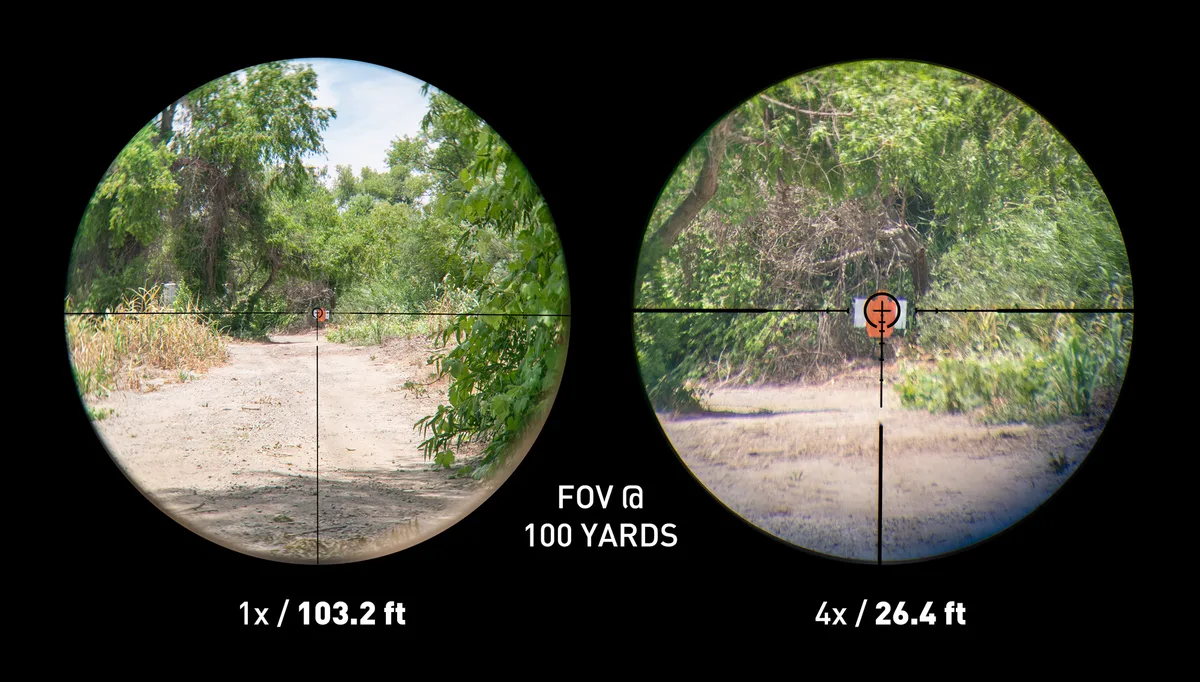
Image source: Bing (Web (fair-use with source credit))
Best Magnification for Common Shooting Scenarios
Different shooting situations call for different magnification ranges. Here's a practical breakdown based on real-world engagement distances.
- Whitetail deer in timber: 4-6x at 30 to 100 yards. Lower power keeps your field of view wide.
- Open-country mule deer: 7-10x at 150 to 350 yards. More zoom helps identify distant animals.
- Coyote hunting: 8-12x at 200 to 400 yards. Enough power to spot without losing peripheral view.
- Varmint hunting (prairie dogs): 12-20x at 300 to 600+ yards. High zoom is genuinely justified here.
- Long-range target shooting (800+ yards): 15-25x. This is where high magnification delivers measurable results.
- Brush hunting (25-50 yards): 2-4x or even a red dot. Maximize speed and field of view.
Military sniper programs routinely train with 5-25x optics for engagements beyond 600 yards. That's the scenario where high magnification makes a real difference. For most civilian shooters, though, the majority of shots land well inside 250 yards.
A useful rule of thumb from expert shooters: use 1x of magnification for every 100 yards you intend to shoot. It's not a hard law. But it's a solid starting point when you're shopping.
A 300-yard shot calls for roughly 6-8x. A 600-yard shot wants 12-15x.
Mistakes to Avoid When Choosing Scope Magnification
- Buying for the spec sheet, not the scenario. A 6-24x scope looks impressive on paper. If your shots stay under 200 yards, you'll rarely dial past 10x. That extra zoom is dead weight.
- Ignoring field of view at max power. Check the FOV spec on both ends. If 9x gives you a 12-foot window at 100 yards, you'll struggle to find animals in cover.
- Overlooking exit pupil specs. Look at the exit pupil at maximum magnification in the manufacturer data. Below 3mm, low-light performance drops noticeably.
- Skipping parallax adjustment. Higher magnification magnifies parallax error. If your scope has a parallax turret, learn to use it before hunting season starts.
- Chasing the highest zoom at the lowest price. Budget optics lose brightness and edge clarity as you zoom in. A $250 6-24x often performs worse at 12x than a mid-priced 3-9x does at its max power.
- Forgetting recoil management. High magnification amplifies perceived recoil. If your rifle kicks hard and your scope is dialed to 20x, your follow-up shots get slower. Eye relief becomes harder to maintain with heavy-caliber rifles.
One consistent finding across aggregate reviews: shooters who buy optics within their realistic engagement range report far higher satisfaction than those who buy maximum magnification "just in case."
Expert Tips for Picking the Right Magnification
Start with your typical shot, not your longest one. If 80 percent of your shots land inside 200 yards, choose magnification that peaks at 10x or below. The 20 percent that need more zoom rarely justify losing the speed and field of view you'll use most often.
Check the exit pupil spec before buying. Divide the objective lens diameter by the magnification. On a 3-9x40mm scope at 9x, that's roughly 4.4mm. Drop below 3mm and low-light performance suffers.
For hunters who shoot at dawn and dusk, this matters more than most buyers expect.
Match magnification to your reticle type. First focal plane (FFP) scopes keep the reticle scaled correctly at any power. Second focal plane (SFP) scopes only give accurate holdovers at one fixed power, usually maximum. If you plan to hold over at distance, FFP is worth the premium.
Test the magnification ring feel. Some budget scopes have stiff, poorly marked power rings. If you're dialing between 3x and 9x constantly, a ring with clear markings and smooth rotation will save you trouble in the field. Premium manufacturers design their power rings with this exact use case in mind.
Weigh the scope against your rifle. High-magnification optics with large objectives are heavy. A 6-24×56 scope can weigh over 2.5 pounds. On a lightweight mountain rifle, that weight changes your carry and your shooting position.
For off-hand shots at walking distance, lighter is better.
Confirm eye relief matches your rifle. Scope bite is a real injury. High magnification on a short eye relief scope combined with heavy recoil can bruise or cut your eyebrow. Check the manufacturer's eye relief spec and match it to your rifle's caliber.
Frequently Asked Questions
What is the best magnification for deer hunting?
A 3-9x magnification range works best for most deer hunting. Most whitetail shots fall between 50 and 200 yards, where 4-7x gives you a bright, wide image. Reserve higher power for open-country mule deer hunts, where 8-10x helps with distant identification.
Can you use too much magnification at the range?
Yes. If you're shooting 100-yard targets with a 20x scope dialed to max, you'll struggle to track the target between shots. Drop to 8-10x for most range work.
Higher magnification only helps past 300 to 400 yards.
What magnification do snipers use in the military?
US military sniper programs typically use 5-25x optics. They dial to 15-25x for confirmed hits beyond 800 yards. But they often drop to 10-12x for scanning and follow-up shots.
The high zoom is reserved for the specific shot, not used constantly.
Is a 1-6x LPVO good for hunting?
For short-range timber hunts and brush hunting, a 1-6x LPVO works well. It gives you true 1x for fast shots and 6x for moderate distances. For open-country hunting past 250 yards, though, a 3-9x or 4-12x will serve you better.
How does magnification affect low-light performance?
Higher magnification shrinks the exit pupil, which darkens the image in low light. A 3-9x40mm scope at 3x delivers a 10mm exit pupil. At 9x, that drops to 4.4mm.
Stick with lower magnification during dawn and dusk hunts for a brighter picture.
Is more magnification worth the extra weight?
Not usually. A high-magnification scope adds weight and can slow your target acquisition. For most hunters and shooters, matching magnification to your engagement range is a better investment than chasing the highest zoom number on the spec sheet.
Final Verdict: Match Magnification to Your Shooting, Not Your Ego
Higher magnification isn't automatically better on a rifle scope. It's only better when the scenario demands it. Short to medium-range hunting is best served by 3-9x and 4-12x optics.
Long-range precision and varmint hunting genuinely benefit from 12-25x.
The decision comes down to three questions. What distance will most of your shots land at? Will you be shooting in low light?
And can you afford to lose field of view for the zoom you're buying?
If most of your shots stay under 250 yards, buy magnification that peaks around 9x to 12x. You'll get brighter glass, a wider field of view, and faster follow-up shots. If you're genuinely shooting past 400 yards regularly, go with higher magnification.
Just make sure the optics quality matches the zoom range.
Spec sheets can't tell you which scope fits your shooting. Your typical engagement distance can. Start there.




