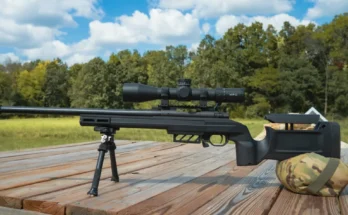
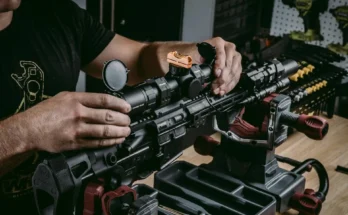
How high should rifle scope rings be? There's no single universal answer. It depends on your rifle platform, your scope's objective lens diameter, your rail type, and your personal cheek weld. Get it wrong and you'll struggle with clearance, eye relief, and point-of-impact shifts.
Manufacturer specifications indicate that scope tube diameters (1-inch, 30mm, 34mm) are standardized across the industry, but ring height varies significantly from rifle to rifle. The MIL-STD-1913 Picatinny rail standard, published by the U.S. Department of Defense, sets the baseline geometry that most modern rings and mounts are built around.
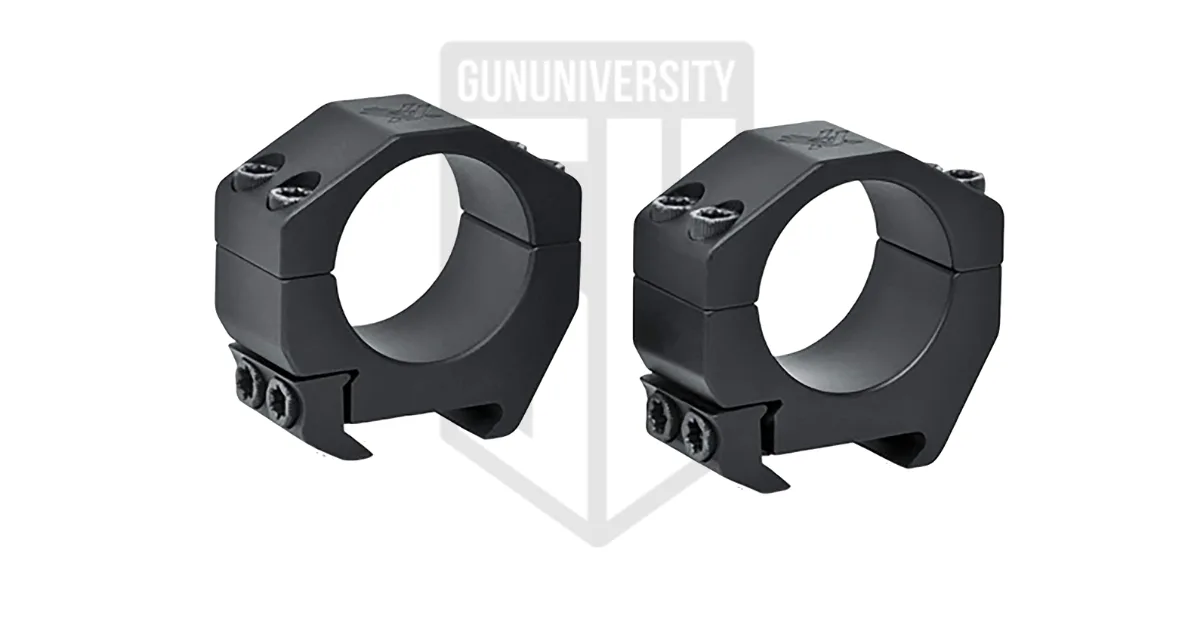
Image source: Bing (Web (fair-use with source credit))
The Problem With Guessing Your Ring Height
Rings are one of the few rifle components where there isn't a universal "right" choice. Low rings that work perfectly on a bolt-action hunting rifle can sit dangerously close to the barrel on a flat-top AR-15. Tall rings that clear a 56mm objective lens might leave your cheek floating over the stock.
Ring height is a relationship between the scope, the rifle, and the shooter. Changing any one of those three variables changes the answer. A scope with a 40mm objective on a bolt-action rifle needs a very different ring height than the same scope on an AR-15 platform.
Most scope manufacturers publish ring height specifications, but those specs assume a particular rail-to-barrel clearance. Your rifle's clearance is different from the one the manufacturer tested on. This is why "medium" rings that worked on your last rifle might be completely wrong on your current one.
Aggregate user reviews across forums and retail platforms consistently report that improper ring height is one of the top causes of new scope installation failures. It's the most common mistake first-time mounters make.
Quick Answer: How High Should Rifle Scope Rings Be?
There is no fixed universal height. The correct ring height depends on your rifle platform, objective lens diameter, and rail clearance. Measure your rail-to-barrel gap, then subtract half your objective lens diameter.
Choose rings that meet or slightly exceed that measurement. Verify your cheek weld before final installation.
The Four Variables That Determine Ring Height
Rifle Platform
The platform is the foundation. AR-15 receivers have flat-top rails that sit higher relative to the bore compared to most bolt-action rifles. AR platforms often need taller rings to clear the barrel while maintaining a workable cheek weld.
Bolt-action rifles, especially older designs with round receivers or low-sitting scopes, generally run on lower ring profiles. European hunting rifles with dovetail rails follow a similar low-profile philosophy.
Objective Lens Diameter
This is the number most people overlook. The objective lens diameter, measured in millimeters, determines how much clearance you need between the bottom of the scope and the top of the barrel or rail.
A 40mm objective needs less clearance than a 56mm objective. That difference of 16mm translates directly into ring height. Manufacturer scope data sheets list the objective lens diameter for every optic model.
Rail Type and Rail-to-Barrel Clearance
Per the MIL-STD-1913 Picatinny rail standard, the rail-to-barrel clearance on any specific rifle can vary. You need to measure this gap on your rifle before selecting rings. Different platforms, different receiver geometries, different clearance numbers.
Muzzle Device Clearance
If your rifle has a muzzle brake or suppressor, that device adds another clearance constraint. Tall scopes on AR-platform rifles with muzzle brakes often need the highest ring category available.
The interplay between these four variables is what makes ring height a calculation, not a guess. If your objective lens is large AND your rail sits high AND you're running a muzzle brake, you may need extra-high rings just to clear everything.
Step-by-Step: Measuring and Selecting Your Correct Ring Height
Here's the workflow that experienced gunsmiths and competitive shooters use:
Step 1: Identify Your Rifle Platform
Determine whether you're working with an AR-platform, a bolt-action, or a specialized receiver design. This dictates which ring height categories are available to you on most retail sites.
Step 2: Measure Your Rail-to-Barrel Clearance
Using calipers or a measuring tape, measure the distance from the top of your rail to the highest point on your barrel, right where the scope will sit. This is your available clearance.
Step 3: Measure Your Objective Lens Diameter
Pull it from your scope's data sheet or measure directly from the objective bell. Common sizes are 40mm, 44mm, 50mm, and 56mm.
Step 4: Calculate Required Ring Height
Take your rail-to-barrel clearance. Subtract half of your objective lens diameter. Add at least 1/16 inch for clearance margin.
That number is your minimum ring height.
If your rail-to-barrel clearance is 1.25 inches and your objective lens is 50mm (about 1.97 inches diameter):
1.25 minus 0.985 minus 0.0625 equals a minimum ring height of roughly 0.20 inches
Step 5: Verify Cheek Weld
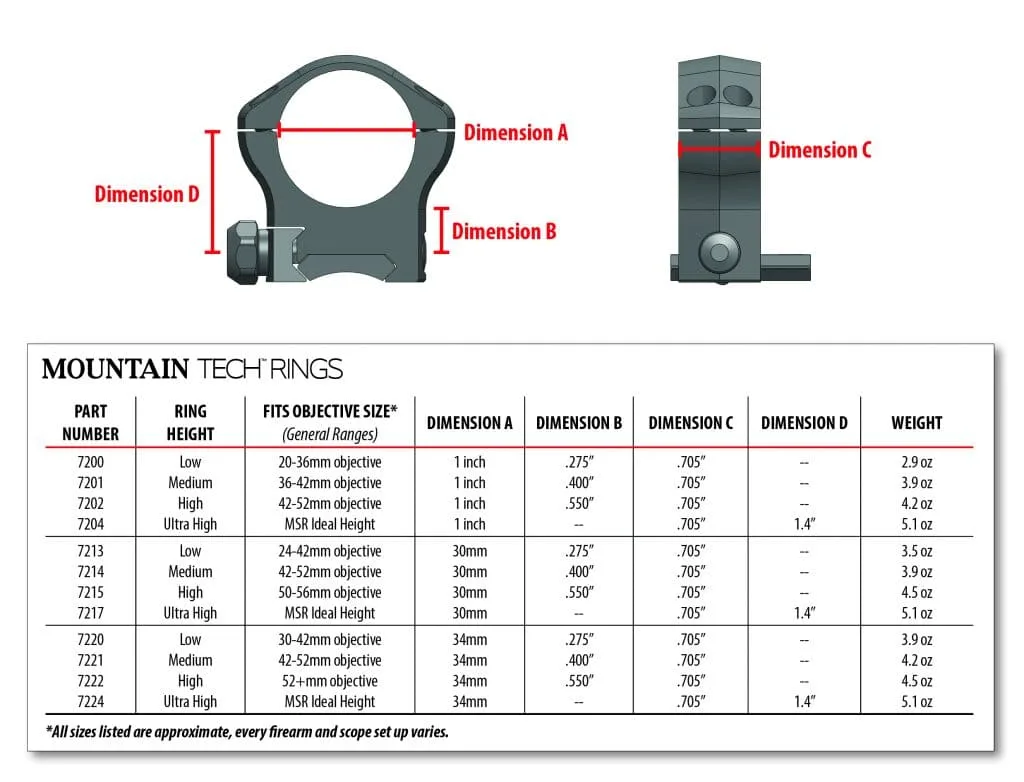
Image source: Bing (Web (fair-use with source credit))
Place the scope at your calculated height on the stock and look through it in your natural shooting position. If your cheek hovers off the comb or you stretch your neck, the rings are too tall. Adjust down if clearance allows.
Step 6: Confirm Muzzle Brake Clearance
Run the bolt forward with the scope in place. Ensure the muzzle brake or suppressor clears the objective lens comfortably. Manufacturer specifications from brands like Leupold recommend at least 2 inches of clearance between the brake and the front of the objective lens.
Step 7: Install and Torque
Set the rings at your calculated height. Torque the ring cap screws in a cross pattern to the manufacturer's specification, typically 15 to 35 in-lbs depending on tube diameter. Use a torque wrench.
Every time.
Step 8: Verify at the Range
Fire a three-shot group to confirm your zero holds and that no point-of-impact shift occurs. If POI shifts between shots, your rings likely aren't torqued evenly.
Common Ring Height Mistakes and How to Avoid Them
Mounting rings too low. The scope objective touches or nearly touches the barrel. You'll see this immediately when you try to mount. Fix: measure the objective diameter before you buy.
Rings too high for the shooter's cheek weld. The scope clears the barrel, but your face can't reach the stock comb properly. You're straining to get behind the optic. This kills accuracy over distance.
Fix: test cheek weld before finalizing ring height.
Mixing ring brands. Different manufacturers use different clamp widths, materials, and tolerances. Two "medium" rings from different brands can be noticeably different heights. Fix: buy matched ring sets from a single manufacturer.
Ignoring muzzle brake clearance. You've installed everything and realize the brake or suppressor fouls the objective lens. This happens often on AR platforms with high-profile rails. Fix: measure the brake-to-rail distance before choosing rings.
Under-torquing ring screws. Aggregate reports across shooting forums show that ring screws that aren't properly torqued cause zero shift after just a few rounds. Fix: use a torque wrench.
Skipping range verification. Assuming everything's correct because it looks right in the vice. Real-world recoil exposes any installation flaw. Fix: always fire a group to confirm zero holds.
Scope Ring Height Comparison: Low, Medium, High, and Extra-High
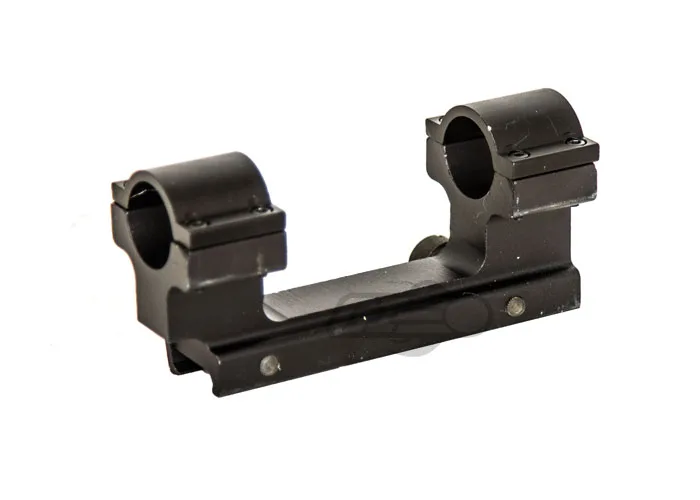
Image source: Bing (Web (fair-use with source credit))
| Category | Rail Top to Ring Center | Best For | Key Limitation |
|---|---|---|---|
| Low | 0.50 to 0.60 inches | Bolt-action rifles, small objectives (32 to 40mm) | Insufficient clearance for larger objectives or muzzle brakes |
| Medium | 0.75 to 0.85 inches | Most hunting rifles, 40 to 50mm objectives, AR-15 with modest scopes | May still be too low for muzzle-brake setups |
| High | 1.00 to 1.10 inches | AR-15 platforms, muzzle brakes, 50 to 56mm objectives | Cheek weld can suffer on conventional stocks |
| Extra-High | 1.25 to 1.40 inches | Suppressed ARs, long-range scopes, large objectives on high rails | Highest risk of cheek weld and eye relief issues |
The most common mistake in this comparison is assuming one category fits all. A "medium" ring height from one manufacturer (Leupold, Vortex, Burris, or Seekins Precision) can differ from another by up to 0.05 inches. Always compare the actual measurement, not the label.
Best for most shooters: medium rings on a bolt-action, high rings on an AR-15. These two categories cover the majority of real-world setups as of 2026.
Who needs extra-high rings: shooters running a suppressor or muzzle brake on a flat-top AR platform with a 50mm or larger objective lens. Confirm your cheek weld supports the height before committing.
Who can use low rings: bolt-action rifles with small objectives (32 to 40mm) and no muzzle device. These setups prioritize a low bore axis and consistent cheek weld above all else.
Expert Tips for Getting Ring Height Right
Trust your cheek weld. If the scope looks right on paper but feels wrong when you shoulder the rifle, the rings are wrong for you. Eye relief and natural head position matter more than a perfectly matched chart value. Competitive shooters confirm that a comfortable, repeatable weld beats an exact "ideal" height every time.
Buy matched ring sets. One-piece mounts or factory-matched pairs eliminate height variance between the front and rear rings. This is critical on 30mm and 34mm tube scopes where even a 0.02-inch difference can introduce cant.
Use a torque wrench every time. Finger-tight plus "feel" is not a substitute for measured torque. Manufacturer specs for most quality rings fall between 15 and 35 in-lbs depending on tube diameter. Over-torquing crushes the tube.
Under-torquing causes zero shift.
When in doubt, go taller. You can add a cheek riser pad to fix a high mount. You cannot fix a scope that physically fouls the barrel. Clearance problems are permanent.
Cheek weld problems are adjustable.
Verify after 20 rounds. Any new scope setup should be checked after a break-in period. Ring screws settle. Components shift.
A second zero check at 20 rounds catches most issues before they become range-day surprises.
Frequently Asked Questions
What height rings do I need for an AR-15?
High rings (1.00 to 1.10 inches from rail top to ring center) are the most common choice for AR-15 platforms. The flat-top receiver sits higher relative to the bore than most bolt-action rifles. If you're running a muzzle brake or suppressor, extra-high rings may be necessary to clear both the rail and the device.
Can I use the same rings on different rifles?
Yes, but only if both rifles have the same rail-to-barrel clearance and the same objective lens diameter. Swapping rings between a bolt-action and an AR-15 rarely works. The platforms sit at very different heights relative to the bore, so what's "low" on one rifle becomes dangerously close to the barrel on another.
What is the difference between low, medium, and high rings?
Low rings sit about 0.50 to 0.60 inches above the rail. Medium rings are 0.75 to 0.85 inches. High rings are 1.00 to 1.10 inches, and extra-high rings are 1.25 inches and above.
The difference between categories is usually 0.15 to 0.25 inches, enough to change your cheek weld and clearance significantly.
Do I need different rings for a 30mm versus a 1-inch scope tube?
Yes. Rings are sized to match the scope tube diameter. A 1-inch tube requires 1-inch rings, and a 30mm tube requires 30mm rings.
The ring height category (low, medium, high) is independent of tube size. You choose both separately based on your clearance measurements and the scope's tube specifications.
What happens if I use rings that are too high?
Your cheek weld suffers. The scope sits too far from the stock comb, so you stretch your neck or hover above the stock. This creates an inconsistent sight picture that degrades accuracy over any real distance.
Fix by going one ring height category lower if barrel clearance allows.