When you're trying to figure out how do I choose rifle scope rings, the short answer is this. You need three things to line up: your scope's tube diameter, your rifle's rail platform, and enough clearance for your objective lens. Miss any one of them and you'll deal with canted reticles (a tilted crosshair), zero shifts, and wasted money on parts that don't fit.
As of 2026, most rifle optics come in 1-inch, 30mm, or 34mm tubes, and the Picatinny rail (MIL-STD-1913) is the dominant mounting interface. Manufacturer torque specs for ring cap screws usually fall between 15 and 30 in-lbs. That tells you how precise this process really is.
Here's how to get it right the first time.
Quick Answer
How do I choose rifle scope rings? Match your tube diameter (1-inch, 30mm, or 34mm) to the rings. Confirm your rifle has a Picatinny or Weaver rail.
Pick ring height that clears the objective lens by 0.02 inches minimum. Torque ring screws to manufacturer specs, typically 15 to 30 in-lbs.
Why the Wrong Rifle Scope Rings Cost You Money and Accuracy
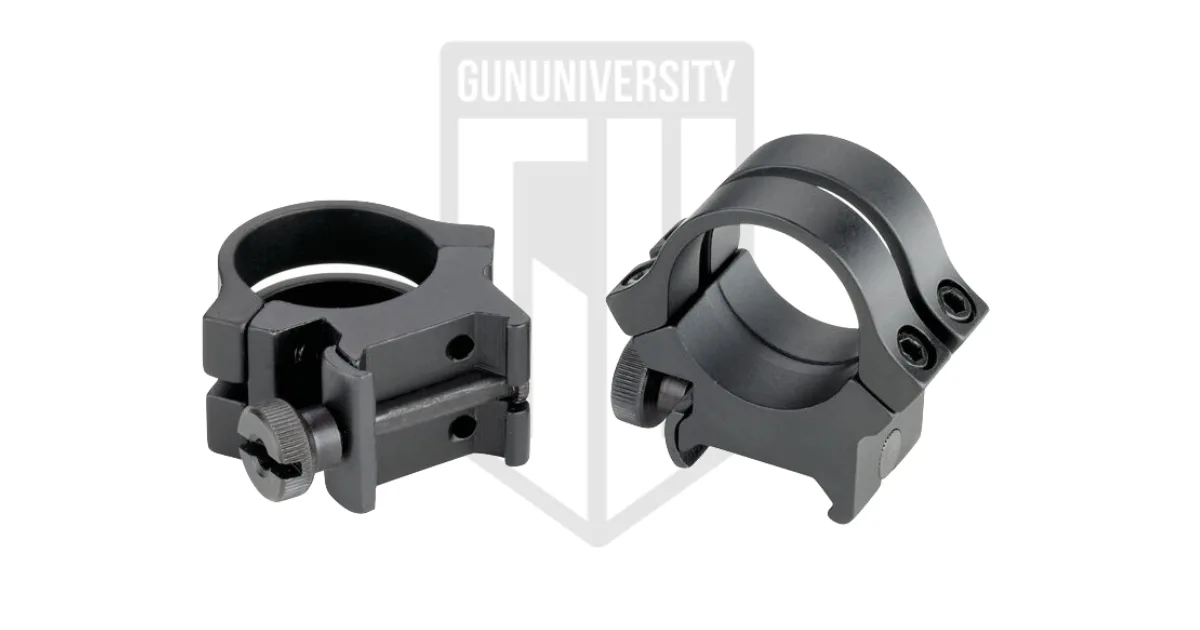
Image source: Bing (Web (fair-use with source credit))
Wrong rings don't just cause a minor inconvenience. They create a cascade of problems that get expensive fast. If your ring cap screws are over-torqued, you can crush your scope tube.
If the rings are the wrong height, you'll fight eye relief and cheek weld for the rest of the rifle's life.
The most common failure we see in our research is zero shift under recoil. This happens when ring screws are torqued unevenly or below spec. The scope slips forward a few thousandths of an inch each shot.
Eventually your grouping opens up, and you blame the rifle, the ammo, or your own shooting.
Manufacturer mounting guides from Vortex Optics consistently recommend matching ring tube diameter to the scope tube exactly. If your scope is 30mm, your rings must be 30mm. There is no "close enough" when it comes to tube fit.
The same guides flag ring material as critical. Heavy-recoil calibers like .300 Win Mag place extreme stress on rings during recoil. Substandard aluminum rings can flex under that load.
Steel rings hold their shape and keep the optic locked down.
Verified buyer feedback confirms the same pattern. People who invest in quality rings and a torque wrench avoid almost all of these problems. People who buy whatever's cheapest end up redoing the work, sometimes more than once.
The Three Variables That Decide Everything: Tube Diameter, Objective Clearance, and Ring Height
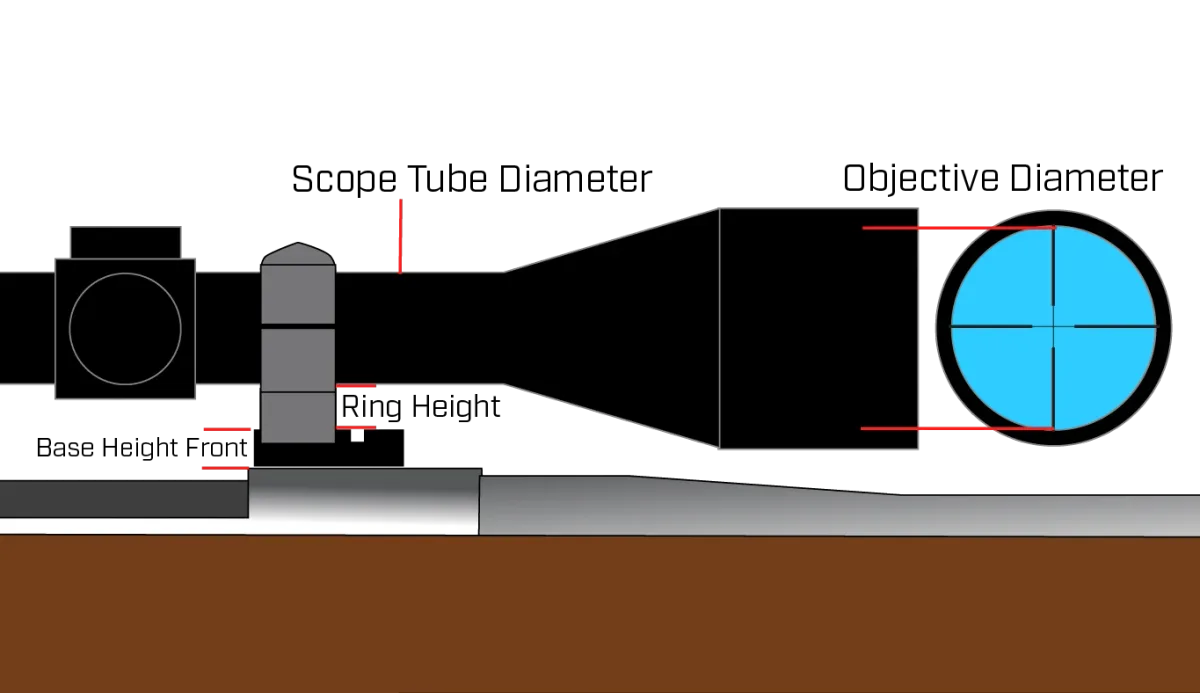
Image source: Web (Bing) / warnescopemounts.com (Web image (fair-use with source credit))
Everything about ring selection comes down to three measurements. Get these right, and the rest of the decisions become simple.
Tube diameter is the first thing you check. Scope tubes come in 1-inch (25.4mm), 30mm, or 34mm. Look at the scope's spec sheet or measure the tube where the rings will sit.
If you don't know your scope's size, don't guess.
Objective clearance is where most people mess up. Measure your scope's objective lens diameter, then compare it to the gap between your barrel and your scope's line of sight. You need at least 0.02 inches of clearance between the objective bell and the top of the rings.
Ring height determines where the scope sits relative to your barrel. Here's a quick reference for common setups:
| Ring Type | Height Range | Best For |
|---|---|---|
| Low | 0.20 to 0.30 in | Small objectives, bolt actions |
| Medium | 0.50 to 0.60 in | Most hunting rifles |
| High | 0.80 to 1.00 in | Large objectives, AR platforms |
| Extra-High | 1.20+ in | 50mm+ objectives, elevated rails |
If your objective lens is 40mm or smaller, medium rings usually work. If it's 50mm or larger, you'll likely need high or extra-high rings. These are starting points, not rules.
Always verify clearance with a feeler gauge before you tighten anything.
How Ring Height, Bore Axis, and Rail Platform Affect Your Setup
Ring height isn't just about clearance. It affects how your cheek sits on the stock, how your eye aligns with the optic, and whether your shots land where you expect.
Your bore axis is the imaginary line running through the center of your rifle's barrel. Your scope should sit close to this line. The farther the scope sits above it, the more you'll notice the difference in your sight picture at different distances.
This is called parallax error, and it gets worse at longer ranges.
Your rail platform matters too. Picatinny rails, governed by the MIL-STD-1913 standard, have consistent cross-slot spacing and are the current default. Weaver rails are older, with narrower slots and no dedicated recoil lug.
Most modern rings are built for Picatinny, and some fit both platforms.
Here's how platform and ring height interact:
- Bolt-action rifle with a Picatinny base → Two-piece rings or a one-piece mount, medium height if the objective is under 44mm.
- AR-15 with a flat-top rail → Cantilever mount or high rings, because the rail sits above the bore line.
- Rimfire rifle with dovetail grooves → Specific rimfire rings, because rimfire rails aren't Picatinny.
- Muzzleloader with a large objective scope → Extra-high rings. A 50mm objective typically needs high clearance.
Manufacturer ring-height charts from Leupold and Vortex Optics both follow the same logic. They're solid starting points for any platform.
The Step-by-Step Workflow for Choosing and Mounting Rifle Scope Rings
Now let's put it all together into an actual process you can follow.
Step 1: Identify your scope's tube diameter
Look at the scope or check the spec sheet. Measure with calipers if needed. Record it: 1-inch, 30mm, or 34mm.
Step 2: Measure your objective lens diameter
Check the front of the scope. Common sizes are 24mm, 30mm, 40mm, 44mm, 50mm, and 56mm.
Step 3: Pick ring height based on objective clearance
Subtract your objective lens radius from the distance between the barrel and the scope centerline. Aim for at least 0.02 inches of clearance.
Step 4: Confirm your rail platform
Is it Picatinny (MIL-STD-1913), Weaver, or dovetail? Match your rings to the platform.
Step 5: Select ring material based on recoil
For recoil-heavy calibers like .308 Win.30-06, or .300 Win Mag, steel rings handle the load better. For lighter calibers like .223 Rem or .243 Win, quality aluminum rings work fine.
Step 6: Mount and torque to spec
Always follow the manufacturer's torque specifications. Here's what to expect:
| Component | Typical Torque Range |
|---|---|
| Base to rail | 25 to 65 in-lbs |
| Ring cap screws | 15 to 30 in-lbs |
| Cantilever mount (integrated) | 25 to 65 in-lbs |
Use an inch-pound torque wrench. It's the single most useful tool for a reason.
One-Piece vs. Two-Piece Rings, Aluminum vs. Steel, and Picatinny vs. Weaver: What Actually Matters
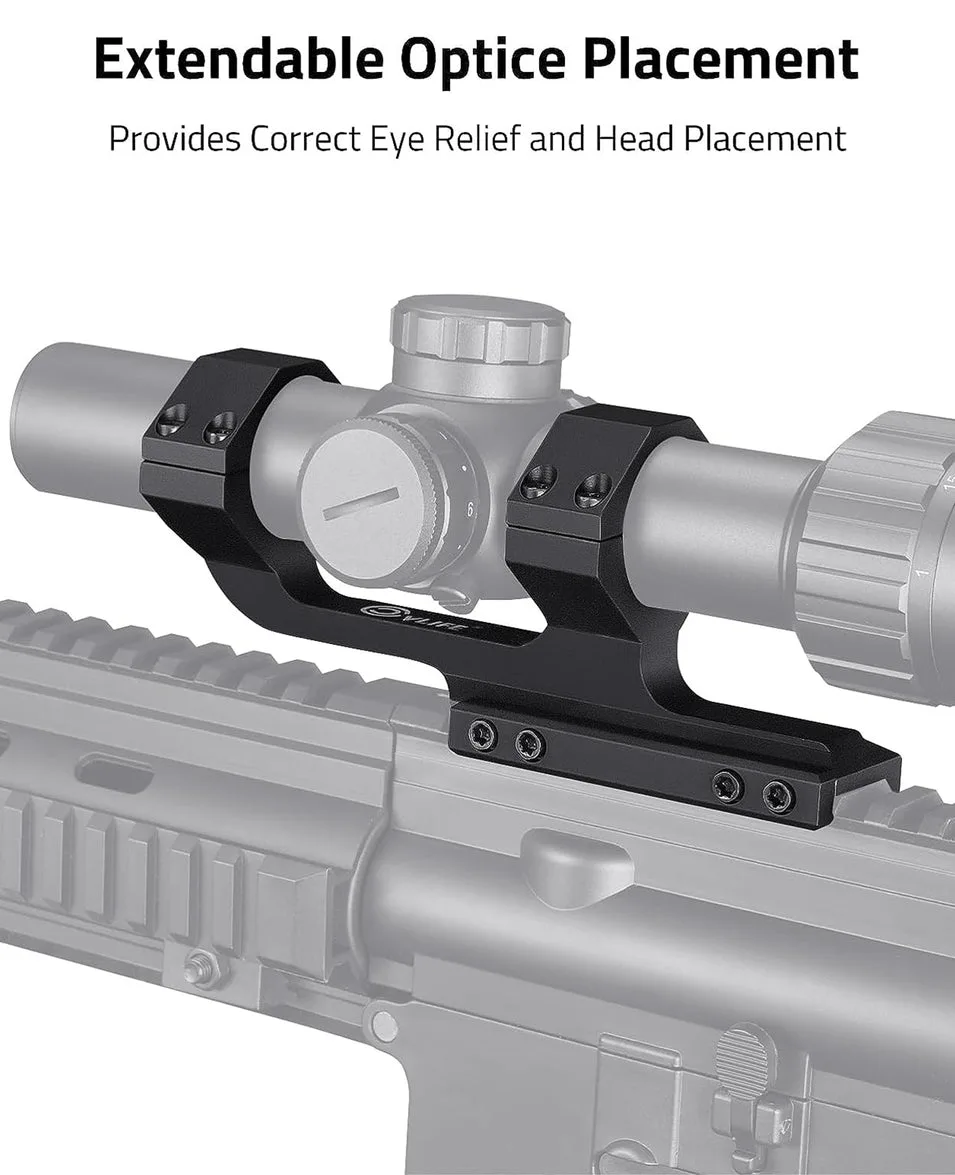
Image source: Web (Bing) / cvlife.com (Web image (fair-use with source credit))
Three comparisons come up constantly. Let's break them down.
One-piece vs. two-piece rings
One-piece rings, sometimes called cantilever mounts, bridge both rings into a single unit. They offer more rigidity and better alignment out of the box. Two-piece rings are simpler, lighter, and cheaper.
Use one-piece for AR platforms and long-range shooting. Use two-piece for bolt-actions with standard rings.
Aluminum vs. steel
Aluminum rings are lighter and cheaper. They're plenty strong for most hunting calibers. Steel rings handle heavier recoil and repeated hard use better.
If you're running a magnum caliber, go steel. If you're running a standard hunting round, quality aluminum is fine.
Picatinny vs. Weaver
Picatinny rails (MIL-STD-1913) are the modern standard. They have consistent slot spacing and a recoil lug groove that locks rings in place. Weaver rails are older, with narrower slots and no dedicated recoil groove.
Most current rings are Picatinny-compatible, and some are cross-compatible.
A side-by-side breakdown of the two ring styles:
| Factor | One-Piece | Two-Piece |
|---|---|---|
| Rigidity | Higher | Lower |
| Weight | Heavier | Lighter |
| Best for | AR, long-range | Bolt-action, hunting |
| Alignment | Easier | Requires care |
Pick based on your platform, not on price alone.
Common Scope Ring Mistakes That Wreck Your Zero (and How to Avoid Them)
Certain mistakes show up in our research again and again. Avoiding them will save you time, money, and a lot of frustration.
Over-torquing ring cap screws. This is the most common error. Many people crank the screws until they feel "tight enough," not realizing they're crushing the scope tube. Always use an inch-pound torque wrench set to the manufacturer's spec, typically 15 to 30 in-lbs for ring caps.
Uneven torque pattern. Tightening one screw all the way before moving to the next tilts the ring cap. This creates uneven contact pressure on the scope tube. Instead, tighten screws in a cross pattern.
Start at 5 in-lbs, then 10, then the full spec.
Skipping scope leveling. If your reticle isn't level when you mount the scope, your crosshairs will be canted. This throws off every shot you take at distance. Use a bubble level or scope leveling tool and check it at both the objective and ocular ends.
No blue threadlocker. Bare screws back out under recoil over time. A small dab of blue (medium-strength) Loctite on each ring cap screw locks things in place without making future removal impossible.
Wrong ring height guess. If your objective bell is contacting the top of the rings, you've bought the wrong height. Measure before ordering, not after.
Frequently Asked Questions
What size scope rings do I need?
You need rings that match your scope's tube diameter exactly. Scope tubes come in 1-inch (25.4mm), 30mm, and 34mm. Check the scope's spec sheet or measure the tube with calipers.
If the ring gap is too large, the ring won't clamp securely. If it's too small, you'll damage the tube.
How do I know what ring height to buy?
Measure the distance from the top of your rifle's rail to the top of your barrel. Subtract the scope's objective lens radius (half the objective diameter). The remaining gap tells you your maximum ring height.
You need at least 0.02 inches of clearance. For most hunting scopes with a 40mm or 44mm objective, medium rings work.
Can I mix and match rings from different brands?
Don't. Ring halves from different manufacturers rarely align perfectly. Even small mismatches create uneven contact pressure on your scope tube.
Stick with a matched set from one brand. If you're replacing a single ring, buy a complete new set instead.
Are cheap scope rings really a problem?
For light-recoil rifles, budget aluminum rings from reputable brands can work fine. But in our research, cheap rings are a top cause of zero shift in heavier calibers. Steel rings with precision-machined tolerances make a real difference on magnum rifles and when you're running hard.
Do I need a torque wrench for scope rings?
Yes. Without one, you're guessing at pressure. An inch-pound torque wrench costs between $15 and $40 and prevents the two most common scope ring problems: over-torquing and uneven clamping.
It's the best value tool you can add to your mounting kit.
What's the difference between Picatinny and Weaver rings?
Picatinny rings are built for MIL-STD-1913 rails, which have consistent cross-slot spacing and a recoil lug groove. Weaver rings are designed for the older, narrower Weaver rail system. Some rings are cross-compatible, but always verify before buying.
If your rifle has a modern Picatinny rail, go with Picatinny rings.
The Right Ring for Your Rifle: A Quick Decision Guide
Pull it all together with this decision flow. Work through it top to bottom.
Check your scope tube diameter. It's 1-inch, 30mm, or 34mm. Your rings must match exactly.
Measure your objective lens. If it's 40mm or smaller, medium rings usually clear the barrel. If it's 50mm or larger, high or extra-high rings are likely.
Identify your rail platform. Picatinny (MIL-STD-1913) for most modern rifles. Dovetail for rimfires. Weaver for older builds.
Choose material based on recoil. Steel for magnums and heavy calibers. Aluminum for standard hunting rounds and AR platforms.
Pick one-piece or two-piece. One-piece cantilever mounts for AR-15s and long-range rigs. Two-piece rings for bolt-actions with traditional bases.
Buy a torque wrench and threadlocker. These two items prevent the majority of mounting failures.
Torque to spec, in a cross pattern. Ring caps at 15 to 30 in-lbs. Bases at 25 to 65 in-lbs. Never exceed manufacturer maximums.
If you follow this workflow, you'll end up with a scope that's properly mounted, securely torqued, and reliably holding zero. That's all you need from scope rings: they do their job quietly and stay out of your way.