What are the best mounts for a rifle scope? The answer depends on your rifle platform, your shooting style, and whether you value a quick optic swap or a permanent zero. One-piece mounts, two-piece split rings, and quick-detach systems each handle recoil and alignment differently.
The wrong choice doesn't just feel uncomfortable. It quietly costs you accuracy.
Mounting a scope properly is one of the most overlooked steps in rifle setup. Most manufacturers publish torque specs of 15 to 20 inch-pounds for ring screws and 35 to 65 inch-pounds for base screws. As of 2026, the Picatinny rail standard (MIL-STD-1913) still dominates across bolt-action and AR-platform rifles.
Here's how to choose the right mount and avoid the mistakes that throw your zero off.
Quick Answer
The best rifle scope mounts depend on your platform and use case. One-piece mounts suit bolt-action rifles best. Cantilever mounts work well on AR-15s.
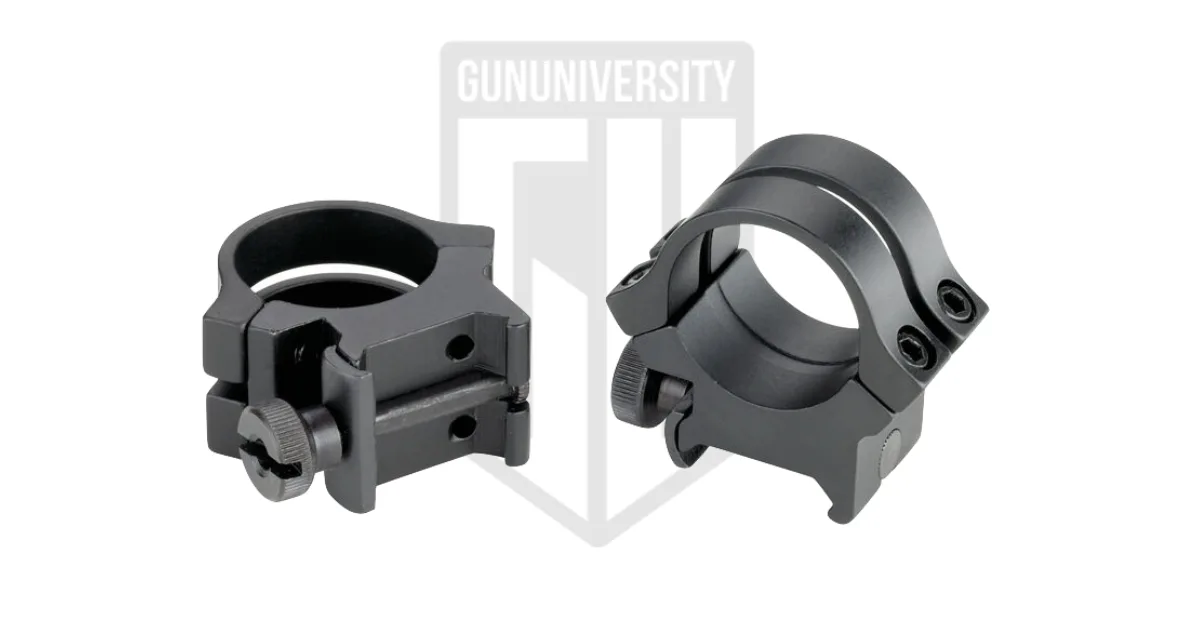
Two-piece split rings fit traditional dovetail or Weaver bases. Match ring height to your cheek weld and follow manufacturer torque specs.
Why the Wrong Scope Mount Costs You Accuracy
A scope mount does more than hold your optic in place. It locks the scope to your rifle's action so both move as a single unit. When that connection is loose or misaligned, your point of impact drifts without warning.
The three most common failures are zero shift, scope cant, and tube slippage under recoil. Verified buyer reviews and manufacturer documentation rank these consistently as top complaints.
| Problem | What It Looks Like | Likely Cause |
|---|---|---|
| Zero shift | Point of impact moves after transport or re-mounting | Under-torqued ring screws |
| Scope cant | Crosshair tilts left or right relative to the horizon | Mount not leveled during installation |
| Tube slippage | Scope slides forward on the tube after firing | Over-torqued rings or wrong ring material |
The stakes climb with heavier calibers. A .300 Win Mag produces enough recoil to loosen cheap aluminum rings in a few range sessions. For semi-auto platforms like the AR-15, a one-piece cantilever mount handles that force better than split rings.
Manufacturer specifications confirm that proper torque is critical. Ring torque targets fall between 15 and 20 inch-pounds. Base screw targets fall between 35 and 65 inch-pounds.
Ignoring those numbers is the most common reason a mount fails in the field.
The financial math favors quality. A mid-range mount costing $60 to $120 saves you from repeated zeroing sessions that waste ammunition and time. Budget options under $30 often loosen after a few dozen rounds and require constant readjustment.
For hunters, the practical stakes are even higher. A scope that shifts half an inch at 300 yards means a missed shot on a once-in-a-lifetime hunt. Forum reports across hunting communities consistently cite mount failure as a top cause of missed shots at extended ranges.
Quality mounts aren't a luxury. They're insurance for the accuracy you already paid for in the rifle and optic.
Two-Piece Rings vs. One-Piece Mounts vs. QD Systems: What Actually Works
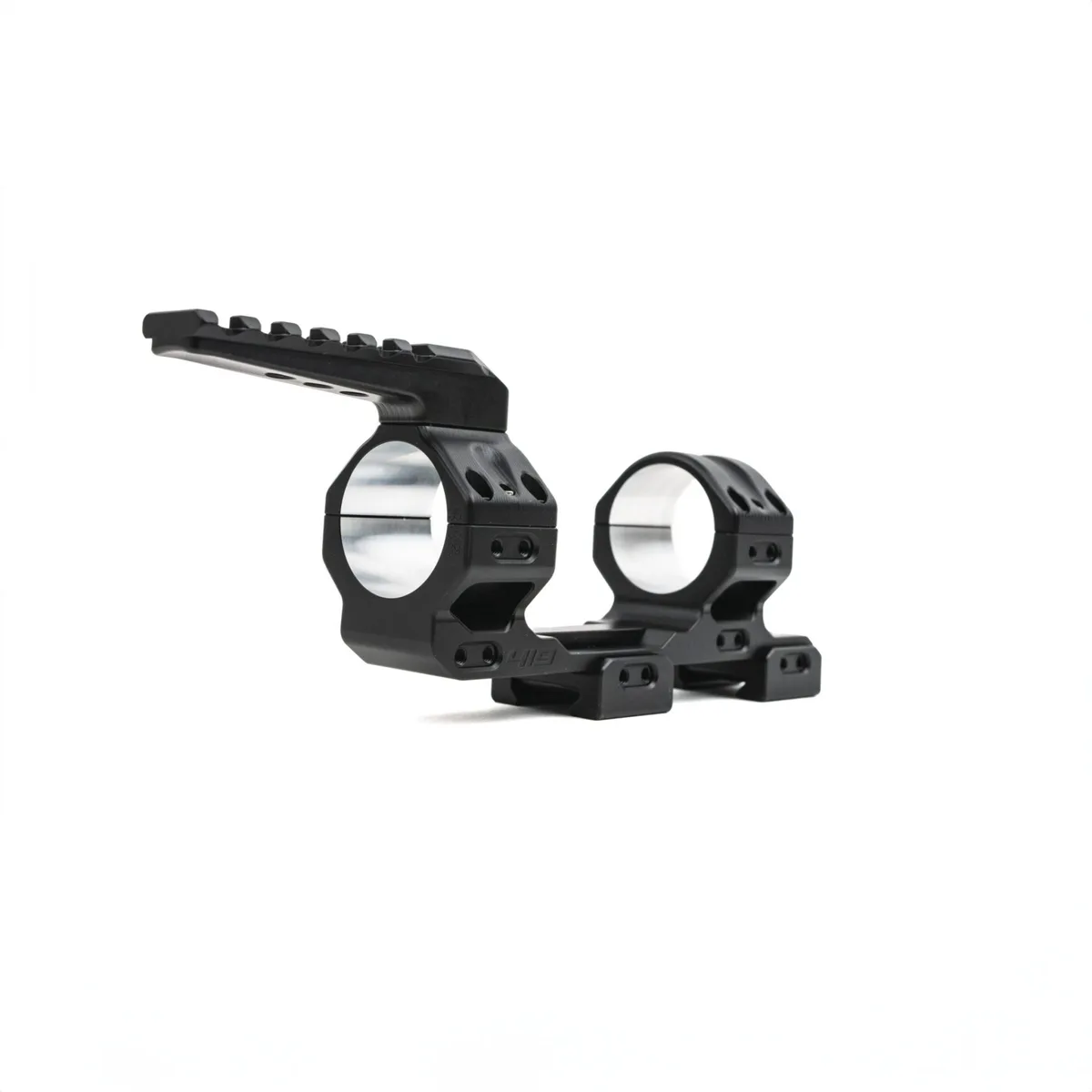
Each mount type handles scope retention differently. The right choice depends on your rifle platform and how often you swap optics. Here's how the three main categories stack up.
| Feature | Two-Piece Split Rings | One-Piece Mount | QD (Quick-Detach) Mount |
|---|---|---|---|
| Weight | Lightest (3-5 oz) | Heaviest (5-8 oz) | Moderate (4-7 oz) |
| Holds zero after removal | No, usually needs re-zero | Yes, for most brands | Yes, for quality QD systems |
| Best platform | Traditional bolt-action, dovetail/Weaver | Bolt-action, long-range, heavy recoil | AR-platform, multi-optic shooters |
| Installation speed | Moderate | Fast (single unit) | Fastest (lever or clamp system) |
Two-piece split rings remain the most traditional option. They mount directly to a dovetail or Weaver base on older rifles. In our research, they still hold up well for hunting rifles with moderate recoil.
The trade-off is that removing the scope and reinstalling it often requires re-zeroing.
One-piece mounts bridge both rings on a single steel or aluminum base. They're stronger under recoil because the mount resists flex better. Long-range shooters and hunters using .30-caliber cartridges benefit most from this design.
The downside is added weight and a higher price point.
Quick-detach (QD) mounts use a lever or clamp system that attaches to a Picatinny rail. They're the go-to for AR-15 shooters and anyone who moves optics between rifles. Quality QD systems hold zero reliably.
Budget QD mounts are the exception. Buyer reviews consistently report zero shift on sub-$50 quick-detach products.
If your scope stays in place permanently, a one-piece mount gives you the most security. If you swap optics between a hunting rifle and a competition rig, a quality QD mount saves real time. If you're on a traditional rifle with a fixed base, split rings still do the job.
Ring Height, Torque Specs, and the Details Nobody Talks About
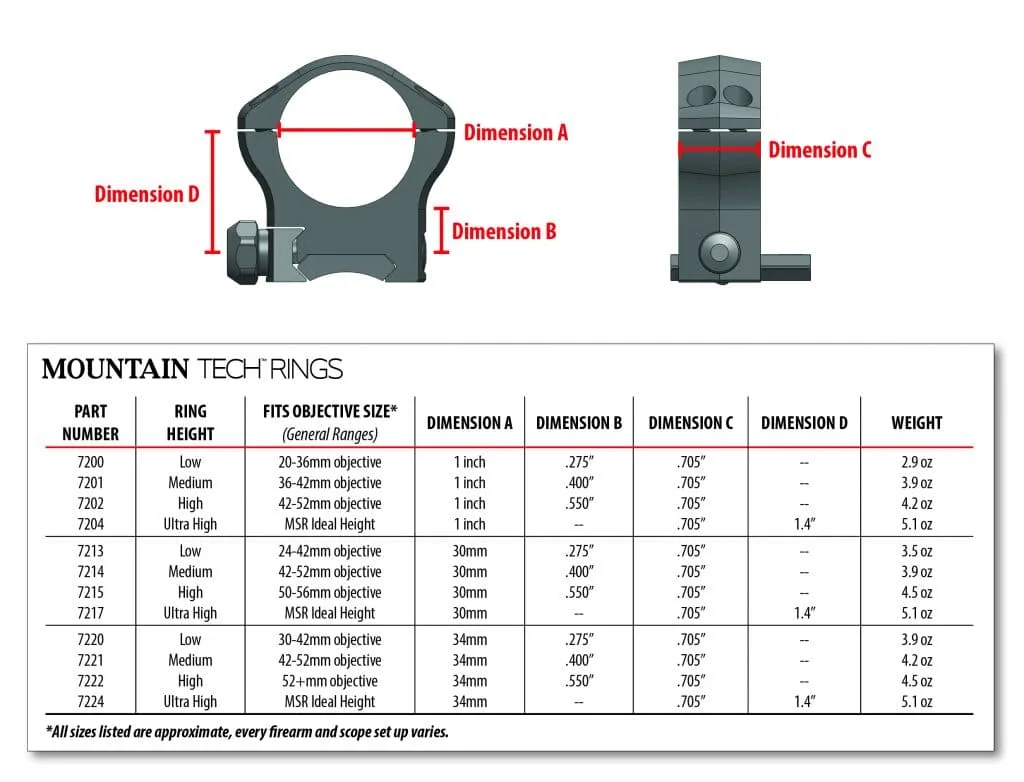
Two numbers determine whether a scope mount actually works on your rifle. Ring height and torque specification. Get either one wrong, and the mount fails even if the brand is premium.
Ring Height Categories
Ring height refers to the distance from the top of the rail to the center of the scope tube. Manufacturers typically offer three heights.
| Mount Height | Approximate Centerline | Common Use Case |
|---|---|---|
| Low | 0.36" / 9.1mm | Bolt-action with low-mounted scope |
| Medium | 0.44" / 11.2mm | General hunting, versatile fit |
| High | 0.50" / 12.7mm and above | AR-15 with large objective bell |
The right height depends on two things. Your scope's objective bell diameter and your stock's comb height. A 50mm objective bell on a bolt-action rifle typically needs a medium or high mount.
An AR-15 with a flat-top receiver almost always needs high mounts.
If your ring height is too low, the objective bell contacts the barrel. If it's too high, your cheek weld suffers. Both problems degrade accuracy.
Torque Specifications
Manufacturers publish torque specs for every component in the mounting chain. These numbers aren't suggestions. They're engineered limits.
| Component | Typical Torque Spec | Notes |
|---|---|---|
| Scope ring screws | 15-20 in-lbs | Do not exceed 20 in-lbs on aluminum tubes |
| Base screws to receiver | 35-65 in-lbs | Varies by receiver type |
| Thread locker (rings) | Blue (Loctite 242) | Removable, easy to disassemble later |
| Thread locker (rail base) | Red (Loctite 272) | Semi-permanent, for base-to-receiver screws |
Use a calibrated torque wrench for every installation. Quality click-type wrenches typically stay within ±5% of their stated spec. NIST maintains calibration standards for torque measurement tools that reputable manufacturers follow.
Tighten ring screws in a cross-pattern. Start at 10 in-lbs, then work up to the final spec. This distributes pressure evenly and prevents scope tube damage.
For detailed torque charts and ring compatibility tables, most scope mount manufacturers publish updated guides on their websites. Vortex Optics maintains mounting documentation covering both bolt-action and AR-platform specs.
Which Mount Is Best for Your Rifle and Shooting Style
There's no single best mount. The right choice depends on what you shoot and how you use your rifle. Here's how to match a mount type to your platform.
Bolt-Action Hunting Rifles
If you're mounting a scope on a Remington 700, Browning X-Bolt, or similar bolt-action, a one-piece Picatinny mount gives you the most recoil resistance. Choose a medium height for most 1-4x or 3-9x hunting scopes. For calibers above .308 Win, spring for a mount rated for heavy recoil.
AR-15 and Modern Sporting Rifles
Flat-top AR receivers almost always need a cantilever one-piece mount or a high-profile QD mount. Cantilever mounts push the scope forward for proper eye relief on the AR platform. Most shooters in this category benefit from a quality QD mount if they own multiple optics.
Long-Range Precision Shooting
For PRS-style competitions or long-range hunting, a one-piece mount in 34mm ring diameter is the standard. These mounts typically use 7075 aluminum and hold zero through hundreds of rounds. Match the mount to your optic's tube diameter exactly.
A 34mm tube won't seat in a 30mm ring.
Rimfire and Small-Caliber Rifles
Rimfire rifles (.22 LR.17 HMR) use lighter mounts because recoil is minimal. Two-piece split rings on a dovetail or Weaver base work well here. There's no need to spend $150 on a precision mount for a .22.
Quick-Swap Setups
If you move optics between a hunting rifle and a target rig, invest in a QD system with a matching base on each rifle. Quality QD mounts hold zero to within 0.1 MOA when reinstalled correctly. Budget QD mounts don't.
The platform determines the mount type. Your shooting style refines it. Match both, and the mount disappears into the background where it belongs.
Common Scope Mounting Mistakes That Mess Up Your Zero
Most zero shift problems trace back to installation errors rather than hardware failure. Here are the mistakes that come up most often and how to avoid them.
Ignoring Torque Specifications
Hand-tightening ring screws is the single most common mistake. Without a torque wrench, it's easy to under-torque (causing scope creep) or over-torque (cracking the scope tube). Always use a calibrated wrench and follow the manufacturer's published specs.
Choosing the Wrong Ring Height
Selecting ring height by eye instead of measurement leads to barrel contact or poor cheek weld. Measure your scope's objective bell diameter and your stock's comb height before buying rings. The gap between the objective and barrel should be at least 0.375 inches.
Skipping Thread Locker
Rail and ring screws loosen under recoil if they don't have thread locker. Apply blue Loctite 242 to ring screws and red Loctite 272 to base-to-receiver screws. This single step prevents most field failures.
Mounting a Scope on a Dirty Rail
Dust, oil, or debris between the mount and rail creates a loose fit. Clean the Picatinny rail surface with a degreaser and a nylon brush before installation. Even a thin layer of grime can cause zero shift over time.
Not Checking for Rail Alignment
After mounting the base to the receiver, check that the rail runs parallel to the bore. Use a boresight or alignment bar to verify. A canted rail throws off zero at long range even if the scope sits perfectly level in the rings.
Forgetting Post-Mount Verification
After installation, confirm the scope tracks correctly by firing three groups at 100 yards. If zero shifts, check the rings, rail, and scope tube for movement before adjusting the turrets. Mounting problems show up as tracking problems.
Getting these details right the first time saves you hours of troubleshooting later.




