Why is my rifle scope tilted? It's one of the most common problems shooters run into, and the symptoms are always the same. Horizontal point-of-impact shift.
Groups that stretch left to right. A crosshair that looks wrong when you check your scope against a bubble level.
The good news is that scope cant is almost always traceable to a small set of causes. Most of them are fixable in an afternoon with a torque driver and a bubble level. We'll walk you through the diagnosis step by step, starting with the most likely culprits.
Quick Answer
A rifle scope is usually tilted because of a misaligned mount. Unevenly torqued ring screws are a top cause. A crooked scope tube in the rings is another.
Sometimes the tilt is intentional, built into a 20 or 30 MOA base. Torque specs and leveling resolve most cant issues.
How to Tell If Your Scope Is Actually Tilted (And Not Just an Illusion)
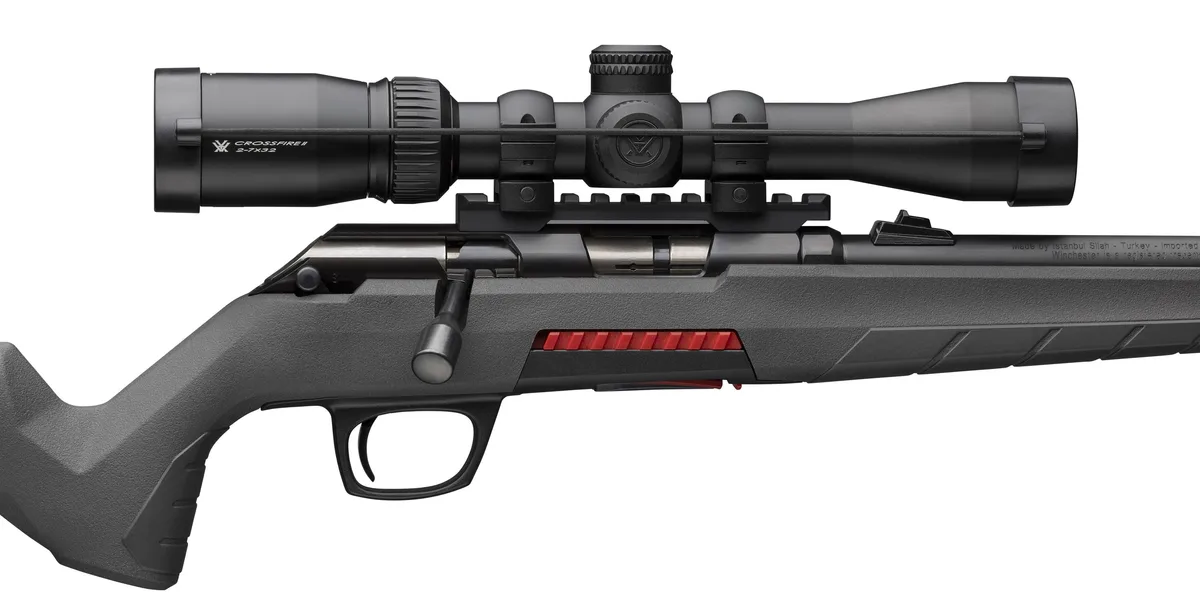
Image source: Bing (Web (fair-use with source credit))
The first thing you should check is whether the scope is truly tilted or just sitting crooked in the rings. These two problems look almost identical but need very different fixes.
Here's a quick check you can run at home. Mount the rifle on a solid rest and set a bubble level on top of the scope's turret housing. Level the rifle body first, then look at the scope's reading.
If the scope shows tilt when the rifle is perfectly level, the scope is canted.
Another approach works without any tools. Remove the scope and look down the barrel from the breech end at a distant target. Then mount the scope and line the reticle up with the same target.
If you can't center the reticle without tilting the scope, something in your mounting chain is off.
As of 2026, most scope manufacturers publish specific leveling and torque guidance. Vortex Optics, for example, recommends a bubble level on the turret housing during installation. Their mounting documentation outlines exact torque values for each ring size.
The Four Most Common Causes of Scope Cant (And How to Tell Which One You Have)
Our research across manufacturer torque specs and gunsmithing references points to four main culprits almost every time. Each one leaves a different fingerprint on your setup.
| Cause | What it looks like | How to confirm |
|---|---|---|
| Ring screws over-torqued | Scope tube tilted in the rings | Check with a torque driver |
| Base screws not at spec | Scope shifting under recoil | Verify each screw individually |
| Rail or receiver out of square | Cant stays the same on every remount | Level the rail directly |
| Built-in rail cant (20+ MOA) | Scope looks tilted even when correct | Check the base angle rating |
If the scope shifts position after you loosen and retorque the rings, the rings were the problem. If the cant stays the same no matter what you do to the scope, your rail or base is the culprit.
This distinction matters because it saves you from chasing the wrong fix. Plenty of shooters re-level their scope three or four times before realizing their rail was never square to begin with.
Is Your Mount, Rail, or Receiver the Problem? A Step-by-Step Diagnostic Check

Image source: Web (Bing) / globalmarksman.com (Web image (fair-use with source credit))
If your scope can't be leveled no matter how you adjust it, the problem is almost certainly below the scope itself. Here's how to isolate it.
Step 1: Remove the scope and mount entirely. Set a small bubble level on top of the Picatinny rail and rock it back and forth across the rail surface. If the level never reads true, your rail is the problem.
Step 2: Check the base screws with a torque driver. Loose or over-torqued base screws cause repeat cant more often than anything else. Manufacturer torque specs for Picatinny base screws typically fall between 20 and 45 in-lbs. Verify each screw individually.
Step 3: Inspect the receiver surface. Some AR-platform receivers have machining tolerances that put the rail slightly off-center. A gunsmith can confirm this with a machinist's square or a dial indicator.
Step 4: Check the mounting interface itself. Look for burrs, paint buildup, or debris between the rail and your mount. Even a thin film can tilt the whole assembly. Clean both surfaces with a solvent and inspect them under good light.
If all four checks come back clean, move to the rings. That's where most cant problems actually live.
Are Your Ring Screws the Culprit? Torque, Sequencing, and How to Inspect Them
Ring screws are the single most common source of scope tilt, and the reasons are straightforward once you see them.
Over-torquing is the first offender. Most scope ring screws are rated for 15 to 25 in-lbs depending on the manufacturer. Going past the rated torque crushes the scope tube slightly.
That can shift the internal erector assembly and throw off your zero entirely.
Uneven torquing is the second. If you tighten one ring screw to 25 in-lbs and leave its mate at 12 in-lbs, the ring itself goes uneven. The scope tube gets pinched on one side.
This is the number one mistake shooters make during installation.
The correct approach is to tighten ring screws in a cross-pattern. Bring each screw up gradually in small increments until you reach spec. Don't rush to full torque on one screw before touching its partner.
To diagnose the problem: loosen all ring screws, remove the scope, and inspect the tube. Look for shiny ring marks or crimp lines that don't sit flat. If you see them, the rings are pinching the tube unevenly.
Re-seat the scope and retorque properly.
Built-In Rail Cant: When a 20 or 30 MOA Base Looks Like a Mistake
If your scope looks tilted but the rings and mount are confirmed square, the cant might be intentional.
Long-range shooters use scope bases with a built-in forward cant of 20, 30, or even 40 MOA. This angles the optic slightly downward relative to the barrel. It gives shooters more elevation adjustment for extended-range targets.
The rail is supposed to be tilted.
Here's how to tell. Look at the scope base or rail product description. If it says "20 MOA" or "30 MOA" on the base itself, that tilt is by design.
Your scope sitting slightly canted on the rifle is correct.
This only becomes a problem if you don't know the rail has built-in cant. You end up spending hours trying to level a scope that was never meant to sit level. Check your base specs first before chasing anything else.
How to Level a Scope, Zero It Correctly, and Verify There's No Residual Tilt

Image source: Web (Bing) / amazon.ca (Web image (fair-use with source credit))
Now that you've diagnosed the cause, here's how to lock everything down properly. Make sure the firearm is fully unloaded and the chamber is clear before you begin any mounting work.
First, set the rifle on a level surface. Place a bubble level on the receiver or a flat scope base. Confirm the rifle body reads level before you do anything else.
Next, mount the scope with the ring screws tightened in a cross-pattern. Use a torque driver set to the manufacturer's spec, not a regular hex key. Bring each screw up to torque gradually, rotating back and forth between them.
Vortex recommends roughly 15 to 18 in-lbs for their rings, but always check your specific model.
Once the scope is torqued, use a bubble level on the turret housing to confirm the reticle sits perfectly vertical. Adjust the scope in the rings until the bubble reads true. Then re-tighten to final spec.
Bore-sighting comes next. Look down the barrel at a target and align the reticle with what you see. This gets you close to zero before firing a round.
At the range, confirm your zero at 100 yards. Fire a three-shot group and check where the rounds land. If the group sits consistently left or right of center, your scope still has residual cant.
Loosen the rings and repeat the leveling process.
Nightforce's mounting guides recommend this full sequence every time you install or remount an optic. Skipping any step reintroduces the chance of cant.
Mistakes That Make Scope Cant Worse (And How to Avoid Them)
Even experienced shooters fall into these traps. Here are the ones that cause the most trouble.
Using a regular hex key instead of a torque driver. A standard key gives you no feedback on how tight a screw actually is. Most ring damage comes from hand-torqued screws that went way past spec. Pick up a dedicated scope torque driver.
They cost less than a single range trip.
Mixing brands in the mounting chain. A 20 MOA base from one manufacturer with rings from another can introduce subtle misalignment. The rail tolerances don't always match perfectly across brands. Stick with a single ecosystem when possible.
Skipping the leveling step because "it looks close enough." A scope can look vertical to the eye and still be off by 2 to 3 degrees. That's enough to cause measurable horizontal drift at distance. Always use a bubble level.
Over-relying on bore-sighting alone. Bore-sighting gets you on paper but not on zero. It doesn't account for how the scope sits in the rings or how the rail aligns to the receiver. Always follow up with a real zeroing session.
Not rechecking after recoil. Recoil can shift a loosely torqued base over time. Check your base screws after every range session for the first few months of ownership.
Frequently Asked Questions
How do I check if my rifle scope is canted?
Set a bubble level on the turret housing of your scope. Level the rifle body first, then read the scope's bubble. If the scope shows tilt while the rifle is level, the scope is canted.
This test takes about a minute and requires no tools.
What torque should I use for scope ring screws?
Most scope ring screws are rated between 15 and 25 in-lbs, depending on the manufacturer. Check your specific ring model for exact specs. Always use a torque driver rather than a hex key to avoid over-tightening.
Can a 20 MOA base make my scope look tilted?
Yes, that's normal. A 20 or 30 MOA base angles the optic forward by design. It gives long-range shooters more elevation adjustment.
If your base rating includes MOA, the cant is intentional and doesn't need to be fixed.
Why does my scope stay tilted after leveling?
If the cant persists after you've torqued the rings and confirmed the reticle with a bubble level, the problem is likely in the rail or receiver. Check the Picatinny rail with a bubble level. If the rail itself reads uneven, the fix is below the scope.
How do I zero a rifle after releveling the scope?
Start with bore-sighting to get on paper. Then fire a three-shot group at 100 yards and adjust the reticle to center. Fire another group to confirm.
Repeat until two consecutive groups group tightly at the point of aim.