Is first focal plane better than second focal plane? That question comes up in almost every optics conversation, and the answer frustrates people because there is no clean winner. FFP scopes give you holdover accuracy at every magnification.
SFP scopes give you a consistent, visible reticle at every magnification. Which one you need depends on what you're actually shooting.
The mechanical difference is straightforward. First focal plane (FFP) scopes place the reticle behind the magnification lens, so it scales with zoom. Second focal plane (SFP) scopes keep the reticle a fixed size regardless of magnification.
As of 2026, the optics market has matured to the point where glass quality alone won't tell you which system you need. The reticle behavior will.
Quick Answer
First focal plane is not better than second focal plane universally. FFP reticles stay accurate at all magnifications. SFP reticles stay visually consistent at all magnifications.
FFP suits long-range tactical shooting. SFP suits hunting and general-purpose use. The right system depends on your shooting discipline and magnification range.
How FFP and SFP Reticles Actually Work (The Mechanical Difference)
The difference comes down to one thing: where the reticle sits inside the scope's optical path.
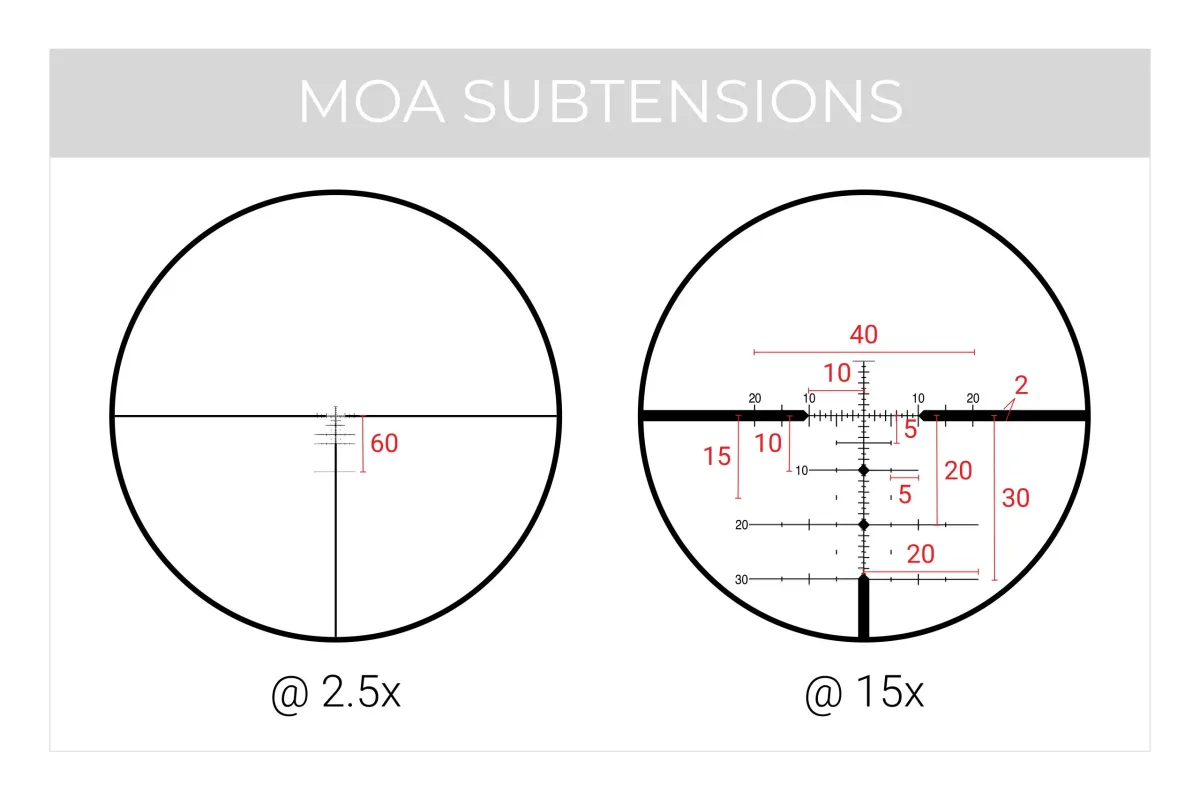
On a first focal plane (FFP) scope, the reticle sits behind the magnification lens group. When you zoom in, the reticle grows proportionally with the target. Every holdover mark represents the same real-world distance at any magnification.
A 0.1 Mil subtension on 5x covers the same ground as a 0.1 Mil subtension on 25x. That is the core advantage. You never lose accuracy when you change magnification.
On a second focal plane (SFP) scope, the reticle sits in front of the magnification lens group. The reticle stays the same visual size no matter what magnification you set. This keeps the reticle clean, bright, and easy to see at low power.
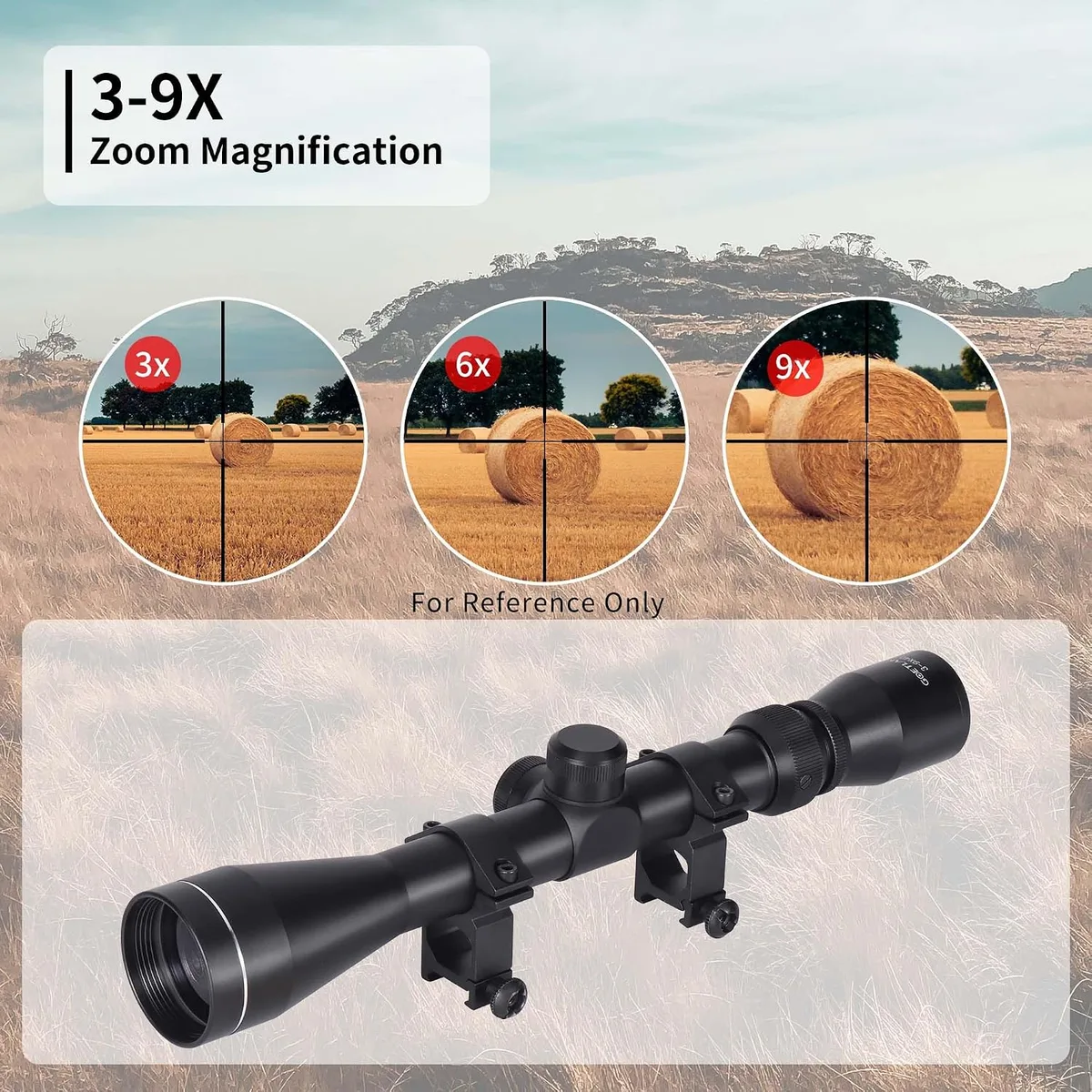
The catch is subtension accuracy. Holdover marks are only valid at one designated magnification, typically the highest power or a marked reference point. Zoom away from that power and your holdover data is wrong.
Manufacturer documentation from Nightforce Optics confirms this behavior clearly. Their FFP reticle designs remain calibrated across the full magnification range. Their SFP reticle designs are calibrated for accuracy at a single reference magnification.
Pros and Cons of First Focal Plane and Second Focal Plane Scopes
Both systems have real strengths and real tradeoffs. Neither is a downgrade. The key is matching the system to what you actually shoot.
First Focal Plane (FFP)
Pros:
- Subtensions remain accurate at every magnification
- Works across changing engagement distances without recalculating
- No need to remember which power makes reticle marks valid
- Standard for precision rifle competition and tactical applications
- Simplifies laser rangefinder-to-holdover workflows
Cons:
- Reticle becomes very fine at low magnifications, harder to see in low light
- Generally more expensive than comparable SFP models at equivalent glass quality
- Overkill for shooters who stay locked at one magnification
- Illuminated reticles can drain battery faster at high magnification settings
Second Focal Plane (SFP)
Pros:
- Reticle stays visually consistent across the entire zoom range
- Cleaner, brighter sight picture at low power
- Typically more affordable than SFP at equivalent glass quality
- Easier for beginners to understand holdover fundamentals
Cons:
- Subtensions are only accurate at one designated magnification
- Holdover accuracy breaks down when you zoom away from that power
- Less suitable for dynamic, multi-distance shooting scenarios
- Requires more conscious attention to which magnification you are using
FFP vs. SFP: Side-by-Side Breakdown Across Key Factors
| Factor | First Focal Plane | Second Focal Plane |
|---|---|---|
| Reticle accuracy | True at all magnifications | True at one magnification only |
| Low-light visibility | Finer reticle at low power | Reticle stays consistently visible |
| Price at equivalent glass | Higher | Lower |
| Best magnification range | 3x to 24x and up | 1x to 9x |
| Target acquisition speed | Slower at low power | Faster at low power |
| Competition use | Standard in PRS and NRL | Less common in long-range competition |
| Hunting suitability | Variable-distance hunts | Fixed-range or brush hunting |
| Beginner-friendly | Requires more understanding | Simpler to learn |
The table captures the core tradeoffs. Now put that into context with real usage scenarios.
A PRS competitor running a 5-25x FFP scope will dial elevation for each stage and use reticle holdover at magnifications from 10x through 25x. Every holdover mark stays reliable because subtensions scale with zoom. Switch to a 3-9x SFP scope at that same stage and the holdover marks are only true at 9x.
That single limitation makes SFP impractical for competition.
Now flip the scenario. A whitetail hunter running a 2-7x SFP scope for deer season will shoot at 80 to 150 yards all day. The reticle stays crisp and bright at every magnification.
Most shots are dial-and-press rather than holdover. Here SFP is simply the better tool.
As of 2026, per Vortex Optics product documentation, their Razor and Viper lines offer both FFP and SFP variants with identical glass quality. The internal reticle design is the only material difference. Understanding that removes the guesswork.
Which Reticle Type Fits Your Shooting? Best Scopes by Use Case
There is no single "better" focal plane. The right choice depends on what you shoot and how you shoot it. Here is a practical breakdown by use case.
Precision rifle competition (PRS, NRL)
FFP wins here, without question. Competitors change magnification constantly during a stage. Subtensions must hold at every power.
A 0.1 Mil tree reticle on a 5-25x FFP scope gives reliable holdover from 5x through 25x without recalculating. Per USMC marksmanship doctrine, holdover-based shooting requires predictable subtension behavior across magnification changes. That is exactly what FFP provides.
Variable-distance hunting
FFP is the better pick when your engagement distance changes on every shot. Mountain hunting can take you from 150-yard brush shots to 400-yard canyon shots in the same hunt. FFP handles that range shift cleanly.
You never wonder whether your holdover marks are accurate because they always are.
Close-range and brush hunting
SFP holds strong here. If most of your shots land between 50 and 200 yards, an SFP scope with a bright, simple reticle gives you faster target acquisition and a cleaner sight picture. You will not notice the SFP limitation because you rarely zoom away from the reference magnification.
Tactical and law enforcement use
FFP dominates. Operators need reliable holdover data without stopping to check magnification. The reticle must track consistently when magnification shifts mid-engagement.
Every serious tactical optic line from Nightforce to Leupold builds its FFP models for this exact purpose.
Beginners and casual shooters
SFP remains the friendlier starting point. The reticle stays readable at low power. Holdovers are straightforward if you stay at the designated true magnification.
You can always upgrade to FFP later once you understand what the reticle is actually doing.
Choosing Between FFP and SFP: Practical Tips Before You Buy
Before you spend money on either system, answer a few practical questions about your own shooting. This is where most scope-buying regrets start and finish.
What magnification range do you actually shoot at?
If your shooting never moves past 3x to 9x, an SFP scope with a clean reticle is plenty. You get better low-light performance and a lower price. If you regularly push past 10x or need reliable holdovers at 5x, FFP removes the guesswork entirely.
How often do you change magnification mid-engagement?
This is the deciding factor for most shooters. If you zoom in and out during a single hunt or stage, FFP subtensions stay accurate every time. If you pick a magnification and stay there, the SFP limitation never actually affects you.
What is your budget at equivalent glass quality?
FFP scopes carry a premium for the reticle mechanism. At the same glass tier, expect to pay $100 to $400 more for an FFP model depending on the brand. If you need better glass and you shoot close to mid-range, spend the money on optics rather than reticle system.
Quick decision checklist
- Shoot under 200 yards and stay at one magnification? Go SFP.
- Shoot past 400 yards and zoom frequently? Go FFP.
- Shoot precision competition or long-range tactical? FFP is the only real option.
- Shoot brush, small game, or casual plinking? SFP delivers everything you need.
- Budget tight and you're learning fundamentals? Start with SFP. Upgrade later.
Do not let FFP marketing pressure you into buying more capability than your shooting demands. The best reticle system is the one that matches the way you actually pull the trigger.
Frequently Asked Questions
What is the main difference between first focal plane and second focal plane?
The reticle behavior under magnification is the main difference. On a first focal plane (FFP) scope, the reticle scales with zoom, so subtensions stay accurate at every magnification. On a second focal plane (SFP) scope, the reticle stays a fixed visual size, and holdover marks are only accurate at one designated magnification power.
Is FFP better than SFP for hunting?
It depends on your engagement distances. FFP is better for variable-distance hunts where your shooting range changes frequently. SFP is better for close-to-mid-range hunting where you stay at a single magnification and need a bright, visible reticle in low light.
Do professional shooters prefer FFP or SFP?
Most competitive and tactical shooters prefer FFP. Precision rifle competition, long-range target shooting, and law enforcement sniping all rely on accurate holdover data across multiple magnifications. SFP scopes remain popular among hunters and recreational shooters who prioritize simplicity and low-light visibility.
Are FFP scopes more expensive?
Yes, generally. At equivalent glass quality, FFP scopes typically cost $100 to $400 more than SFP models. The difference comes from the more complex internal mechanism needed to move the reticle position during magnification changes.
Brands like Vortex, Nightforce, and Leupold offer both options so you can compare price directly.
Can I use holdover on an SFP scope?
Yes, but only at the designated true magnification. Every SFP scope has one magnification power where the reticle subtensions match real-world distances. Most shooters use the highest power on the scope.
At other magnifications, the holdover data is incorrect and will cause misses at distance.
What magnification is true on a second focal plane scope?
That depends on the scope manufacturer, but it is typically the maximum magnification listed on the scope. For example, on a 3-9x SFP scope, subtensions are usually calibrated for 9x. Always verify the true magnification in your scope's manual before relying on holdover data.
Final Verdict: Which Focal Plane Should You Pick?
There is no universal answer, and any article that tells you one system is objectively better than the other is oversimplifying. The honest verdict is that FFP and SFP each dominate different shooting contexts.
Choose FFP if you shoot at varying distances, change magnification frequently, or compete in precision rifle shooting. The subtension accuracy at every power removes the mental overhead and makes holdover data reliable no matter what magnification you're on. It's the right tool for long-range work.
Choose SFP if you shoot within a consistent range, stay at one magnification, or prioritize a bright, easy-to-see reticle in low light. The price savings at equivalent glass quality are real, and the reticle simplicity makes it a better fit for hunting and general-purpose shooting.
Most shooters own both types over time. They're not competing systems. They're different tools.
Pick the one that matches how you actually shoot, and the rest of your optic decisions get a lot easier.