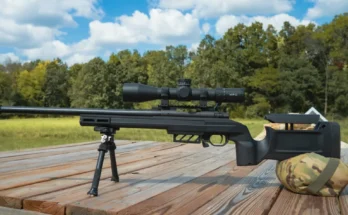
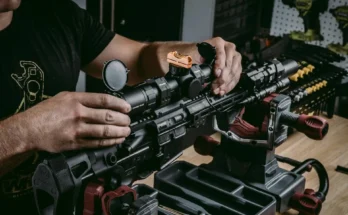
What is the best rifle scope for hunting? There isn’t one universal answer. The right scope depends on your game, shooting distance, caliber, and the terrain you hunt in.
A great whitetail optic can be the wrong tool entirely for an open-prairie elk hunt.
Manufacturers like Vortex, Leupold, and Nightforce build scopes for every scenario and price point. Aggregate reviews suggest a 3-9x scope covers most deer hunting at 50 to 300 yards. The real decision comes from matching the optic to your specific situation.
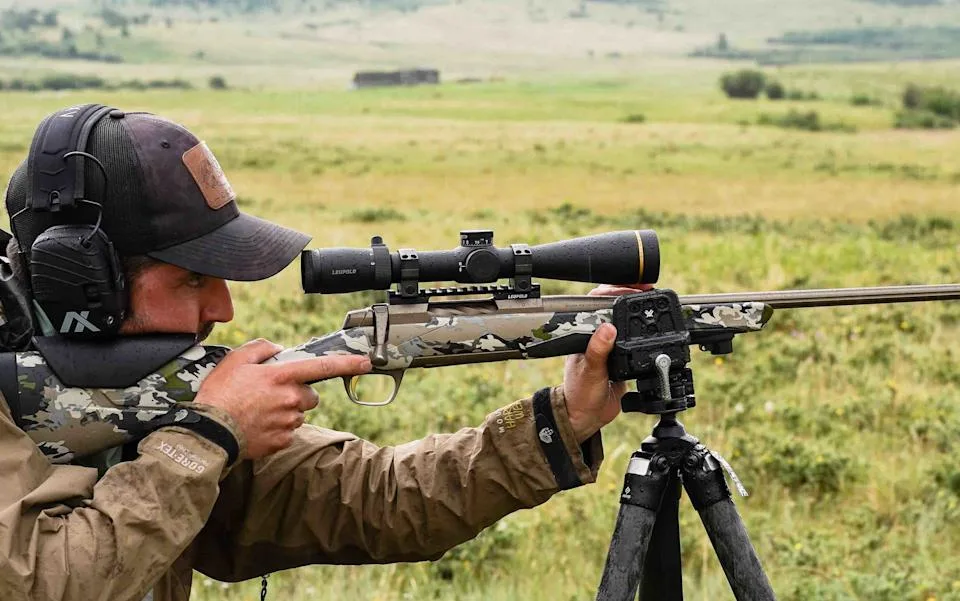
Image source: Bing (Web (fair-use with source credit))
Quick Answer
The best rifle scope for hunting depends on your game, range, and terrain. For most deer hunters, a 3-9x scope handles shots up to 300 yards. For elk and open-country hunts, go with a 4-16x scope for added reach.
Budget hunters should focus on the $150 to $600 range for solid value.
Why There’s No Single Best Rifle Scope for Hunting
Most guides will hand you a product list and call it “the best.” That approach falls apart quickly, because hunting demands change from one scenario to the next.
If you hunt whitetail deer in thick Eastern timber, you need fast target acquisition at 100 to 250 yards. A 3-9x scope with a 1-inch tube handles that job well. Light weight and quick magnification let you drop on a deer that appears for three seconds.
Now shift to elk hunting on the open plains. Those shots often stretch to 400 yards or beyond. You need magnification, a reliable BDC reticle, and enough turret travel to dial in bullet drop.
A 4-16x scope with a 30mm tube fits that scenario.
Your caliber matters too. A .270 Winchester pushes a lighter bullet flatter than a .30-06. Choose your scope to match the ballistics you actually shoot, not the ballistics you wish you had.
Budget plays a role as well. A $200 scope will cover plenty of hunting scenarios. But if you hunt in low light regularly, investing in better glass pays off fast.
What Actually Matters When Choosing a Hunting Scope
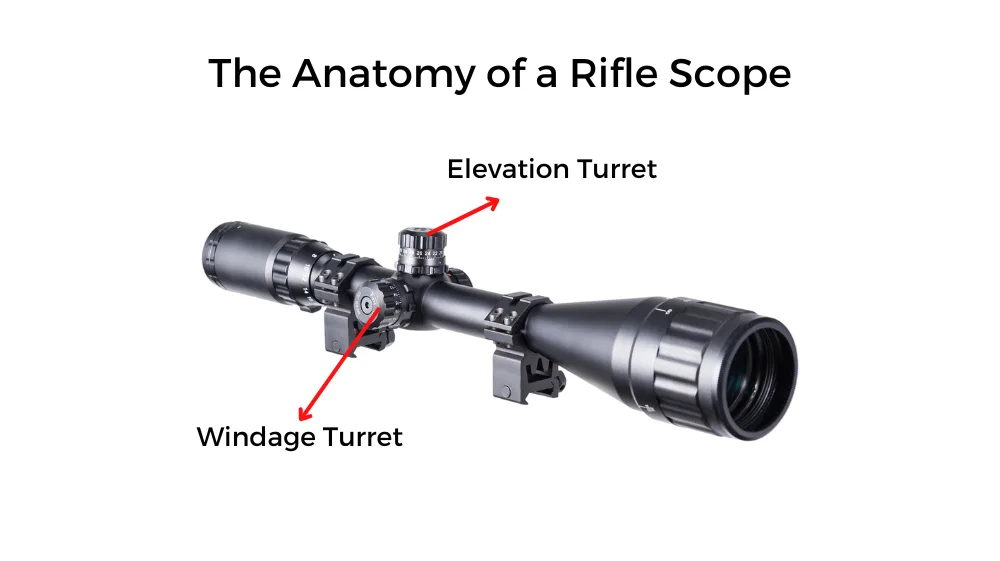
Image source: Web (Bing) / pintydevices.com (Web image (fair-use with source credit))
Six specs separate a good hunting scope from a bad one. Here’s what matters most.
Magnification Range
Start with your realistic hunting distance. If your shots rarely exceed 300 yards, a 3-9x or 2.5-10x scope covers the range without slowing target acquisition. For open country, 4-16x or higher gives you the reach you need.
First Focal Plane vs. Second Focal Plane
First Focal Plane (FFP) reticles scale with magnification, so your holdover marks stay true at every zoom setting. Second Focal Plane (SFP) reticles stay the same size but only hold true at one magnification, usually the highest.
SFP works well for hunters who shoot at a set range. FFP suits those who dial or hold at variable distances.
Tube Diameter
A 1-inch (25mm) tube gives you plenty of adjustment for most hunting ranges. A 30mm tube offers more total elevation travel. That matters if you shoot past 400 yards or use a caliber with heavy bullet drop.
Glass Quality
Lens coatings and glass type determine low-light performance. Extra-low dispersion (ED) glass and fully multi-coated lenses keep images bright and sharp at dawn and dusk. Those are the hours when most deer and elk actually move.
Eye Relief
Manufacturers typically spec 3.3 to 4 inches of eye relief. Heavy calibers like .300 Win Mag generate sharp recoil. Make sure the scope you choose protects your eye under that recoil.
Reticle Type
A BDC reticle gives you pre-calculated holdover marks for known distances. Mil and MOA reticles offer more flexibility but require you to know your dope. Choose based on how you actually shoot in the field.
Rifle Scope Price Tiers: Budget, Mid-Range, and Premium
| Tier | Price Range | What You Get | Trade-offs |
|---|---|---|---|
| Budget | Under $150 | Functional glass, basic reticle, workable turrets | Lower light transmission, less durable coatings |
| Mid-Range | $150 to $600 | Solid coatings, better eye box, reliable zero retention | May lack illumination, fewer tube options |
| Upper Mid-Range | $600 to $1,500 | ED glass, excellent low-light performance, precise tracking | Heavier, more expensive mounting |
| Premium | $1,500 to $3,000+ | Top-tier glass, flawless tracking, lifetime warranties | Diminishing returns for most hunting distances |
For most hunters, the mid-range tier delivers the best overall value. Models like the Vortex Diamondback HD and Burris Fullfield E1 sit in this range and perform reliably for deer and elk hunting.
As of 2026, aggregate reviews and manufacturer warranty data suggest scopes in the $400 to $600 range track consistently within 1/4 MOA through repeated zeroing cycles. That’s precise enough for any big-game hunt inside 400 yards.
If your hunting regularly happens at dawn or dusk, step up to the upper mid-range tier. The glass quality jump between $300 and $700 optics is one of the clearest performance differences in the entire product category.
Best Rifle Scope by Hunting Use Case
Match your scope to the actual hunt, not the one you imagine.
Whitetail Deer in Timber
Thick cover means fast shots at 100 to 250 yards. A 3-9x scope with a 40mm objective works perfectly. You don’t need heavy magnification when the deer appears at 80 yards through a stand window.
Elk and Mule Deer in Open Country
Shots here often stretch to 300 to 500 yards. Step up to 4-16x or 5-25x. A 30mm tube gives you the turret travel to dial bullet drop with confidence.
Coyote and Predator Hunting
Predator hunters debate this constantly. If you’re calling coyotes at 100 yards or closer, a 1-6x LPVO gives you the speed you need. If you’re hunting open farmland at 300 yards and beyond, a 4-12x scope with a BDC reticle is the better tool.
Mountain Hunts
Weight matters at altitude. A lightweight 2.5-10x scope with a 40mm objective keeps your rifle balanced while climbing. Skip the 34mm tubes and large objectives when ounces add up over miles.
Rimfire Small Game
Squirrel and rabbit hunting needs low magnification and fine parallax adjustment. A dedicated rimfire scope with a 3-9x range and a 20mm to 32mm objective handles close-range shots cleanly.
Top Hunting Scopes Worth Considering
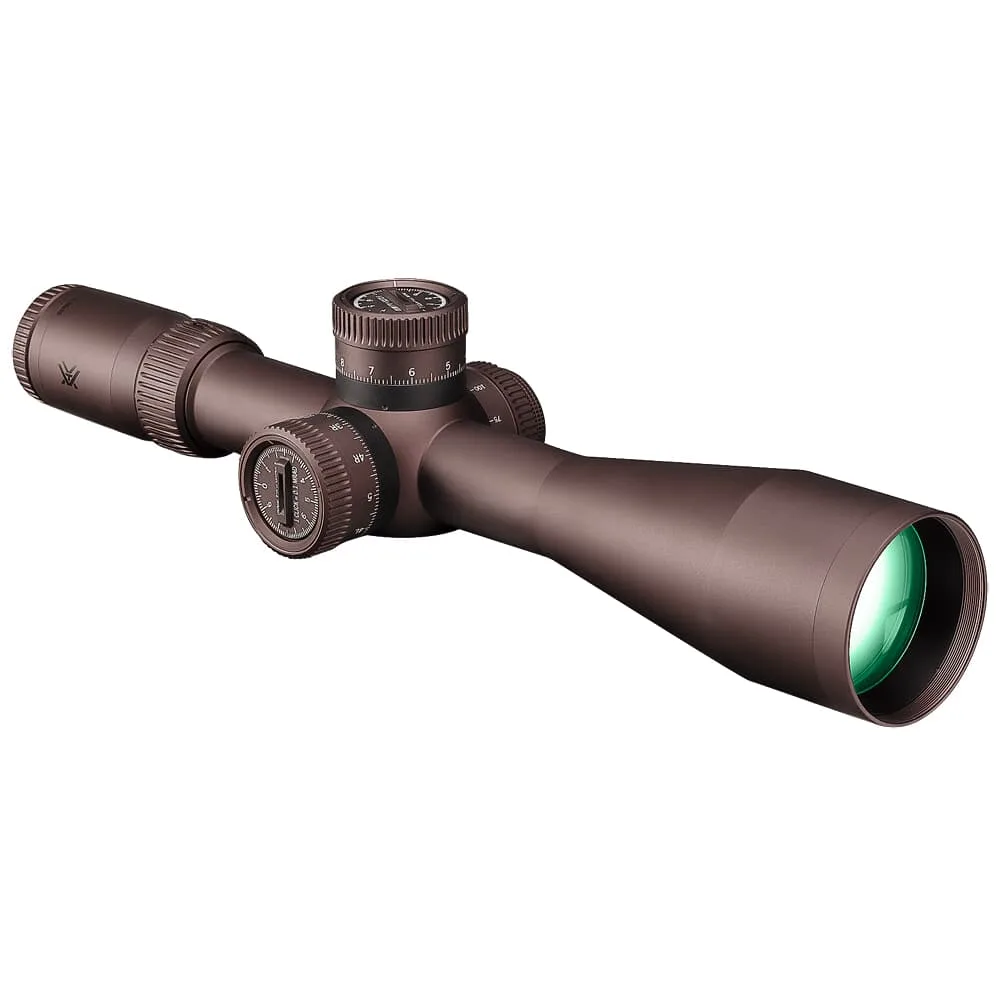
Image source: Web (Bing) / eurooptic.com (Web image (fair-use with source credit))
Here’s a shortlist of scopes that earn consistent praise in hunting communities, based on aggregate user feedback and manufacturer specifications.
| Scope | Price Tier | Best For | Magnification | Tube |
|---|---|---|---|---|
| Vortex Diamondback HD | Budget | General deer hunting | 3-9x, 4-12x, 4-16x | 1 inch |
| Leupold VX-3HD | Mid-Range | Low-light performance | 3.5-10x, 4.5-14x | 1 inch |
| Vortex Viper HD | Mid-Range | All-around versatility | 2-10x, 3-15x | 30mm |
| Nightforce NX8 | Upper Mid | Long-range precision | 4-32x, 2.5-10x | 34mm |
| Primary Arms SLx | Budget | Value builds and AR-15 | Various | 30mm |
If your budget is tight, the Vortex Diamondback HD offers ED glass and reliable tracking at a price most hunters can absorb. Leupold’s VX-3HD line is widely praised for low-light brightness, which matters in the last 20 minutes of legal shooting light.
For hunters ready to invest, Vortex Optics Razor HD line and Nightforce NX8 deliver premium glass and turret precision that justify the higher cost for long-range hunts.
No single scope wins every category. The best choice is the one that matches your hunting scenario, not the one with the longest spec sheet.
Common Mistakes Hunters Make When Choosing a Scope
Over-magnifying for your actual hunting distances is the most common mistake. A 6-24x scope for timber whitetail shots at 150 yards gives you a narrow field of view and slows target acquisition. Match magnification to where your shots really happen.
Buy a scope for the hunt you’re in now, not the dream hunt someday. If you never shoot past 300 yards, you don’t need a 20x optic. Match the spec to the real hunt in front of you.
Eye relief is another thing hunters overlook until their eyebrow meets the scope bell. If you hunt heavy calibers like .308 or .300 Win Mag, pick a scope with at least 3.5 inches of eye relief. Check manufacturer specs before mounting, not after the first range session.
Cheap glass looks fine on a display rack but falls apart at dawn. That’s when most deer and elk actually move. Budget optics with poor light transmission lose brightness in those critical minutes.
Spend more on lens coatings and glass quality if you hunt low light regularly.
Wrong ring height throws off both your sight picture and cheek weld. Too low, and the objective bell blocks the view. Too high, and your head doesn’t line up on the comb.
Match ring height to your objective diameter and stock geometry.
Expert Tips for Mounting, Zeroing, and Getting the Most Out of Your Scope
Boresight your scope before firing a single round. Align the bore with a target at 25 yards using a laser boresighter or by looking down the barrel from behind. This gets you close enough that your first live-fire group lands on paper.
Torque specs matter more than most hunters realize. Scope rings and bases need consistent, manufacturer-specified torque to hold zero under recoil. A common range is 15 to 20 in-lbs for rings and 20 to 25 in-lbs for bases.
Use a torque wrench, not guesswork.
Zero at 100 yards for most calibers and most hunting distances. Then build DOPE, which stands for Data On Previous Engagements. Record your actual bullet drop at 200, 300, and 400 yards.
This data lets you hold or dial with confidence when the moment matters.
Check turret tracking by dialing 1 MOA up, firing, then dialing back to zero and firing again. If your point of impact doesn’t return to the original group, the turrets aren’t tracking cleanly. This quick test catches mounting problems and turret defects early.
Parallax adjustment is worth learning. When your target sits on a different focal plane than the reticle, small aiming errors creep in. Set parallax for your actual hunting distance before taking the shot.
Side focus makes this adjustment easy and fast to dial in.
Scope caps and a quality throw lever round out a field-ready setup. Caps protect your lenses from dirt and scratches during transport and tree-stand climbing. A throw lever lets you change magnification instantly when a deer steps out at close range.
Frequently Asked Questions
What magnification do I need for deer hunting?
For most deer hunting, a 3-9x scope covers the range you’ll realistically shoot. It handles shots from 50 to 300 yards with a wide field of view. If you hunt Eastern timber where shots stay under 150 yards, a 2.5-10x scope also works well.
Is a 3-9x scope still the best all-around hunting scope?
Yes, the 3-9x range remains the most popular all-around hunting scope for good reason. It balances magnification, field of view, and target acquisition speed across most deer and medium-sized game scenarios. For most hunters, it’s the safest and most versatile starting point.
FFP or SFP, which should a hunter choose?
Choose FFP if you dial your turrets or hold at variable distances. The reticle subtensions stay true at every magnification setting. Choose SFP if you prefer a simpler setup and shoot at consistent ranges.
SFP holds true at its highest magnification.
Do I really need a 30mm tube?
You need a 30mm tube if you shoot past 400 yards or use a caliber with heavy bullet drop. The larger tube gives you more total elevation travel for dialing. For deer hunting inside 300 yards, a 1-inch tube is more than enough.
Can I use a scope on my AR-15 for hunting?
Yes, many hunters use scopes on AR-15 rifles for coyotes, deer, and hogs. An LPVO like a 1-6x scope handles close-range shots effectively. A 2.5-10x or 3-12x scope works better if you hunt open country at longer distances.
Do I need an illuminated reticle?
An illuminated reticle helps in low light, especially at dawn and dusk when deer and elk are most active. It makes the reticle visible against dark game animals when natural light is fading fast. For most deer hunters, illumination is a useful upgrade rather than a strict necessity.