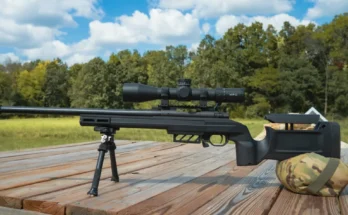
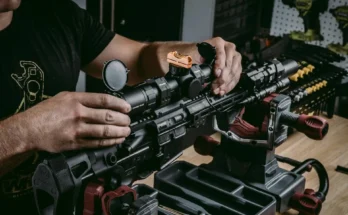
Why does my rifle scope have a black circle? That dark ring creeping around the edge of your scope image is one of the most common complaints from new scope owners and seasoned shooters alike. The fix is usually straightforward once you know which variable is off.
Most often, the culprit is eye relief being too short or too long, or from mount ring height sitting at the wrong level above the bore. Manufacturer specs typically list eye relief between 3 and 4 inches. If you're behind the scope but can't see a full, clear circle of image, something in that chain is off.
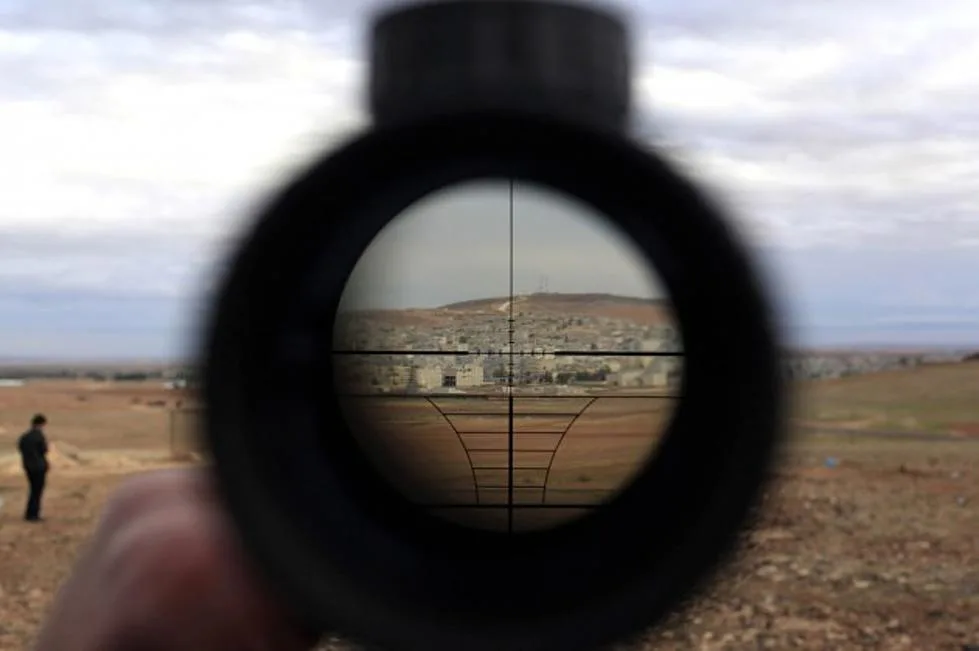
Image source: Bing (Web (fair-use with source credit))
Quick Answer
Why does my rifle scope have a black circle? Eye relief misalignment is the most common cause. Mount ring height can also block part of your field of view.
Parallax not set to your target distance adds another dark edge. A sunshade that's too long for your magnification level creates a tunnel effect.
How Each Cause Works: Eye Relief, Mount Height, Parallax, and Sunshade Length
A black circle in your scope can come from four distinct sources. Each one produces a slightly different visual symptom, which is exactly why the diagnostic workflow works. Let's break down what's happening in each case.

Image source: Web (Bing) / warnescopemounts.com (Web image (fair-use with source credit))
Eye Relief Misalignment
Eye relief is the distance between your eye and the rear lens of the scope. If you're too close, you get what shooters call "scope shadow" from the edge of the ocular bell. If you're too far back, you lose the outer ring of your field of view entirely.
The symptom looks different depending on the direction. Too close means a shadow that moves when you shift your head slightly. Too far means a permanent dark circle around the full image.
Most rifle scopes require 3 to 4 inches of eye relief at maximum magnification.
Mount Ring Height
Your scope rings sit your optic at a specific height above the rifle bore. If that height is wrong, your eye can't align properly with the optical center. Low rings often cause scope shadow when you're shooting from a prone position.
High rings can create the same issue from a standing position.
The fix isn't always "go higher." Sometimes you need a stock with an adjustable cheek comb instead.
Parallax Not Set Correctly
Parallax occurs when the reticle and the target image are on different focal planes. On scopes with a parallax adjustment turret or an adjustable objective, failing to dial this to your target distance can cause edge distortion and a subtle dark ring.
This one is more common at longer ranges. As of 2026, most mid-range scopes under $500 now include either a side focus turret or an adjustable objective, so this cause is more accessible than it used to be.
Sunshade Too Long
A sunshade is an extension you thread onto the front of your scope to reduce glare. If the sunshade is too long relative to your current magnification, it creates a tunnel effect. You'll see a dark ring that gets worse as you increase magnification.
Most manufacturers recommend removing the sunshade below 8x magnification. Check your scope's manual if you're unsure.
| Cause | When It Appears | What It Looks Like |
|---|---|---|
| Eye relief too close | Close-range shooting, any position | Shadow that shifts with head movement |
| Eye relief too far | High magnification, standing | Permanent dark ring around full image |
| Mount ring height wrong | Prone or standing | Scope shadow on one side of field |
| Parallax misaligned | Long-range, 150+ yards | Subtle edge distortion |
| Sunshade too long | Any magnification above 8x | Tunnel effect, dark ring at edges |
The Step-by-Step Diagnostic Workflow: Isolate Your Black Circle Cause
This is where we sort the real problems from the red herrings. Work through each step in order. Most shooters find their answer by step four.
Step 1: Remove the Sunshade
If you have a sunshade threaded on the front of your scope, take it off first. This eliminates the simplest variable. Look through the scope without it.
If the black circle disappears, you've found your problem. Reinstall the sunshade only at magnification levels where it doesn't cause tunneling.
Step 2: Set the Diopter to Zero
The diopter ring at the very rear of the scope adjusts reticle sharpness. Turn it to a neutral or mid-point position. Point the scope at a clear, bright sky.
Adjust the diopter until the reticle edge is sharp. If the diopter was cranked too far in the wrong direction, it can create artificial edge distortion that looks like scope shadow.
Step 3: Check Eye Relief at Maximum Magnification
Eye relief gets shorter as magnification increases on most scopes. Set the scope to its highest magnification. Shoulder the rifle in your normal shooting position.
If the black circle appears only at high magnification and vanishes at lower settings, eye relief is your issue. You'll need to move the scope forward or backward in the rings.
Step 4: Verify Mount Ring Height and Bore Alignment
Get a bore-sight tool or a laser bore sighter. Center the rifle bore on a target at 25 yards. Look through the scope.
If the reticle doesn't line up with the bore sight reference, your scope is mounted too high or too low for your head position. The scope needs to sit at the height where your eye naturally falls behind the ocular lens.
Step 5: Set Parallax to Target Distance
Engage the parallax turret or adjustable objective. Set it to match your target distance. Cycle through 50 yards, 100 yards, and 200 yards while looking at a flat, distant surface.
If the reticle image shifts relative to the surface as you move your head side to side, parallax isn't correctly set. Dial it to your actual range.
Step 6: Test at Multiple Magnification Levels
Run through the full magnification range. If the black circle appears only at certain magnification settings, that narrows the cause further. Eye relief issues tend to worsen with increasing magnification.
Sunshade tunneling follows the same pattern. Parallax issues are more pronounced at higher magnification regardless of position.
| Step | Variable Tested | What If It's The Problem |
|---|---|---|
| 1 | Sunshade length | Remove or shorten the sunshade |
| 2 | Diopter setting | Adjust to neutral, then re-zero to sharp reticle |
| 3 | Eye relief | Shift scope forward or backward in rings |
| 4 | Mount ring height | Swap ring height or add adjustable comb stock |
| 5 | Parallax | Dial parallax turret to target distance |
| 6 | Magnification range | Confirms which cause it is, not a new fix |
Common Mistakes That Create or Worsen Scope Shadow
Understanding the root causes only helps if you avoid the habits that make things worse. Here are the mistakes we see over and over again in range diagnostics.
Buying Rings by Height Number Without Measuring
Ring height specs are not universal across brands. A "medium" ring from one manufacturer sits at a different distance above the bore than a "medium" from another. Always check the actual measurement, usually printed on the packaging or listed on the manufacturer's site.
Vortex Optics, for instance, provides specific height measurements for every ring model they make.
Ignoring Recoil-Induced Shift
A black circle that appears only after firing several rounds is a different problem from one that's there from the first shot. Loose mounting screws let the scope shift under recoil. Check your torque specs.
Most scope mount rings call for 15 to 25 inch-pounds of torque. Scope bases typically require 20 to 25 inch-pounds. Use a torque wrench, not a feel-based guess.
Adjusting Multiple Variables at Once
If you change two variables at once, you won't know which one fixed the problem. Change one thing. Look through the scope.
Assess. Then change the next thing. This is the core of the diagnostic workflow.
Choosing Low Rings to Look Cool
Low rings look clean on a rifle. But if your head doesn't naturally sit at the right height behind the ocular lens with those rings, you'll chase scope shadow forever. Ring height should match your facial anatomy and stock design, not a photo you saw online.
The Specs That Matter: Mount Ring Height, Eye Relief, and Tube Diameter
The specs that affect black circle formation are surprisingly few. Once you understand how these three variables interact, most of the mystery disappears.
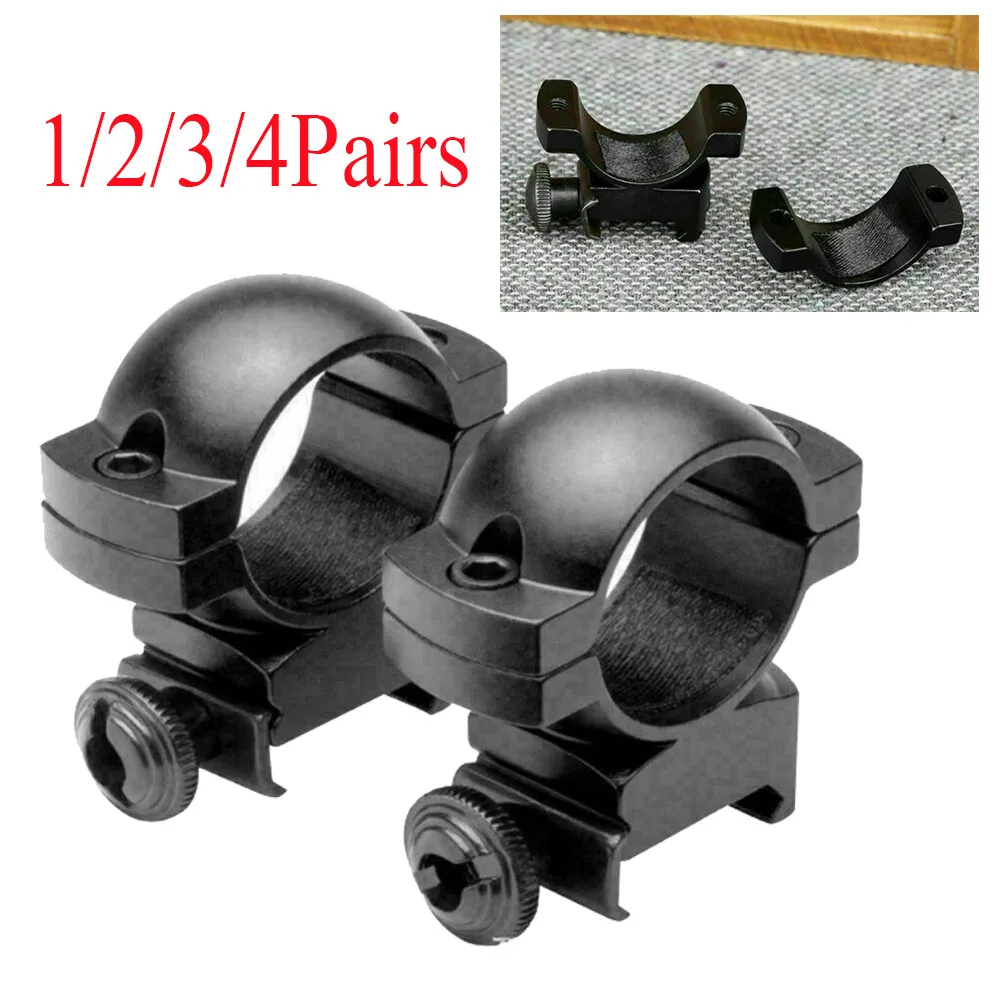
Image source: Web (Bing) / ebay.com (Web image (fair-use with source credit))
Tube Diameter: 1 Inch vs. 30mm
Tube diameter doesn't directly cause black circle issues, but it does affect available adjustment range. A 30mm tube typically offers more internal adjustment for elevation and windage than a 1-inch tube. If your scope can't dial to the correct parallax or reticle center because you've run out of adjustment, edge distortion can result.
Most modern rifle scopes come in 1 inch or 30mm. Neither is inherently better for this problem. Choose based on your magnification range and shooting discipline.
Objective Lens Diameter
A larger objective lens (40mm or 50mm) gathers more light, but it also requires higher mount rings to clear the rifle barrel. That higher ring position changes your natural eye alignment. A 50mm objective scope needs high or extra-high rings on most bolt-action rifles.
If you mount a 50mm scope with medium rings, you'll likely run into the exact black circle issue we're discussing.
Eye Relief by Magnification
Eye relief isn't static. It changes as you turn the magnification dial. Most scopes lose 10 to 20 percent of their eye relief as you move from low to maximum magnification.
Manufacturer specifications usually list the minimum eye relief at the highest magnification. That's the number to design around.
| Specification | Typical Range | Effect on Black Circle |
|---|---|---|
| Tube diameter | 1" (25.4mm) or 30mm | Indirect, via adjustment range |
| Objective lens | 24mm to 50mm | Larger = needs higher rings |
| Eye relief at max mag | 3.0" to 4.0" | Direct cause if too short or long |
| Ring height | 0.5" to 1.25" | Primary mounting variable |
| Mount screw torque | 15–25 in-lbs (rings) | Shift under recoil if wrong |
| Base torque | 20–25 in-lbs | Same, for the base itself |
For a practical reference on safe mounting torque, the National Shooting Sports Foundation publishes guidance on standard installation practices that align with what most manufacturers recommend.
Pro Tips for a Clean Scope Image at Every Magnification Level
Solving the black circle problem once is good. Keeping it solved is better. Here's what experienced shooters do to maintain a clean image across the full magnification range.
Set your diopter once and leave it. Adjust it for a sharp reticle at 25 yards. Don't touch it again unless your eyesight changes.
Lock in your cheek weld. An adjustable cheek comb stock lets you fine-tune height to match your specific ring setup. Fixed-stock rifles with high rings are the most common source of chronic scope shadow.
Zero and verify in the same session. Torque specs can shift slightly during transport. Shooting right after installation catches any ring movement early. Manufacturer torque specs for rings are typically 15 to 25 in-lbs.
Mark your tube position. Once eye relief is dialed, put a small reference mark where the scope tube meets the ring. It makes reassembly fast and prevents misalignment later.
Respect the sunshade limits. Most sunshades are designed for magnification above 8x. Remove them for low-light, low-magnification work.
When to Worry vs. When You're Fine: A Quick Decision Guide
Not every black circle signals a problem. Knowing the difference keeps you from over-tweaking a setup that's already working.
The Circle Appears Only at Maximum Magnification
Most scopes lose some edge clarity at the top of their range. If your shot groups are consistent and you can still see your target clearly, leave it. Shooters working at 60 to 70 percent of max magnification almost never notice this.
The Circle Appears at Every Magnification Level
That's a setup issue, not an optical one. Go back through the diagnostic workflow. Eye relief and mount ring height are the first two variables to recheck.
The Circle Shifts When You Move Your Head
This confirms eye relief is the culprit. Even a half-inch of head movement shouldn't cause visible shadow if your scope is positioned correctly. Adjust the scope's position in the rings until the image stays stable.
The Circle Persists After All Diagnostic Steps
If the six-step workflow hasn't resolved it, you might be looking at internal scope damage. Manufacturer specifications from Vortex, Leupold, and Nightforce all indicate that internal fogging or lens displacement is rare. Take it to a professional for inspection.
| Symptom | Likely Cause | Action |
|---|---|---|
| Circle at max mag only | Expected scope behavior | Shoot at lower magnification |
| Circle at all magnification levels | Eye relief or ring height | Rerun diagnostic steps 3 and 4 |
| Circle shifts with head movement | Eye relief misalignment | Reposition scope in rings |
| Circle constant, no change with adjustments | Possible internal defect | Professional inspection |
Frequently Asked Questions
Why does my rifle scope have a black circle?
The most common reason is eye relief misalignment, meaning your eye sits too close to or too far from the rear lens. Incorrect mount ring height, misaligned parallax settings, and overly long sunshades can cause the same symptom. Running through the diagnostic workflow in the steps above usually isolates the cause within one range session.
How do I know if my scope rings are the wrong height?
Shoulder the rifle in your normal shooting position. If you can't see a complete circular image without shifting your head up or down, your ring height doesn't match your eye position. Measure the actual height of your current rings rather than trusting the package label, since ring heights vary by manufacturer.
Can a black circle in my scope mean it's broken?
Almost never. Internal lens damage or mechanical failure inside the scope tube is rare in modern optics. A circle that changes with head movement or magnification is a setup issue.
If the circle stays constant no matter what you adjust, a professional inspection is warranted.
What is the correct eye relief for a rifle scope?
Most rifle scopes require 3.0 to 4.0 inches of eye relief at maximum magnification. Set the scope to its highest magnification, shoulder the rifle, and reposition the scope in the rings until you see a full, clear field of view. Manufacturer specs list the exact figure for your model.
Should I remove my sunshade for low magnification?
Yes. Sunshades work best above 8x to 10x magnification. Below that range, they create a tunnel effect that darkens the edges of your image.
Remove the sunshade for low-light hunting or close-range work. Thread it back on for long-range, bright-light conditions.
Does the tube diameter affect scope shadow?
Indirectly, yes. A 1-inch tube typically offers less internal adjustment than a 30mm tube. If you've used up all your elevation or windage adjustment trying to center your reticle, the optical center may sit closer to the edge of the tube, which can contribute to edge distortion at higher magnification.