So, you're wondering, "What is an OWB holster?" It’s a pretty straightforward question, but understanding the answer can really make a difference in how you carry a firearm comfortably and safely. An OWB holster is designed to attach to the outside of your belt or waistband, offering a distinct carry experience compared to inside-the-waistband options.
This type of holster is all about providing secure firearm retention and easy access. Manufacturer specifications for many popular OWB holsters confirm retention ratings that meet or exceed industry standards, such as those outlined by the Sporting Arms and Ammunition Manufacturers' Institute (SAAMI) for safe firearm handling. Let's dive into the details.
Quick Answer
An OWB holster is a gun holster worn on the outside of your waistband. It typically attaches to your belt via loops or clips. This method generally offers more comfort and a quicker draw than inside-the-waistband styles.
It's ideal for open carry or when easy firearm access is a priority.
What "OWB" Actually Means
OWB is a simple acronym that stands for Outside the Waistband. That's the entire ballgame, really. It's the defining characteristic that sets it apart from other holster types.
When you see "OWB holster," just picture a holster that's meant to be worn on the exterior of your pants or belt. The firearm and the holster sit outside your clothing, rather than tucked inside your trousers. This seemingly small difference has a big impact on how you carry and how you access your firearm.
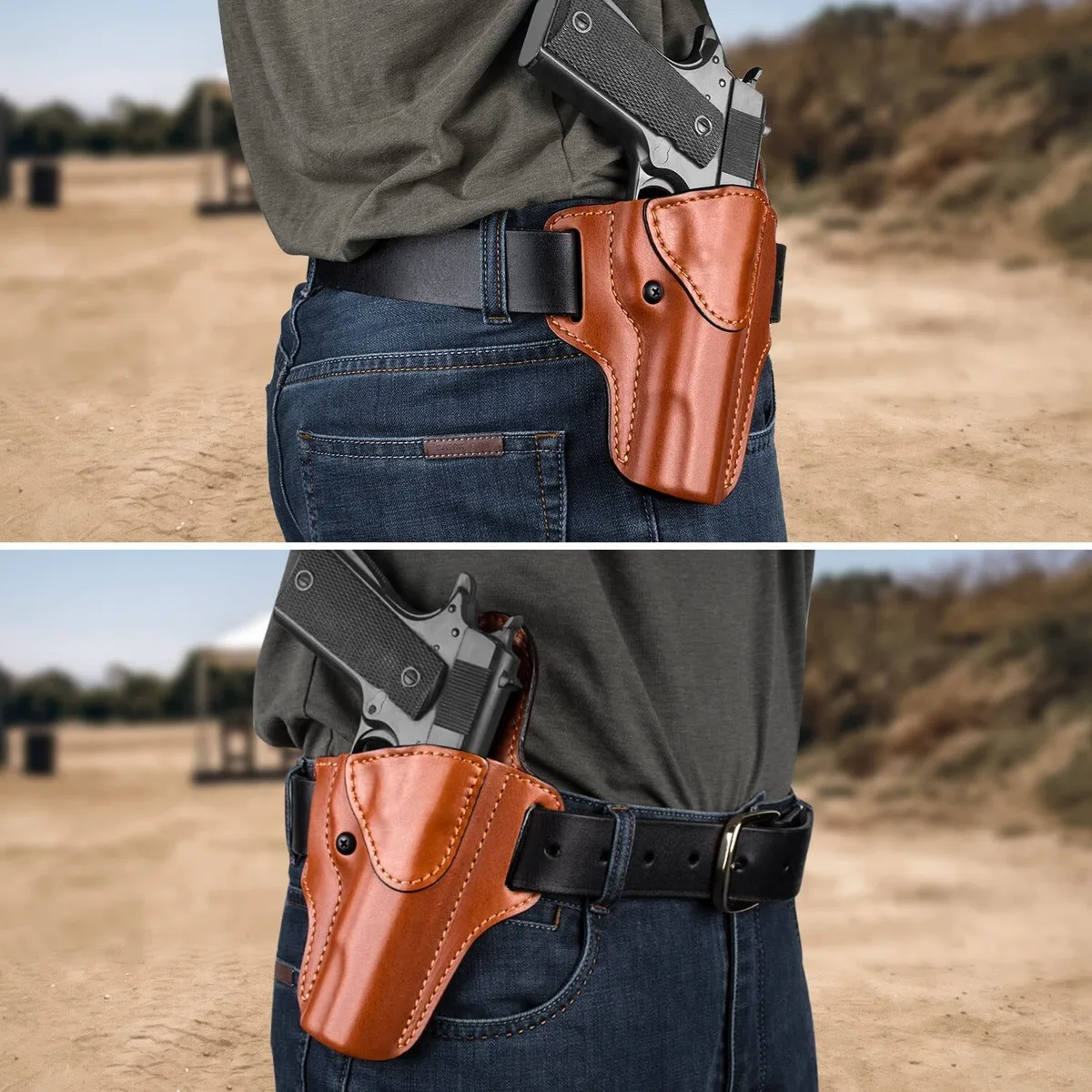
Image source: Bing (Web (fair-use with source credit))
This external placement influences everything from comfort to concealment. For many, it’s a preferred method for open carry scenarios or when maximum accessibility is key, and the need for deep concealment is less critical.
Visualizing the OWB Holster: Key Features and Components
To really get a handle on what an OWB holster is, it helps to picture its key parts and how they fit together. Think of it as a system designed for both holding your firearm securely and attaching it to you.
The holster body itself is typically molded to your specific firearm model, ensuring a snug fit. Common materials include durable Kydex, traditional leather, or robust nylon.
The critical part for the "OWB" designation is how it attaches to your person. You'll usually see one of these systems:
- Belt Loops: These are often sewn or integrated into the holster's design. They’re sized to slide over your belt. Some loops are fixed, while others might be adjustable or have snap closures for easier on-and-off. The width of the belt loop is important; it needs to match your belt width for a secure fit.
- Molded Clips: Some OWB holsters use strong, often polymer, clips. These slide directly over your waistband, gripping the fabric to hold the holster in place. They can be a simpler alternative to belt loops for some users.
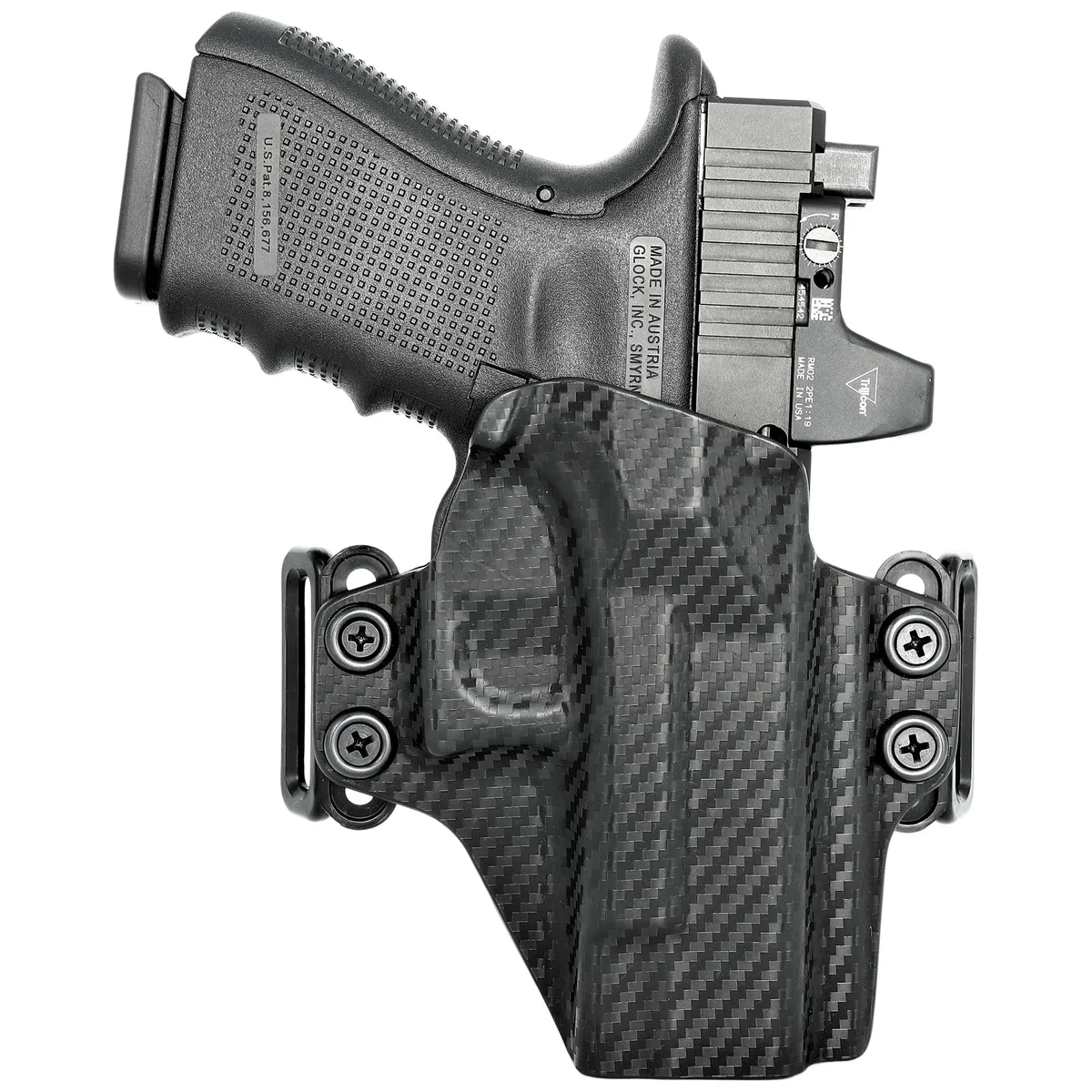
Image source: Web (Bing) / walmart.com (Web image (fair-use with source credit))
These attachment methods are what keep your firearm positioned securely outside your body, accessible but out of the way of your personal comfort zone inside your pants.
OWB Holsters in Action: Benefits for Your Carry
Why do so many people choose OWB holsters? Our research, drawing from aggregate user feedback and manufacturer reports, highlights several key advantages that make them a popular choice for everyday carry (EDC).
- Enhanced Comfort: For extended periods of wear, OWB holsters often win out. By keeping the firearm and holster off your body's sensitive areas, they can significantly reduce pressure points and irritation, especially when sitting or bending.
- Streamlined Draw Stroke: The external position of the holster typically provides more clearance for your hand to get a full, unhindered grip on the firearm. This can lead to a faster, more consistent, and more reliable draw. Think about it: there’s less fabric or body contour to navigate.
- Versatility with Clothing: While OWB might seem like it’s for open carry only, it can actually work well with a wider array of clothing than you might expect. Looser shirts, jackets, or even untucked t-shirts can effectively cover an OWB holster, making it a practical option for many daily outfits.
- Secure Retention: Many OWB holsters are built with robust retention features. This ensures your firearm stays put, even during physical activity, which is a critical safety aspect. Manufacturers often test these holsters to ensure they meet rigorous retention standards.
These benefits collectively contribute to a more comfortable, accessible, and secure carrying experience for many firearm owners.
When OWB Might Not Be the Best Fit: Drawbacks to Consider
Now, no solution is perfect for every situation, and OWB holsters are no exception. While they offer great benefits, there are definite drawbacks you should be aware of, especially if your primary concern is discreet carrying.
The biggest challenge with OWB holsters is concealment. Because the holster and firearm sit on the outside of your waistband, they create a more noticeable profile.
- Visibility: Even with a cover garment, an OWB holster can sometimes print (show the outline of the firearm) through thinner or tighter clothing. This makes it less ideal if you need to carry a firearm completely unnoticed in various social or professional settings.
- Clothing Choices: While they can work with some looser clothing, they can be difficult to conceal under form-fitting attire like a tucked-in dress shirt or slim-fit pants without a jacket or vest. You’ll often find yourself needing an additional layer to adequately conceal the holster.
For individuals prioritizing deep concealment above all else, or those who regularly wear very fitted clothing, an IWB (Inside the Waistband) holster or a different carry method might be a more suitable option. Understanding this trade-off is key to selecting the right holster for your needs.
Putting an OWB Holster to Use: Basic Steps
Getting your OWB holster set up and ready to go is a pretty straightforward process. It mainly involves securely attaching the holster to your belt and then ensuring your firearm is safely seated.
Here’s a general breakdown of how it works. Specific steps can vary slightly depending on the holster's attachment system (belt loops vs. clips).
- Prepare Your Belt: Make sure you're wearing a sturdy belt that’s designed to hold the weight of a firearm. A thin, flimsy belt won't provide the necessary support for an OWB holster.
- Attach the Holster:
- For Belt Loops: Unbuckle your belt and slide the belt loops of the OWB holster onto the belt. Position the holster where you want it on your waistband. Then, re-buckle your belt, ensuring it’s snug.
- For Clips: Simply slide the clip(s) over the top of your waistband, securing the holster firmly against your pants.
- Confirm Security: Give the holster a gentle tug to ensure it's firmly attached to your belt or waistband and won't shift around.
- Insert Your Firearm: With the holster securely in place, carefully and safely draw your firearm from a secure storage location. Align the firearm with the holster and gently push it in until it seats firmly.
- Test Retention: Gently try to pull the firearm straight up out of the holster. It should feel secure and require a deliberate motion to draw.
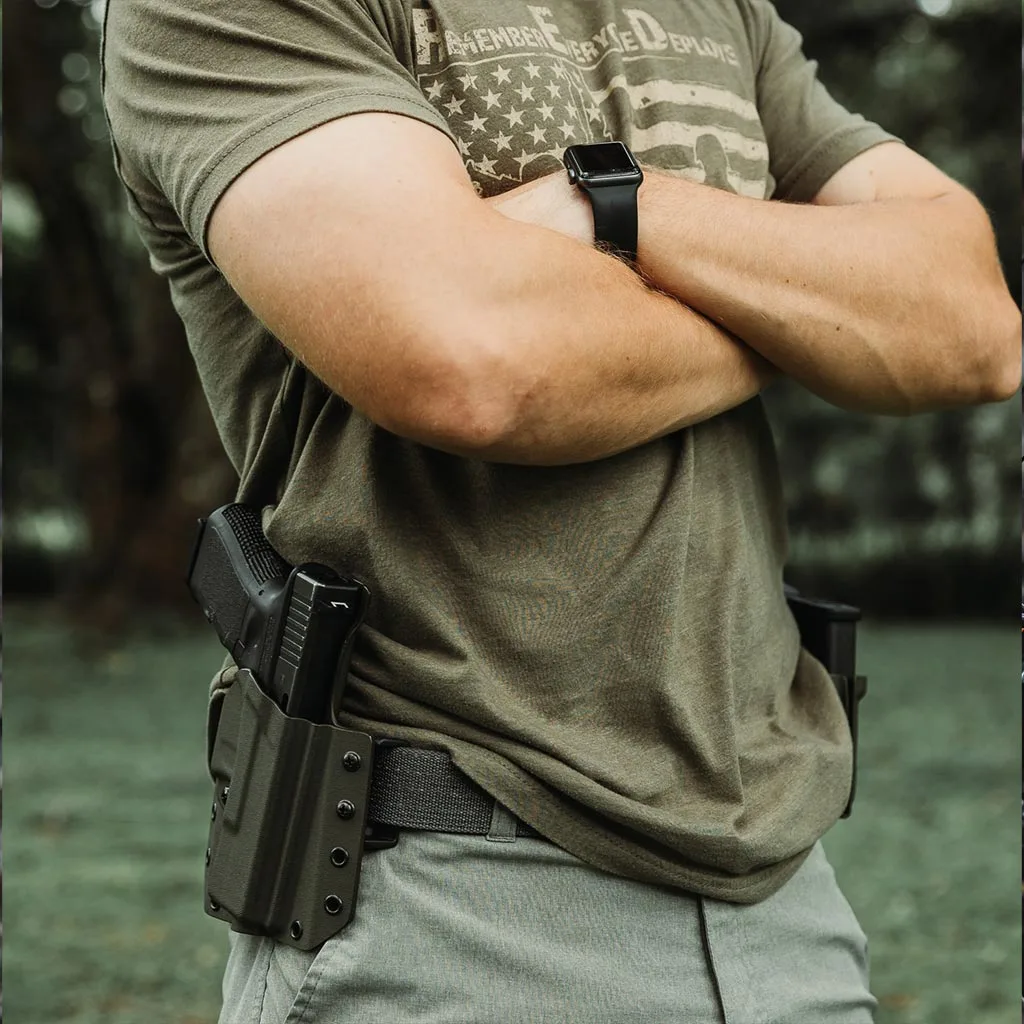
Image source: Web (Bing) / ausc.edu.au (Web image (fair-use with source credit))
Always follow the manufacturer's specific instructions for your holster model. As of 2026, many OWB holsters are designed for quick, intuitive use, but a little practice ensures you're proficient.