What is a zero stop on a rifle scope? It's one of the most common questions new long-range shooters ask. After dialing your turret up for a 600-yard shot, the last thing you want is to forget where your zero sits and spin back to the wrong click.
A zero stop is a mechanical feature built into a scope's elevation turret that physically limits downward travel past your zero point. Most modern long-range scopes include one now, with turret click values of ¼ MOA or 0.1 MRAD standard. Here's how it works and what to look for.
Quick Answer
A zero stop is a mechanical limit on a rifle scope's elevation turret. It prevents the turret from dialing below your zero point. Once you hit the stop, you're back at your original zero.
Most long-range scopes include one as a standard feature. It works on both MOA and MRAD turret systems.
What Is a Zero Stop on a Rifle Scope?
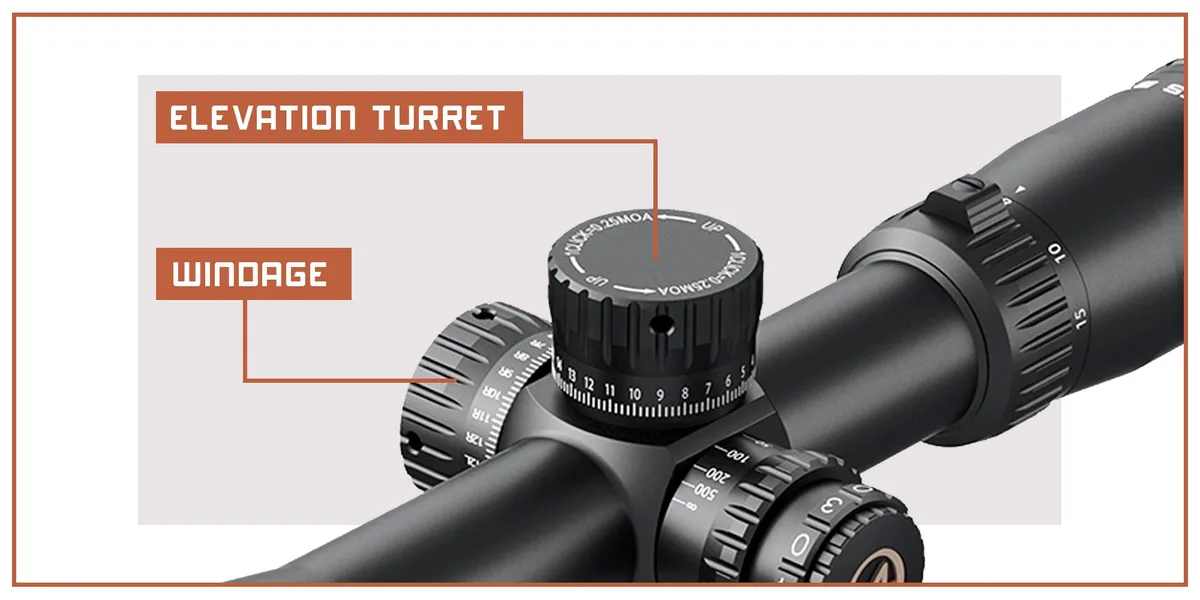
Image source: Bing (Web (fair-use with source credit))
A zero stop is a mechanical reference point built into the elevation turret of a rifle scope. It acts as a physical barrier that stops the turret from rotating past a predetermined position. That position is set to match your rifle's zero, typically at 100 yards or 100 meters.
Here's a concrete example. You dial your turret up 12 MOA to reach a target at 700 yards. After the shot, you need to return to zero for your next target.
The zero stop lets you spin the turret back and hit a hard stop at your original zero without reading the markings.
Most shooters zero their rifles at 100 yards. They then set the zero stop so that when the turret reaches that position, it clicks into place and won't travel further down. Every return-to-zero action becomes repeatable, fast, and reliable.
You'll find zero stop systems on tactical rifle scopes, precision rifle optics, and many modern hunting scopes. Brands like Vortex, Nightforce, Leupold, Bushnell, and Athlon all include zero stop features across their long-range product lines as of 2026.
The mechanism itself is simple. It's a small ring, shim, or internal pin that blocks downward travel inside the turret. The exact design varies by brand, but the purpose stays the same: a dependable return to zero, every time.
What a Zero Stop Does (and Doesn't Do)
| It does this | It doesn't do this |
|---|---|
| Provides a hard mechanical stop at zero | Calculate your ballistic trajectory |
| Returns turret to zero reliably and fast | Replace proper rifle zeroing |
| Eliminates mental math on return-to-zero shots | Adjust for wind or spin drift |
| Works on both MOA and MRAD systems | Function correctly if the scope is removed and re-mounted without resetting |
A zero stop doesn't improve your accuracy on its own. It simply makes returning to zero faster and more consistent. If you shoot with holdover reticles and never dial your turret, the feature may seem unnecessary.
For shooters who dial elevation for every long-range shot, though, it becomes essential. Aggregate user reviews across major optics platforms consistently report that zero stop ranks among the most valued features on long-range scopes. Shooters in the Precision Rifle Series and NRL circuits rely on it heavily during timed competition stages.
How the Zero Stop Mechanism Actually Works
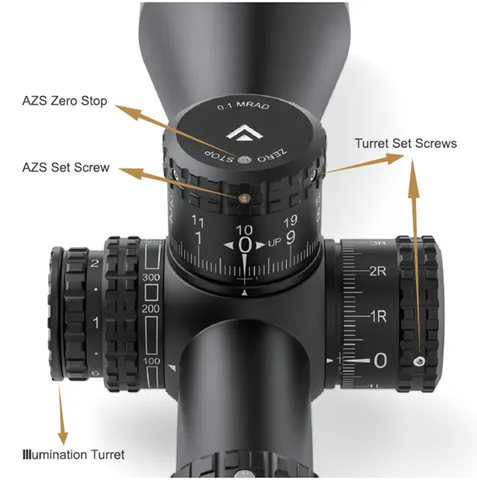
Image source: Web (Bing) / gushinoptics.com (Web image (fair-use with source credit))
A rifle scope turret moves in precise clicks. Each click represents a specific angular change in point of impact. In an MOA turret, a single click typically equals ¼ MOA.
In an MRAD turret, a single click equals 0.1 MRAD.
Every turret has a maximum range of travel. Some scopes offer 60 MOA of total elevation. Others offer 15 to 20 MRAD.
Without a zero stop, the turret can travel all the way down to its lowest setting, which might be several clicks below your zero.
The zero stop works by installing a physical obstruction at a specific position inside the turret mechanism. When you dial the turret upward for a long-range shot and then spin it back down, the turret hits that obstruction and stops. You're at zero.
No counting clicks.
Here's what happens step by step:
- You dial the turret up to the correct elevation for your target distance.
- You take your shot.
- You spin the turret back toward zero.
- The turret clicks into place at the zero stop and won't go further down.
The mechanism itself varies by brand. Nightforce uses a removable ring system on their ATACR and NX8 lines. Vortex uses a shim-based approach on the PST Gen II.
Nightforce documents their zero stop setup process in the official product manual that ships with every optic.
Manufacturer specifications indicate that zero stop positions typically hold within ¼ MOA or 0.1 MRAD of the set point. That's consistent enough for practical shooting, competition, and hunting.
One thing to understand is that the zero stop only stops downward travel. You can still dial the turret as high as it goes. The stop is one-directional by design.
The mechanism is purely mechanical. No electronics. No batteries.
No ballistic computers. Just a metal ring or pin that physically blocks turret travel when you spin back to zero.
Types of Zero Stop Systems: What You'll See on Different Turrets
Not all zero stops are built the same way. As of 2026, there are four main types you'll encounter when you pick up a rifle scope. Understanding the differences helps you know what you're looking at and what tools you'll need if you ever have to reset one.
Shim-Based Zero Stop
This is the most common type. A flat metal shim or ring sits inside the turret housing and acts as a physical stop. Brands like Vortex and Athlon use this approach on many of their precision optics.
Installation requires removing the turret cap, placing the shim at the correct position, and reassembling. Most shim-based systems need a hex key or small flathead screwdriver.
Pin-Based Zero Stop
A small metal pin drops into a channel on the turret and blocks travel past the zero point. Some Leupold models and certain Bushnell optics use pin-based systems.
This type tends to offer a very crisp stop feel. Shooters often describe it as a firm, positive click when the turret reaches zero.
Tool-Less Zero Stop
Some manufacturers now offer zero stop adjustments that don't require tools at all. You simply turn the turret to your zero position and lock it in place by hand.
This is convenient for quick field adjustments. However, aggregate reviews suggest that tool-less systems can sometimes loosen under heavy recoil, especially on magnum calibers like .300 PRC or .338 Lapua Magnum.
Internal Ring Zero Stop
Nightforce uses this design on several of their premium optics, including the ATACR and NX8 lines. An internal ring inside the turret mechanism provides the stop point.
This type tends to be the most robust and consistent over time. It's also the hardest to accidentally displace during normal use.
Quick Comparison
| Type | Common Brands | Tool Required? | Durability |
|---|---|---|---|
| Shim-based | Vortex, Athlon | Yes | Good |
| Pin-based | Leupold, Bushnell | Yes | Very good |
| Tool-less | Some Vortex, Bushnell | No | Moderate |
| Internal ring | Nightforce | Varies | Excellent |
MOA vs MRAD Zero Stop Turrets: Key Differences to Notice
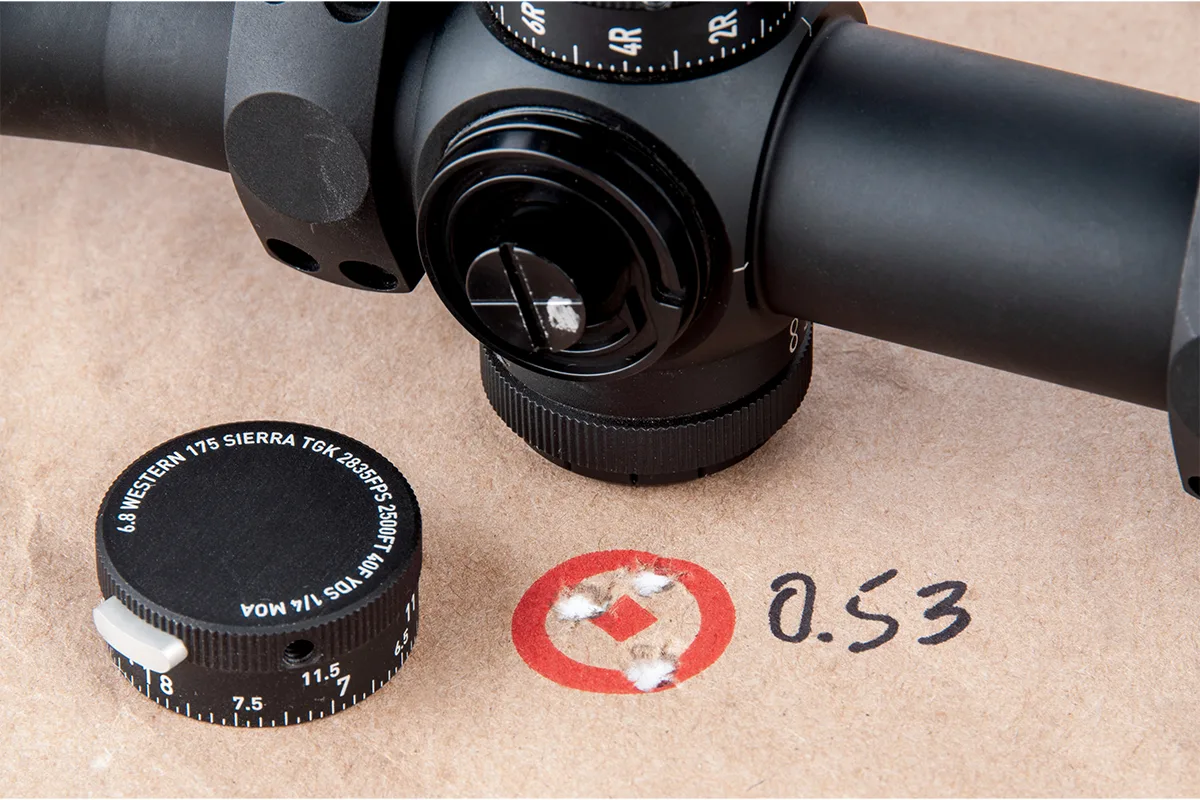
Image source: Web (Bing) / petersenshunting.com (Web image (fair-use with source credit))
The zero stop mechanism itself works the same way regardless of whether your turret uses MOA or MRAD. But the turret markings, click values, and the way you set the stop differ. Here's what to notice when comparing the two.
Turret Click Values
| System | Click Value | Common Use |
|---|---|---|
| MOA | ¼ MOA per click | North American hunting, civilian long-range shooting |
| MRAD | 0.1 MRAD per click | Tactical, military, PRS/NRL competition |
In practical terms, ¼ MOA equals roughly ¼ inch at 100 yards. 0.1 MRAD equals roughly 1 centimeter at 100 meters. Neither system is more accurate than the other. They're different ways of measuring the same angular change.
Setting the Zero Stop
The process is nearly identical for both systems. You zero the rifle, remove the turret cap, install the zero stop ring or shim at the zero position, and reassemble. The difference is that MOA turrets typically offer more total travel per click value compared to MRAD turrets at the same magnification range.
Turret Markings
MOA turrets usually have larger numerical markings because each click represents a bigger angular value. MRAD turrets tend to have finer markings with more hash marks per revolution. If you've never handled both side by side, the visual difference is immediately obvious.
Which system you choose matters less than understanding it well. Many competitive shooters prefer MRAD because the metric system aligns with how range cards and ballistic calculators present data. Many North American hunters prefer MOA because the inch-based system feels more intuitive.
Manufacturer specs indicate that most long-range scopes offer either 60 MOA or 15 to 20 MRAD of total elevation travel. That's enough for most shooting situations out to 1,000 yards with common calibers like 6.5 Creedmoor or .308 Winchester.
Benefits and Drawbacks of Scopes with Zero Stop
A zero stop is a genuinely useful feature. But it's not perfect, and it's not essential for every shooter. Here's an honest look at both sides.
Benefits
- Fast return to zero. You spin the turret back and hit a mechanical stop. No reading markings, no counting clicks.
- Consistency. Every return to zero is identical. The turret lands on the same point every time.
- Reduced mental load in competition. PRS and NRL shooters report that zero stop cuts down on cognitive strain during timed stages.
- Works with any caliber. The mechanism doesn't care what you're shooting. It's purely mechanical.
- No batteries or electronics. Zero stop works in all weather conditions without power.
Drawbacks
- Doesn't replace proper zeroing. If your rifle isn't zeroed correctly, the zero stop just stops you at the wrong point.
- Can lock out below-zero travel. Some zero stop systems prevent you from dialing below zero. If you need to dial negative elevation for a very close shot, this becomes a limitation.
- Field adjustment can be tricky. Shim-based and pin-based systems usually require tools. If you need to reset zero stop in the field, it's not always convenient.
- Adds complexity to turret disassembly. Removing and reinstalling turret components carries a risk of misalignment if done carelessly.
- Budget implementations vary. Not all zero stop systems are created equal. As of 2026, aggregate user reviews indicate that budget optics with zero stop sometimes have less precise stop points than premium models.
Price is another consideration. Scopes with reliable zero stop systems typically start around $400 for entry-level models and run well past $2,000 for premium optics from brands like Nightforce. Vortex Optics publishes detailed turret setup guides for their zero stop systems, which is worth reading before you attempt the installation yourself.
Aggregate reviews across major optics forums consistently rank zero stop as a top-five desirable feature for long-range shooters. But if you primarily use holdover reticles and never dial your turret, you likely won't need it.