What battery does a rifle scope use? Most rifle scopes use a CR2032 lithium coin cell to power their illuminated reticle. It's a small, flat, 3-volt battery that drops into a dedicated compartment on the scope body.
Not every scope follows this rule, though. Some models take a CR123A, a CR2, or even an AA cell, depending on the brand and the powered features built in.
The CR2032 delivers 3 volts of output and roughly 220 to 240 mAh of capacity. A single cell can power a bright reticle for hundreds to thousands of hours depending on the brightness setting. Whether you're shopping for a new illuminated scope or troubleshooting a dead reticle, understanding scope batteries will save you time and money.
Image source: Web (Bing) / midwayusa.com (Web image (fair-use with source credit))
Quick Answer
The battery most rifle scopes use is a CR2032 lithium coin cell. It powers the illuminated reticle in scopes from Vortex, Leupold, and Nightforce. This 3-volt cell delivers reliable output even in cold weather.
Some scopes use a CR123A instead, especially thermal and night vision models. Check your scope's manual to confirm the exact type.
Why Rifle Scopes Need a Battery (How Scope Illumination Works)
A basic glass-only scope works on optical physics alone. No power required. Where a battery comes in is with the illuminated reticle.
Modern optics feature a lit-up crosshair or floating dot that powers on at different brightness levels. This makes the reticle far easier to pick up against dark backgrounds, low light, or cluttered terrain. If you've ever tried to spot a reticle against a shadowed tree line at dusk, you know why shooters pay extra for illumination.
The brightness settings matter too. Most illuminated scopes offer between 5 and 15 levels. Lower settings work for dawn or dusk.
Higher settings cut through bright midday light or fog. Without a battery, you lose all of that adjustment.
Some scopes go even further. Models like the SIG Sauer TANGO6 and the Leupold Mark 5HD feature ballistic calculators and laser rangefinding circuits. All of those electronic features draw power from the same small battery compartment.
The takeaway is simple. If your scope has any electronic component, it needs a battery. If it's a basic optic with no illumination, you don't need to think about batteries at all.
Which Battery Does Your Scope Use? Brand-by-Brand Guide
Almost every major scope brand uses a CR2032 for reticle illumination. There are a few exceptions, but the pattern is clear. Here's what the most popular scopes require as of 2026.
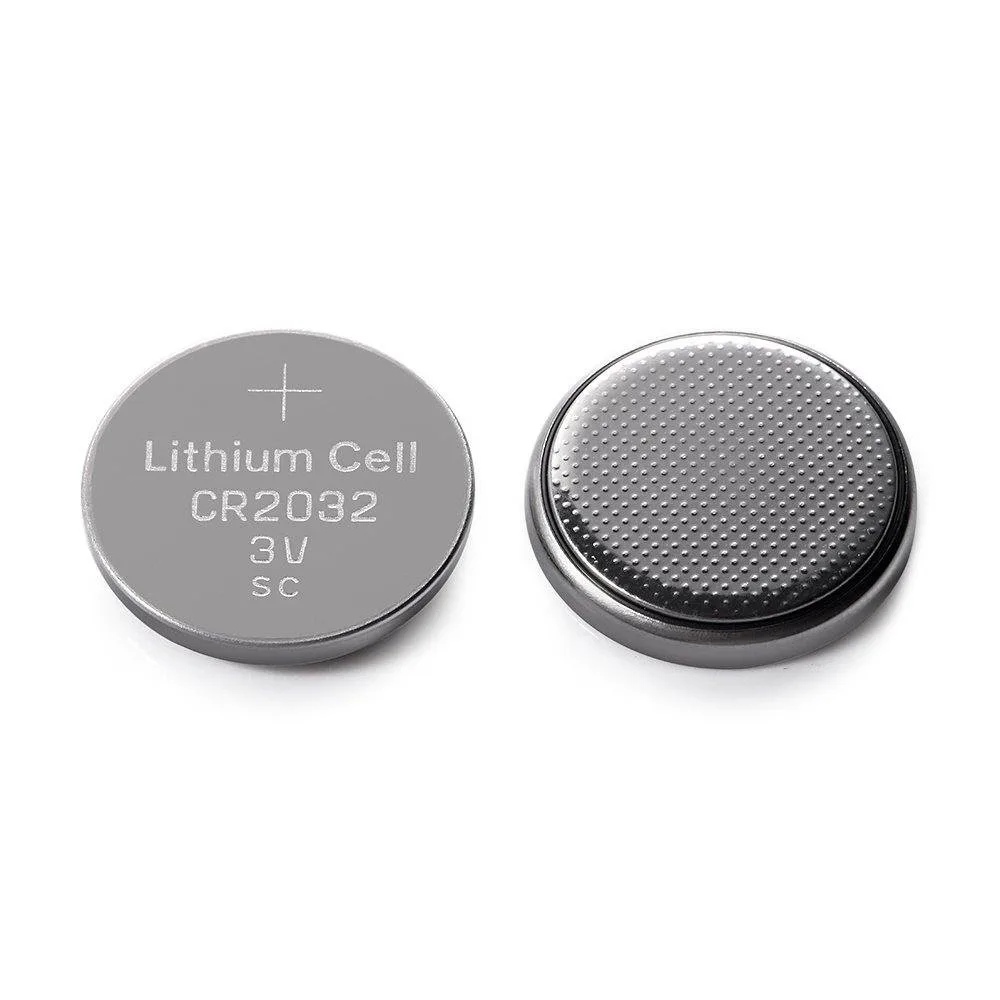
Image source: Web (Bing) / makestore.in (Web image (fair-use with source credit))
| Scope Brand and Model | Battery Type |
|---|---|
| Vortex Razor HD Gen III | CR2032 |
| Vortex PST Gen II | CR2032 |
| Leupold Mark 5HD | CR2032 |
| Leupold VX-6HD | CR2032 |
| Nightforce ATACR | CR2032 |
| Nightforce NX8 | CR2032 |
| Primary Arms SLx (Shake-Awake) | CR2032 |
| SIG Sauer TANGO6 / SIERRA3BDX | CR2032 |
| Trijicon AccuPoint | CR2032 |
| Bushnell (select models) | CR2032 |
| Various thermal scopes | CR123A |
Manufacturer specifications on Vortex Optics' official site confirm CR2032 usage across their full illuminated line. The same holds true for Leupold, Nightforce, and Primary Arms. Each brand lists CR2032 in their current product manuals.
A handful of thermal scopes and night vision optics take a CR123A instead. These models pack in more electronics, from laser rangefinders to digital reticle displays. The extra circuitry needs a larger cell with more capacity.
If you're not sure which battery your scope needs, check the owner's manual. You can also look up the model number on the manufacturer's website. Most brands publish a spec sheet listing the exact battery type.
CR2032 vs CR123A vs Other Battery Types
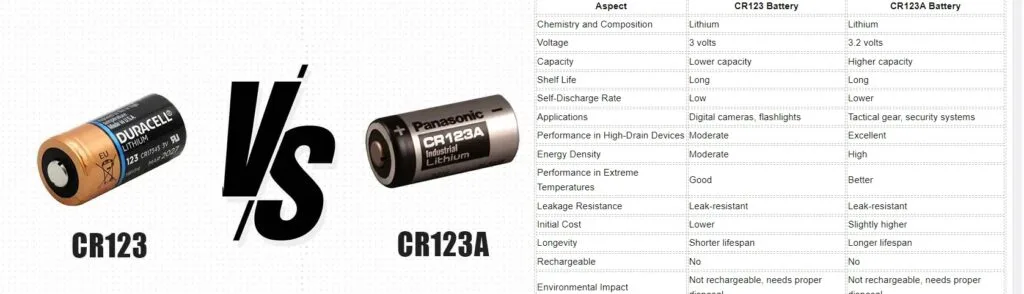
Image source: Web (Bing) / road.zubatherm.de (Web image (fair-use with source credit))
Not all scope batteries are created equal. Here's how the main options compare.
CR2032: 3 volts, 20mm diameter, roughly 3mm thick, with about 220 to 240 mAh of capacity. This is the go-to coin cell for most illuminated rifle scopes. It's widely available and performs well in cold weather.
CR123A: 3 volts, cylindrical shape, about 34mm long. You'll find these in thermal scopes, some night vision optics, and holographic sights. They hold more total energy than a CR2032 but are harder to find in regular stores.
CR2 and CR1620: Smaller coin cells found in compact red dot sights and a few low-profile illuminated scopes. Not common in rifle scopes, but they do show up in some budget models.
AA Lithium: Used in a few legacy scope models and some digital ballistics optics. Lithium AA cells give you the longest runtime when available.
| Feature | CR2032 | CR123A | AA Lithium |
|---|---|---|---|
| Voltage | 3V | 3V | 3V |
| Capacity | ~225 mAh | ~1,500 mAh | ~3,000 mAh |
| Cold performance | Excellent | Excellent | Excellent |
| Availability | Very common | Common | Very common |
| Typical scope use | Most illuminated optics | Thermal and NV optics | Legacy or digital scopes |
For detailed CR2032 specifications, Energizer's official lithium cell datasheets provide the most reliable technical reference. The bottom line is straightforward. If you own a standard illuminated rifle scope, a CR2032 lithium cell is almost always what you need.
Only reach for a CR123A if your scope manual specifically calls for it.
How to Replace Your Scope Battery the Right Way
Replacing a scope battery takes about two minutes, but doing it right protects your optic from damage. Here's the step-by-step process.
- Step 1: Confirm the battery type. Check your scope's owner's manual or look up the model on the manufacturer's website. Don't guess.
- Step 2: Buy lithium cells. Lithium CR2032 batteries outperform alkaline in cold weather and last longer on the shelf. If you hunt in cold conditions, avoid alkaline altogether.
- Step 3: Open the battery compartment. Most scopes use a twist-off cap with an O-ring seal. Use your fingers or a coin for extra grip. Many modern caps are toolless by design.
- Step 4: Insert the battery with correct polarity. Match the positive (+) side to the direction shown in the manual. The flat side usually faces up, but always verify.
- Step 5: Close and seal the cap. Make sure the O-ring is seated properly before tightening. A misaligned seal can let moisture in and damage the illumination circuit.
- Step 6: Test the illumination. Power on the reticle and cycle through each brightness setting to confirm everything works.
If your scope uses a multi-cell configuration with two or more batteries, replace them all at the same time. Mixing old and new cells can cause uneven voltage output.
Mistakes to Avoid When Buying or Storing Scope Batteries
Most scope battery problems come down to simple, preventable mistakes. Here are the ones that show up most often.
Mixing alkaline and lithium cells. If your scope takes two batteries, don't put one alkaline next to one lithium. The voltage mismatch causes uneven drain and can corrode the contacts. Replace the full set every time.
Leaving alkaline batteries in the compartment for months. Alkaline cells are prone to leaking over time, and that leak can ruin the illumination circuit. If you're storing a scope for the off-season, pull the batteries out.
Forgetting to check polarity during installation. The most common installation error. Inserting a cell backwards can damage some illumination boards, especially on budget scopes without reverse-polarity protection. Always check the manual diagram before you close the cap.
Ignoring cold-weather performance. Alkaline CR2032 cells lose significant output at low temperatures. Verified field reports show that lithium cells hold capacity at -20°C while alkaline can drop by half or more. If you hunt in the cold, lithium is not optional.
Stockpiling batteries without checking shelf life. Lithium cells keep for 10+ years sealed, but alkaline degrades in 3 to 5. Check expiration dates before trusting your battery backup.
Using non-recommended brands for warranty coverage. Some manufacturers flag third-party battery damage as a warranty issue. Stick with the brand's recommended cell type to stay covered.
Battery Costs, Capacity, and Life Expectancy by the Numbers
Scope batteries are one of the cheapest parts of any shooting setup. A CR2032 lithium cell typically costs between $1 and $3 individually. Buy them in bulk, and that drops to well under a dollar per cell.
Here's how the math stacks up:
| Battery Type | Approximate Cost | Rated Capacity | Expected Scope Runtime |
|---|---|---|---|
| CR2032 Lithium | $1 to $3 per cell | ~225 mAh | 1,000+ hours at low brightness |
| CR123A Lithium | $3 to $7 per cell | ~1,500 mAh | 2,000+ hours |
| AA Lithium | $2 to $4 per cell | ~3,000 mAh | 3,000+ hours |
| AA Alkaline | $0.50 to $1 per cell | ~2,000 mAh | Performance drops in cold |
Lithium CR2032 cells deliver the best balance of cost, availability, and cold-weather reliability for most rifle scope owners. Runtime depends heavily on brightness. A scope running on low illumination can stretch a single CR2032 across an entire hunting season.
Higher brightness settings drain the cell faster. Aggregate user reviews indicate that scopes with auto-off timers or motion-activated illumination, like SIG Sauer's MOTAC and Primary Arms' Shake-Awake, extend battery life dramatically between shooting sessions.
For competitive shooters, PRS and NRL match rules may require carrying a backup battery. Budget around $5 to $10 for a small pack of spare CR2032 cells as insurance.
Frequently Asked Questions
What battery does a Vortex rifle scope use?
Vortex illuminated rifle scopes use a CR2032 lithium coin cell. This applies to models across their PST Gen II, Razor HD, and Strike Eagle illuminated lines. Manufacturer specifications on Vortex's official website confirm CR2032 as the standard across their current product range.
What battery does a Leupold rifle scope use?
Most Leupold illuminated scopes use a CR2032 lithium coin cell. This includes popular models like the VX-6HD and Mark 5HD lines. Older discontinued models may differ, so check the original manual or Leupold's support resources if you're unsure.
How long does a CR2032 battery last in a rifle scope?
A single CR2032 lithium cell typically runs 1,000 or more hours at low brightness settings. High brightness levels drain it faster, closer to 100 to 300 hours. Scopes with auto-off or motion-activated illumination can stretch a battery across a full hunting season with normal use.
Can I use an alkaline CR2032 in my scope?
You can, but lithium is the better choice. Alkaline cells lose significant output in cold weather and degrade faster on the shelf. They're also more prone to leaking, which can damage the scope's electronics.
Lithium costs more up front but lasts longer overall.
Can a scope work without a battery?
Yes. Any scope without an illuminated reticle functions completely without a battery. You simply won't get the lit crosshair.
For shooters who hunt primarily in daylight with good contrast, a non-illuminated scope eliminates the battery question entirely.
What happens if I put the wrong battery in my scope?
The wrong battery type can damage the illumination circuit, especially if the voltage or dimensions don't match the compartment design. In some cases, the scope simply won't power on. In worse cases, a mismatched cell can corrode contacts or blow a protection diode inside the electronics.