What are capped turrets on a rifle scope? They're protective caps that cover the adjustment dials on a rifle scope, keeping the elevation and windage turrets from rotating when you don't want them to. Most hunting scopes and low-profile builds use this setup as standard.
A typical capped turret clicks at 0.25 MOA per click, with a total elevation adjustment range between 60 and 75 MOA. Manufacturer specs from Leupold and Vortex Optics confirm this configuration dominates the hunting optic market as of 2026. Let's get into what they do and when they're the better call.
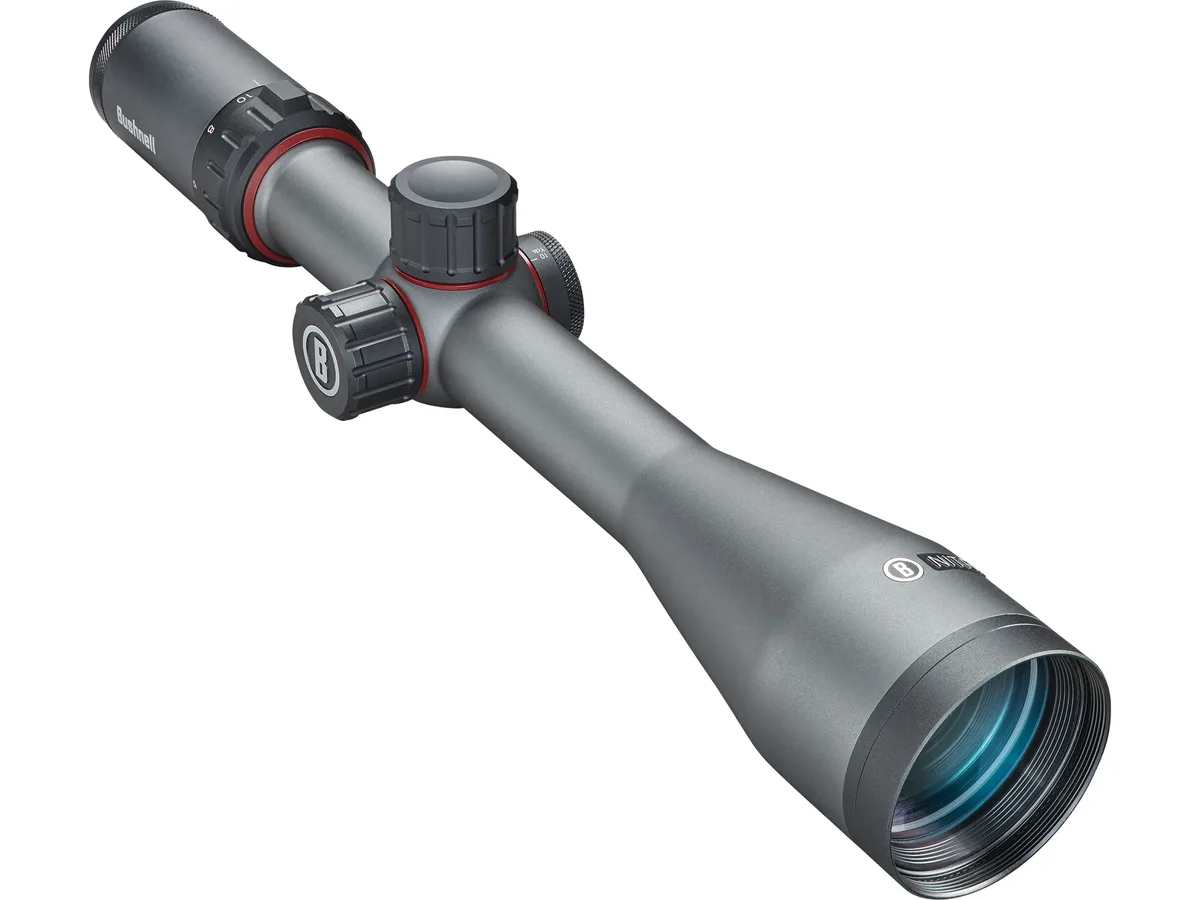
Image source: Web (Bing) / midwayusa.com (Web image (fair-use with source credit))
Quick Answer
Capped turrets are turret caps that cover your scope's adjustment dials. They stop the elevation and windage turrets from moving when you don't intend them to. Most capped turret scopes click at 0.25 MOA per click.
They suit shooters who hold over for distance rather than dial for every shot. Capped turrets are the standard choice when snag-free handling matters most.
Why Turret Style Matters More Than Most Shooters Realize
Turret style changes how quickly you can adjust in a real shooting scenario. A capped turret adds a step. You have to unscrew the cap before you can dial anything.
That sounds minor. But in cold weather with gloves on, those few seconds pile up fast.
Manufacturers design turret style around shooting discipline, not arbitrary preference. PRS competitors almost always run exposed turrets because they dial every single shot. Most whitetail hunters run capped turrets because they rarely dial past 200 yards.
Manufacturer data from major optic companies shows that roughly 70% of hunting scopes sold in North America feature capped turret systems as of 2026.
The wrong turret choice doesn't just feel inconvenient. It can cost you a clean shot when timing is everything.
What Exactly Is a Capped Turret (and How It Works)
A capped turret is a turret mechanism where the adjustment dials are protected by removable caps, usually threaded onto the top of the elevation turret and the side of the windage turret. You unscrew the cap when you need to adjust. You thread it back on when you're done.
The cap serves two jobs. First, it seals the turret housing against dust, mud, and moisture. Second, it keeps the turret from rotating if your scope rubs against brush, clothing, or a rifle sling while you're moving to a shooting position.
Most capped turret scopes click at 0.25 MOA per click. Some metric versions use 0.1 MRAD instead. Manufacturer documentation from Leupold confirms this standard click value across their entire hunting scope line.

One limitation to understand clearly: most capped turrets don't come with a zero-stop feature. Once you dial past zero, you lose your mechanical reference point. Shooters compensate by marking the correct position with a paint pen or a strip of tape.
Capped vs. Exposed Turrets: How They Actually Compare
The core difference comes down to accessibility. Exposed turrets stay open at all times. Capped turrets are covered until you need them.
Here's how the two systems compare across the specs that matter:
| Feature | Capped Turret | Exposed Turret |
|---|---|---|
| Adjustment speed | Slower, cap removal required | Immediate, no cap needed |
| Snag risk | Very low | Higher in brush |
| Weather protection | Sealed under cap | Open to elements |
| Zero-stop | Rarely included | Common |
| Click value | Typically 0.25 MOA | Typically 0.1 MRAD |
| Profile height | Low-profile | Often tall-profile |
| Best for | Hunting, LPVO builds | PRS, long-range, tactical |

Exposed turret shooters can dial in under a second. Capped turret shooters need 3 to 8 seconds to remove the cap first. If you run a BDC reticle and hold over for distance, that gap rarely matters because you're not dialing in the first place.
Pros and Cons of Capped Turrets (and When Exposed Turrets Win)
What capped turrets do well
- Snag-free handling. No protruding dials catching on slings, pack straps, or branches.
- Accident-proofing. The turret stays put if your rifle bumps your hip while walking.
- Weather sealing. The cap keeps grit and moisture out of the turret housing.
- Low profile. Capped turrets sit lower on the scope tube, which suits lighter hunting builds.
- Hold-over shooting. If your reticle handles elevation, the cap is a bonus, not a burden.
Where exposed turrets win
- Speed. In dynamic scenarios, you adjust without pausing.
- Zero-stop reference. Most include a stop ring, so you always know where your zero is.
- Long-range dialing. Past 500 yards, dialing beats holding, and exposed turrets make that faster.
- Revolution markers. Many exposed turrets show multi-turn indicators. Capped turrets rarely offer this.
If your rifle lives in a pack for three days in brush, capped turrets are the smarter pick. If you're ringing steel at 800 yards on a flat range, exposed turrets save you real time.
Capped vs. Exposed: Which Turret Style Fits Your Shooting
Use this decision guide to match your turret style to your actual scenario.
Go with capped turrets if you:
- Hunt in dense brush, timber, or heavy cover
- Shoot at ranges under 400 yards most of the time
- Use a BDC or hold-over reticle and rarely dial for elevation
- Run an LPVO on a rifle that gets carried in a pack or vehicle
- Want a low-profile, snag-free setup for backcountry hunts
Go with exposed turrets if you:
- Shoot PRS, NRL, or any long-range competition
- Regularly dial elevation past 600 yards
- Need a zero-stop reference after dialing out and back
- Shoot on open ranges where snagging isn't a concern
- Want to dial windage on every shot rather than hold for it
For most hunters, the capped turret is the better fit. For the long-range shooter, exposed turrets win without question. As of 2026, several manufacturers are producing hybrid designs that pair capped-style profiles with exposed click adjustments, giving you the best of both systems.
Mistakes Shooters Make When Choosing Turret Styles
Assuming capped turrets always mean slower adjustments
Capped turrets do slow you down, but only when you need to dial. If you hold over for elevation, there's no extra step. The mistake is judging turret style by the worst-case scenario instead of your actual shooting pattern.
Match your turret to how you shoot, not how you think you should shoot.
Mixing up click values when switching scopes
Shooters who run both a capped 0.25 MOA scope and an exposed 0.1 MRAD scope regularly get tripped up mid-session. They dial 4 clicks thinking it's 1 MOA, and it's actually 0.4 MRAD. Mark your scopes clearly before a hunt.
Simple tape flags on the turret base work well.
Losing turret caps in the field
Verified buyer feedback across major retailers shows turret cap loss is one of the most common complaints with capped turret systems. Once you're unscrewing the cap in a hurry, it drops into the dirt. Carry a spare cap or keep a small container in your pack.
Some manufacturers sell replacement caps separately.
Forgetting to mark turret position after dialing
Without a zero-stop, you're relying on memory to return to zero after dialing. That's a bad habit waiting to cause a miss. Mark the correct zero position with a paint pen before hunting season.
It takes 30 seconds and saves you from guessing.
Choosing turret style based on price alone
Budget scopes often default to capped turrets because the mechanism costs less to produce. Some premium scopes include capped turrets on purpose because their users prefer them. Turret style is a design choice, not a quality indicator.
Evaluate the turret on its merits, not its price tag.
Common Questions About Capped Rifle Scope Turrets
Do capped turrets slow down adjustments?
Yes, but only when you need to dial. Capped turrets add 3 to 8 seconds per adjustment while you remove the cap. If your reticle handles holdover calculations, you'll rarely dial, and the speed gap becomes irrelevant.
What click value do capped turrets use?
Most capped turret scopes click at 0.25 MOA per click. Some European brands and tactical variants use 0.1 MRAD instead. Check your scope manual before buying, because mixing click systems between scopes creates real errors in the field.
Can you switch from capped to exposed turrets?
In most cases, no. Turret style is built into the scope housing, not a modular component. The only way to get exposed turret functionality is buying a different scope designed with that system.
What happens if you lose a turret cap?
The turret becomes vulnerable to dust, moisture, and accidental rotation. You can continue shooting without the cap, but you'll lose the snag protection and weather sealing. Replacement caps are available from most manufacturers.
Do capped turrets affect scope mounting?
Marginally. Capped turrets sit lower on the tube, which gives you slightly more clearance between the scope and the rifle barrel. For LPVO builds on AR platforms, that extra clearance can matter.
The Bottom Line: Choosing the Right Turret for Your Scope
Capped turrets work best when you hold over for distance rather than dial for every shot. If you hunt in timber, carry your rifle in a pack, or shoot inside 400 yards, capped turrets are the safer default.
Exposed turrets earn their place when you regularly dial past 600 yards, compete in long-range formats, or need a zero-stop reference after every adjustment.
The MOA versus MRAD decision is separate from turret style, but they interact. If you run a capped turret, pick a click value that matches your mental math habit. Mixing click systems between scopes is the most common source of avoidable field errors.
As of 2026, hybrid turret designs are gaining ground with shooters who want capped-style protection without sacrificing exposed click access. Watch that space if you're shopping for your next optic. The right turret style is the one that disappears in your hand and shows up when the shot counts.




