What does 2-7×32 mean on a rifle scope? Those numbers describe the two most important specifications on any variable-power optic. The first number is the magnification range, and the second is the size of the objective lens in millimeters.
Together, they tell you exactly how this scope will perform in the field before you ever mount it to a rifle.
In this case, "2-7×32" means a scope that zooms from 2x magnification up to 7x, with a 32mm objective lens. That objective lens diameter directly affects how much light the scope gathers in low-light conditions. Now let's break down what each number means so you can read any scope spec like a pro.

Image source: Web (Bing) / riflescopescenter.com (Web image (fair-use with source credit))
Quick Answer: What 2-7×32 Actually Tells You
The number "2-7x" is the magnification range. It means the scope zooms from 2x to 7x power. At 2x, objects appear twice as close as with the naked eye.
At 7x, they appear seven times closer.
The "32" is the objective lens diameter in millimeters. A 32mm objective gathers moderate light. It works well in open timber and during dawn or dusk hunts.
This scope suits close-to-mid-range shooting between 50 and 300 yards. It's a common spec for hunting rifles and brush-country setups.
Breaking Down the Numbers: How Rifle Scope Magnification Works
Rifle scope specs follow a standard format. You'll see something like "2-7×32" on almost every variable-power optic on the market. Understanding this format lets you decode any scope in seconds.
It's the same system used by manufacturers like Leupold, Vortex, and Bushnell.
The Magnification Range (2-7x)
The "2-7x" part is your zoom range. The lower number (2x) is your minimum magnification. The higher number (7x) is your maximum.
You get a 3.5x zoom ratio, which is plenty for most hunting distances.
Think of 2x as your wide-field view. It's great for scanning timber or tracking moving game. At 7x, you've got enough power to identify a target at a few hundred yards.
What the "x" Actually Means
The "x" stands for magnification. At 2x, a deer at 100 yards looks like it's at 50 yards through the scope. At 7x, that same deer appears as if it's roughly 14 yards away.
Here's a quick reference:
| Magnification | What You See at 100 Yards | Best For |
|---|---|---|
| 1x | Naked eye view | Fast scanning, close encounters |
| 2x | 50-yard appearance | Timber hunting, tracking |
| 4x | 25-yard appearance | Mid-range identification |
| 7x | ~14-yard appearance | Target ID at distance |
Tube Diameter vs Objective Size
One thing people mix up: tube diameter and objective lens diameter are two different specs. Tube diameter (1 inch, 30mm, or 34mm) affects how much light passes through the main body. Objective diameter (the number after "x") affects the entry point for light at the front of the scope.
Both matter, but they're not the same thing.
Why the 32mm Objective Lens Matters More Than You Think
The objective lens diameter might seem like a minor detail. It's not. It directly controls how much light your scope lets in, which decides how clear your picture looks when the sun drops.
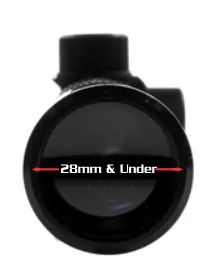
Image source: Bing (Web (fair-use with source credit))
Light Gathering at a Glance
A 32mm objective is a mid-size lens. It gathers noticeably less light than a 42mm or 50mm objective, but it's not a poor performer. In open forest, golden hour, or overcast conditions, it delivers a usable image.
Here's how the sizes compare:
| Objective Size | Relative Light Gather | Low-Light Performance | Weight Impact |
|---|---|---|---|
| 24mm | Low | Fair in bright light | Very light |
| 32mm | Moderate | Good in most conditions | Light |
| 40mm | High | Very good in low light | Moderate |
| 42mm | High | Excellent in low light | Heavier |
| 50mm | Maximum | Best available | Heavy |
The 32mm Sweet Spot
The 32mm objective hits a real sweet spot for hunting. It's large enough to give you a bright, clear picture in timber and at dusk. It's small enough to keep the scope compact, slim, and easy to mount.
Manufacturers like Vortex Optics build many of their entry and mid-range hunting scopes around this objective size. It's a proven spec for a reason.
Where 32mm Falls Short
If you hunt prairie at 500 yards at last light, you'll want more objective lens. A 32mm won't give you the brightness a 50mm will when the sun is almost gone. Know what conditions you shoot in before committing to this spec.
2-7×32 vs 3-9×40 vs 2-7×42: Which Scope Spec Fits Your Setup
These three specs come up constantly in the hunting community. Each serves a different job, and choosing the wrong one means your scope fights you instead of helping you.

Image source: Web (Bing) / ar.inspiredpencil.com (Web image (fair-use with source credit))
Side-by-Side Breakdown
| Spec | Magnification | Objective | Weight (typical) | Best Range | Low-Light Rating |
|---|---|---|---|---|---|
| 2-7×32 | 2-7x | 32mm | 10 to 12 oz | 50 to 250 yards | Good |
| 3-9×40 | 3-9x | 40mm | 13 to 16 oz | 75 to 300 yards | Very good |
| 2-7×42 | 2-7x | 42mm | 13 to 15 oz | 50 to 250 yards | Excellent |
Who Each Spec Is Best For
2-7×32 fits hunters who spend most of their time in timber, brush, or close-range stands. If you need fast target acquisition at 2x and decent power at 7x, this is your scope. Manufacturer spec sheets from brands like Primary Arms confirm that 2-7×32 scopes typically weigh under 12 ounces, making them ideal for lightweight rifle builds.
3-9×40 is the all-purpose hunting standard. It works from open fields to timber. The 40mm objective gives you solid low-light performance without excessive bulk.
It's the spec most first-time hunters should look at.
2-7×42 keeps the close-range magnification range of a 2-7×32 but adds light-gathering power. It's slightly heavier and bulkier. If you hunt a lot of timber but also shoot at last light in open areas, this split-the-difference spec makes sense.
The Verdict on Comparison
If your hunting is mostly 100 yards or closer, the 2-7×32 wins on weight and field of view. If you want one scope that handles everything from 50 yards to 350 yards, the 3-9×40 is the safer bet. The 2-7×42 sits right between them, and it's worth considering if low-light hunting is a priority.
For more on how these specs interact with field of view, the National Shooting Sports Foundation publishes educational resources on optic selection that walk through these tradeoffs clearly.
Who Should Buy a 2-7×32 Scope (And Who Shouldn't)
Not every shooter needs a 2-7×32. That's fine. Knowing when this spec fits and when it doesn't saves you money and frustration.
This Scope Is Right For You If
- You hunt in dense timber, brush, or close-range stands most of the time.
- You want a lightweight scope that keeps your rifle balanced and easy to carry.
- Your shots typically land between 50 and 250 yards.
- You value a wide field of view at minimum magnification for fast target acquisition.
- You're setting up a first hunting rifle and want a versatile, budget-friendly optic.
Skip This Scope If
- You regularly shoot past 300 yards in open country.
- Low-light hunting at last light is a big part of your season and you need maximum brightness.
- You want high magnification for predator hunting or target shooting beyond 400 yards.
- You need a compact optic that fits under iron sights or specific mounting constraints.
The Bottom Line on Fit
The 2-7×32 is a specialist's tool that does a few jobs extremely well. It's not a do-everything scope, and that's exactly why it works. Match it to your hunting style, and it'll serve you for years.
Common Mistakes People Make When Reading Scope Specs
Scope specs mislead people constantly, usually because the numbers sound technical but leave out context. Here are the mistakes we see most often, and how to sidestep them.
Assuming Higher Magnification Always Means Better
More magnification isn't automatically better. At 7x, your field of view narrows, making it harder to track moving game in thick cover. In close-range hunting, 2x with a wide view beats 7x every time.
Match magnification to your actual hunting distance, not what looks impressive on a spec sheet.
Ignoring Objective Lens Size in Low Light
Many buyers fixate on magnification and forget the objective lens. A 32mm objective delivers good results in timber, but if you regularly hunt at last light in open country, you'll want 40mm or bigger. Aggregate user reviews of 2-7×32 scopes consistently report excellent daytime clarity and noticeable dimming in very low light.
Forgetting Eye Relief and Mount Height
A scope spec tells you magnification and objective size. It doesn't tell you whether the eye relief works with your rifle's stock or whether your mount height is right. Eye relief issues cause scope bite under recoil and make the scope hard to use.
Check your rifle's mounting platform before ordering.
Overpaying for Magnification You Won't Use
If most of your shots land inside 150 yards, buying a 4-12×40 scope is wasted money. A 2-7×32 handles those distances easily and costs less. As of 2026, quality 2-7×32 hunting scopes from reputable manufacturers run between $120 and $400 depending on glass quality and features.
Pro Tips for Matching Scope Magnification to Your Hunting Style
Once you understand the spec sheet, the next step is pairing magnification range with the way you actually hunt. These tips come from manufacturer guidance, NRA marksmanship education materials, and aggregate field reviews.
Match Magnification to Your Environment
If you hunt dense timber or brush country, lower magnification wins. A 2-7×32 gives you the wide view you need for fast target acquisition and close-range shots. For open prairie or agricultural land, you'll want more power.
Consider a 3-9×40 or higher if your shots regularly exceed 250 yards.
Think About Field of View Before You Buy
Field of view shrinks as magnification increases. At 2x on a typical 2-7×32, you'll see roughly 35 to 40 feet at 100 yards. At 7x, that narrows to about 5 to 7 feet.
If you need to scan timber for moving game, that difference is huge. Wide view at minimum magnification is your friend in close cover.
Consider Objective Size for Your Season
If you hunt dawn and dusk as often as midday, the objective lens matters more than the magnification range. A 32mm works well for most conditions, but a 40mm or 42mm objective gives you noticeably better brightness when the sun is low. Know what time of day you hunt most.
Keep Your Rifle Balanced
Scope weight affects handling. A 2-7×32 typically weighs 10 to 12 ounces. A heavier scope shifts your rifle's balance forward and makes it tiring to carry on long stalks.
If you cover miles on foot, keeping the optic light pays off at hour six.
Scope Magnification FAQs
What does the "x" stand for in 2-7×32?
The "x" means magnification. It tells you how much closer objects appear through the scope compared to the naked eye. At 2x, a target at 100 yards looks like it's at 50 yards.
At 7x, that same target looks like it's roughly 14 yards away.
Is a 2-7×32 scope good for deer hunting?
Yes, a 2-7×32 is a solid choice for deer hunting, especially in timber and brush where most shots land inside 150 yards. It provides a wide field of view at 2x for scanning cover and enough power at 7x to identify targets at moderate range.
How far can you shoot accurately with a 2-7×32 scope?
The scope itself doesn't limit accuracy, your rifle and ammunition do. However, 7x magnification makes precise shot placement practical out to about 250 to 300 yards. Beyond that, higher magnification helps with bullet drop compensation and target identification at longer distances.
What is the difference between a 2-7×32 and a 2-7×42?
Both scopes share the same 2x to 7x magnification range. The difference is the objective lens diameter: 32mm versus 42mm. The 42mm gathers more light for better low-light performance, but it adds weight and bulk to the rifle.
Choose based on your typical hunting conditions.
Does objective lens diameter affect accuracy?
No, objective lens diameter does not affect accuracy directly. It affects brightness and clarity, which helps you see your target more clearly. A larger objective makes it easier to place an accurate shot in low light, but the scope's reticle and your rifle determine where the bullet lands.
What magnification do most hunting scopes offer?
Most hunting variable-power scopes fall between 3x and 9x magnification with a 40mm objective lens. That 3-9×40 spec is the industry standard for all-around hunting. Lower-power options like 2-7×32 or 1-4×24 serve close-range and timber hunting specifically.