Is a 30mm scope tube better than a 1-inch tube? Every rifle shooter hits this question at some point, usually staring at two scopes and trying to figure out where the extra money goes. The answer isn't a simple yes or no.
It depends on what you're shooting, how far you're shooting, and what you're willing to pay.
A 30mm tube gives you roughly double the internal turret adjustment compared to a 1-inch tube, typically 120 to 200+ MOA versus 60 to 90 MOA. That's a real mechanical difference. But most shooters don't need that range, and the light-transmission angle people hear is mostly a myth.
Let's break down what actually changes between these two tube sizes and what doesn't.

Quick Answer
A 30mm scope tube is not automatically better than a 1-inch tube. It depends on your shooting application, distance, and optical quality. The 30mm tube offers more internal turret travel for long-range shooting.
The 1-inch tube is lighter and better suited for hunting at moderate distances. Optical glass quality matters far more than tube diameter in most real-world scenarios.
Why the 30mm vs. 1-Inch Tube Debate Matters More Than You Think
The debate between a 30mm scope tube and a 1-inch tube comes down to real differences in internal mechanical space. The tube isn't just a housing. It's the physical container that holds the erector system, the turret mechanism, and everything else that makes a scope work.
A wider tube means more room inside for those moving parts. That translates directly to more adjustment travel. Manufacturers use the extra space to give shooters more elevation and windage range.
Here's what matters though. Most shooters don't need all that range. If your longest shot is 300 yards on deer, a 1-inch tube scope with 60 to 90 MOA of adjustment is plenty.
You'll never dial past 250 yards in that scenario.
Where the 30mm tube really earns its keep is at extended range. Competition shooters dialing for 800, 1000, or 1500 yards need every bit of adjustment. They also need the mechanical reliability to track true across that entire range.
The 30mm tube also lets manufacturers build more advanced turret systems. Companies design scope internals around the wider tube geometry. The result is a turret that stays consistent over hundreds of adjustment cycles.
As of 2026, competitive long-range shooters have largely moved to 30mm and even 34mm tubes for this reason. The hunting market still sees strong demand for 1-inch tubes. Both options are valid.
The right choice depends on what you're actually doing with the rifle.
What a 30mm Scope Tube Actually Gives You
The main advantage of a 30mm scope tube is turret adjustment range. You're looking at 120 to 200+ MOA of elevation and windage travel in most 30mm tactical and competition scopes. That's roughly double what a 1-inch tube typically offers.
That extra range comes from one simple fact. More space inside the tube means the erector system has room to move further before hitting the tube walls.
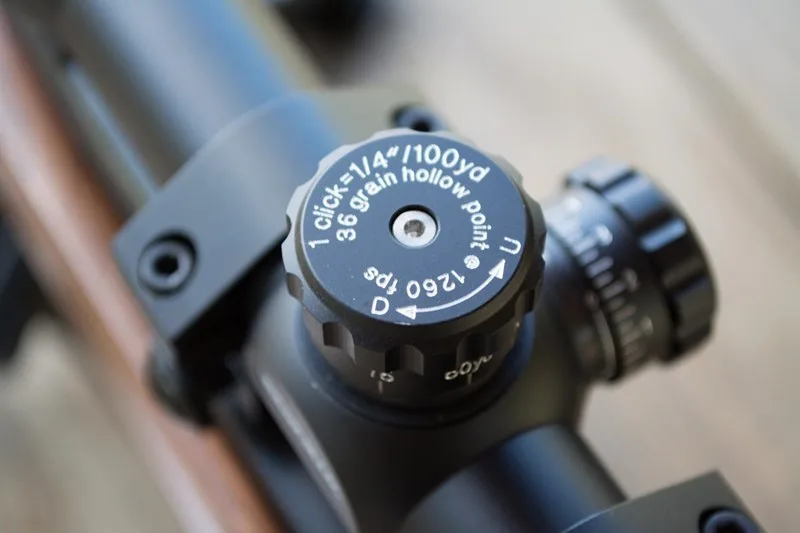
Here's what a 30mm tube typically offers that 1-inch options don't:
- Higher adjustment ranges for elevation and windage
- Better mechanical tracking at the extremes of adjustment
- A wider selection of tactical and competition optics
- More advanced turret designs with complex internal mechanisms
- Slightly stiffer tube construction under heavy recoil
The trade-offs are weight and cost. A 30mm tube scope typically runs 2 to 8 ounces heavier than a comparable 1-inch tube scope. You'll also pay $50 to $300+ more depending on the optical tier.
Aggregate user reviews show that shooters who dial extensively at long range consistently prefer the 30mm tube's mechanical performance. Those who don't dial much notice very little practical difference day to day.
What a 1-Inch Scope Tube Actually Gives You
The 1-inch tube is lighter, cheaper, and still perfectly capable for most hunting and moderate-range shooting. It's the default tube diameter for the vast majority of deer hunting scopes on the market.
Weight savings of 2 to 8 ounces compared to a 30mm tube might not sound like much. But on a rifle that's already at 7 to 9 pounds with optics, it adds up over a long hike. Backpack hunters consistently choose 1-inch tubes for this reason.
Cost is the other big factor. You'll find quality 1-inch tube scopes across every price tier. The selection of rings and mounts is the widest available.
Almost every rifle shop has 1-inch rings in stock.
What you give up is adjustment range. Most 1-inch tube scopes offer 60 to 90 MOA of elevation travel. That's plenty for shots out to 500 to 600 yards with proper holdover calculation.
It's not enough for extended-range competition shooting where you're dialing for 1000+ yards.
One thing worth noting. Some manufacturers pack 1-inch tubes with excellent optical glass. Premium hunting lines from companies like Leupold and Zeiss routinely deliver world-class image quality through 1-inch tubes.
Tube diameter doesn't cap optical quality. It caps mechanical adjustment range.
For most hunters reading this, the 1-inch tube is the right answer.
30mm vs. 1-Inch: Side-by-Side Specs and Performance
Let's put the numbers side by side. This is where the differences become concrete and actionable.
| Feature | 1-Inch Tube | 30mm Tube |
|---|---|---|
| Diameter | 25.4mm | 30mm |
| Elevation adjustment | 60 to 90 MOA | 120 to 200+ MOA |
| Weight penalty | Baseline | +2 to +8 oz |
| Price premium | Baseline | +$50 to +$300+ |
| Typical light transmission | 85 to 92% | 85 to 93% |
| Common magnification | 3-9x, 4-12x | 4-16x, 5-25x |
| Ring availability | Widest | Second most common |

The light-transmission column deserves a closer look because it's the most misunderstood spec on the list. Both tube sizes can achieve similar light throughput depending on the glass and coatings used. A 50mm objective lens with multi-coated glass can push 90%+ transmission through a 1-inch tube just fine.
Tube diameter is not the limiting factor for how much light reaches your eye.
What the 30mm tube genuinely buys you is mechanical room inside the tube. More room means more adjustment travel, better tracking at the extremes of that range, and access to higher-end tactical optics that are only offered in 30mm. Manufacturer engineering documentation from companies like Leupold and Nightforce confirms that the internal geometry of a 30mm tube supports more complex erector systems with tighter tolerances.
The 1-inch tube wins on weight, cost, and hunting practicality. For most shooters, that trade-off is the right one.
Which Tube Diameter Fits Your Shooting Style?
This is where the decision gets personal. Here's how it breaks down based on what you actually do with the rifle.
Go with a 1-inch tube if:
- Your longest realistic shot is 300 to 500 yards
- Weight matters on long backcountry hikes
- You want the widest selection of hunting scopes and rings
- Budget is a real constraint
- You use holdover reticles and dial minimally
Go with a 30mm tube if:
- You shoot regularly past 600 yards
- You compete in PRS, NRL, or long-range disciplines
- You need to dial beyond 90 MOA of elevation
- Your rifle is a heavy-recoil platform and you want stiffer tube construction
- You're building a dedicated long-range setup
The middle ground
If you're unsure, a 1-inch tube scope with quality glass will serve you well for years. You won't feel limited unless you're pushing extreme distances. You can always upgrade to a 30mm system later when you have a specific reason.
As of 2026, manufacturer specs from companies like Leupold and Vortex Optics confirm both tube sizes offer competitive optical performance at every price tier. The meaningful difference is mechanical, not optical. Pick the one that matches your shooting, and you'll be happy either way.
Mistakes to Avoid When Choosing Between 1-Inch and 30mm Tubes
Confusing tube diameter with objective lens size
This is the most common mistake in shooting forums and gun shop conversations. A 50mm objective lens does not mean you have a 30mm tube. A 3-9×50 scope can come in a 1-inch tube.
The 50mm refers to the objective bell, not the main tube. Tube diameter and objective size are completely separate specs. Check both before you buy.
Buying a 30mm tube for light transmission you'll never see
Manufacturers don't advertise a big light advantage between tube sizes because it doesn't exist in any meaningful way. As we covered in the comparison table, both tube sizes can achieve 85 to 93% transmission depending on glass quality and coatings. ED glass, multi-coating treatment, and lens design matter far more.
If someone tells you the 30mm tube lets in more light, they're repeating marketing language, not optical engineering.
Forgetting you'll need new rings and possibly new mounts
Switching from a 1-inch tube scope to a 30mm tube means buying a new set of rings. It also means rechecking ring height. The 30mm tube sits slightly higher, so you may need different ring heights to clear your objective bell off the barrel or rail.
Factor $30 to $80+ for new rings into your budget. Some shooters also find their existing scope base won't accommodate the taller profile.
Paying for turret range you don't use
This applies in both directions. If your longest shot is 400 yards, you don't need a 200 MOA elevation turret. You also don't need a 34mm tube.
Overspec'ing costs you money, weight, and a higher bore line on your rifle. Match the scope to your actual shooting distance. A 1-inch tube with 60 to 90 MOA handles everything out to roughly 600 yards with confidence.
Ignoring mechanical tracking verification
Aggregate user reviews show that tracking accuracy varies between manufacturers regardless of tube size. A well-built 1-inch tube scope can track flawlessly across its range. A poorly built 30mm tube scope can lose its zero after a few dialing cycles.
Always verify tracking by dialing out to maximum elevation, shooting, then returning to zero and confirming the point of impact.
Overlooking weight on hunting platforms
Every ounce matters when you're carrying a rifle over mountain terrain. Research from experienced backcountry hunters consistently shows that 1-inch tube scopes save significant weight compared to their 30mm counterparts. A 30mm tube scope with a 50mm objective and heavy tactical rings can push total optic weight past 30 ounces.
On a 7-pound rifle, that's over a pound of scope alone. Know your weight budget before committing.
Frequently Asked Questions
Does a 30mm scope tube let in more light than a 1-inch tube?
No, not in any practically noticeable way. Manufacturer specs show both 1-inch and 30mm tubes achieving 85 to 93% light transmission depending on glass quality and lens coatings. The optical glass and coating treatment matter far more than tube diameter when it comes to light.
Tube size affects mechanical range, not optical clarity.
Can you put a 30mm scope on a 1-inch mount?
No. The 30mm tube physically won't fit through 1-inch rings. You must purchase 30mm rings that match your tube diameter exactly.
Mixing tube sizes will also void your scope warranty. Always confirm ring diameter before mounting any scope.
What tube diameter do most hunters use?
Most hunters use 1-inch tube scopes. They're lighter, less expensive, and offer plenty of adjustment range for shots under 600 yards. The hunting market still favors 1-inch tubes because they fit the typical use case.
Hunters who regularly shoot past 600 yards are the group moving to 30mm tubes.
Is a 30mm scope heavier than a 1-inch scope?
Yes, a 30mm tube scope typically weighs 2 to 8 ounces more than a comparable 1-inch tube scope. The difference comes from the larger tube, heavier ring hardware, and sometimes a larger objective bell. Weight-conscious backcountry hunters generally prefer 1-inch tube options.
Do I need a 30mm tube for long-range shooting?
Only if you need to dial elevation beyond 90 MOA, which is roughly 600+ yards depending on caliber and conditions. For PRS, NRL, and extended-range competition shooting, a 30mm tube gives you the mechanical room you'll actually use. For hunting distances under 600 yards, a 1-inch tube handles the job without issue.
Can a 1-inch tube handle heavy recoil?
Yes, 1-inch tube scopes are built to handle heavy recoil when properly mounted. Premium 1-inch tube options from manufacturers like Leupold are rated for magnum calibers. The key is using correctly sized rings at the proper torque specification.
Tube diameter alone doesn't determine recoil resistance.
Final Verdict: Should You Go 30mm or Stick With 1-Inch?
Here's the short version. If you're hunting, shooting targets at moderate range, or building a general-purpose rifle, a 1-inch tube is the better choice. It's lighter, cheaper, and gives you all the mechanical range you need for shots out to 600 yards.
If you're competing in long-range disciplines, regularly shooting past 600 yards, or dialing for distances where you need more than 90 MOA of elevation, the 30mm tube earns its premium. The extra adjustment range and mechanical robustness are real advantages in that specific context.
The mistake is assuming one is universally better than the other. They're engineered for different jobs. Pick the one that matches your actual shooting, and you'll get better results than chasing specs you don't need.




