How should I transport a rifle scope? The honest answer depends on where you're going and how far. The wrong choice can cost you a scratched lens, a crushed turret, or an optic that won't hold zero.
Manufacturer specifications tell us ring screws should sit at 15 to 25 inch-pounds. That's just the reinstallation piece. Transport decisions also cover case selection, foam fitment, and legal requirements.
Here's how to sort through all of it.
Quick Answer
How should you transport a rifle scope? Use a hard-sided case with snug foam that prevents movement inside. Remove the optic before flying to avoid TSA complications.
For long drives, a mounted scope with padding works fine. Always follow federal and state transport laws for the rifle itself.

Image source: Web (Bing) / cobrafoaminserts.com (Web image (fair-use with source credit))
Why Scope Transport Problems Almost Always Come Down to One Decision
Most scope transport failures trace back to a single choice: whether to remove the optic from the rifle before moving it. That decision changes everything that follows.
If you leave the scope mounted during a long drive, it sits in the rings and absorbs every bump and vibration from the road. Smooth pavement won't hurt it. Gravel roads, washboard surfaces, and truck-bed bounces are a different story.
Remove the optic instead and you protect the lenses and turrets from impact. But now you've got to reinstall it later, re-torque the screws, and verify your zero still holds. Mess that up and you've traded one problem for another.
Our research into manufacturer mounting guides and aggregate buyer feedback shows a clear pattern. Shooters who mark their ring positions before removal almost always re-zero without drama. Those who skip the marking step struggle with alignment.
The right move depends on your transport method, distance, and legal situation. That's why this guide is built around decisions rather than blanket advice. The next section breaks down the four scenarios you're most likely to face.
Remove the Scope or Leave It Mounted? Here's How to Decide
There's no universal answer, but the four transport scenarios below cover most real-world situations.
| Transport Mode | Remove Scope? | Case Type | Key Risk |
|---|---|---|---|
| Short road trip (under 100 mi) | No | Soft or hard case | Minor vibration |
| Long road trip (over 100 mi) | Yes | Hard case with foam | Zero shift |
| Airline flight | Yes | Hard case, checked bag | TSA inspection |
| Shipping to gunsmith | Yes | Padded box + case | Transit damage |
| Long-term storage | Yes | Sealed case + desiccant | Moisture and dust |
Long Road Trips and Off-Road Travel
If the drive is under 100 miles on paved roads, leaving the scope mounted is usually fine. The rings hold it securely, and modern scopes handle vibration well enough. Beyond that distance, or on rough terrain, remove it.
A scope that shifts inside its rings during a 500-mile trip can lose its zero or worse.
Airline Travel and TSA Regulations
Remove the scope. The Transportation Security Administration requires firearms to be declared at check-in, unloaded, and locked in a hard-sided case in checked baggage. Optics aren't separately regulated, but leaving a scope mounted to a rifle complicates inspection.
A detached optic in its own padded case is easier to handle and less likely to be damaged by baggage handlers.
Shipping to or From a Gunsmith
Always remove it. Gunsmiths expect loose scopes. If the scope stays mounted during shipping, you can't tell what caused a zero shift.
It might be transit damage. It might be improper mounting. Either way, you're guessing.
Ship the optic separately in a padded case with a note detailing ring positions.
Long-Term Storage and Moving House
For storage over 30 days, remove the scope and store it in a sealed case with desiccant packs. Temperature swings, moisture, and dust are the real enemies here. When moving house, treat it like a fragile instrument: custom foam, no loose rattling, and the case marked "fragile" on every side.
Choosing the Right Case, Foam, and Packaging for Transit
The case is your first line of defense, and the foam is what actually protects the optic. Get both right and you've solved most transport problems before you even hit the road.
Hard-sided cases like Pelican cases offer the best impact protection. They're rated to withstand drops, crushing force, and temperature extremes. Soft cases are lighter and cheaper, but they won't save a scope from a hard impact.
For air travel or long drives, hard-side is the way to go.

Image source: Web (Bing) / ar.inspiredpencil.com (Web image (fair-use with source credit))
Foam choice matters as much as the case itself. Pick-and-pluck foam lets you customize the fit by hand, but it wears out over time and loses its grip. Custom-cut foam, sized to your specific scope dimensions, holds the optic firmly with zero movement.
Per manufacturer specifications for optics like the Leupold VX-5HD series, objective lens diameters range from 32mm to 56mm. Your foam cut needs to match.
Here's what to include in your transport kit:
- A hard-sided case with a pressure-equalization valve
- Custom-cut or pick-and-pluck foam sized to your scope
- Desiccant packs to control moisture
- Torque wrench set to inch-pounds
- Blue Loctite for threadlocker (optional but recommended)
- Tape or a marker to note ring positions before removal
The valve is worth mentioning. Most quality hard cases include one, and it prevents the case from collapsing under pressure changes during air travel. That's a small feature that saves a lot of grief at 35,000 feet.
How to Remove and Reinstall a Scope Without Losing Your Zero
Removing a scope and putting it back on correctly is the most critical step in the entire transport process. Do it right and your zero stays. Do it wrong and you'll be re-zeroing for an hour at the range.
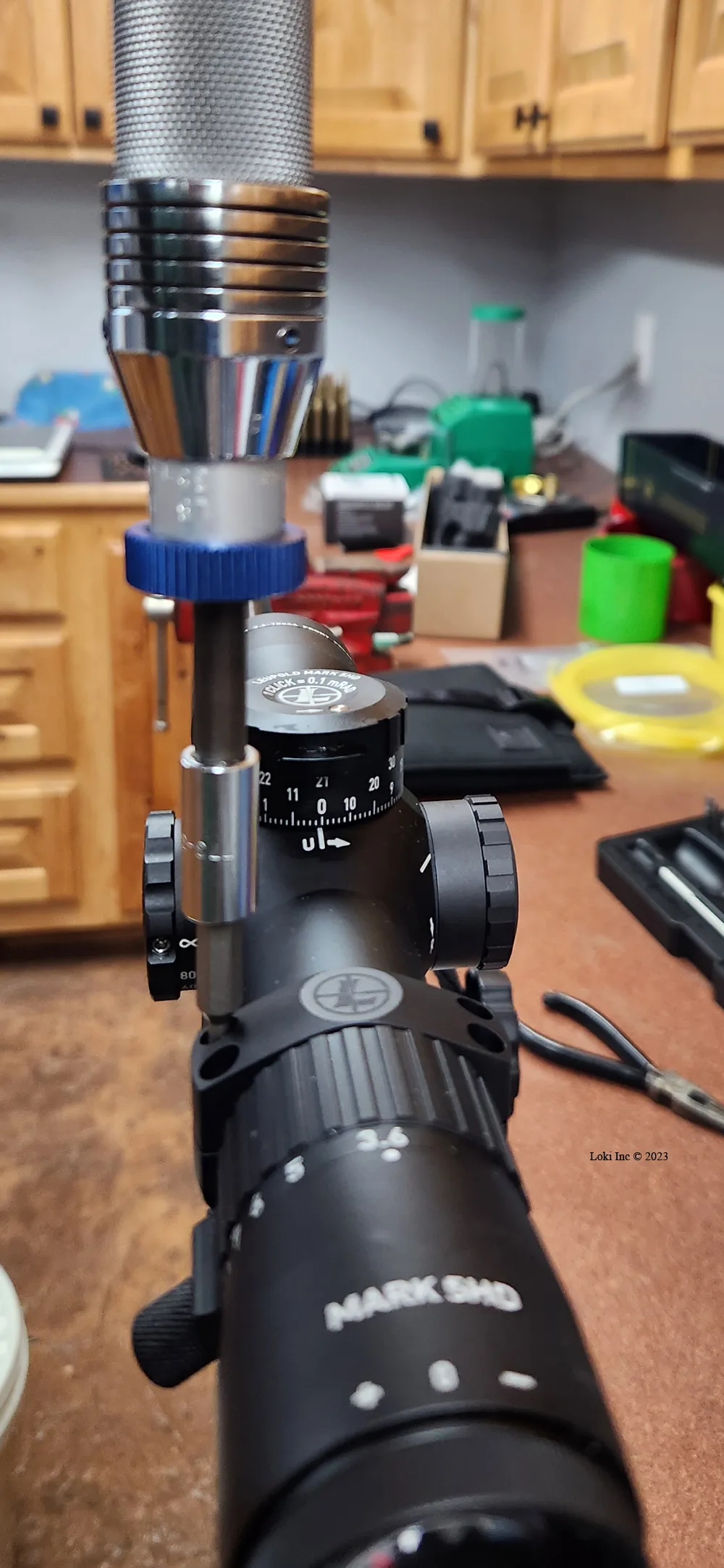
Image source: Web (Bing) / lokiconsult.com (Web image (fair-use with source credit))
Here's the workflow, in order:
Mark your ring positions. Place a small strip of tape on the scope tube where the rings sit, or mark with a non-permanent marker. This tells you exactly where to reinstall it.
Loosen ring screws evenly. Use an inch-pound torque wrench. Loosen the top and bottom screws in a cross pattern, just like you tightened them. Most ring screws require 15 to 25 in-lbs.
Lift the scope out carefully. Don't slide it. Lifting straight up prevents scratches on the tube finish.
Package the optic. Place it in its own case with foam that cradles the body and prevents lateral movement.
Reinstall on the rifle. Line up your marked positions. Torque ring screws to the manufacturer specification, usually 15 to 25 in-lbs. Apply Blue Loctite if you prefer.
Verify zero. Bore-sight at 50 yards first, then take a few confirmation shots. If the point of impact has shifted, your ring screws are likely not at spec.
A torque wrench isn't optional here. Setting ring screws by feel is one of the most common reasons shooters lose their zero after transport. The wrench takes the guesswork out entirely.
Flying, Shipping, or Mailing a Scope: Rules and Best Practices
Each transport mode has its own rules, risks, and best practices. Here's what you need to know for each.
TSA and Airline Firearm Transport Requirements
The TSA requires all firearms to be declared at the ticket counter, unloaded, and packed in a locked hard-sided case in checked baggage. Optics aren't listed separately, but best practice is to detach the scope and pack it in its own padded case inside the same checked bag. Most airlines charge $25 to $100 per firearm as of 2026.
Check your carrier's specific policy before heading to the airport. You can review the latest requirements at the TSA's official firearms page.
Shipping a Scope to a Gunsmith or Dealer
Optics ship via standard carriers like UPS or FedEx, but you'll need to comply with the manufacturer's packaging requirements. Use a box that's at least twice the dimensions of the case, add foam padding on all sides, and insure the shipment. If you're shipping a rifle too, federal law requires an FFL transfer.
The ATF enforces these rules under 18 U.S.C. § 922, and violations carry real penalties. You can review federal regulations at the ATF website.
State-by-State Transport Laws You Need to Know
Transport rules vary significantly by state. California, New York, and Massachusetts have stricter transport laws than states like Texas or Montana. Some states require firearms to be unloaded in a locked container when transported in a vehicle.
Others allow open carry with no specific transport requirements. If you're crossing state lines, check the laws at both your origin and destination before you go.
Scope Transport Mistakes That Cost You Zero or Worse
These are the errors that show up over and over in shooter forums and range reports. Most of them are avoidable with a little attention before you leave the house.
Skipping the ring position marks. When you pull the scope out of its rings without noting where the tube sat, you're gambling on alignment during reinstallation. Even a fraction of an inch shift can move your point of impact enough to matter at 300 yards.
Over-torquing ring screws. Cramming screws past 25 in-lbs crushes the scope tube and deforms the erector system inside. Your zero won't just shift. It may never hold properly again.
Manufacturer specs exist for a reason.
Using the wrong torque wrench. A standard screwdriver won't tell you what force you're applying. An inch-pound torque wrench will. Without one, you're guessing at the most critical variable in the reinstallation process.
Leaving the scope mounted for a long drive. Every vibration from the road transfers directly into the scope body through the rings. Over hundreds of miles, that repeated stress can loosen screws or knock turrets out of alignment.
Storing without desiccant. Moisture doesn't care if your case is sealed. Temperature swings inside a vehicle or storage unit create condensation inside the optic over time. That fogged interior means a trip to the manufacturer, not just a wipe-down.
Shoving the scope in a case without foam support. A scope that rattles freely inside its case will take hits at the weakest points: turrets, windage knobs, and the objective bell. Every loose shift is a potential impact.
Ignoring legal requirements for the rifle. The optic itself isn't regulated, but the rifle is. Transporting a firearm across state lines without following local laws is a real legal risk, not a paperwork inconvenience.
The fix for most of these is preparation. Mark your positions. Torque to spec.
Use a proper case with foam that fits snugly. Follow the law at both ends of your trip. Those four habits prevent the majority of transport failures.
Frequently Asked Questions
Can I leave my rifle scope mounted during transport?
For short drives on paved roads under 100 miles, yes. The rings hold the optic securely enough for moderate conditions. Beyond that distance, or on rough terrain, remove it.
A scope in its own padded case handles vibration and impact far better than one locked in rings during a bumpy trip.
What torque should I use when reinstalling scope ring screws?
Most scope manufacturers specify 15 to 25 inch-pounds for ring screws. Check your specific scope's manual, as some use different values. Use a proper inch-pound torque wrench for accuracy.
Over-torquing beyond spec can damage the scope tube permanently.
How should I pack a rifle scope for airline travel?
Remove the scope from the rifle and place it in a hard-sided case with custom foam that prevents any movement. Declare your firearm at the ticket counter for checked baggage. Keep the optic case separate from the rifle case inside the same locked bag.
Can I ship a scope through the mail or by carrier?
Yes, optics ship via standard carriers like UPS or FedEx. Use a box at least twice the size of your case with foam padding on all sides. Insure the shipment for the full value.
Federal law applies only to the rifle itself, not the optic.
Do I need to re-zero after removing and reinstalling a scope?
In most cases, yes. Even with marked ring positions and correct torque values, a small shift in point of impact is common. Bore-sight at 50 yards first, then confirm with a few shots at the range before relying on your zero.
What's the best case type for transporting a long-range optic?
A hard-sided, sealable case with custom-cut foam is the best option for long-range optics. These scopes have larger objective lenses, often 50mm or 56mm, and sensitive turrets. A Pelican-style case rated for impact protection and moisture resistance is the safest choice.




