Are expensive rifle scopes worth it? The answer isn't a simple yes or no. It depends on what you're doing with the rifle and how much the optics actually matter for your scenario.
A $400 scope can outperform expectations when you're hunting whitetails at 150 yards in a hardwood forest.
In our research across manufacturer specifications, industry data from the National Shooting Sports Foundation, and aggregate buyer feedback, the biggest performance jump happens between $200 and $500. Beyond that, you're paying for edge-case reliability rather than everyday results. As of 2026, Chinese-manufactured optics have pushed mid-range quality higher than ever.
Let's break down what actually changes at each price point and where the smart money goes.
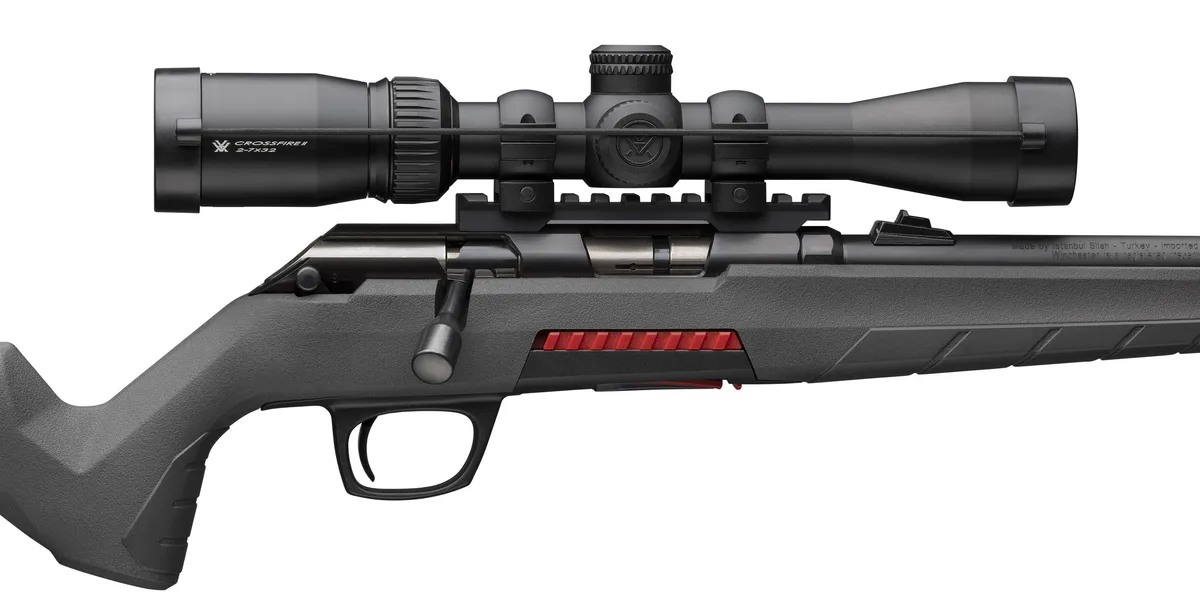
Image source: Web (Bing) / winchesterguns.com (Web image (fair-use with source credit))
Quick Answer
Are expensive rifle scopes worth it? It depends on your shooting scenario. The biggest performance jump happens between $200 and $500.
Budget scopes work for short-range hunting. Premium scopes earn their price in low light and long range.
The Price Gap Is Real, But the Jump Where It Matters Happens Early
Let's talk money first. As of 2026, rifle scopes span from under $100 to over $5,000. That's a 50x price spread for the same basic job: aim, fire, hit what you're aiming at.
Scopes fall into four practical tiers. Budget scopes run $100 to $300. Mid-range scopes run $300 to $700.
Premium optics sit between $700 and $2,000 or more. Ultramodern competition optics run $2,000 to $5,000 and beyond. Each tier brings real upgrades in glass quality, turret precision, and ruggedness.
But those upgrades don't scale evenly with price.
Here's what most buyers miss. The biggest jump in optical quality happens between $200 and $500. That's where you transition from mediocre glass to genuinely good clarity.
Beyond $700, improvements are real but incremental.
Put it in a hunting context. If you're pursuing whitetail deer at 150 yards in hardwoods, a solid $400 scope delivers everything you need. The image will be clear, the turrets will track, and the scope will hold zero season after season.
Now consider a different scenario. A pronghorn hunt on open Wyoming prairie in fading light. A $2,000 Swarovski or Zeiss optic gathers meaningfully more light.
The image stays brighter in the last ten minutes of legal shooting. For that specific situation, the premium price earns itself.
Aggregate buyer feedback points to the same conclusion. The $300 to $700 range delivers the best balance of performance and price for general-purpose hunting. Premium optics score higher in controlled low-light and long-range tests.
But the gap shrinks fast when both scopes sit within normal hunting distances.
The right move is to match scope tier to your actual hunting scenario. Not to the most expensive option you can afford.
What You're Actually Paying For at Each Price Tier
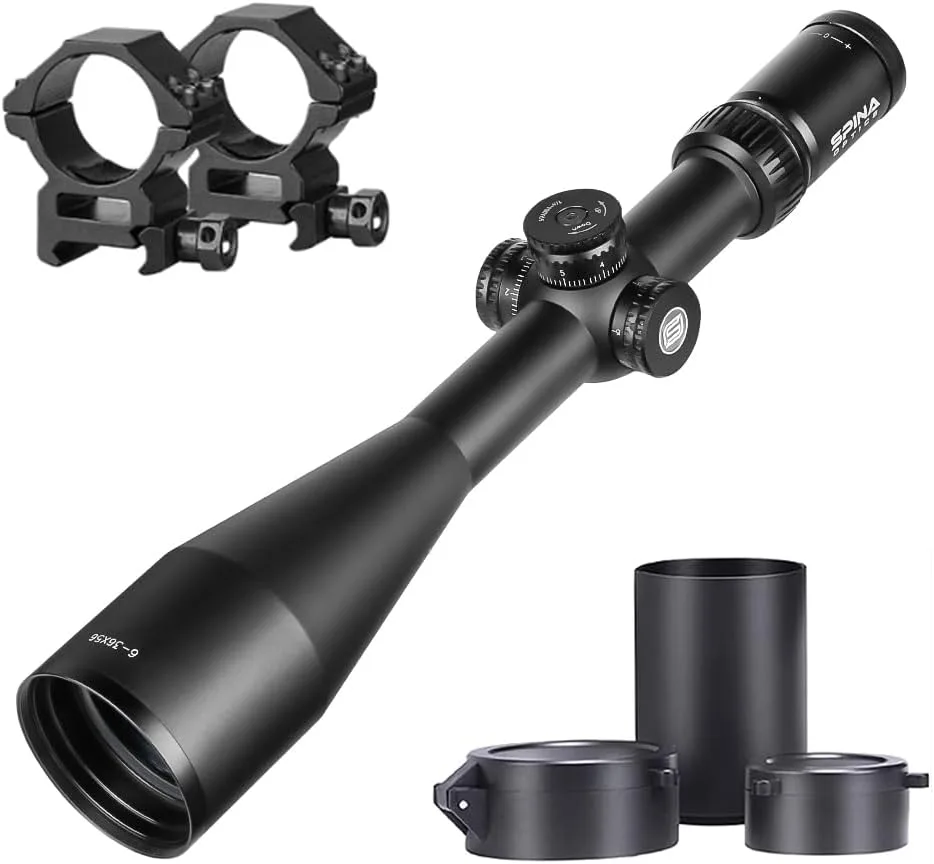
Image source: Web (Bing) / amazon.co.uk (Web image (fair-use with source credit))
Not all scopes are built equally, even when they look similar on the rack. Here's what actually changes as you move up in price.
Budget scopes ($100 to $300)
These are functional, not exceptional. The glass will be decent at 100 yards but soft at the edges. Turret tracking is inconsistent, which matters more than you'd think when dialing adjustments.
Light transmission hovers around 85 to 90 percent, meaning the image dims noticeably in dusk conditions. Construction is usually nitrogen-purged and waterproof, but build quality varies widely. Fine for deer hunting at moderate ranges.
Risky for precision work.
Mid-range scopes ($300 to $700)
This is where the real value lives. Fully multi-coated lenses push light transmission to 90 to 92 percent. Glass clarity becomes noticeably better, especially at the edges.
Turrets start tracking more reliably, which means your holdover adjustments actually mean something. Brands like Vortex Razor HD, Leupold VX-5, and Tract Toric deliver genuine optical performance here. For most hunters, this tier is the sweet spot.
Premium scopes ($700 to $2,000+)
Premium glass from German, Japanese, and Austrian manufacturers shows up in this range. Light transmission climbs to 93 to 97 percent and above. Edge clarity becomes razor-sharp.
Turret tracking stays consistent across the full zoom range, which matters enormously for long-range shooting. Durability is exceptional, and the warranty is often unconditional. Schmidt & Bender, Zeiss, Swarovski, and Nightforce operate here.
Ultramodern and competition optics ($2,000 to $5,000+)
Built for Precision Rifle Series competitors and military applications. These are the highest-magnification, most precisely-machined optics available. MIL-STD-810G compliance is standard across this tier.
Tracking repeatability is near-perfect. But if you're not shooting beyond 800 yards competitively, this tier delivers diminishing returns for hunting use.
The honest takeaway is simple. The features that matter most for hunting all show up between $300 and $700. Everything above that is incremental improvement.
Side-by-Side: How the Tiers Actually Compare
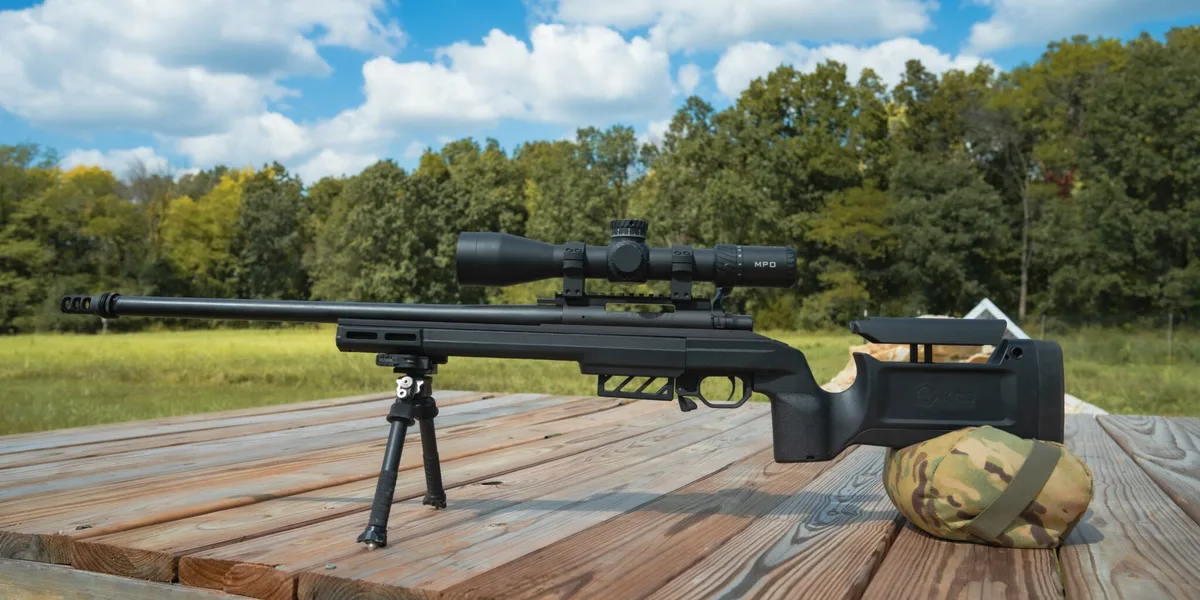
Image source: Web (Bing) / gununiversity.com (Web image (fair-use with source credit))
Specs matter, but comparisons make them real. Here's how the four tiers stack up on the metrics that actually affect field performance.
| Metric | Budget ($100 to $300) | Mid-Range ($300 to $700) | Premium ($700 to $2,000+) | Ultramodern ($2,000+) |
|---|---|---|---|---|
| Light Transmission | ~85 to 90% | ~90 to 92% | ~93 to 97% | ~95 to 98% |
| Edge Clarity | Soft, noticeable distortion | Clean at center, decent edges | Sharp edge-to-edge | Razor-sharp edge-to-edge |
| Turret Tracking | Inconsistent | Generally reliable | Highly repeatable | Near-perfect repeatability |
| Eye Relief | 3.0 to 3.5 in typical | 3.3 to 4.0 in typical | 3.5 to 4.5 in typical | 3.5 to 4.5 in typical |
| Durability | Acceptable for light use | Solid under normal recoil | Exceptional across calibers | MIL-STD-810G rated |
| Warranty | Limited or prorated | Lifetime on many models | Unconditional lifetime | Unconditional lifetime |
Looking at the table, you can see the pattern. Light transmission differences look modest on paper but matter in low-light conditions. Edge clarity improvements are obvious through the scope itself, even if they look small on a spec sheet.
The turret tracking row surprises people. Budget scopes often don't hold their adjustments reliably. Dialing 1 MOA up doesn't always move your point of impact exactly 1 MOA.
Mid-range scopes have largely fixed this problem. Premium scopes get it right consistently across the full range.
One thing worth more than raw specs: eye relief and tube diameter compatibility with your mounting system. A 30mm tube needs different ring heights than a 1-inch tube. Getting this wrong affects your cheek weld and shooting comfort.
For most hunting applications, the mid-range column delivers everything you need. The premium column adds polish, not necessity. And the ultramodern column only makes sense if you're competing or shooting at extreme distances regularly.
Where the Extra Money Really Pays Off (and Where It Doesn't)
Not every premium scope feature is equally valuable. Here's the breakdown of what earns its price and what doesn't.
Where premium optics genuinely earn their money
Low-light performance. This is the biggest real-world difference. Premium glass from Swarovski, Zeiss, or Tract gathers measurably more light in the last 30 minutes of legal shooting. If you hunt in early morning or late evening, premium optics make a visible difference.
Turret tracking reliability. If you dial elevation for long-range shots, tracking repeatability matters enormously. Premium scopes track consistently across their full adjustment range. Dial 3 MOA up, dial back to zero, and return to the same point of impact. Budget scopes don't always do this.
Durability under heavy recoil. A scope mounted on a .300 Win Mag or .338 Lapua endures serious internal stress. Premium optics are built to handle this without losing zero. Budget scopes can shift under sustained magnum recoil.
Warranty and long-term value. Premium scopes often carry unconditional lifetime warranties that cover damage from normal use. That warranty alone can justify the price difference over time.
Where the extra money doesn't matter much
Short-range hunting. If your deer season is spent in hardwoods at 100 to 200 yards, a solid mid-range scope delivers everything you need.
Clear weather, midday shooting. Glass quality differences are hardest to see in full sunlight. The performance gap shows up mostly in edge cases.
Simple hunting scope designs. A quality mid-range 3-9x scope has less mechanical complexity than a premium competition optic. Fewer moving parts means less that can go wrong.
Recreational plinking or casual range use. Durability and optical clarity matter far less here.
The practical rule is straightforward. Spend more when low-light performance, long-range precision, or heavy-recoil durability matters to your scenario. Save when it doesn't.
SAAMI standards for ammunition and firearm testing confirm that scope calibration accuracy depends heavily on turret consistency, which is exactly where premium optics pull ahead.
Matching Scope Tier to Your Hunting or Shooting Scenario
The best scope is the one matched to your actual use case. Not the most expensive option on the shelf. Here's how to think through it.
If you hunt whitetail in the woods at 100 to 200 yards
A budget-to-mid-range scope works perfectly. A Vortex Crossfire II or Leupold VX-Freedom in the $200 to $400 range gives you the clarity and reliability you need. Spend the savings on ammo and range time.
If you hunt western big game in open country at 200 to 400 yards
A mid-range variable scope in the $400 to $700 range is the smart move. Look for a 3-15x or 4-12x with a 40mm to 50mm objective lens. Good edge clarity and reliable turrets matter here.
Tract Toric and Vortex Razor HD in this price range deliver.
If you hunt in fading light or run predator hunts
This is where premium glass starts earning its keep. Low-light performance is the primary differentiator between mid-range and premium optics. A Swarovski Z8i or Zeiss Victory in the $1,200+ range shows a real difference in the last 10 minutes of light.
If you compete in PRS or shoot beyond 500 yards
Premium or ultramodern scopes become almost mandatory. You need reliable turret tracking, a first focal plane (FFP) reticle, and enough magnification for precise holdovers. FFP reticles scale with magnification, so holdover marks stay accurate at any zoom level.
Nightforce ATACR, Schmidt & Bender PM II, or Vortex Razor HD Gen III in the $1,500 to $3,000+ range fit this scenario.
If you backcountry hunt and weight matters
Look for a lightweight scope with a 30mm tube and a 24mm to 36mm objective lens. Mid-range options under 24 oz exist. The Leupold Mark 3HD and Tract Toric Ultra HD both come in around that weight.
The common thread is this. Match the scope tier to where your hunting scenario actually puts optical demands on the equipment. Don't overbuy for a scenario you rarely face.
And don't underbuy for the conditions you hunt in every season.




