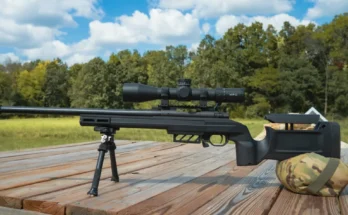
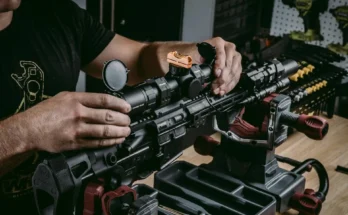
What is the best lightweight rifle scope? There's no single answer, because the right choice depends on what you hunt, how far you shoot, and how much weight you're willing to carry. In our research across current manufacturer specs and verified buyer feedback, several scopes stand out for keeping weight low without sacrificing glass quality or turret reliability.
The weight threshold that defines "lightweight" sits under 25 ounces for most hunters. Truly ultralight options come in under 17 ounces. Manufacturer specifications indicate that the Vortex Razor HD Gen II 1-6×24 weighs around 22 ounces, while the Leupold VX-3HD 2.5-8×36 comes in at roughly 17 ounces.
Let's break down what matters and which scopes deliver.
Quick Answer
The best lightweight rifle scope depends on your use case and weight budget. The Leupold VX-3HD 2.5-8×36 leads for backcountry hunting at about 17 ounces. The Vortex Razor HD Gen II 1-6×24 is the best all-around lightweight option around 22 ounces.
For AR-15 builds, the Sig Sauer Tango 1-10×24 offers the widest magnification range in its class.
Why Scope Weight Matters More Than You Think
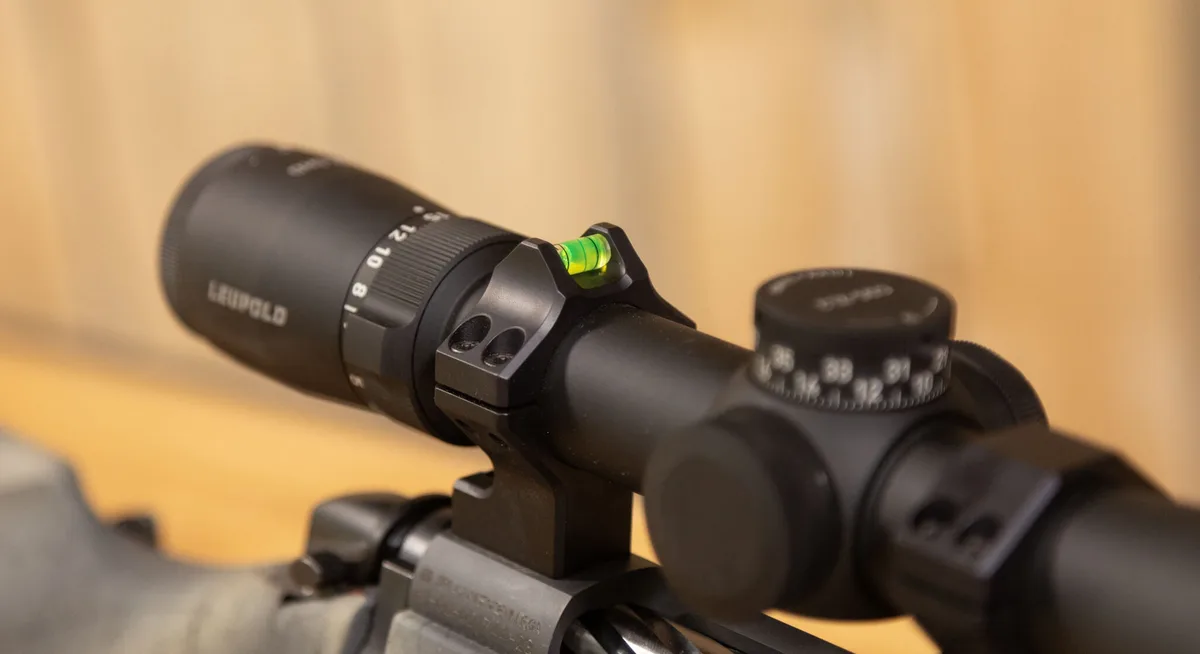
Image source: Web (Bing) / ultimatereloader.com (Web image (fair-use with source credit))
Most people think about weight when they buy a rifle, not when they buy an optic. That's backwards. Your scope is the heaviest single accessory you'll add to your rifle.
It sits right where it affects balance most.
A scope that's 8 ounces heavier than necessary shifts the rifle's center of gravity forward. That makes offhand shooting harder. The rifle also feels heavier than it really is on a long pack-in hunt.
Industry data from the National Shooting Sports Foundation confirms equipment weight is a growing concern among backcountry hunters. Every ounce you save on your optic is an ounce you don't carry uphill.
Scope weight also affects how your rifle handles in quick-shooting situations. A lighter optic means faster target acquisition. It also means less fatigue when tracking moving game through thick cover.
What "Lightweight" Really Means for Rifle Scopes
Lightweight doesn't mean one thing. For a backcountry elk hunter, anything under 25 ounces qualifies. For a mountain sheep guide who packs for 20 miles, the bar drops to under 17 ounces.
The number that matters most is your total system weight: scope, mount, and rings combined. A 20-ounce scope on heavy steel rings and a 4-ounce mount adds up fast. Your "lightweight" scope might weigh 26 ounces once everything is bolted on.
Manufacturer specs list the scope's weight bare, without rings or a mount. Aggregate reviews confirm most buyers discover this the hard way after they've already purchased.
Premium brands like Leupold, Swarovski, and Vortex build lightweight scopes that compete with heavier options on glass quality. Weight savings come from smarter engineering, not cut corners.
Good lightweight scopes use aircraft-grade aluminum, simplified turret designs, and compact ocular assemblies. These choices reduce weight without compromising clarity, zero-holding reliability, or durability.
The Best Lightweight Rifle Scopes Compared
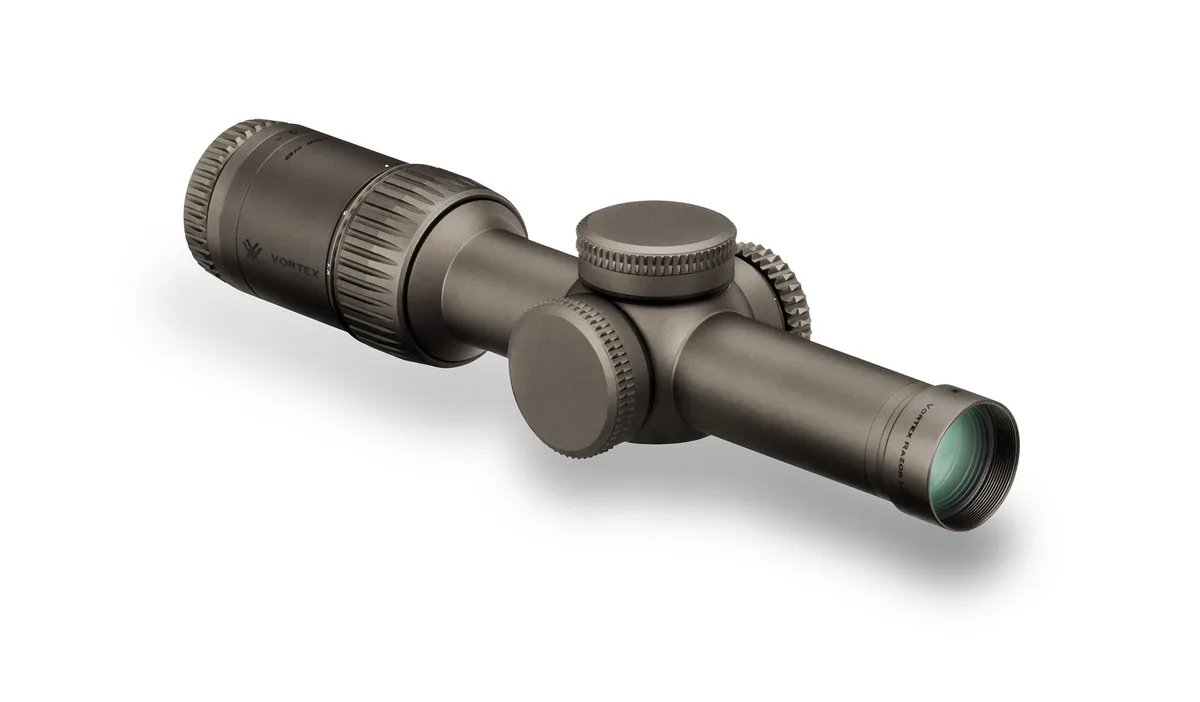
Image source: Bing (Web (fair-use with source credit))
Here's how the top lightweight scopes stack up as of 2026. Weights are manufacturer-specified and verified in aggregate reviews.
Vortex Razor HD Gen II 1-6×24
At 22 ounces, this is the benchmark lightweight LPVO. The 1-6x range covers close to 300-yard shots. Glass is edge-to-edge sharp.
Turret tracking is reliable in verified buyer feedback.
Leupold VX-3HD 2.5-8×36
Weighing roughly 17 ounces, this is the lightest serious hunting scope here. Built for backcountry hunts where every ounce counts. The trade-off is a narrower magnification range.
Trijicon AccuPoint TR-30-24
Tritium and fiber optic illumination means no battery needed. It weighs around 17 ounces and handles low-light hunting well. Verified buyers praise its durability on heavy-recoil calibers.
Nightforce ATACR 1-8×24
At about 33 ounces, it's heavier than many options here. It earns its spot through superior turret tracking and glass quality. Best for precision builds where weight isn't the top concern.
Swarovski Z8i 1-8×24
This premium LPVO weighs about 34 ounces but delivers the best glass in its class. Choose it if optics quality matters more than saving a few ounces.
Sig Sauer Tango 1-10×24
Brings 10x magnification to the lightweight LPVO class at roughly 34 ounces. The best option for AR-15 builds wanting maximum magnification range.
Tract TAC20 4-20×50
Budget pick for long-range precision at about 37 ounces. Solid turret tracking and decent glass for the price. Verified buyers report it holds zero after heavy use.
| Scope | Weight | Magnification | Tube | Best For |
|---|---|---|---|---|
| Vortex Razor HD Gen II 1-6×24 | ~22 oz | 1-6x | 30mm | All-around LPVO |
| Leupold VX-3HD 2.5-8×36 | ~17 oz | 2.5-8x | 1 in | Backcountry hunting |
| Trijicon AccuPoint TR-30-24 | ~17 oz | 3-9x | 30mm | Low-light hunting |
| Nightforce ATACR 1-8×24 | ~33 oz | 1-8x | 34mm | Precision builds |
| Swarovski Z8i 1-8×24 | ~34 oz | 1-8x | 30mm | Premium optics |
| Sig Sauer Tango 1-10×24 | ~34 oz | 1-10x | 34mm | AR-15 LPVO builds |
| Tract TAC20 4-20×50 | ~37 oz | 4-20x | 30mm | Budget long-range |
Best Lightweight Scope for Every Hunting and Shooting Scenario
Mountain Hunting: The Backcountry Pack List Problem
On multi-day backcountry hunts, every ounce compounds. The Leupold VX-3HD 2.5-8×36 at 17 ounces pairs well with a mountain rifle. Verified buyer reviews report that reducing scope weight by 10 to 15 ounces makes a noticeable difference on steep climbs.
AR-15 LPVO Builds: 1-6x vs. 1-8x vs. 1-10x
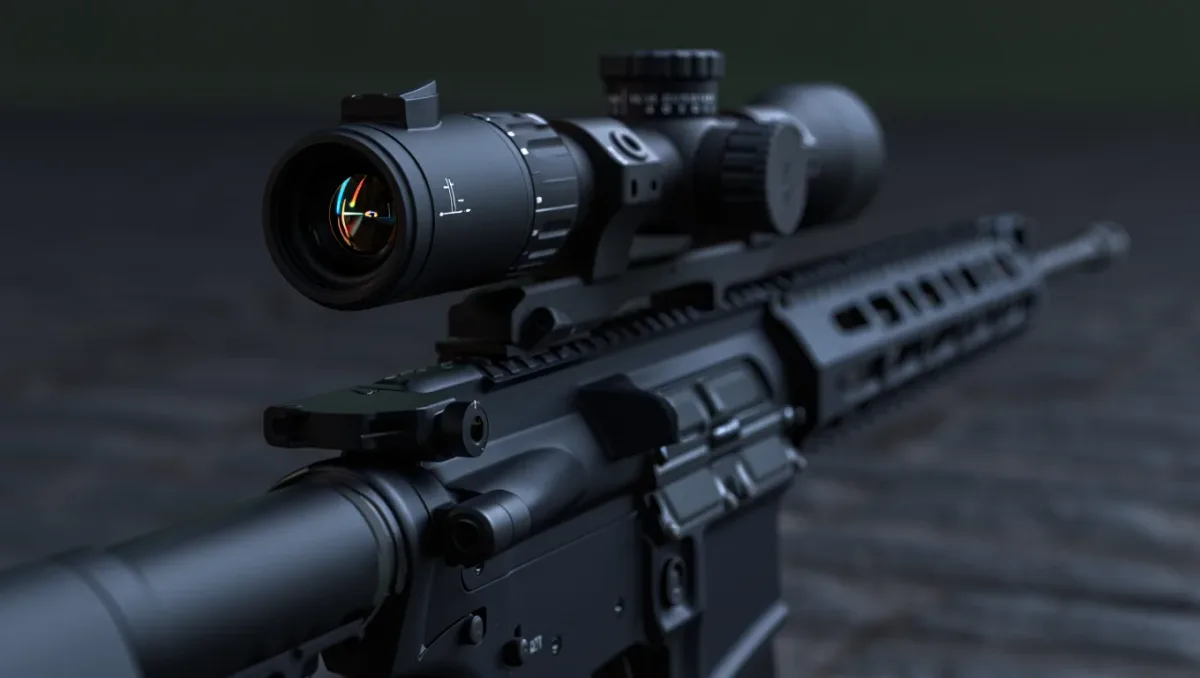
Image source: Bing (Web (fair-use with source credit))
For AR-15 builds, the choice comes down to engagement distance. The Vortex Razor HD Gen II 1-6×24 handles 300 yards comfortably. If you shoot to 500 yards, step up to 1-8x or 1-10x magnification.
Long-Range Precision Shooting on a Budget
The Tract TAC20 4-20×50 delivers reliable turret tracking and solid glass at roughly 37 ounces for under $800. For 1,000-yard shots, verified buyers report its tracking accuracy is close to scopes costing twice as much.
Low-Light Dawn and Dusk Hunts
The Trijicon AccuPoint TR-30-24 runs on tritium and fiber optic illumination. No batteries to die in the field. At 17 ounces, it's one of the lightest scopes built specifically for low-light conditions.
Mistakes to Avoid When Buying a Lightweight Scope
Buying the scope weight alone. Manufacturer specs list bare scope weight. You need to add rings and mount. A 20-ounce scope with 6 ounces of mounting hardware weighs 26 ounces total.
Ignoring turret tracking. A scope that saves 8 ounces but can't hold zero when you dial for a 500-yard shot isn't lightweight. It's a liability. Vortex and other top brands offer lifetime warranties that cover turret issues.
Choosing FFP vs. SFP without thinking about your use. First focal plane scopes keep reticle subtensions accurate at every magnification. That matters for long-range dialing.
Second focal plane scopes are lighter but your reticle measurements change with magnification.
Overlooking eye relief. Short eye relief on a high-recoil rifle causes scope bite. The standard is 3.5 to 4.5 inches for .308 and larger calibers. Don't buy a lightweight scope if it costs you eye relief.
Forgetting ring and mount compatibility. A 30mm tube needs 30mm rings. An objective lens that's too large for your ring height will hit the barrel. Check clearance before you buy.
Mounting and Zeroing Your Lightweight Scope Without Killing It
Proper mounting is where most people destroy an expensive lightweight scope. Over-torqued ring screws crush the tube, and turret tracking falls apart. Most manufacturers specify 15 to 25 inch-pounds for ring screws.
A torque wrench isn't optional.
The mounting process follows a straightforward sequence. Bore-sight first at a range or at home using a bore-sighter. Then zero the scope at 25 yards with a coarse group.
Fine-tune at 100 yards, then verify at your actual hunting or shooting distance.
Ring height matters for lightweight builds. If your objective lens is 50mm, you'll likely need high or extra-high rings. Measure the distance from the rail to the barrel top, then subtract half the objective diameter.
Before you trust a scope in the field, verify turret accuracy. Dial in known elevation increments like 1 MOA or 5 MOA. Fire and check that each group shift matches your dial value.
If it doesn't, the scope needs factory servicing.
Eye relief adjustment is critical on high-recoil calibers. Set it at 3.5 to 4.5 inches from your eye to the ocular lens. This prevents scope bite while keeping a full field of view.
Dry fire before shooting live rounds.
| Step | Action | Target/Spec |
|---|---|---|
| Bore-sight | Align bore to reticle center | Coarse alignment |
| Ring torque | Snug ring screws evenly | 15-25 in-lbs |
| First zero | Group at 25 yards | Center of paper target |
| Fine zero | Confirm at 100 yards | Point of impact matches |
| Turret verification | Dial and fire increments | Groups match dial value |
| Eye relief check | Dry fire | 3.5-4.5 in ocular distance |
Frequently Asked Questions
What is the best lightweight rifle scope under 20 ounces?
The Leupold VX-3HD 2.5-8×36 and the Trijicon AccuPoint TR-30-24 both come in around 17 ounces. They're the best options under 20 ounces as of 2026. The Leupold works well for backcountry hunting.
The Trijicon adds tritium illumination without any batteries.
Is a lighter scope worse than a heavier one?
Not necessarily. Modern lightweight scopes like the Vortex Razor HD Gen II 1-6×24 match heavier options in glass quality and turret reliability. Lighter scopes use smarter engineering, not cheaper materials.
Aggregate reviews confirm sub-25-ounce scopes perform just as well as 30-plus-ounce alternatives in most hunting scenarios.
What magnification do I need for backcountry hunting?
Most backcountry hunters shoot between 100 and 500 yards. A 2.5-8x or 3-9x magnification range covers that comfortably. If you regularly shoot past 500 yards, step up to a 4-16x range.
Verified buyer feedback suggests 1-6x LPVOs work well on AR-15 platforms for shorter engagements.
How do I know if a lightweight scope can handle my caliber?
Check the manufacturer's recoil rating for the scope. Leupold and Trijicon scopes handle magnum calibers like 300 Win Mag and .308 Winchester comfortably. If your caliber is .30-06 or larger, verify that your mount and ring combo can handle the recoil.
Most premium lightweight scopes are rated up to .338 Lapua Magnum.
Are cheaper lightweight scopes worth it?
Budget options like the Tract TAC20 4-20×50 offer solid turret tracking and decent glass for under $800. They trade off some optical polish compared to premium options. For hunters shooting within 600 yards, the gap between a $500 and a $2,000 scope is often marginal.
If you're on a budget, spend on quality mounting hardware.
What is the most important spec for a lightweight scope?
Total system weight matters most. Always calculate scope weight plus ring and mount weight together. A 20-ounce scope with 6 ounces of mounting hardware weighs 26 ounces total.
Manufacturer specifications list bare scope weight only, so add it up yourself before purchasing.
Final Verdict: Which Lightweight Rifle Scope Should You Buy?
For most hunters shooting inside 500 yards, the Vortex Razor HD Gen II 1-6×24 is the best lightweight rifle scope. It balances weight, glass quality, and price better than anything else in its class as of 2026.
If your top priority is carrying as little weight as possible on mountain hunts, the Leupold VX-3HD 2.5-8×36 wins. At 17 ounces, you'll barely notice it on your rifle after a long pack-in.
For AR-15 builds needing maximum magnification range, the Sig Sauer Tango 1-10×24 delivers 10x magnification without excessive weight. Budget precision shooters should look at the Tract TAC20 4-20×50 for reliable turret tracking under $800.
Pick the scope that matches your hunting style, not the one with the lightest number on the spec sheet. Weight matters. But glass, reliability, and proper mounting matter just as much when a shot counts.