Why is my rifle scope blurry at high magnification? You dial up, the target goes soft, and the reticle starts looking fuzzy at the edges. You're not crazy, and your scope isn't necessarily broken.
This happens to shooters at every level, and the fix usually isn't what you'd expect.
The most common causes come down to four things: an unset diopter, an exit pupil that's too small for your lighting conditions, parallax error at the wrong distance, or atmospheric mirage doing the damage. Exit pupil, the light beam that reaches your eye from the scope, is calculated as objective lens diameter divided by magnification. A 50mm objective at 25x gives you just 2mm of light.
As of 2026, most shooters are still overlooking the first two causes on this list. Let's walk through the full picture.
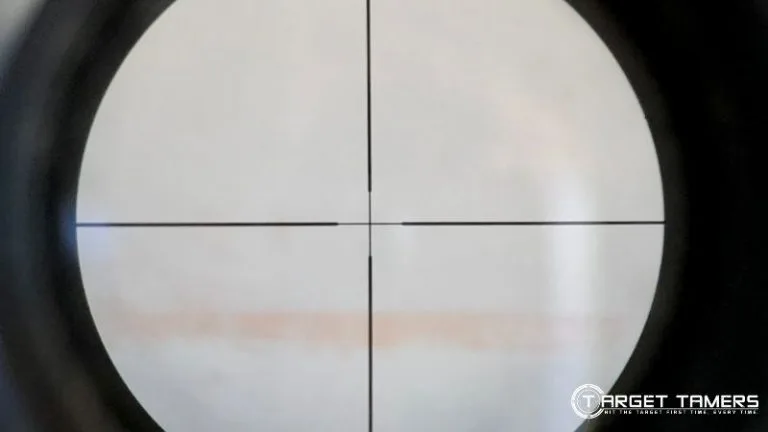
Image source: Bing (Web (fair-use with source credit))
Quick Answer
Your rifle scope is blurry at high magnification for four main reasons. The diopter is not set correctly for your eye. The exit pupil is too small for the lighting.
Parallax is set to the wrong distance. Atmospheric mirage becomes visible above 12x to 15x. Start with the diopter.
It fixes the problem more often than anything else.
Why Does My Scope Get Blurry at High Magnification?
If you've ever cranked your scope to max power and watched the image go to mush, you know how frustrating this feels. You spent real money on the optic. You mounted it carefully.
And now it looks worse at 25x than it did at 4x.
The good news is that this almost never means your scope is defective. More often, one specific adjustment is off, or you've pushed the optic past what it was designed to handle. In our research across optics forums and manufacturer troubleshooting guides, the same handful of causes come up over and over.
What's Actually Going On
When you increase magnification, several things happen at once. Your depth of field shrinks. Your exit pupil gets smaller.
Your eye box tightens up. Every speck of atmospheric distortion becomes more visible. None of that is a scope failure.
That's physics.
The question is whether your specific setup is amplifying one of these factors more than it should. The answer usually comes down to how you've dialed in the diopter, where your eye sits relative to the eyepiece, and whether your parallax setting matches your actual target distance.
The Four Root Causes at a Glance
Before we go step by step, here's the short list. These are the four things that cause blur at high magnification in the vast majority of cases.
1. Diopter Never Set Correctly
This is the single most overlooked cause. The diopter is a small focus ring at the rear of the eyepiece, designed to match the scope's reticle to your individual eye. If it's not set right, the reticle looks soft regardless of magnification.
2. Exit Pupil Too Small for the Light
The exit pupil is the circle of light that comes out of the scope and enters your eye. Its size is the objective lens diameter divided by your current magnification. A 40mm objective at 20x gives you 2mm.
In bright daylight that's enough. In shade or at dusk, it's not, and the image goes dark and soft.
3. Parallax Set to the Wrong Distance
Many fixed-parallax scopes are set at 100 yards or 150 yards from the factory. If you're shooting at 300 yards on that setting, the image can shift or blur, especially at higher magnifications. Side focus scopes solve this, but only if you actually adjust them to the target distance.
4. Atmospheric Mirage
Heat shimmer rising off the ground or water distorts the target image. It's barely noticeable at 6x. It's unmistakable at 18x and above.
This isn't your scope's fault, and no amount of adjustment will fix it.
| Root Cause | Easy to Fix? | Most Common In |
|---|---|---|
| Diopter not set | Yes, takes 30 seconds | All scopes, all experience levels |
| Exit pupil too small | Moderate, depends on lighting | Budget scopes with small objectives |
| Parallax error | Yes, if scope has side focus | Fixed-parallax scopes |
| Atmospheric mirage | No, you dial down power | Warm weather, open terrain |
How Magnification Actually Changes What You See
Understanding this part takes the guesswork out of the whole problem. Magnification doesn't just make things bigger. It changes the optics of what you're looking at in specific, predictable ways.
Depth of Field Narrows
Depth of field is the zone of acceptable sharpness in front of and behind your target. At low magnification, that zone is wide. Dial to 20x and it can shrink to a few inches at close range.
Even at 300 yards, the zone of sharp focus gets noticeably tighter at high power.
Exit Pupil Shrinks
This is the math problem that catches most people off guard. Exit pupil equals objective diameter divided by magnification. A 50mm objective at 25x delivers only 2mm of light to your eye.
Your pupil opens to about 7mm in low light but only about 2mm in bright sun. If your exit pupil is smaller than your pupil, the image goes dark and soft.
Manufacturers like Vortex Optics list exit pupil figures in their spec sheets for exactly this reason. It tells you how much light the scope can actually deliver at each magnification setting.
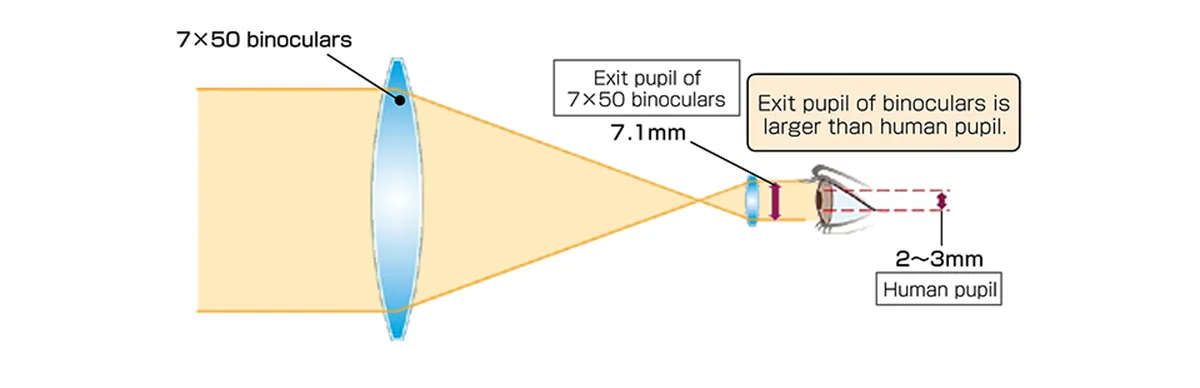
Image source: Web (Bing) / rdsic.edu.vn (Web image (fair-use with source credit))
The Eye Box Tightens
The eye box is the area behind the eyepiece where you can see the full image clearly. At 4x, it's forgiving. Miss the center by a little and you still get a good sight picture.
At 25x, being slightly off-center means vignetting, edge blur, or a partially blacked-out image.
Mirage Amplifies
Atmospheric distortion is always there. At 6x you barely notice it. At 15x it looks like the target is swimming in water.
This is why experienced long-range shooters often stop at a magnification that's comfortable for their conditions, even if their scope goes higher.
Glass Quality Sets the Ceiling
Cheap glass simply can't deliver the same sharpness at 20x that premium ED glass can. Coatings, lens quality, and build tolerances all factor in. If your scope is under $200 and it's soft above 12x, that might just be where the optics stop being good enough.
Step-by-Step Diagnostic: Find What's Actually Wrong
Now let's actually fix it. Work through these steps in order. Each one rules out or confirms a specific cause.
The order matters because the earlier checks are faster and cheaper to correct.
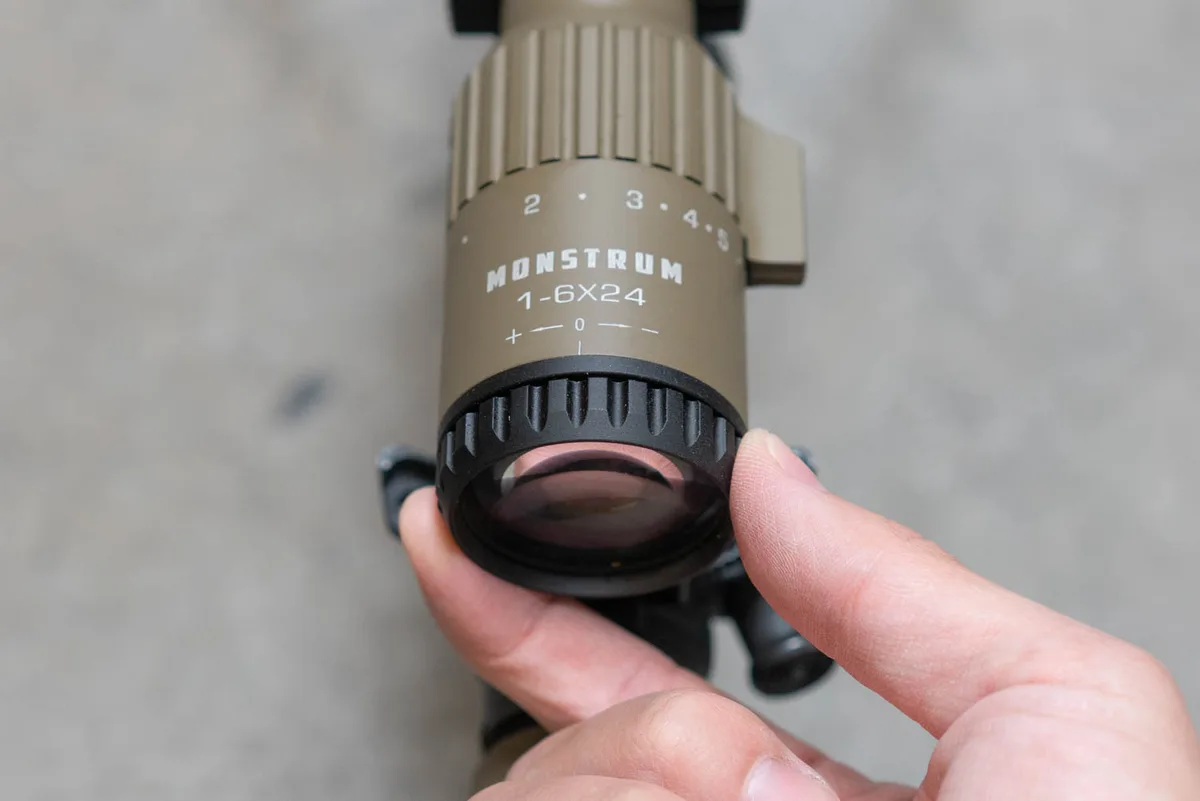
Image source: Web (Bing) / microscope.healthcare.nikon.com (Web image (fair-use with source credit))
Step 1: Set the Diopter Correctly
This takes about 30 seconds and fixes the problem for a surprising number of shooters.
- Point your scope at a high-contrast target, like a dark object against a bright sky.
- Close one eye and look through the scope with the other.
- Adjust the diopter dial at the rear of the eyepiece until the reticle lines look razor-sharp.
- Lock the diopter in place. Don't touch it again unless your eyes change.
If the reticle was blurry and now it's sharp, you just found your problem.
Step 2: Check Eye Relief
Eye relief is the distance between your eye and the rear lens of the scope. Standard values run from 3.0 to 4.5 inches depending on the caliber and design.
- Too close and you'll feel recoil impact. Too far and the image darkens at the edges.
- At high magnification, even being half an inch off causes noticeable blur.
- Verify your scope mounts place the optic at the correct height for your cheek weld.
Step 3: Adjust Parallax to Match Your Target Distance
If your scope has a side focus knob, set it to the actual distance you're shooting. Not the zero distance. Not a guess.
The actual target distance.
- Fixed-parallax scopes are usually set at 100 or 150 yards. Shooting at 400 means the image can shift or soften at high magnification.
- Moving the parallax knob while watching the image should bring the target into crisp focus. If it doesn't, the problem isn't parallax.
Step 4: Rule Out Environmental Factors
- Is there heat mirage? Try shooting in the early morning or late evening.
- Are you using shooting glasses? They can throw off eye relief.
- Is the lens clean? Even a fingerprint smudge softens the image at high power.
- Is it low light? Exit pupil math matters most when the light drops.
Step 5: Determine If You've Hit the Scope's Optical Ceiling
Some scopes simply aren't built for maximum magnification. If everything above checks out and the image is still soft, you may be at the point where the glass can't deliver a sharp picture anymore.
- Budget scopes under $300 often go soft above 10x to 12x.
- If that's your situation, either stay at a lower magnification or consider an upgrade with better glass and side focus capability.
The Diagnostic Flow
Reticle blurry at high power?
  → Set diopter first. Still blurry?
    → Check eye relief. Still blurry?
      → Adjust parallax to target distance. Still blurry?
        → Check for mirage, low light, dirty lenses
          → All clean? Scope may be at its optical limit.
Common Mistakes That Make It Worse
A few habits make this problem worse or mask what's actually happening.
Cranking to Max Magnification by Default
More power doesn't mean better results. At 25x on a 3-25x scope, you're amplifying every optical imperfection and every bit of atmospheric shimmer. Match magnification to your target distance and conditions.
If your deer is at 150 yards, 9x to 12x is plenty.
Ignoring the Diopter Entirely
The diopter is the most misunderstood adjustment on a scope. Many shooters don't know it exists. Others set it once and never verify it after swapping rifles or changing shooting glasses.
Recheck it whenever something looks off.
Misunderstanding Parallax on Fixed-Parallax Scopes
A fixed-parallax scope set at 100 yards works great for 75 to 125 yard shots. At 400 yards, you're asking the scope to focus where it can't. Side focus scopes are the fix, but only if you dial them in properly.
Dirty Lenses Masquerading as Optic Failure
Clean your lenses with a microfiber cloth or lens pen. Fingerprints, dust, and oil on the objective or ocular lens will degrade the image at high magnification. This is a five-minute fix that solves more problems than people realize.
Neglecting the Eye Box
At 25x, your eye has to be in the exact right position to see a clean image. If you're slightly off-center, you'll see vignetting or edge blur that looks like an optical flaw. Proper cheek weld and scope mount height make a bigger difference than most people expect.
When to Adjust vs. When to Upgrade: The Decision Guide
Not every blur problem needs a new scope. Use this flow to decide whether you're dealing with a technique issue or a hardware limitation.
Adjust first if the problem is:
- A blurry reticle (likely a diopter issue)
- Dark edges in the image (likely eye relief or exit pupil)
- A shifting image when you move your head (likely parallax)
- A soft image in morning or afternoon light (likely mirage)
Consider an upgrade if:
- You've dialed in the diopter correctly and the image is still soft at magnifications above 12x to 15x.
- Your scope has no side focus knob, and you regularly shoot beyond 150 yards at higher magnifications.
- You're shooting at dusk or dawn and the image is consistently dark despite proper exit pupil calculations.
- The edges of the image are permanently soft regardless of distance or lighting.
As a rough rule, scopes under $300 reach their optical ceiling around 10x to 12x on the magnification dial. Mid-tier optics in the $400 to $800 range hold sharpness to about 16x to 20x with a proper side focus. Premium glass from Leupold and similar manufacturers can maintain image quality at 25x and beyond, but that performance comes at a real price.
The most practical move is to know where your scope's sharpness ends and stop dialing there. You'll shoot more accurately at 12x with a clear sight picture than at 25x with a blurry one.
Frequently Asked Questions
Why does my scope get dark at high magnification?
The exit pupil shrinks as you increase magnification. Exit pupil equals objective diameter divided by magnification. A 50mm objective at 25x delivers only 2mm of light.
In bright sun that's fine. In shade or low light, it's too little and the image goes dark and soft.
Can a blurry scope be fixed, or do I need a new one?
Usually it can be fixed. Set the diopter first, then check eye relief and parallax. Clean the lenses.
If all of that is correct and the scope is still soft at high magnification, the glass has likely reached its optical limit and an upgrade is warranted.
What magnification should I actually use for my hunting distance?
Match magnification to target distance, not to what the scope can do. For shots under 150 yards, 6x to 12x is usually enough. For longer shots, 12x to 18x is practical.
Going higher than 20x in field conditions often introduces mirage and blur that hurt accuracy more than they help.
Does first focal plane vs. second focal plane matter for image clarity?
No. FFP and SFP describe how the reticle scales with magnification, not how sharp the image is. Both types will show the same blur issues at high magnification.
The glass quality and lens coatings determine sharpness, not the focal plane position.
Why is my reticle blurry even when the target looks okay?
Your diopter is not set correctly for your eye. The diopter adjusts the focus of the reticle to match your individual eye. Close one eye, look at the reticle against a bright background, and adjust the diopter dial at the rear of the eyepiece until the crosshairs are razor-sharp.
This is the most common and most fixable cause of reticle blur.
How do I know if it's atmospheric mirage or a scope problem?
Mirage appears as a wavy, swimming distortion that moves with heat shimmer. It's most visible on bright, warm days, especially over open terrain or water. If you lower your magnification and the blur disappears, it's mirage.
If the blur stays the same at any magnification, it's your scope setup.




