What is the best distance to zero a rifle scope? The honest answer is that it depends on your caliber, your platform, and where you actually shoot. A 100-yard zero works great for long-range bolt-action rifles, but it's often the wrong choice for an AR-15 in 5.56 NATO.
A 36-yard zero on a 5.56 AR keeps you within about 1.5 inches of point of aim from 25 to 200 yards, based on manufacturer ballistic data. As of 2026, no single standard replaces knowing your own setup. Let's walk through the five main zero distances and figure out which one fits you.
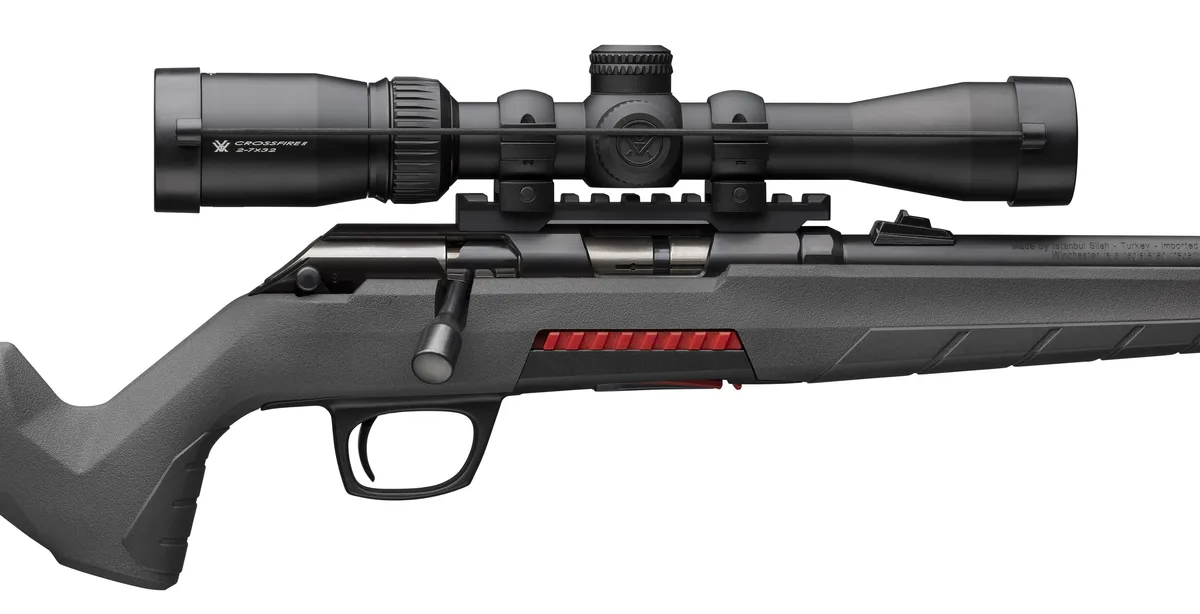
Image source: Web (Bing) / winchesterguns.com (Web image (fair-use with source credit))
Quick Answer
The best distance to zero a rifle scope depends on caliber, platform, and intended use. For AR-15 rifles in 5.56 NATO, a 36-yard or 50-yard zero is widely recommended. For bolt-action rifles in .308 or 6.5 Creedmoor, a 100-yard zero remains standard.
Shooters should confirm zero at their likely engagement distances.
What the Right Zero Distance Actually Depends On
The right zero distance comes down to a handful of variables. Every caliber and every rifle produces a different ballistic trajectory. Two shooters using the same zero won't see identical results with different setups.
Caliber and bullet velocity are the starting point. A .223 Remington and a .308 Winchester diverge sharply past 200 yards. The same 100-yard zero that's spot-on for one rifle can leave you several inches off with the other at 300.
Rifle platform shapes the decision too. AR-15 owners typically do well with close zero distances like 25, 36, or 50 yards. Bolt-action rifles in heavier calibers perform best with a 100 or 200-yard zero.
Intended use is the variable most people overlook. A deer hunter working thick timber needs a different zero than a PRS competitor shooting steel at 500 yards. One size truly doesn't fit all.
Shooting terrain and typical engagement distance round out the picture. Dense forest calls for a close zero that keeps shots inside a small window. Open plains or mountain hunting favors a zero that holds up at longer, more predictable ranges.
Here's a quick reference:
| Variable | Favors Close Zero (25-50 yd) | Favors Long Zero (100-200 yd) |
|---|---|---|
| Caliber | .22 LR, .223, 7.62×39 | .308, 6.5CM, .300 WM |
| Platform | AR-15, SBR, pistol caliber carbine | Bolt-action, precision rifle |
| Primary use | Home defense, brush hunting | PRS, long-range hunting |
| Terrain | Dense woods, urban | Open fields, mountains |
Don't choose a zero distance by habit. Answer these four questions about your own setup, and the right choice usually becomes obvious. Manufacturer ballistics data from Hornady or Federal can help you model each option before you ever hit the range.
Why 100-Yard Zero Isn't Always the Answer
The 100-yard zero is the default answer most shooters hear first. And for good reason. It's simple, it's clean, and it works well for a lot of rifles.
But it's not always the best choice.
For a .308 Winchester bolt-action rifle, a 100-yard zero makes perfect sense. The round stays relatively flat to 200 yards and drops only a few inches by 300. Most hunting scenarios never push past that window.
For an AR-15 in 5.56 NATO, though, things change fast. A 100-yard zero puts you about 2 to 3 inches high at 200 yards and roughly 6 to 8 inches low at 300. That's not terrible, but it's not ideal either.
The bigger issue is intermediate distances. A lot of self-defense and brush hunting happens between 25 and 75 yards. A 100-yard zero can leave you 1 to 2 inches high at close range, which sounds harmless until you're aiming at a small target.
Then there's the MPBR question. Maximum Point Blank Range zero lets you hold dead center on a target from point blank out to a set distance without dialing turrets. That system typically needs a closer zero to work properly.
Vortex Optics publishes zeroing guides that recommend different distances based on caliber and platform. Per their documentation, many modern shooters benefit from a 36 or 50-yard zero on AR platforms rather than defaulting to 100.
When the 100-yard zero still wins:
- Bolt-action rifles in .308.30-06, or 6.5 Creedmoor
- Long-range precision shooting beyond 300 yards
- Shooters who prefer dialing elevation over using holdovers
- Rifles with BDC reticles calibrated for a 100-yard zero
When it doesn't:
- AR-15 rifles in 5.56 or .300 Blackout
- Home defense setups where shots land under 50 yards
- Shooters who want one zero covering the widest range of scenarios
The 100-yard zero isn't wrong. It's just not the universal answer it's often treated as.
The 5 Main Zero Distances Explained (25, 36, 50, 100, and 200 Yards)
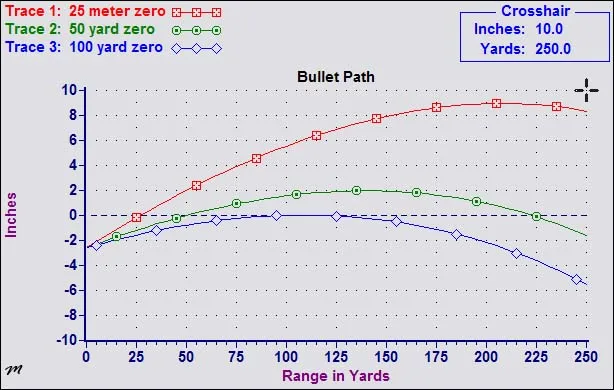
Image source: Bing (Web (fair-use with source credit))
Each zero distance has a distinct profile. Here's what each one actually offers in the field.
25-yard zero
This is the classic military-style zero for AR-15 rifles in 5.56 NATO. Manufacturer data shows a 25-yard zero puts the round roughly 2 to 3 inches high at 100 yards. At 200 yards, you're looking at about 5 to 6 inches high.
It's forgiving at close range but requires mental math at distance.
36-yard zero
The 36-yard zero has surged in popularity since around 2020. In our research, this zero keeps you within about 1.5 inches of point of aim from 25 to 200 yards on a 5.56 AR. It's one of the most forgiving do-everything options available today.
50-yard zero
A 50-yard zero is a solid middle ground. It returns to zero at approximately 200 yards for most 5.56 loads. Between 50 and 200 yards, the maximum deviation stays under 3 inches for common ammunition types.
100-yard zero
The most common zero for bolt-action rifles. It's easy to verify and simple to explain to a new shooter. For .308 and 6.5 Creedmoor, the round stays within a few inches out to 200 yards.
Past that, drop increases predictably and can be compensated with turret dials.
200-yard zero
A less common but legitimate option for .308 and magnum calibers. The rifle shoots about 3 to 4 inches high at 100 yards and returns to zero at 200. Shooters using this zero gain a flatter trajectory past 200 yards without excessive holdover.
Each zero trades off performance at certain distances for consistency at others. The right pick depends on your caliber and where you expect to shoot most often.
Side-by-Side: How Each Zero Distance Compares
Here's how the five main options stack up against each other on common calibers:
| Zero Distance | Best For | POI at 50 yd | POI at 100 yd | POI at 200 yd | POI at 300 yd |
|---|---|---|---|---|---|
| 25 yd | AR-15, close quarters | ~0 in | ~+2.5 in | ~+5 in | ~+2 in |
| 36 yd | AR-15 do-everything | ~-0.5 in | ~+0.5 in | ~+1 in | ~-3 in |
| 50 yd | AR-15, hunting | 0 in | ~+1.5 in | 0 in | ~-6 in |
| 100 yd | Bolt-action, .308 | ~-3 in | 0 in | ~-2.5 in | ~-8 in |
| 200 yd | .308 bolt-action | ~-7 in | ~-3.5 in | 0 in | ~-5 in |
Values are approximate for 5.56 NATO (close zeros) and .308 Winchester (long zeros) based on manufacturer ballistic data from Hornady and Federal.
If you're working in MOA instead of inches, remember that 1 MOA equals roughly 1.047 inches at 100 yards. A quarter-MOA click moves your point of impact about 0.26 inches at that distance. These conversions matter when fine-tuning your zero after the initial group.
For AR-15 rifles in 5.56:
The 36-yard zero has the edge. It stays closest to point of aim across the widest range of distances. The 50-yard zero is a close second and easier to verify at most outdoor ranges.
For bolt-action rifles in .308 or 6.5 Creedmoor:
The 100-yard zero dominates. It's simple, accurate, and gives you plenty of margin before you need to dial elevation. The 200-yard zero works well if you're consistently engaging targets beyond 200 yards.
For .300 Blackout and 7.62×39:
A 50 to 100-yard zero is typical. These calibers have steeper trajectories than 5.56, so a very close zero can leave you off at intermediate ranges.
For .22 LR rimfire:
A 50-yard zero is the standard practice. At that distance, most .22 LR loads stay within a 2-inch window from 25 to 75 yards.
Each setup has a sweet spot. The table above gives you the raw data. Matching that data to your caliber and purpose comes next.
Best Zero Distance by Caliber and Purpose
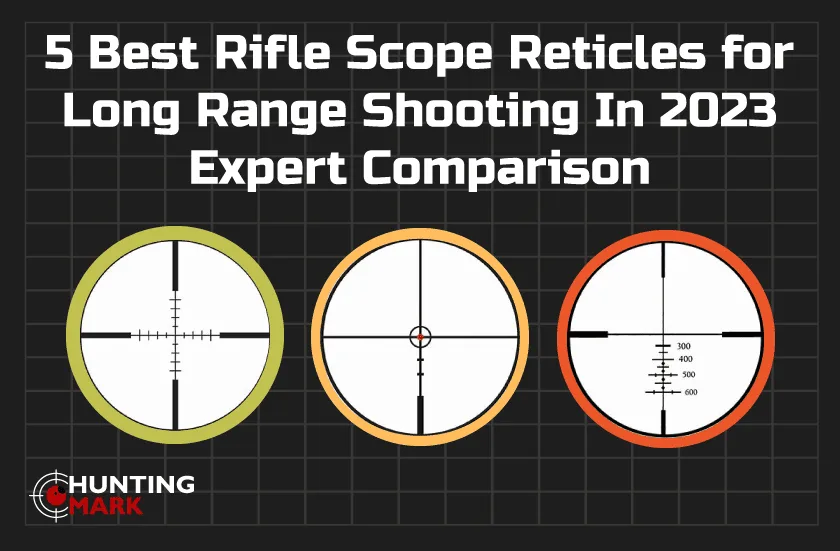
Image source: Web (Bing) / huntingmark.com (Web image (fair-use with source credit))
Here's where the theory meets your actual rifle. Below are the zero distances that make the most sense for common calibers and shooting scenarios.
By Caliber
5.56 NATO / .223 Remington (AR-15)
Recommended zero: 36-yard or 50-yard. Per manufacturer data from Federal and Hornady, both zeros keep you within 3 inches of point of aim from 25 to 200 yards. The 36-yard zero has a slight edge in overall consistency.
.308 Winchester / 7.62×51mm (bolt-action)
Recommended zero: 100-yard. The .308 retains good velocity and predictable drop to 300 yards with a 100-yard zero. This is the sweet spot for most hunting scenarios.
6.5 Creedmoor
Recommended zero: 100-yard. This cartridge is built for long-range accuracy. A 100-yard zero keeps the trajectory flat to 300 yards, and most shooters never need to dial beyond that.
.300 Blackout
Recommended zero: 50 to 100-yard. Subsonic rounds behave very differently from supersonic ones. If you primarily shoot subsonic loads, a 25 or 50-yard zero works.
For supersonic, go with 100.
7.62×39mm
Recommended zero: 100-yard. This caliber has a steeper trajectory than 5.56. A 100-yard zero keeps you within a manageable window out to 200 yards.
.22 LR rimfire
Recommended zero: 50-yard. This is standard practice. Most .22 LR loads stay within a 2-inch drop from 25 to 75 yards.
By Purpose
| Purpose | Caliber | Best Zero | Why |
|---|---|---|---|
| Home defense | 5.56, .300 BLK | 25-36 yd | Fast, forgiving close-range shots |
| Deer hunting (thick woods) | .308, 30-06 | 100 yd | Predictable drop to 200 yards |
| Varmint hunting | .223, .22-250 | 100 yd | Flat trajectory at long range |
| PRS / precision | 6.5CM, .308 | 100 yd | Reliable turret tracking from a known zero |
| Steel shooting (100-300 yd) | 5.56, .308 | 36 or 100 yd | Holdover stays manageable |
| Small game / rimfire | .22 LR | 50 yd | Standard practice for most loads |
The key takeaway: your zero distance should reflect where you shoot most often. If that changes, re-zero before it costs you.