What is the ideal magnification for long-range shooting? There's no single answer that fits every shooter. It depends on what you're shooting, how far away it is, and what rifle you're running.
A hunting setup and a PRS competition rig need very different optics.
Manufacturer specs and competition data show that most PRS (Precision Rifle Series) shooters run 5-25x or 10-25x scopes, spending most time between 12x and 18x. But that's one use case. Hunters, benchrest shooters, and tactical users all need different things from their magnification.
Let's break down what actually matters.
Quick Answer
What is the ideal magnification for long-range shooting? It depends on your purpose, distance, and platform. A 4-16x or 3-18x variable optic works well for most practical use.
Higher magnification narrows field of view and worsens mirage on hot days. Match magnification to what you shoot, not the biggest number on the box.
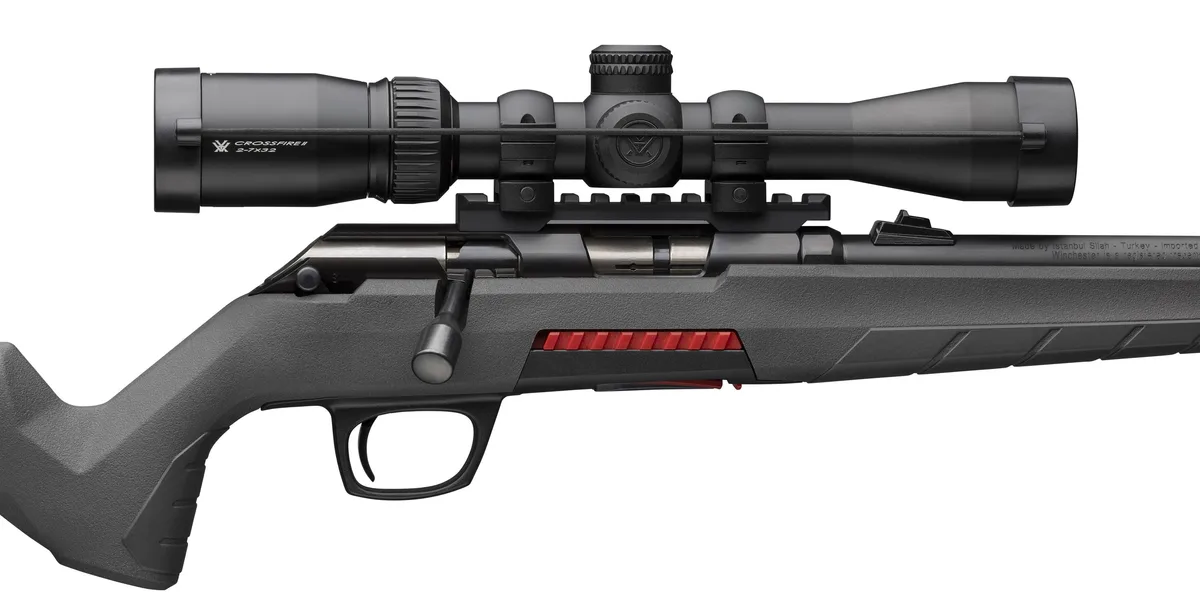
Image source: Bing (Web (fair-use with source credit))
Why the "Ideal Magnification" Question Has No Simple Answer
Magnification is a tradeoff. Every click higher narrows your field of view. It worsens heat mirage on warm days.
It amplifies body movement and can tighten eye relief at maximum power.
Too little magnification costs you too. You can't confirm bullet impacts at 600 yards through a 4x scope. You can't identify targets clearly at 800 yards with a 1-4x LPVO (low power variable optic).
Wind calls become guesses when the target blurs.
The "just buy more magnification" approach ignores the conditions that make long-range shooting hard. It assumes a heavy rifle, a solid rest, and clear weather. Most shooters don't have all three.
And many won't realize it until the first time they dial to 25x on a 700-yard target on a hot afternoon.
The Tradeoff at a Glance
| If you increase magnification… | What you gain | What you lose |
|---|---|---|
| Target clarity | Clearer view of targets and impacts | Wider field of view |
| Wind reading | Better detail on target and terrain | Stability and comfort |
| Holdover correction | Easier fine adjustments | Performance on warm days |
| Confidence | More visual information | Speed in dynamic situations |
The right magnification isn't about choosing the most power. It's about matching magnification to your actual shooting situation. That means understanding what you shoot, how far you shoot, and what platform you're using.
The Variables That Decide Your Magnification
Three factors drive almost every magnification decision. Get these right and you'll never wonder about scope power again.
What Are You Shooting?
Your primary purpose eliminates half the confusion. If you hunt, you need a wide field of view and fast target identification. If you compete in PRS (Precision Rifle Series) or shoot static steel, you need precision and magnification for distance.
As of 2026, manufacturer specifications and competition data break it down like this:
| Purpose | Typical Range | Sweet Spot |
|---|---|---|
| PRS / NRL competition | 5-25x or 10-25x | 12-18x |
| Long-range hunting (500-800 yards) | 4-16x or 3-18x | 8-14x |
| Benchrest shooting | 10-40x or 20-60x | 20-40x |
| Tactical / law enforcement | 1-8x or 1-10x | 4-8x |
| AR-15 long-range setup | 2-10x or 3-12x | 6-10x |
How Far Are You Actually Shooting?
Buy magnification for the distance you shoot 80% of the time. Not the distance you might shoot someday.
- Under 400 yards: 3-9x or 4-12x covers it easily
- 400-700 yards: 4-16x or 3-18x hits the sweet spot
- 700-1,000 yards: 5-25x becomes justified
- 1,000+ yards: 15x and above for competition or benchrest
What Platform Are You Using?
A 5-25x scope on a lightweight hunting rifle is miserable. You'll fight the wobble more than making shots. A 3-18x on a heavy PRS rig is undersized.
Heavy bolt-action rifles handle high magnification well. Lighter semi-autos and AR platforms work best with lower-power optics that stay fast. Companies like Nightforce Optics design magnification ranges around these platform differences.
Your shooting position matters too. Prone with a bipod gives you the stability needed for high magnification. Standing or kneeling drops your usable magnification quickly.
Decision Tree: Match Magnification to What You Actually Shoot
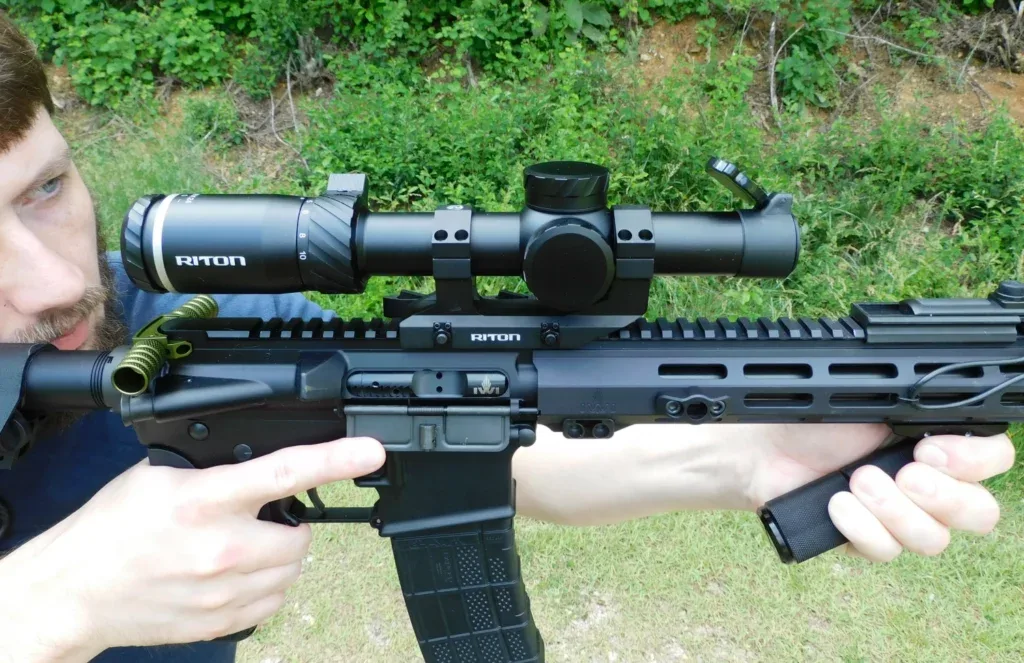
Image source: Web (Bing) / inside.safariland.com (Web image (fair-use with source credit))
Follow this flow. Answer each question honestly and you'll land on the right magnification.
What's Your Primary Shooting Purpose?
If you hunt, go 3-12x or 4-16x. You need field of view, fast target ID, and enough magnification for ethical shots.
If you compete in PRS, NRL, or similar events, go 5-25x or 10-25x. You need precision dialing for stages at 400-800+ yards.
If you shoot benchrest or extreme long range, go 10-40x or higher. You're on a stable platform where magnification matters most.
If you shoot "a bit of everything," go 3-18x or 4-16x. This is the true do-everything range.
What Distance Do You Shoot Most Often?
- Under 400 yards: 3-9x or 4-12x
- 400-700 yards: 4-16x or 3-18x
- 700-1,000 yards: 5-25x
- 1,000+ yards: 15-25x and above
Do You Shoot at Moving or Static Targets?
If targets are moving, favor lower magnification. Field of view is critical when you need to find and track targets quickly.
If targets are static, higher magnification works well. You don't need to search for them.
What's Your Rifle's Weight and Stability?
If your rifle is heavy (12+ lbs) on a solid rest, high magnification is comfortable.
If your rifle is lightweight (7-9 lbs) or you're shooting from a bipod in the field, moderate magnification is better.
How to Test Whether Your Magnification Works Before You Commit
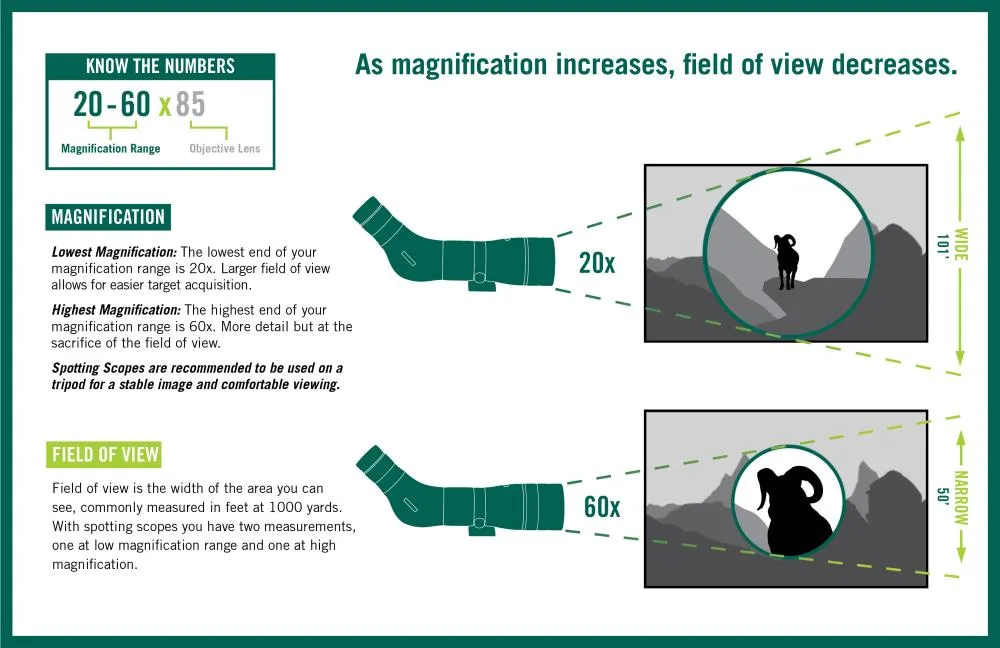
Image source: Web (Bing) / vortexoptics.com (Web image (fair-use with source credit))
Don't commit based on specs alone. Test it first. Here's what to verify before mounting a scope on your rifle.
Check Eye Relief at Maximum Magnification
Many variable-power scopes have tighter eye relief at maximum magnification. This creates scope bite risk, where recoil drives the scope into your eye. Manufacturer specs list eye relief in inches or millimeters.
Compare readings at minimum power versus maximum power.
If the difference exceeds an inch, test carefully. Mount the scope, shoulder the rifle, and verify comfortable eye relief at the magnification you'll use most.
Confirm Field of View at Your Working Magnification
Check the field of view spec at the magnification you plan to use regularly. Not at max power. Companies like Leupold publish detailed FOV charts in their spec sheets.
If the field of view is too narrow at your working power, you'll spend too much time searching for targets.
Evaluate Mirage Conditions
Take the scope to the range on a warm day. Shoot at 600+ yards through the scope at various magnification levels. Watch how much the target shimmers.
This tells you more about usable magnification than any spec sheet. Mirage is the number-one reason shooters discover their high-power optic is less useful than they hoped.
Test Your Comfort Level
Can you hold the magnification steady for 30 seconds without fatigue? Can you find a target quickly at that power? If not, you need less magnification.
Comfort isn't optional. It's the difference between a scope you enjoy using and one you dread.
Common Magnification Mistakes That Cost Money and Missed Shots
We see these mistakes repeatedly. Each one leads to wasted money, missed targets, and frustrated shooters.
Mistake 1: Buying the Highest Magnification Available
Store shelves push maximum magnification. But a 4-24x scope on a lightweight hunting rifle won't help you at 300 yards. At high power, your natural movement becomes the limiting factor.
Buy magnification that matches your use case. Not the biggest number on the box.
Mistake 2: Ignoring Mirage
On warm afternoons, high magnification at long distances makes targets wobble. You're zooming in on heat shimmer itself.
If you shoot in hot climates or during summer, keep magnification moderate. Use a sunshade. Shoot in the morning when conditions are cooler.
Mistake 3: Overlooking Field of View
A high-power scope at 25x might show 100 yards of target detail at 1,000 yards. But if you're hunting in timber, you'll spend more time searching than shooting.
Check field of view at your working magnification. Not at max power.
Mistake 4: Forgetting Eye Relief Changes
Eye relief tightens at maximum magnification on many variable scopes. If you don't test at max power, you risk scope bite under recoil.
Shoulder the rifle at maximum magnification before you commit to a scope.
Mistake 5: Confusing Magnification with Clarity
More magnification doesn't mean a clearer image. Glass quality, lens coatings, and optical design matter more. A 4-16x with excellent glass outperforms a 5-25x with mediocre optics at the same power.
Quick Reference: The Right Magnification for Every Setup
| If you're a… | Buy this | Why |
|---|---|---|
| PRS competitor | 5-25x or 10-25x | You need precision dialing for 600-1,000 yard stages |
| Hunter at 300-600 yards | 4-12x or 4-16x | Wide field of view, enough power for clear shots |
| Hunter at 500-800 yards | 4-16x or 3-18x | Versatile glass, manageable at all realistic distances |
| Benchrest or ELR shooter | 10-40x or 20-60x | High-power optic on a heavy, stable rifle |
| AR-15 long-range setup | 1-8x or 2-10x | Keeps the rifle light, fast, and practical |
| Shooter who does everything | 3-18x or 4-16x | The true do-everything magnification range |
For most shooters, a 4-16x or 3-18x variable optic is the "do-everything" choice. It covers hunting, practical shooting, and out to 800 yards comfortably. It's light enough, versatile enough, and won't make you hate yourself on a hot day.
But that's not the universal answer. The real answer is: match your magnification to your use case, your typical distances, and your shooting position. Run through the decision tree above, and you'll land on the right choice.
Frequently Asked Questions
Is more magnification always better for long-range shooting?
No. More magnification brings more mirage, more shake, a narrower field of view, and sometimes tighter eye relief. There's a point of diminishing returns.
For many shooters, that point is lower than they expect.
What magnification do most long-range competition shooters use?
At PRS and NRL events, the most common setups are 5-25x, 10-25x, or fixed 10x and 16x scopes. Many shooters spend most of their time between 12x and 18x, even when the scope goes higher.
Can I get by with a 4-16x for 800-yard shooting?
Yes, with caveats. You'll need good glass quality, a solid shooting position, and patience to identify targets and confirm hits at that distance. Many experienced shooters run 4-16x at 800 yards without problems.
What about low-power variable optics (1-6x or 1-8x) for long range?
These are designed for versatility, not true long-range precision. They're excellent for 0-500 yards and capable at 600 yards for experienced shooters. But if your primary job is precision at 700+ yards, you'll want more magnification.
Does higher magnification make me more accurate?
Not directly. Magnification lets you see better: clearer targets, visible impacts, easier wind reading. But your shooting fundamentals still have to be solid.
A magnified view of a bad trigger pull is still a bad trigger pull.




