Do all rifle scopes fit the same mounts? No, they don't. Rifle scopes come in different tube diameters, and each diameter requires a matching ring size.
If you buy the wrong rings, the scope physically won't seat in the mount.
The most common tube diameters are 1-inch (25.4mm), 30mm, and 34mm. Per MIL-STD-1913, the Picatinny rail standard used on most modern rifles, your mount needs to match both the scope tube and the rifle's rail. Here's how to check compatibility before you spend money on the wrong parts.
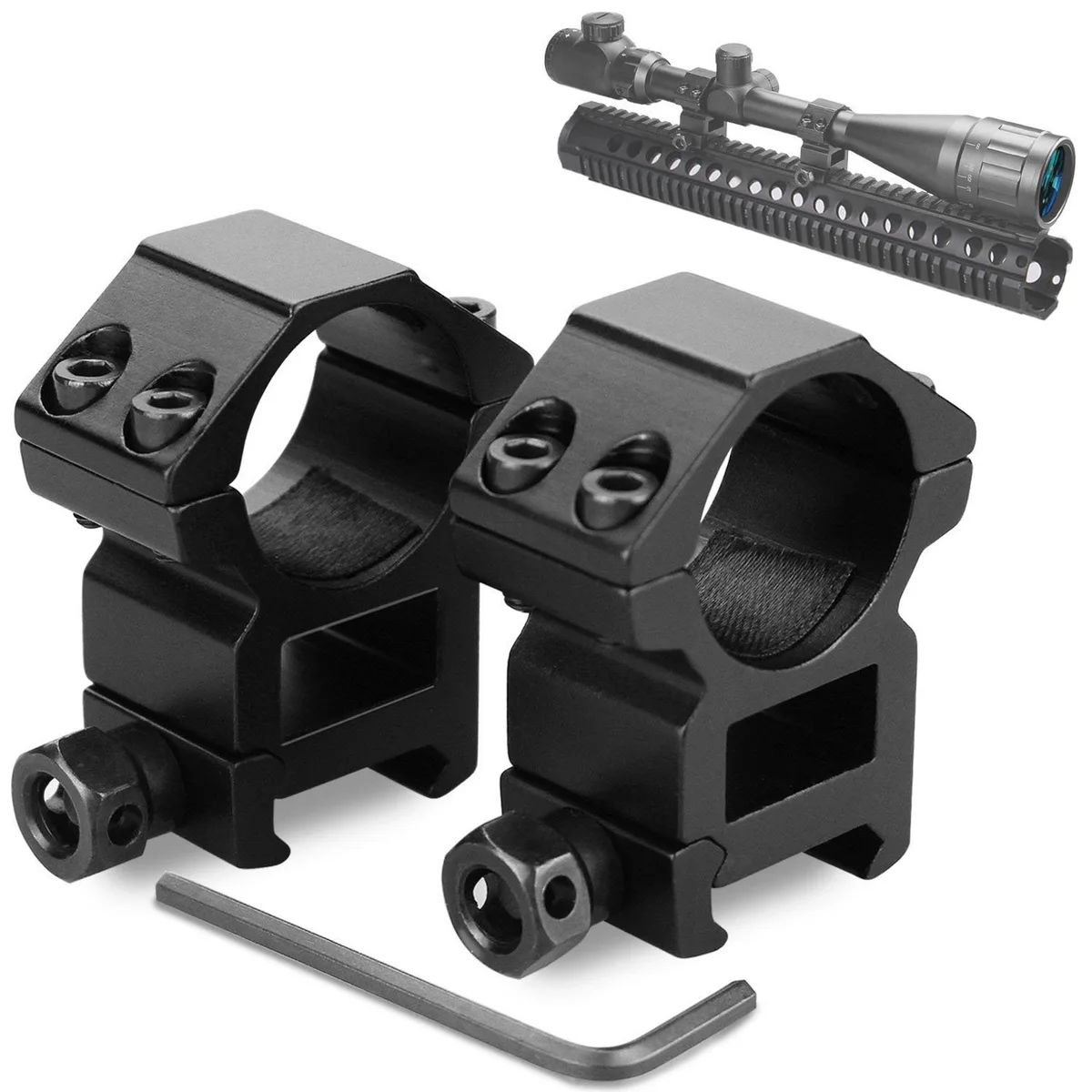
Image source: Web (Bing) / iwmidsp.org (Web image (fair-use with source credit))
Quick Answer
No, rifle scopes do not all fit the same mounts. Scope tube diameters come in 1-inch, 30mm, 34mm, and 35mm sizes. Each diameter requires matching ring sizes.
Objective lens size and rail type also determine compatibility. Always measure your scope and rifle before buying mounts.
Why Getting This Wrong Costs You Accuracy
A mismatched scope mount isn't just an annoyance. It costs you accuracy and can damage expensive equipment.
When rings don't clamp the scope tube properly, the scope shifts under recoil. Your zero drifts shot after shot. In hunting, that means missed shots at ethical ranges.
Over-torquing rings to compensate for a poor fit is just as bad. It crushes the scope tube and misaligns the internal erector assembly. Manufacturer specs for ring screws typically sit between 15 and 20 in-lbs.
Going past that limit is a fast track to a dead optic.
There's also a safety angle. A loose scope under recoil can slide forward or fly off the rail entirely. That's a projectile risk on a crowded range or in a field scenario with nearby hunters.
Beyond physical safety, there's the financial cost. A high-quality long-range scope can run $1,000 or more. Destroying it with a $40 set of poorly fitted rings is a frustrating way to learn a compatibility lesson.
The good news? Every one of these problems is preventable with the right mount matched to your scope and rifle. A few minutes of checking specs before purchase solves all of it.
The Short Answer: No, and Here's Why Tube Diameter Changes Everything
The core reason rifle scopes don't all fit the same mounts is straightforward. Main tube diameter varies between optics, and rings are built to clamp a specific diameter.
A 1-inch tube needs 1-inch rings. A 30mm tube needs 30mm rings. Put a 30mm scope in 1-inch rings and the tube won't seat.
The rings will sit on top of the tube instead of clamping around it. It's a hard physical incompatibility, not a matter of brand preference.
As of 2026, the most common tube diameters you'll encounter are 1-inch, 30mm, and 34mm. Here's a quick reference:
| Tube Diameter | Common Use | Ring Size Needed |
|---|---|---|
| 1-inch (25.4mm) | Hunting, rimfire, older optics | 1-inch rings |
| 30mm | Mid-range hunting, tactical shooting | 30mm rings |
| 34mm | Long-range precision optics | 34mm rings |
| 35mm | Premium long-range scopes | 35mm rings |
Beyond tube diameter, objective bell size matters too. A 50mm objective lens is physically wider than a 40mm one. If your ring height is too low, the objective bell will scrape the rifle barrel and prevent the scope from sitting level.
The gap you need is at least 0.125 inches between the bottom of the objective bell and the top of the barrel.
Manufacturer spec sheets list both the tube diameter and the objective size. Check those numbers before ordering rings. Leupold publishes detailed mount specifications and torque values on their official site at leupold.com.
How Scope-Mount Compatibility Actually Works
A scope mount is a system with three components that all need to match. The scope tube, the rings, and the rifle's rail all work together. Miss one and the whole setup fails.
Rings clamp around the scope tube. They come in two pieces (top and bottom) and are sized to a specific tube diameter. You need a pair of rings to hold a scope secure.
The base connects the rings to the rifle. On most modern rifles, this is a Picatinny rail (MIL-STD-1913) or a Weaver-style rail. The base clamps to the rail via cross-slots.
A recoil lug sits in one of those slots to prevent the scope from sliding forward under recoil.
Picatinny and Weaver are similar but not identical. Picatinny slots are 0.170 inches wide and spaced 1.00 inch center-to-center. Weaver slots are slightly wider at 0.180 inches.
The differences are small, but they affect how securely a mount clamps.
Compatibility follows a simple logic chain:
- If your scope tube is 30mm, you need 30mm rings
- If your rifle has a Picatinny rail, you need a Picatinny-compatible base
- If your objective bell is 50mm and your rings are low, you may not clear the barrel
- If your stock comb is high, low rings may put the scope too close to the bore line
Every variable has to align for the system to work. That's why checking specs before purchase matters more than any brand recommendation.
Vortex Optics publishes their mounting compatibility charts at vortexoptics.com. Their guides are a solid starting reference for matching tube diameters to ring sizes.
Step-by-Step: How to Check If Your Scope Fits Your Mount
Follow this sequence every time you're pairing a new scope with a mount. Each step catches a different compatibility variable.
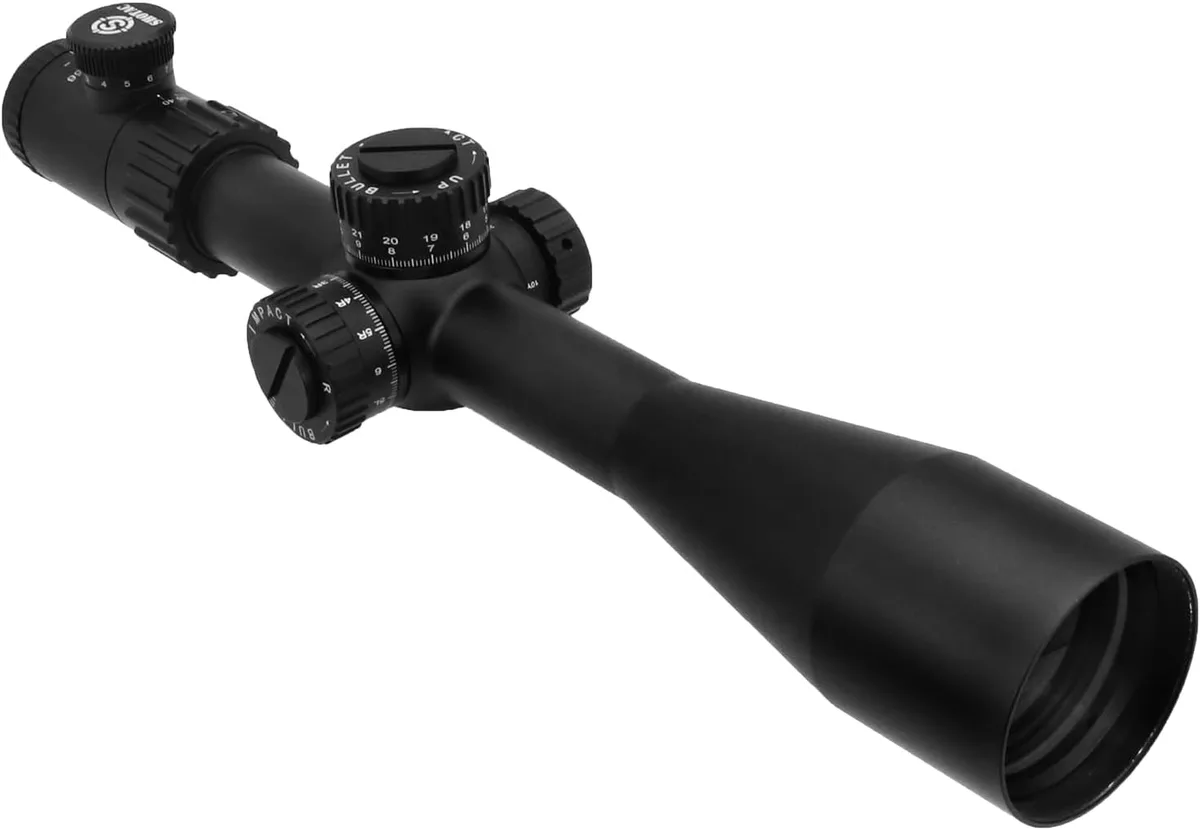
Image source: Web (Bing) / amazon.com (Web image (fair-use with source credit))
Step 1: Read the scope spec sheet. Look for the main tube diameter and the objective lens diameter. These two numbers drive every compatibility decision that follows.
Step 2: Identify your rifle's rail type. Is it Picatinny, Weaver, dovetail, or proprietary? Check your rifle manufacturer's documentation if you're not sure.
Step 3: Measure or look up rail slot spacing. Picatinny rails follow MIL-STD-1913: 1.00 inch center-to-center between cross-slots. Weaver slots are slightly wider. Confirm which standard your rifle uses.
Step 4: Calculate clearance above the barrel. Subtract the outer diameter at the objective bell from the bore height to the scope centerline. You need at least 0.125 inches of clearance to avoid barrel contact.
Step 5: Choose ring height. Low, medium, or high rings are measured from the top of the rail to the scope centerline. Match the height to both your objective bell and your stock comb.
Step 6: Match ring size to tube diameter. This is non-negotiable. A 30mm scope takes 30mm rings. There are no exceptions.
Step 7: Verify mount height with your stock. A high-comb stock may push low rings too close to the barrel. A thin stock may make high rings put the scope too far above the bore line. Cheek weld and sight alignment both depend on getting this right.
Step 8: Torque everything to spec. Ring screws typically need 15 to 20 in-lbs. Base screws on a Picatinny rail usually need 25 to 35 in-lbs. Use a torque wrench, not a feel.
Step 9: Confirm cross-slot engagement. The mount's recoil lug must sit inside a Picatinny cross-slot, not between two slots. This prevents the scope from sliding forward under recoil.
Step 10: Bore-sight and zero. Once everything is secure, bore-sight through the barrel before taking live shots.
| Step | What You're Checking | Key Spec |
|---|---|---|
| 1 | Scope tube diameter | 1", 30mm, or 34mm |
| 2 | Rifle rail type | Picatinny, Weaver, dovetail |
| 4 | Objective clearance | Minimum 0.125" above barrel |
| 6 | Ring size match | Must equal tube diameter |
| 8 | Torque values | Rings 15–20 in-lbs; base 25–35 in-lbs |
If every check passes, the scope will fit the mount. If any check fails, you've found the compatibility gap. Fix that one variable and the rest of the setup falls into place.
Common Mounting Mistakes That Zero Your Accuracy
These errors show up constantly on gun benches and range trips. They're all avoidable with a few extra minutes of checking.
Using the wrong ring size for the tube diameter. This is the number one mistake. A 34mm scope in 30mm rings won't clamp correctly. The tube simply won't seat, and no amount of tightening will fix it.
Ignoring objective bell clearance. Mounting a scope with a 56mm objective bell on low rings puts the bell right against the barrel. The scope can't sit level, and the front ring gets scratched every time you fire.
Torquing too tight to "be safe." More torque isn't safer. Overtightened rings crush the scope tube and distort the internal erector assembly. Stick to manufacturer specs every time.
Torquing too loose to avoid scratches. Under-torqued rings let the scope slip under recoil. Your zero shifts every shot. Both extremes cause the same end result: inaccurate shots.
Mounting a cantilever mount on a bolt-action rifle. Cantilever mounts are designed for AR-15 platforms where the rail sits forward of the receiver. On a bolt-action rifle, they're bulky and unnecessary.
Using Weaver rings on a Picatinny rail without checking fit. Weaver rings are slightly narrower at the cross-slot. They'll sit in Picatinny slots, but they may not clamp as securely as dedicated Picatinny rings.
Forgetting to check the rail type before ordering. Some rifles use dovetail rails, common on rimfire rifles like the Ruger 10/22. These require a different base or adapter entirely.
Skipping the recoil lug check. If your mount's recoil lug isn't seated in a cross-slot, it's not doing its job. The scope will drift forward under heavy recoil.
Every one of these mistakes is caught in the step-by-step process above. Take the extra ten minutes to check specs before ordering. Your rifle, your scope, and your zero will thank you.




