How far should I zero a rifle scope? The honest answer depends on your rifle, your cartridge, your optic, and what you're actually shooting at. No single zero distance works for everyone.
Most experienced shooters zero at 100 yards. Plenty of AR-15 owners prefer 50 yards. As of 2026, the US Army still recommends a 25/300 yard zero for the M4 platform, while competitive shooters overwhelmingly stick with 100-yard zeros.
The right zero for you depends entirely on your setup.
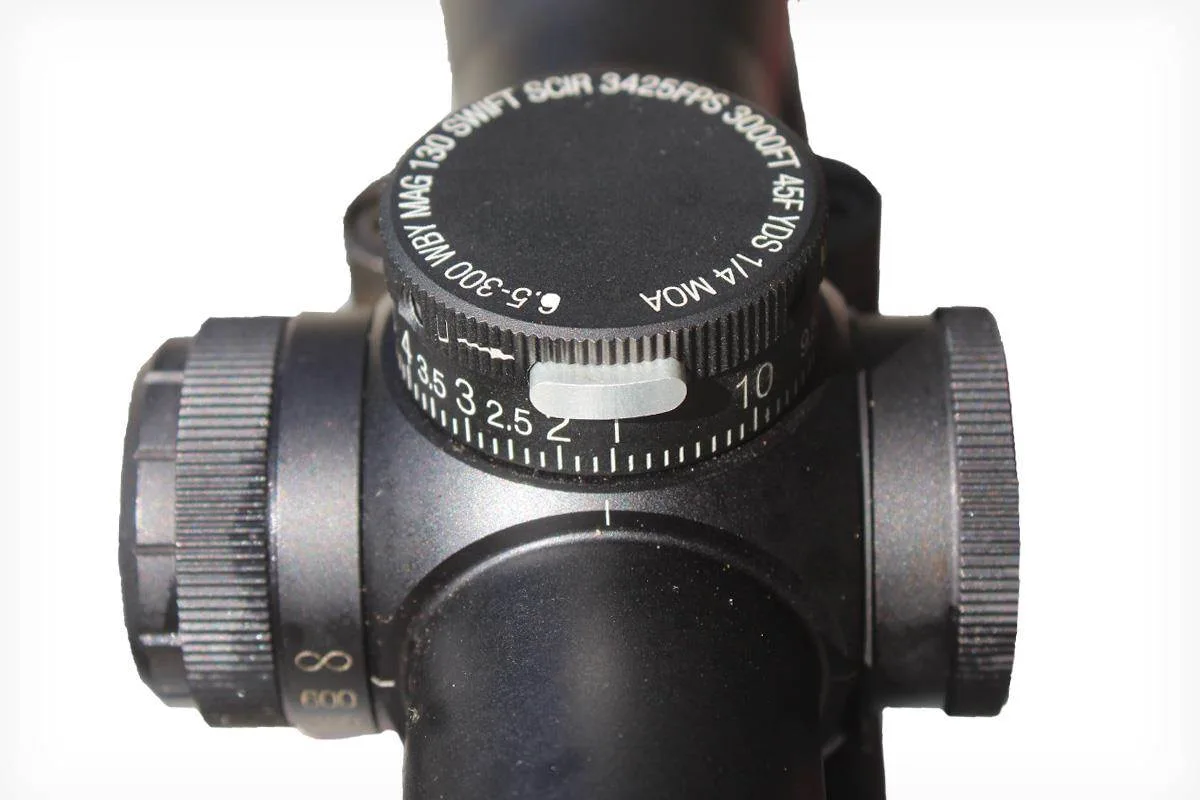
Image source: Web (Bing) / rifleshootermag.com (Web image (fair-use with source credit))
Quick Answer
How far should you zero a rifle scope? It depends on your rifle, caliber, and primary shooting distance. Most bolt-action rifles zero at 100 or 200 yards.
AR-15 rifles commonly use a 50-yard or 100-yard zero. Match your zero distance to your most common shooting scenario.
Why the Right Zero Distance Depends Entirely on Your Setup
The "right" zero distance isn't a rule you can Google and follow blindly. It's a decision built around your specific combination of rifle, cartridge, optic, and shooting scenario.
A varmint hunter shooting at 600 yards needs a completely different zero than a deer hunter working inside 150 yards in thick eastern woods. A competitive PRS shooter dialing for wind needs something else again. The US Army Marksmanship Training Unit still supports a 25/300 yard zero for military rifles, which places rounds roughly 1.5 inches high at 100 yards.
That compromise works for the M4's effective range. It won't work for a bolt-action .308 in mountain hunting country.
Before you touch a turret, you need to know what you're actually building your zero around.
The Five Variables That Decide Your Zero Distance
Five factors shape every zero decision. If you skip any one of them, you'll end up with a rifle that shoots in the wrong direction when it counts.
Primary Shooting Range
This is the big one. Where do you shoot most of the time? If 80% of your hunting takes place between 50 and 150 yards, zero for that window.
If you're punching steel at 400 yards every weekend, your zero distance needs to reflect that reality.
Caliber and Cartridge Ballistics
Your cartridge determines how flat your bullet flies. A 5.56 NATO AR-15 shoots noticeably flatter than a .308 Win at close range. A 6.5 Creedmoor stays flat much farther out.
The flatter your trajectory, the less your zero distance choice affects where rounds land.
Scope Optic Height Over Bore
Your scope sits above the barrel, usually 1.2 to 1.9 inches on an AR-15 platform. That height creates an upward angle between your bore line and your scope line. At close distances, this mismatch causes rounds to print high.
Knowing your optic height over bore is key to predicting zero behavior.
Rifle Platform
AR-style rifles and bolt-action rifles behave very differently when zeroed. The AR's raised optic height makes close-range zeroes behave differently than on a bolt-action with lower ring heights.
Dialing vs Holdover Method
If you dial elevation with turrets, your zero is more of a reference point. If you rely on a BDC reticle for holdovers, your zero distance must align with the specific ranges that reticle is calibrated for. Get this wrong and your holdover points will be off by inches.

Image source: Web (Bing) / everydaymarksman.co (Web image (fair-use with source credit))
Zero Distance Decision Guide: Which Setup Calls for Which Zero
Here's where it gets practical. Different platforms call for different zeros, and the numbers below reflect what shooter communities and military standards have converged on as of 2026.
| Platform | Caliber | Common Zero Distance | Best For |
|---|---|---|---|
| AR-15 / AR-10 | 5.56 / .308 | 50 yards (200-yard crossover) | Versatile, most popular |
| AR-15 | 5.56 | 100 yards | Long-range precision work |
| AR-15 | 5.56 | 36/300 yard | Close-to-mid range combo |
| Bolt-action rifle | .308 / 6.5 Creedmoor | 100 yards | Most hunting and range work |
| Bolt-action rifle | .300 Win Mag | 200 yards | Long-range hunting |
| Rimfire (.22 LR) | .22 LR | 50 yards (supersonic) | Small game, plinking |
| Lever-action | .30-30 | 100 yards | Dense woods hunting |
If you hunt thick eastern timber where shots rarely exceed 150 yards, a 50-yard or 100-yard zero on an AR-15 is more than enough. If you hunt open western plains, a 200-yard zero on a bolt-action rifle makes more sense.
Neither choice is wrong. The right one is the one that matches your shooting life.
Step-by-Step: How to Zero a Rifle Scope at Your Chosen Distance
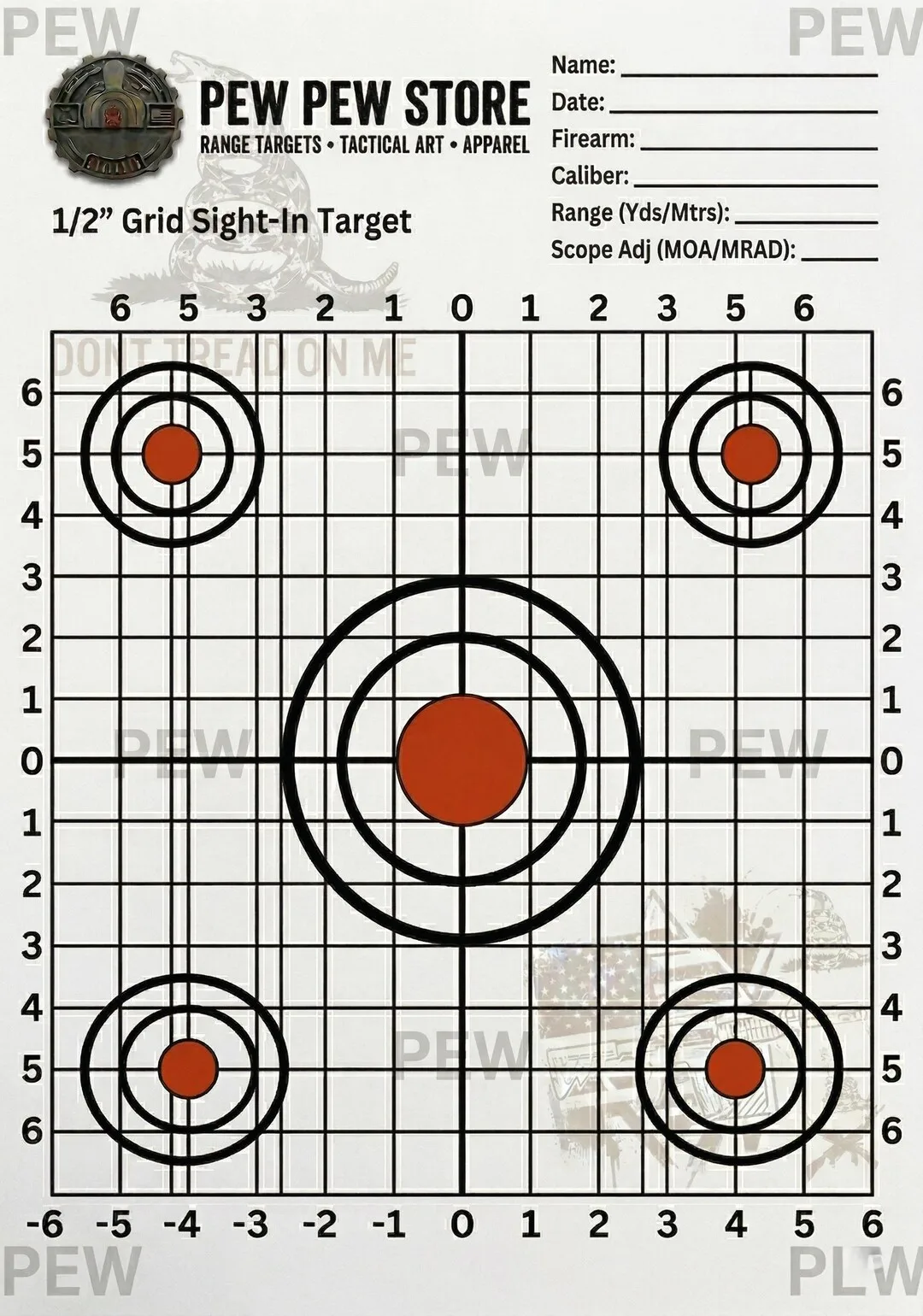
Image source: Bing (Web (fair-use with source credit))
Zeroing is a process, not a single event. Here's the workflow that gets you a reliable zero without wasting ammo.
Step 1: Bore Sight First
Start with bore sighting to get your rounds roughly on paper. Remove the bolt on a bolt-action rifle and look down the bore at a target. For AR-15s, use a laser bore sighter through the muzzle.
This gets you within a few inches of the target before you fire anything.
Step 2: Fire a Three-Shot Group
Set your paper target at your chosen zero distance. Fire a slow, steady three-shot group. Focus on consistent cheek weld and trigger pull.
Judge the group center, not each individual hole.
Step 3: Calculate Turret Adjustments
Measure the distance from your group center to your point of aim. Convert that into turret clicks using your scope's click value.
For a .25 MOA per click scope at 100 yards:
- 1 inch high = 4 clicks down
- 2 inches left = 8 clicks right
For a .1 MIL per click scope at 100 yards:
- 1 inch high = 5 clicks down
- 1.2 inches right = 3 clicks right
Make your adjustments, then fire another three-shot group to confirm.
Step 4: Verify at a Second Distance
Fire a confirmation group at a different distance. For a 100-yard zero, shoot at 200 yards. This catches trajectory errors and confirms your zero holds.
Step 5: Re-Verify After Any Change
Any scope removal, mount change, or ammo swap means you need to re-zero or at minimum re-confirm. Turrets don't always track perfectly back to the same point after repeated adjustments.
Common Mistakes That Cause High, Low, or Inconsistent Zero
Most zeroing problems trace back to one of these five mistakes.
Ignoring Bore Height on AR Platforms
The most common error. A scope mounted 1.75 inches above the bore will shoot high at close distances unless you've calculated for it. Shooters who zero at 25 yards on an AR-15 often get surprised by high hits at 100 yards.
Zeroing at the Wrong Distance for Your Optic Magnification
If your scope zero is calibrated at 3x magnification on a second focal plane reticle, the holdover points shift when you magnify to 10x. This throws your point of impact off at longer ranges.
Using Different Ammo Than You Zeroed With
Match-grade ammo and generic ball ammo fly differently. Zero with the same cartridge you'll hunt or compete with.
Not Confirming After Scope Remounting
Scopes shift when torqued to spec, then settle after shooting. Removing and remounting a scope almost always requires re-zeroing.
Judging Zero Based on Group Size Instead of Group Center
A tight three-shot group tells you the rifle is precise. It tells you nothing about where that group lands relative to your point of aim.
Expert Tips and Pro Advice for a More Reliable Zero
A few practices separate a zero that holds for months from one that drifts after a single hunt.
Cold bore confirm your first shot. Fire the first round of a session as your true zero. Most rifle shots in the field come from a cold barrel, not a hot one.
Zero with your hunting ammo, not range ammo. Hornady and Federal both publish ballistic calculators free online. Manufacturer-generated trajectory data beats guessing.
Keep your zero stop consistent. If your scope has a zero stop turret, set it after zeroing so you can dial back to your reference point without thinking.
Check torquing specs on your mounts. Scope rings torqued to inch-pound specs per manufacturer guidance. Over-tightening strips threads. Under-tightening causes zero shift.
Consider altitude and temperature. Mountain hunting at 8,000 feet behaves differently than sea-level zeroing. Cold winter air changes bullet trajectory compared to summer heat.
The US Army's FM 23-9 manual walks through the full zeroing procedure in detail for anyone who wants the military-standard approach.
Frequently Asked Questions
What distance should I zero my hunting rifle?
Zero at 100 yards for most big game hunting rifles. This gives you a predictable reference point for calculating holdovers at longer distances. If you hunt exclusively inside 150 yards, a 50-yard or 75-yard zero also works well.
Is a 50-yard or 100-yard zero better for an AR-15?
Both work, and the choice depends on your shooting range. A 50-yard zero places rounds roughly 1.5 inches high at 100 yards, giving you a flat 25 to 200 yard window. A 100-yard zero is simpler and more predictable for precision work at distance.
Can I zero at 25 yards?
Yes, but expect surprises at longer ranges. The US Army uses a 25-yard bore sighting as a starting point before confirming at 300 yards. A pure 25-yard zero without verification will shoot high at typical hunting distances.
How often should I re-zero my scope?
Re-zero after any scope removal, mount change, or ammo swap. Many hunters also re-confirm their zero before each season. Scopes with quality tracking will hold zero for thousands of rounds, but mounts can shift over time.
Does MOA or MIL affect how far I should zero my scope?
No, the zero distance itself doesn't change. MOA and MIL only affect how you make turret adjustments during the zeroing process. Pick the system your scope uses and stick with it.
What's the difference between bore sighting and live-fire zeroing?
Bore sighting aligns your scope roughly with your bore so your first shots land on paper. Live-fire zeroing confirms and fine-tunes that alignment with actual groups. Both are needed.
Bore sighting alone doesn't produce a reliable zero.
Final Decision Guide: Which Zero Distance Should You Choose?
Pick your zero distance by answering one question: where will this rifle actually shoot most of the time?
If your answer is "up to 200 yards in mixed terrain," a 50-yard zero on an AR-15 or a 100-yard zero on a bolt-action rifle gives you the most versatility. If you hunt open country and take shots past 250 yards regularly, push to a 200-yard zero and confirm at 300.
Whatever you choose, bore sight first, fire a three-shot group at your zero distance, adjust, then confirm at a second distance. That process works for any platform, any caliber, and any optic. The zero distance is your decision.
The verification method stays the same.