How does an illuminated reticle work? It relies on a small light source inside your optic that makes the crosshair pattern glow against a dark or cluttered background. Without that glow, low-light shooting becomes guesswork.
Most shooters upgrade to illuminated reticles for exactly this reason.
Modern optics use two main illumination systems: fiber optic filament or an LED diode with a circuit board. As of 2026, manufacturer specifications indicate that quality LPVOs (low-power variable optics) deliver illumination with 11 to 32 brightness settings powered by a CR2032 lithium battery. Here's how each system actually delivers that glow.

Image source: Web (Bing) / aliexpress.com (Web image (fair-use with source credit))
Quick Answer: What Makes an Illuminated Reticle Tick
An illuminated reticle works by placing a small light source behind the reticle pattern. This glow lets you see the crosshair in low light. Two systems deliver the light: fiber optic filament or an LED diode.
Fiber optic reticles capture ambient light through a thin plastic fiber. LED reticles use an electric light source powered by a small battery.
The Two Illumination Systems: Fiber Optic vs. LED, and How Light Actually Travels Through Each
Every illuminated reticle on the market uses one of two light delivery methods. Knowing how each one works saves you from confusion when shopping or troubleshooting your optic.
Fiber optic reticles rely on a thin plastic filament running inside the scope. The filament captures ambient light at one end and channels it toward the reticle pattern at the other end. Think of it like a fiber optic lamp in a bar.
The glow comes entirely from the light the fiber can gather.
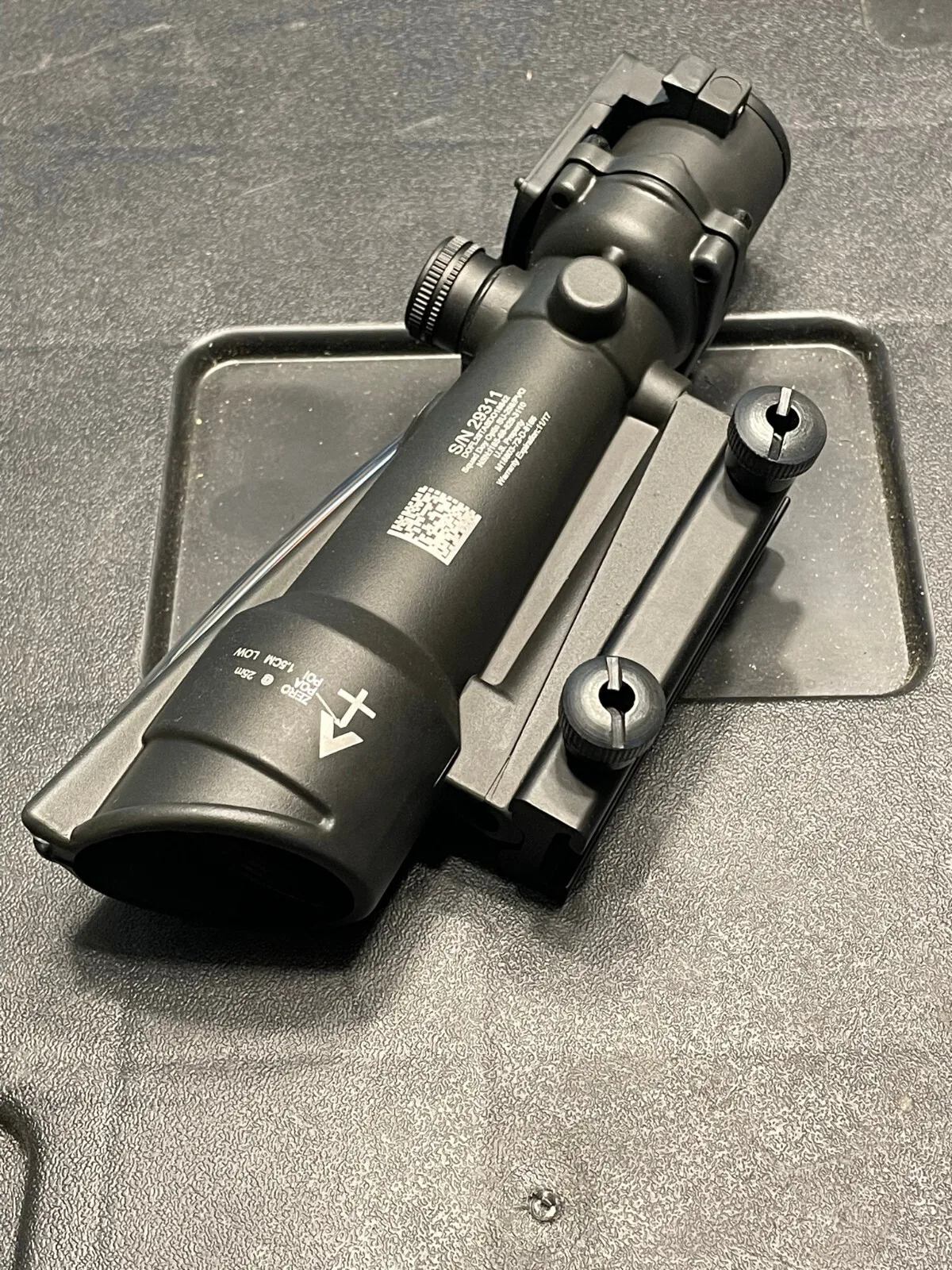
Image source: Web (Bing) / ebay.com (Web image (fair-use with source credit))
LED reticles use a completely different approach. A small light-emitting diode sits near the reticle inside the scope's housing. When you flip the illumination dial, the LED activates and projects light directly onto the etched reticle surface.
Vortex Optics technical documentation confirms that most of their LPVO models use this LED method with adjustable brightness settings.
| Feature | Fiber Optic | LED Illumination |
|---|---|---|
| Light source | Ambient light via filament | Electric LED diode |
| Battery required | No | Yes |
| Works in total darkness | No | Yes |
| Brightness control | None | Adjustable (11 to 64 settings) |
| Best environment | Bright daylight | Any lighting condition |
The practical difference is straightforward. If you hunt at dawn and dusk, LED wins. If you only shoot in full sun and want zero maintenance, fiber optic works fine.
What's Inside the Optic: Fiber Filament, LED Diode, Glass-Etched Reticle, and Illumination Housing
The illumination system isn't just a light bulb thrown into a scope. Each component plays a specific role. Knowing what does what helps you diagnose problems and make smarter buying decisions.
Here's what you'll find inside a modern illuminated optic:
- Fiber optic filament: A thin plastic cable, typically 1mm to 3mm in diameter. It routes ambient light from the objective lens area to the reticle.
- LED diode: A small semiconductor light source that produces red, green, or dual-tone illumination. Red light typically measures 620 to 650 nanometers in wavelength.
- Glass-etched reticle layer: Precision-cut glass with the crosshair pattern etched into its surface. Light passes through the etched channels to create the glow.
- Illumination housing: The sealed chamber where the LED or fiber terminates near the reticle. It's usually O-ring sealed to keep moisture out.
- Circuit board and battery contact: The PCB routes power from the battery to the LED and manages the brightness control mechanism.
- Brightness dial or rheostat: The external control that adjusts illumination intensity. Most modern scopes offer 11 to 64 brightness settings.
Leupold technical specifications confirm that glass-etched reticles paired with LED illumination deliver the most consistent brightness across magnification ranges. Wire reticles, by contrast, can shift or thicken as magnification changes.
Reading the Reticle Visually: Glass-Etched vs. Wire, FFP vs. SFP, and Red vs. Green Illumination
Not all reticles look the same through the eyepiece. The material, focal plane, and illumination color all change how you perceive the pattern in real conditions.
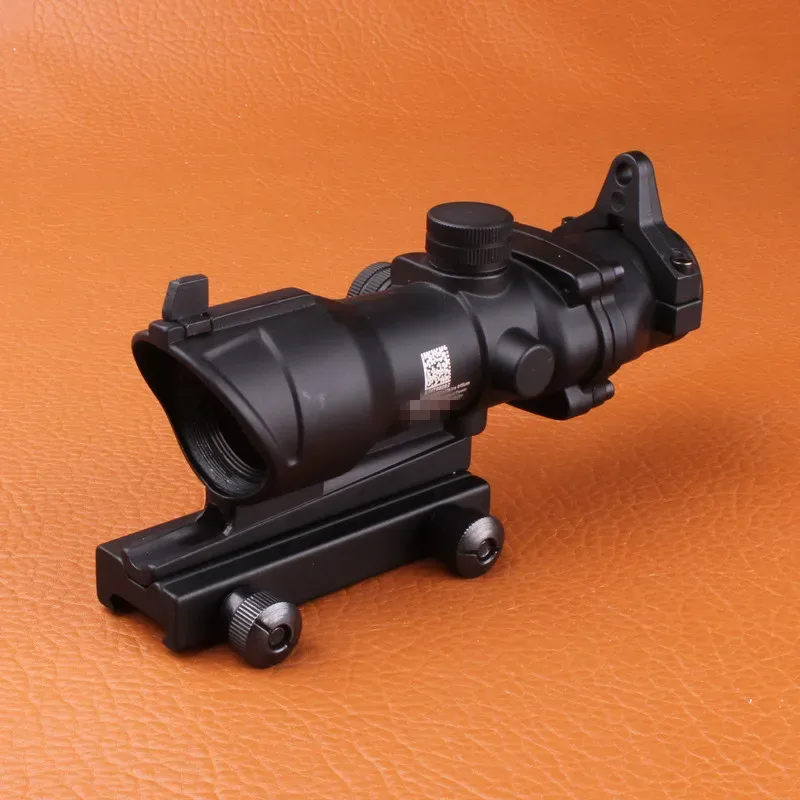
Image source: Web (Bing) / unexprodsund1986.blogspot.com (Web image (fair-use with source credit))
Glass-etched vs. wire reticles: Glass-etched reticles are cut into a thin glass disc using a precision process. The crosshair lines appear crisp and don't bend under recoil. Wire reticles use thin metal filaments stretched across the scope's internal frame.
They can look thicker at high magnification and may shift after a hard impact.
First focal plane (FFP) vs. second focal plane (SFP): In an FFP reticle, the crosshair scales proportionally with magnification. The hash marks appear the same size relative to the target at 1x as they do at 6x. SFP reticles keep the crosshair size constant regardless of magnification.
Holdover values are only accurate at one specific magnification setting on an SFP.
Red vs. green illumination: Red illumination (620 to 650 nm) preserves your natural night vision better. It doesn't trigger the eye's cones as aggressively. Green illumination (520 to 555 nm) appears brighter due to peak photopic sensitivity around 555 nm.
For hunting at dusk, green gives you more perceived contrast. For maintaining dark-adapted vision, red is the better choice.
Common Visual Mistakes and Misunderstandings About Illuminated Reticles
Even experienced shooters get some of this wrong. Here are the most common mistakes people make with illuminated reticles.
- Cranking brightness to maximum: Most shooters assume brighter is better. It isn't. An overly bright reticle creates a blooming halo that washes out your target detail. Start at the lowest setting and increase until the crosshair is visible without overpowering the image.
- Expecting fiber optic reticles to glow in total darkness: If you're inside a dark building or shooting at night with no ambient light, fiber optic reticles go dark. They simply have no light to capture. This isn't a defect. It's how the technology works.
- Assuming all scopes re-zero the same after battery replacement: If your illumination system sits near the turrets, removing the battery cover can shift internal components. Re-zero after any battery swap to be safe.
- Ignoring parallax when checking illumination: At high magnification, the reticle can appear bright even when the target is out of focus. Parallax adjustment matters as much as reticle brightness.
- Confusing reticle glow with target visibility: Illumination helps you see the reticle. It doesn't help you see the target. If your target is too dark to see clearly, a bright reticle doesn't solve the problem.
Keeping the Illumination System Working: Battery, Seals, Fiber Care, and Re-Zero After Service
The illumination system is sealed, but it's not maintenance-free. Here's what you need to watch over time.
Battery swaps: Most LED-reticle scopes use a CR2032 or CR123A lithium cell. Manufacturer specifications indicate that battery life ranges from 100 to over 200 hours on the lowest brightness settings, dropping sharply at higher intensities. Replace the battery before every hunting season or competition block.
Store the optic in a dry, room-temperature case.
Seal checks: The O-ring around the battery compartment keeps moisture out. If your scope has seen significant temperature swings, inspect the O-ring for cracks. A compromised seal leads to fogging inside the tube, which is expensive to fix and kills both the reticle glow and your field of view.
Fiber care: If you're running a fiber optic reticle, clean the exposed filament gently with a soft cloth. Dust and oil from your hands dull the fiber's light-gathering ability. Don't pull, bend, or over-clean the filament.
Re-zero after service: Removing the battery cover or cleaning near the illumination housing can shift internal alignment. After any service step, re-zero your windage and elevation turrets on the range. This takes 10 to 15 minutes and prevents a missed shot in the field.
| Maintenance task | Frequency | Time needed |
|---|---|---|
| Battery replacement | Every 6 to 12 months | 2 minutes |
| O-ring inspection | Every season | 5 minutes |
| Fiber optic cleaning | Monthly during use | 3 minutes |
| Re-zero after service | Every battery change | 10 to 15 minutes |
Real Scenarios and Expert Tips: Choosing the Right Illumination for Your Shooting Conditions
Where and when you shoot determines which illumination system makes sense. Here are common scenarios and what works best.
Hunting at dawn or dusk: Choose an LED-reticle optic with at least 32 brightness settings. You'll want the lowest usable setting during first light. Green illumination gives you the strongest perceived contrast in dim conditions.
Red illumination preserves your night vision for longer walks back after a shot.
Competition shooting (3-gun, PRS): LPVOs with dual-color illumination cover both bright-range and shadow stages. A 1-8x magnified scope with a BDC (bullet drop compensation) reticle lets you hold over quickly without ranging. First focal plane (FFP) reticles are standard here because hash marks stay accurate at any magnification.
Tactical duty use: MIL-STD-810G ruggedization matters more than reticle color. Look for optics with argon or nitrogen purging, sealed illumination housings, and a wide brightness range. Aggregate reviews report that duty-optic reliability tracks with the robustness of the illumination housing, not the brand name.
Long-range precision (1000+ yards): A high-magnification optic (12-24x or more) with a precision-etched glass reticle and fine illumination dots works best. At these distances, a bright reticle starburst can obscure your target. Set the illumination to the lowest visible level.
A quick rule of thumb: if you can see the reticle clearly without turning it on, you probably don't need illumination that day. If the crosshair disappears against the target background, that's your cue to dial up.
Frequently Asked Questions
Why does my illuminated reticle stop glowing in total darkness?
Fiber optic reticles rely entirely on ambient light. If there's no light around your optic, there's nothing for the fiber to capture, so the reticle goes dark. LED-reticle scopes don't have this problem because they use their own light source.
If you need a reticle that works with zero ambient light, choose an LED model.
Can I replace a battery in a fiber optic scope?
No. Fiber optic reticles don't use a battery. They collect light from the environment through a thin plastic filament.
If you need adjustable illumination or total-darkness capability, you'll need to switch to an optic with an LED-based illumination system.
How do I know if my reticle is glass-etched or wire?
Glass-etched reticles appear crisp and uniform at every magnification level. The lines don't thicken as you zoom in. Wire reticles often show slight distortion or thickness changes when magnification increases.
You can also check the manufacturer specifications, which typically list the reticle material.
What battery size do most illuminated scopes use?
Most modern LED-reticle optics use a CR2032 lithium coin cell or a CR123A. These are widely available at hardware stores and online. Check your scope's manual before buying spares, since some premium models use proprietary battery sizes.
Does illumination drain the battery even when the scope is off?
It depends on the optic. Many modern scopes use a motion-activated or timer-based illumination circuit that kills power after a set period of inactivity. Older or budget models may lack this feature.
Manufacturer specs will state whether an auto-off function is included.
Is green illumination better than red for hunting?
Green light (520 to 555 nm) appears brighter to the human eye because of peak photopic sensitivity near 555 nm. That makes green useful for tracking targets in dim conditions. Red light (620 to 650 nm) doesn't trigger the eye's cones as aggressively, so it helps maintain dark-adapted vision after shooting.
Choose green for visibility, red for night adaptation.