How much eye relief should a rifle scope have? There's no single number that works for every shooter. It depends on your caliber's recoil energy, your rifle platform, your shooting position, and the magnification range you're using.
Manufacturer specs indicate most hunting scopes sit between 3 and 4.5 inches of eye relief, while heavy-recoil optics tighten to 2.5 to 3.5 inches. Scout scopes run 9 inches or more. Let's break down how to dial in the right setup for your rifle.
Quick Answer
How much eye relief should a rifle scope have? Most hunting scopes offer 3 to 4.5 inches. Heavy-recoil rifles need tighter settings around 2.5 to 3.5 inches.
Low-recoil and rimfire rifles can use 3.5 to 5 inches or more. Match eye relief to your caliber and recoil level.
Why Eye Relief Matters More Than You Think
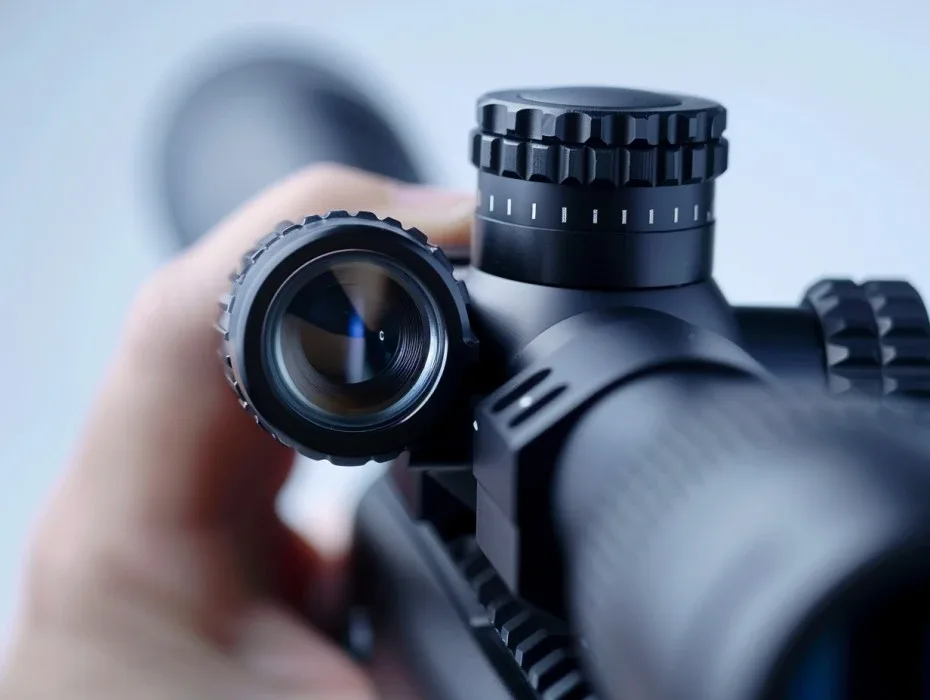
Eye relief is the distance between your eye and the scope's ocular lens when you're looking through it at the correct distance. It sounds simple. Getting it wrong creates real problems fast.
When you fire a rifle, recoil drives the gun backward instantly. If your eye sits too close to the scope, the optic slams into your eyebrow. That's scope bite.
It leaves welts, cuts, or even permanent eye damage.
Field reports from experienced shooters indicate scope bite most often happens when scopes are mounted without considering recoil energy. It's one of the most preventable mistakes in scope setup.
If your eye is too far back, your sight picture shrinks. You lose your field of view and pick up black shadows around the reticle. Both problems trace back to the same cause: eye relief matched to your specific rifle and shooting style.
How Eye Relief Works: The Variables That Change Everything
Several factors determine where your eye should sit behind a scope. Here's what actually matters.
Caliber and Recoil Level
If your rifle produces heavy recoil, the scope pushes back faster and farther. You want slightly less eye relief on high-recoil rifles to keep the optic seated properly. Low-recoil rifles give you more room to work with.
Rifle Type and Platform
Bolt-action rifles let you position the scope freely on the rail. Lever-action rifles often require long eye relief because of their shorter receivers. AR-15 platforms constrain your options with fixed stock positions.
Rimfire rifles have almost zero recoil, so generous eye relief is easy to achieve.
Magnification Range
Variable-power scopes can shift eye relief as you zoom in. At minimum magnification, you often get more eye relief. At maximum magnification, it often tightens.
This behavior is standard across most LPVO designs, including the popular 1-6x and 1-8x ranges.
Mount Height and Cheek Weld
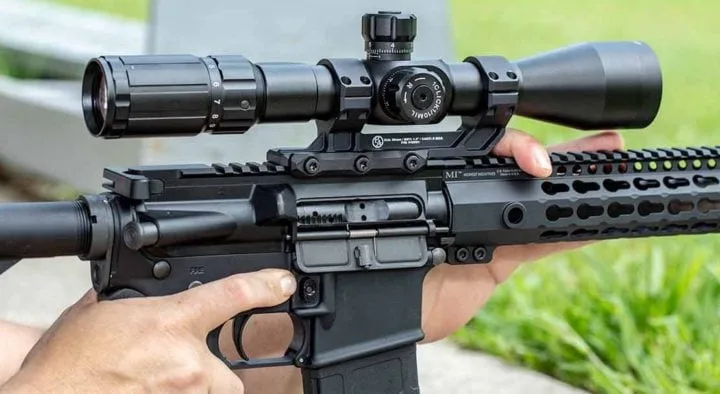
Where your rings sit on the Picatinny rail changes how your eye lines up with the scope. Higher mounts push your head position upward. Lower mounts bring it closer.
Your stock's comb height works alongside mount height to determine your final cheek weld.
Finding the Right Eye Relief: A Decision Flow for Your Setup
Here's a practical step-by-step process that works for nearly any rifle and scope combination.
Step 1: Identify Your Caliber and Recoil Level
Pull up your cartridge's recoil energy. SAAMI publishes standard specs for commercial cartridges, and their data is the reference point most manufacturers use. A .22 LR produces roughly 0.8 ft-lbs.
A .308 Win pushes about 13 ft-lbs. A .338 Lapua Mag delivers 45+ ft-lbs. This number drives everything that follows.
Step 2: Match Eye Relief to Recoil
| Recoil Level | Energy Range | Starting Eye Relief |
|---|---|---|
| Low | Under 10 ft-lbs | 3.5 to 5 inches |
| Medium | 10 to 20 ft-lbs | 3 to 4 inches |
| High | 20+ ft-lbs | 2.5 to 3.5 inches |
Step 3: Choose the Right Mount Height
Pick rings that put the scope at your natural eye level. Most shooters use medium or high rings when their objective lens is over 40mm. Lower rings work well with 24mm to 32mm objectives.
SAAMI provides cartridge dimensions that influence how your stock and scope sit together.
Step 4: Set Your Diopter
Before you mount the scope, adjust the eyepiece diopter until your reticle is sharp. This is an eye-by-eye setting, not a rifle setting. Do it with the scope off the rifle.
Step 5: Position the Scope on the Rail
Mount the scope and shoulder the rifle. Check that you see the full field of view with your eye at the correct distance. Adjust forward or rearward on the rail until the sight picture is clean.
Step 6: Live-Fire Verification
Head to the range and shoot from your usual positions. Confirm there's no scope bite and that your eye relief holds at every magnification setting. Live fire is where hidden problems surface.
Eye Relief by Caliber: Quick Reference Table
Use this table to match your rifle to a starting eye relief range. Fine-tune it during live-fire testing.
| Caliber / Platform | Recoil Level | Recommended Eye Relief | Notes |
|---|---|---|---|
| .22 LR / Rimfire | Very low | 4 to 5 inches | Generous eye relief preferred |
| .223/5.56 / 6.5 Creedmoor | Low to medium | 3.5 to 4.5 inches | Common AR-15 and precision rifle platforms |
| .270 Win / .30-06 / .308 Win | Medium | 3 to 4 inches | Standard hunting rifle range |
| .300 Win Mag / .338 Lapua / .375 H&H | High | 2.5 to 3.5 inches | Tighter setting prevents scope bite |
| Lever-action (.30-30, .45-70) | Varies | 4 to 9+ inches | Scout scopes often used |
| LPVO (1-6x, 1-8x) on AR platform | Low | 3.5 to 4 inches | Eye relief shifts with magnification |
As of 2026, modern scope designs continue to push toward more generous eye relief. Many hunting optics now offer 3.5 to 5 inches, which benefits newer shooters and anyone running moderate recoil calibers.
Common Eye Relief Mistakes That Cause Scope Bite and Lost Accuracy
Most scope problems trace back to one of these setup errors.
Mounting the Scope Too Far Forward or Too Far Rearward
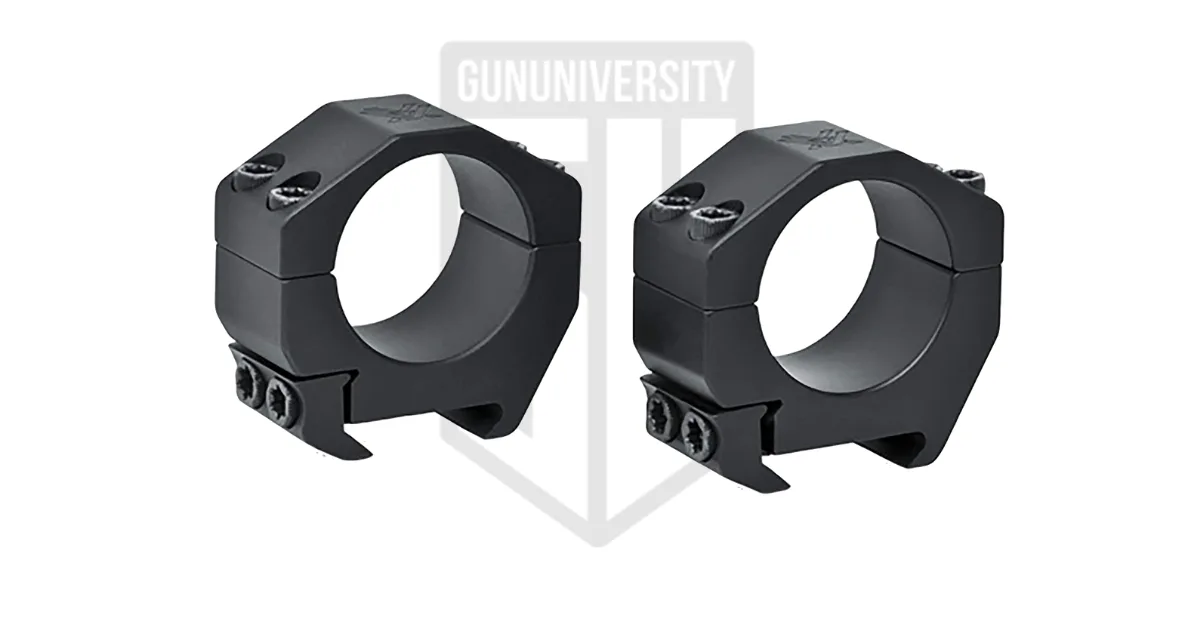
Scopes sit on Picatinny rails with plenty of slot range. Many shooters mount in a hurry and don't check the sight picture. Moving the scope one slot forward or backward changes your eye position immediately.
Using the Wrong Ring Height
A 50mm objective lens needs high rings. A 24mm objective doesn't. Getting this wrong forces an awkward head position and breaks your cheek weld.
Your accuracy suffers as a result.
Ignoring Magnification-Dependent Eye Relief Changes
If your variable-power scope tightens eye relief at maximum magnification, your comfortable position at 3x might feel cramped at 9x. Test both extremes before you trust the setting for a hunt or match.
Setting the Diopter After Mounting
Many shooters skip the diopter step entirely. A blurry reticle causes eye strain and inaccurate shot placement. Always set it before mounting, with the scope off the rifle.
Skipping Live-Fire Verification
Bench testing feels good. The range is where problems show up. Recoil changes everything about your sight picture.
Always confirm your setup with live rounds before hunting season opens.
Expert Tips for Dialing In Eye Relief That Actually Works
Experienced shooters don't chase a magic number. They approach scope setup as a system where caliber, mount height, stock design, and shooting position all pull against each other.
One tip from precision rifle competition: prioritize eye box forgiveness over a specific eye relief figure. The eye box is how much lateral and vertical head movement your eye can make while still seeing the full reticle. A scope with a forgiving eye box feels more comfortable across positions than one locked to a narrow eye relief distance.
Cold-Weather and Layered-Clothing Considerations
Heavy winter clothing changes your stock weld. Thick coats push your face away from the comb, which can throw off your eye relief by a fraction of an inch. In cold conditions, many hunters pull their scope slightly closer to compensate.
When Swapping Scopes Between Rifles
If you run the same optic on different rifles, save your ring height and scope position settings. Write down your slot position on the rail and ring height. That way you can replicate the setup quickly instead of re-dialing it every time.
The NRA maintains educational resources on scope mounting practices that reference these same setup principles.
FAQs About Rifle Scope Eye Relief
What is the ideal eye relief for a .30-06 hunting scope?
For a .30-06 Springfield, start with 3 to 4 inches of eye relief. This is a medium-recoil cartridge producing around 20 ft-lbs, so you need enough distance to absorb recoil without losing your sight picture. Manufacturer specs for most 3-9x scopes fall in this range naturally.
Does eye relief change when I adjust magnification?
Yes. On variable-power scopes, eye relief typically tightens as you increase magnification. The maximum eye relief is usually at minimum magnification.
Always test your setup at both ends of the magnification range before heading to the field.
Can I use a high-power scope on a .22 LR?
Yes, but the low recoil of a .22 LR lets you use generous eye relief comfortably. You won't have scope bite concerns, so you can position the scope for maximum comfort. Scopes with 4 to 5 inches of eye relief work great on rimfire rifles.
How much eye relief does a lever-action rifle need?
Lever-action rifles with traditional stock designs often require 9 or more inches of eye relief. Scout scopes were built specifically for this platform. If your receiver won't allow conventional placement, a long-eye-relief optic mounted forward is the standard solution.
Is more eye relief always better?
No. Too much eye relief on a high-recoil rifle causes you to lose the full field of view. You end up peering into the scope from too far back.
The goal is matching eye relief to your caliber's recoil, not maximizing it.
What ring height should I use with a 50mm objective lens?
High rings or extra-high rings are standard for 50mm objective lenses. Medium rings typically won't give you enough clearance. Measure from the rail to the bottom of the scope tube to confirm before purchasing.
A good starting measurement for a 50mm objective is usually 0.875 to 1.125 inches.