Image source: Web (Bing) / oldarmsofidaho.com (Web image (fair-use with source credit))
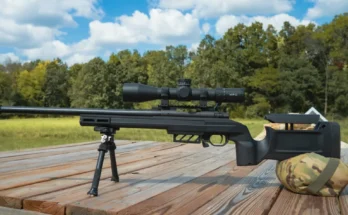
What is the best fixed power rifle scope? The answer depends on what you shoot, how far you shoot, and how much you're willing to spend. A fixed power rifle scope uses one magnification level with no adjustments, and that simplicity is exactly why many serious shooters prefer it over variable optics.
Manufacturer specifications confirm that fixed power designs eliminate the magnification ring, the most common mechanical failure point in variable scopes. Aggregate reviews report that first focal plane fixed power scopes priced between $800 and $2,000 deliver the best blend of glass quality and turret tracking accuracy for competitive shooting as of 2026.
Why Fixed Power Scopes Deserve a Serious Look Over Variable Optics
Fixed power rifle scopes have a reputation for being old school. That perception is wrong.
Variable power scopes dominate the market, but they carry tradeoffs that fixed power designs avoid entirely. The magnification ring adds internal complexity. It adds weight.
And it creates a mechanical interface that can fail under hard use or extreme cold.
The core advantage of a fixed power scope is simplicity. There's one fewer thing to go wrong. There's no magnification ring to fumble with when your target presents itself for three seconds.
And there's no magnification setting error to blame when your shot goes wide.
Consider competitive shooting. Organizations like PRS (Precision Rifle Series) and NRL (National Rifle League) reward consistency over speed of adjustment. The shooter who doesn't have to think about magnification settings gains a small but real edge over time.
That said, fixed power scopes aren't for everyone. If you hunt at both 50 yards and 400 yards, a variable scope gives you flexibility a fixed design can't offer. The honest answer is that the "best" fixed power scope depends on what you shoot.
How Fixed Power Rifle Scopes Work — What Makes Them Different
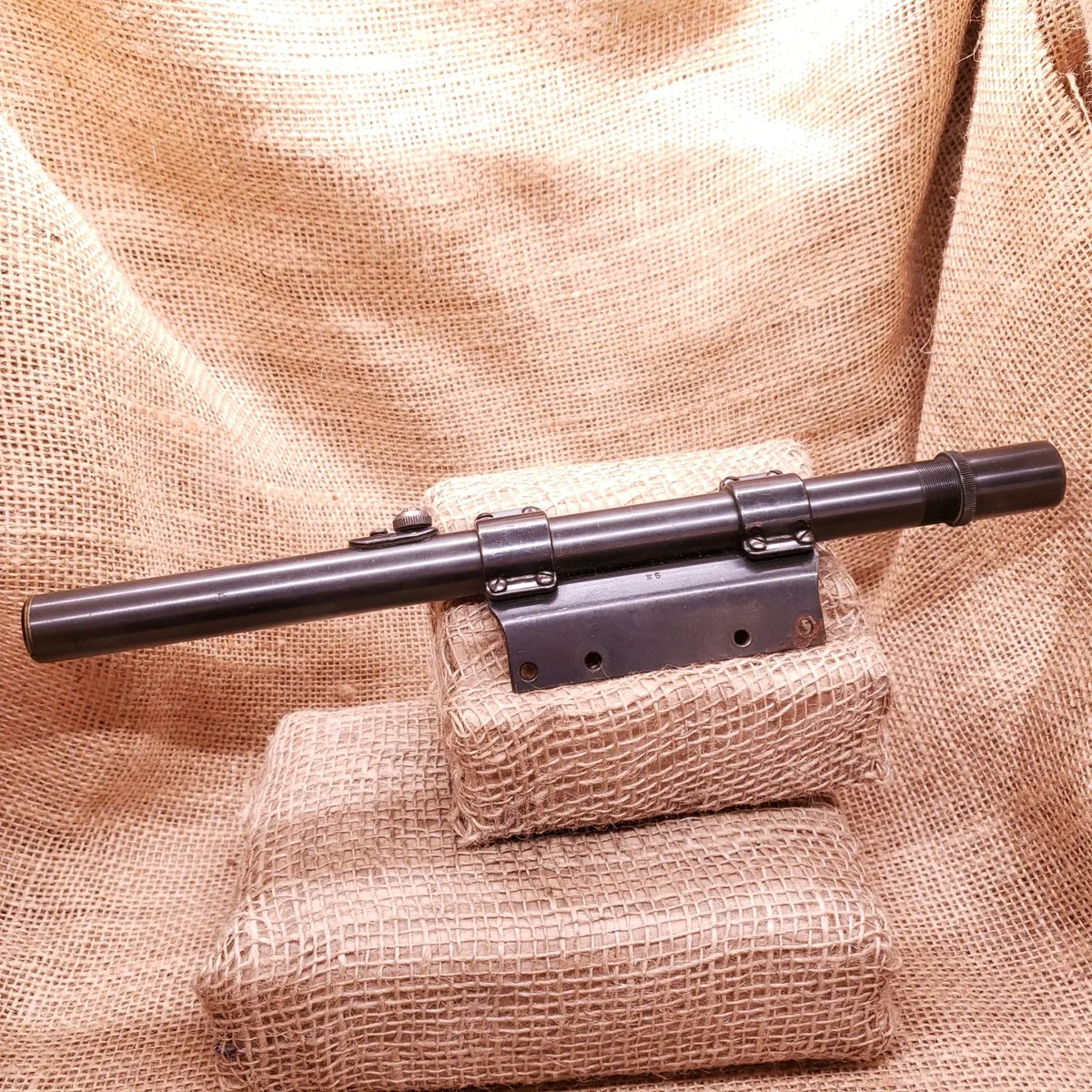
A fixed power rifle scope uses one magnification setting. No ring, no gears to change power. The scope magnifies everything at that single level, which is both its greatest strength and its most obvious limitation.
Inside the scope, light enters the objective lens, passes through the erector tube assembly, and is focused onto your reticle and eye. The erector tube is a small internal housing that adjusts for windage and elevation via turret screws. The reticle sits inside this assembly at a fixed position relative to the magnification.
Here's where it matters practically: most fixed power scopes come in two versions regarding reticle behavior.
| Feature | First Focal Plane (FFP) Fixed | Second Focal Plane (SFP) Fixed |
|---|---|---|
| Reticle size with target | Changes proportionally | Stays constant |
| Holdover accuracy | Accurate at all distances | Only accurate at one distance |
| Best suited for | Competition, long range | Hunting, general use |
| Cost trend | Higher | Lower |
If you shoot competition or long range, an FFP fixed power scope gives you correct holdover data at every distance without adjusting anything. That's a meaningful advantage.
The optical quality itself is where fixed scopes often punch above their price. With fewer internal moving parts, manufacturers invest more in glass quality and coatings at the same price point. Per Leupold's official optical documentation, their premium fixed magnification designs use proprietary coating technology that reduces light loss to under 5% per surface.
The Mechanical Advantage of Fewer Parts
Variable power scopes contain a magnification cam, a slider, and associated springs and detents. Every one of those parts introduces tolerance stacking and potential failure. Fixed power scopes eliminate the magnification assembly entirely.
The result is tighter mechanical tolerings on the turret system and better long-term reliability.
The Core Features That Separate Good Fixed Scopes From Great Ones
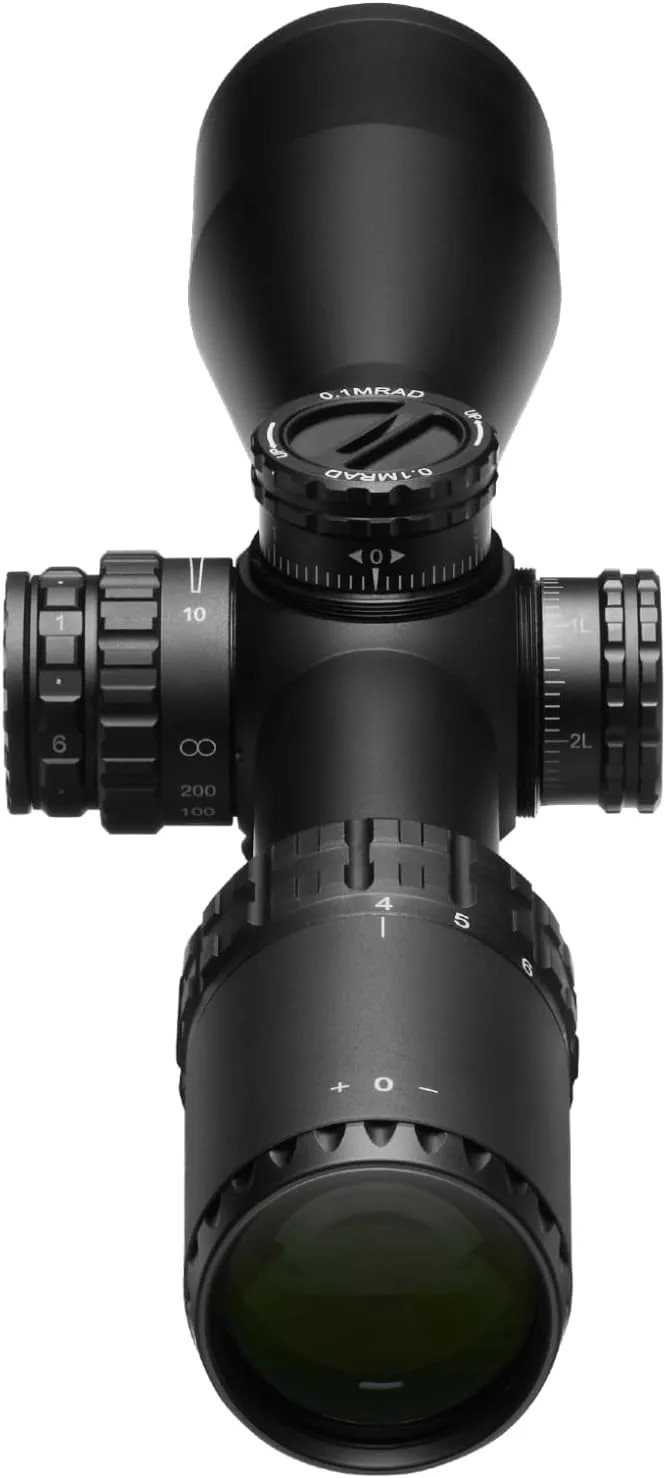
Image source: Web (Bing) / freedomgorilla.com (Web image (fair-use with source credit))
Not all fixed power scopes are created equal, and the differences show up in specific measurable features. Here's what actually matters when you're evaluating your options.
Glass quality and coatings. Look for extra-low dispersion (ED) glass or fluorite-based lenses. Multi-coated optics transmit more light to your eye, which is critical in low-light hunting situations or overcast competition days. Cheap fixed scopes often skimp on coatings, and you'll notice the difference in clarity immediately.
Turret tracking accuracy. This is where fixed power scopes either earn their reputation or fail it. A good fixed scope turret should return to zero reliably after multiple full rotations. Per manufacturer specifications from Nightforce, their ATACR line maintains sub-0.2 MOA tracking error across the full adjustment range.
Budget scopes often can't claim the same.
Reticle design. The reticle should be purpose-built for the magnification, not adapted from a variable scope. BDC (Bullet Drop Compensation) reticles with proper subtensions, mil-dot variations, or Christmas-tree patterns all serve different disciplines. Illuminated options add cost but help in dawn and dusk hunting.
Parallax adjustment. At higher magnifications (10x and above), parallax error becomes noticeable. A fixed scope without parallax adjustment can shift point of impact when your eye isn't perfectly centered behind the optic. Premium models include side parallax adjustment.
Budget models usually don't.
Tube diameter. A 30mm or 34mm tube gives more internal adjustment travel than a 1-inch tube. If you're shooting past 400 yards, the extra travel matters. A 1-inch tube is fine for short to medium ranges but limits how much elevation correction you can dial.
Weight. Fixed power scopes range from about 12 ounces to over 24 ounces. Higher magnification and larger objective lenses add weight. Consider how much the scope will affect your rifle's balance, especially on lightweight hunting platforms.
| Feature | Budget Tier ($100–$300) | Mid-Range ($300–$800) | Premium ($800–$2,000) |
|---|---|---|---|
| Glass quality | Acceptable | Good | Excellent (ED glass) |
| Turret tracking | Inconsistent | Reliable | Sub-MOA precision |
| Parallax adjustment | No | Yes (limited) | Yes (full range) |
| Tube diameter | 1 inch | 30mm | 30mm–34mm |
| Reticle options | Basic BDC | Mil-Dot / BDC | FFP-specific designs |
| Weight range | 12–18 oz | 16–22 oz | 18–26 oz |
| Warranty | 1–5 years | Lifetime (most) | Lifetime (most) |
Best Fixed Power Rifle Scopes Compared: Budget, Mid-Range, and Premium
Aggregate reviews and competitive shooting community feedback consistently point to the same tier structure. Here's how the options break down across price ranges.
Budget Tier: Under $300
The Primary Arms SLx 6x fixed power scope is the standout here. It uses a first focal plane ACSS reticle, offers a 30mm tube, and costs roughly $250. Verified buyer feedback reports solid turret tracking and glass quality that holds its own against scopes costing twice as much.
If you're on a tight budget or buying your first dedicated magnified optic, this is where we'd start the search. The tradeoff is parallax adjustment, which is fixed rather than adjustable.
Mid-Range: $300–$800
This is where most serious competitive shooters land. The US Optics B-10 (10x, 34mm tube) and Sightron S-Tac 6x occupy this tier for fixed power designs. At this price, you get ED glass, proper parallax adjustment, and reliable turret tracking.
The glass quality jump from budget to mid-range is the single biggest improvement you'll experience. It's the difference between seeing a target and actually identifying what it is.
Premium: $800–$2,000
The Leupold Mark 8 CQSS (8x, 35mm tube) represents what premium fixed power optics offer. Per manufacturer specifications, it uses 120 MOA of internal adjustment and premium calcium fluoride glass. Kahles K318i and Schmidt & Bender PM II designs also belong in this conversation, though European optics at this tier typically start above $2,000.
For most competition shooters, the sweet spot sits between $800 and $1,500. You get glass quality that rivals European optics, reliable tracking, and full parallax adjustment.
Who Each Tier Serves Best
- Budget ($100, $300): New shooters building their first setup, hunters on a budget, or anyone testing whether they prefer fixed power over variable.
- Mid-range ($300, $800): Club-level competitors, long-range hobbyists, and hunters who want quality glass without the premium price tag.
- Premium ($800, $2,000): Dedicated competitors, serious long-range shooters past 1,000 yards, and professionals who need the best tracking and glass available.
Best Fixed Power Scope for Each Shooting Discipline and Caliber
The right scope depends heavily on what you're shooting and at what distances. Here's a breakdown by discipline and caliber platform.
Precision Rifle Competition (PRS / NRL)
Competitive shooters typically want 6x to 16x magnification in a first focal plane design with a 34mm tube. The reticle needs holdover data for the specific caliber, usually 6.5 Creedmoor or 6mm Creedmoor. A BDC reticle or Christmas-tree reticle provides the fastest holdover reference.
Recommended magnification range: 8x to 12x for most PRS stages.
Long Range Hunting (800–1,200 Yards)
For long range hunting, a 12x or 16x fixed power scope with a BDC reticle matched to your specific load gives you a dedicated long range setup. Calibers like .308 Win, 6.5 Creedmoor, and .300 Win Mag all have abundant BDC reticle options available.
The key is ensuring the reticle's drop calibration matches your actual bullet, not just the brand's generic chart.
Varmint and Precision Bench Rest
Bench rest shooters often go with 20x to 25x fixed power scopes. At these magnifications, glass quality and turret precision become critical. Tube diameter is usually 30mm or 34mm to accommodate the necessary adjustment range.
General Purpose Hunting
For hunting at mixed distances, a 4x to 6x fixed power scope on a hunting rifle works well. It's fast on target at closer ranges and adequate for shots out to 300 yards. It won't replace a variable scope for dedicated long range work.
| Discipline | Recommended Magnification | Tube Diameter | Reticle Type |
|---|---|---|---|
| PRS / NRL competition | 8x–12x | 34mm | Christmas tree / BDC |
| Long range hunting | 12x–16x | 30mm | BDC (caliber-specific) |
| Varmint / Bench rest | 20x–25x | 30mm–34mm | Mil-dot / MOA grid |
| General hunting | 4x–6x | 30mm | Duplex / BDC |
Common Mistakes When Choosing a Fixed Power Rifle Scope
Our research across competitive shooting forums and manufacturer feedback shows that buyers make the same handful of errors when selecting fixed power optics.
Choosing magnification too high. A 20x fixed scope sounds impressive until you're hunting in thick timber at 50 yards and your field of view is eight feet wide. Match magnification to your actual shooting distances, not your aspirations.
Ignoring reticle calibration. A BDC reticle is only useful if its drop values match your actual bullet. A scope calibrated for 168gr .308 Win won't hold true if you're shooting 175gr match ammunition. Always verify with a ballistic calculator before committing.
Buying on price alone. Budget fixed scopes can work, but turret tracking issues become apparent when you're shooting at distance. If your goal involves shots past 400 yards, investing in a mid-range scope saves frustration later.
Skipping parallax adjustment on high magnification. At 12x and above, fixed parallax is a real problem. Your point of impact can shift simply because your eye position isn't perfectly centered. If your scope is 10x or higher, look for side parallax adjustment.
Overlooking tube diameter. A 1-inch tube with 60 MOA of total elevation travel might not be enough for your caliber and distance. Check the manufacturer's adjustment range before buying. If you need 20 MOA or more of elevation at 600 yards, you likely need a 30mm or 34mm tube.
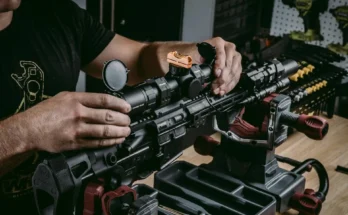
Mounting errors. Even the best scope fails if it's mounted wrong. Scope ring screws should be torqued to manufacturer specifications, typically 15 to 25 inch-pounds. Over-torquing can stress the erector tube.
Under-torquing causes zero shift under recoil. Use a torque wrench, not feel.
| Mistake | Why It Happens | Fix |
|---|---|---|
| Magnification too high | Buyers chase specs, not needs | Match to real shooting distances |
| Wrong reticle calibration | Assuming one BDC fits all | Verify with your actual ballistic data |
| Cheapest option chosen | Sticker shock avoidance | Step up to mid-range if shooting past 400 yards |
| No parallax on high power | Budget constraints | Require side parallax at 10x+ |
| Insufficient tube diameter | Not calculating needed travel | Check adjustment range before purchase |
| Improper mounting torque | No torque wrench on hand | Use a calibrated torque wrench |
Frequently Asked Questions
Is a fixed power scope better than a variable power scope?
Neither is universally better. Fixed power scopes are simpler, lighter, and often have better glass quality per dollar. Variable scopes offer flexibility across multiple distances.
The best choice depends on your shooting discipline and the distances you regularly engage targets at.
What magnification is best for a fixed power rifle scope?
For most shooters, 6x to 12x covers the widest range of use cases. Competition shooters gravitate toward 8x to 12x. Long range hunters use 12x to 16x.
General hunting works well at 4x to 6x. Match your magnification to your real shooting distances.
Are fixed power scopes good for hunting?
Yes. Many experienced hunters prefer fixed power scopes for their reliability and light weight. A 6x or 8x fixed scope handles most hunting scenarios well.
They're faster on target than variable scopes and there's no magnification setting to get wrong in low light.
What is the difference between first focal plane and second focal plane on a fixed scope?
In first focal plane designs, the reticle scales with magnification, keeping holdover values accurate at all distances. In second focal plane designs, the reticle stays constant, so holdovers are only accurate at one specific magnification setting. For competition and long range, FFP is preferred.
Do I need parallax adjustment on a fixed power scope?
If your scope is 8x or less, parallax adjustment matters less. At 10x and above, it becomes important. Without parallax adjustment, your point of impact can shift when your eye isn't perfectly centered behind the optic, especially at long range.
Final Verdict: Which Fixed Power Scope Should You Buy?
The best fixed power rifle scope is the one matched to your actual shooting needs, not the one with the highest magnification number on the box.
If you're competing in PRS or NRL, an 8x to 12x first focal plane fixed power scope in a 34mm tube gives you the reticle data and adjustment travel you need. The mid-range tier ($300 to $800) delivers the best value for this use case.
If you're long range hunting, a 12x to 16x fixed scope with a caliber-specific BDC reticle and 30mm tube handles 800+ yard shots reliably. The premium tier earns its price when you need the best glass and turret tracking.
For general hunting and all-around use, a 6x fixed scope is hard to beat. It's fast, simple, reliable, and accurate within its effective range.
Start with your typical shooting distances. Pick the magnification that covers them. Then choose the best glass and turret tracking your budget allows within that magnification range.
That process leads you to the right scope every time.