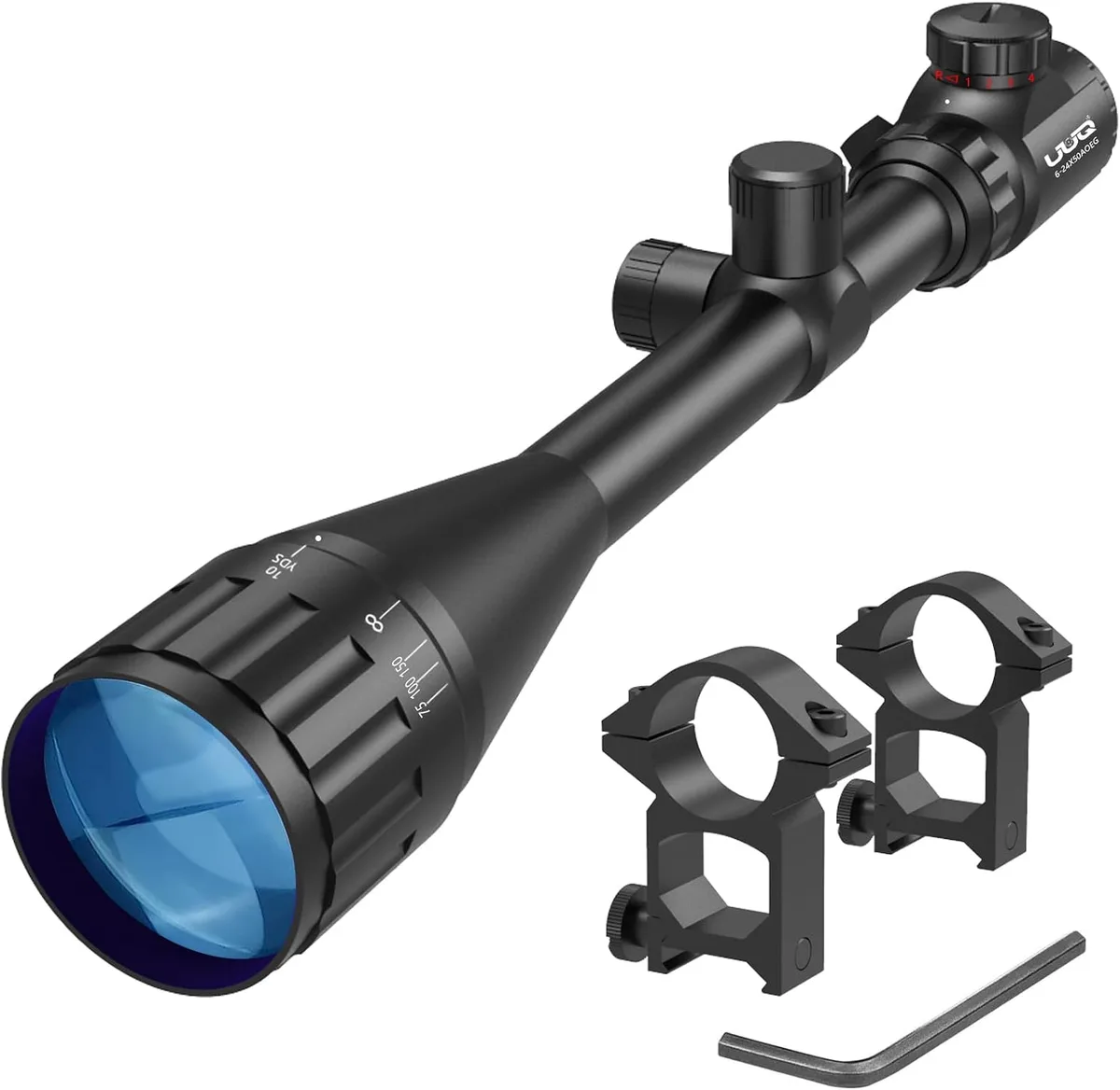
What does 6-24×50 mean on a rifle scope? It describes two key numbers that tell you how the optic behaves in the field: the magnification range and the objective lens diameter. The "6-24x" means the scope zooms from 6 times to 24 times.
The "50" tells you the front lens measures 50 millimeters.
Those numbers drive real decisions about mounting height, light gathering, and what shooting distances the scope actually suits. Manufacturer specifications as of 2026 confirm that a 6-24×50 scope delivers an exit pupil of roughly 8.3mm at 6x, dropping to about 2.1mm at 24x. Let's break down what each number means and when this magnification range earns its place on your rifle.
Quick Answer
6-24×50 means a scope with 6x to 24x magnification and a 50mm objective lens. The first numbers show your zoom range. The last number is the front lens diameter in millimeters.
A larger objective gathers more light in low-light conditions. This spec suits long-range shooting over close-range hunting.
6-24×50 Explained: The Two Numbers That Define Your Entire Scope
Every rifle scope spec follows the same pattern. The format "6-24×50" is standard across brands like Vortex, Leupold, and Athlon. It always reads the same way: magnification range first, then objective diameter.
The "6-24x" portion tells you the scope zooms continuously from 6 times magnification to 24 times. At 6x, you see a wide field of view with a bright image. At 24x, the target appears larger but the image dims.
The field of view shrinks too. The zoom ratio is 4x, calculated as 24 divided by 6.
The "50" refers to the objective lens diameter in millimeters. This front lens acts as the light-gathering window for the entire optical system. A 50mm lens captures more light than a 40mm or 32mm lens.
That difference matters during dawn and dusk hours.
Together, these numbers set expectations for the scope's job. A 6-24×50 isn't built for close-range deer hunting. It's designed for precision at longer distances, where you need magnification to resolve targets and a large objective to keep the image usable.
Per manufacturer documentation from brands like Vortex Optics, the naming convention has stayed consistent across decades of production. When you see specs like 4-16×50 or 5-25×50, the same rules apply.
Breaking Down the Magnification Range: What 6x to 24x Really Buys You
The 6x low end covers most mid-range shooting needs comfortably. You can still identify targets at 200 to 300 yards with a clear, bright image. Many shooters find 6x plenty for scanning terrain and getting on target quickly.
The 24x high end is where the scope shows its specialty. That level of magnification lets you resolve small targets at 400 to 600 yards and beyond. It's also what benchrest and competition shooters need when accuracy demands matter above everything else.
Exit Pupil, Eye Relief, and Why 24x Isn't Always Better
Exit pupil is the bright circle of light you see through the scope. Divide the objective diameter by the magnification to calculate it. At 6x, a 50mm objective gives you an 8.3mm exit pupil.
At 24x, that drops to just 2.1mm.
A small exit pupil makes the image dimmer. It also becomes harder to hold your eye in the right position. Eye relief, the distance your eye sits from the rear lens, typically shortens as magnification increases.
These are real tradeoffs you'll feel at 24x.
The 50mm Objective Lens: Light Gathering, Mounting Height, and Tradeoffs
The "50" in 6-24×50 tells you the objective lens measures 50 millimeters in diameter. This number determines how much light the scope can gather. A 50mm objective produces a brighter image at lower magnifications compared to smaller objectives like 40mm or 32mm.
That brightness advantage matters most in low-light conditions. Dawn hunts and overcast range days benefit from the extra light-gathering ability. Manufacturer testing consistently shows 50mm objectives outperform 40mm lenses in dim-light scenarios.
But there's a real cost. A 50mm objective needs taller mounting rings to clear the barrel. This raises your scope's height over bore, which affects cheek weld and natural point of aim.
Scope weight also increases with the larger front lens assembly.
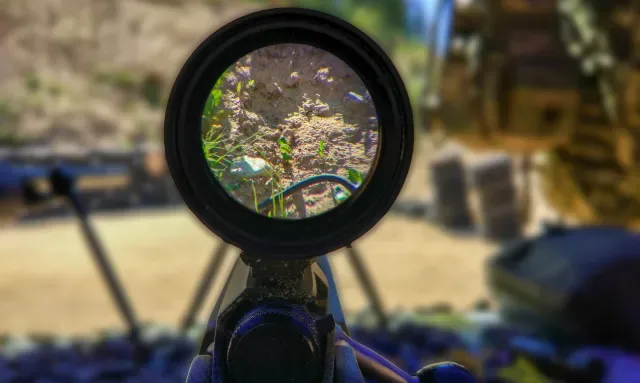
The tradeoff depends on your setup. If you're building a precision rifle for benchrest or PRS competition, the 50mm objective makes sense. If you need a lightweight hunting scope, a 40mm objective might serve you better.
Who Should Actually Buy a 6-24×50 Scope (and Who Shouldn't)
A 6-24×50 scope fits certain shooters well. It suits long-range target shooters, benchrest competitors, and precision rifle series (PRS) participants. These users typically shoot at 300 to 600+ yards and need the magnification to call shots and make precise adjustments.
It also works for varmint hunting at extended distances. If you're targeting predators or small game across open terrain, the 6x to 24x range covers your needs. The 50mm objective helps during the low-light hours when predators are most active.
Here's who should probably skip this magnification range. Close-range deer hunters rarely need more than 12x. Brush hunters benefit from a wider field of view at 3x to 6x.
Shotguns with slugs at 50 to 100 yards don't need 24x.
The sweet spot for a 6-24×50 is disciplined, distance-focused shooting. If most of your shooting happens under 200 yards, you'll likely leave the scope on 8x or 10x most of the time. That means you're paying for magnification you barely use.
6-24×50 vs Other Common Scope Specs: Side-by-Side Comparison
Different magnification ranges suit different shooting needs. Understanding where 6-24×50 sits among popular options helps you make a smarter choice. Here's how the most common long-range scope specs compare.
Quick Spec Comparison Table (3-9×40, 4-16×50, 6-24×50, 5-25×50)
| Spec | Magnification | Objective | Best For | Weight Range |
|---|---|---|---|---|
| 3-9×40 | 3x to 9x | 40mm | Deer hunting | 10–14 oz |
| 4-16×50 | 4x to 16x | 50mm | Versatile hunting | 16–20 oz |
| 6-24×50 | 6x to 24x | 50mm | Long-range precision | 22–30 oz |
| 5-25×56 | 5x to 25x | 56mm | Competition shooting | 30–36 oz |
If you need versatility across distances, a 4-16×50 hits the middle ground well. For competition shooting where magnification matters most, the 5-25×56 pushes the range further. The 6-24×50 sits right between these two.
Per Leupold & Stevens, magnification ranges are designed to match specific shooting disciplines. Choosing the wrong range means you'll either lack the magnification you need or carry weight you'll never use.
Common Mistakes When Choosing a 6-24×50 Rifle Scope
Buying a 6-24×50 scope comes with predictable pitfalls. Knowing them in advance saves you from regret after your first range session.
Assuming 24x means better accuracy. Aggregate user reviews show that many shooters never crank past 12x. More magnification amplifies shooter error too. A shaky hold at 24x looks terrible on paper.
Ignoring mounting height needs. A 50mm objective requires medium to tall rings. Low rings won't clear the barrel. Your cheek weld suffers, and your eye can't find the exit pupil easily.
Overlooking weight. Manufacturer specs place most 6-24×50 scopes between 22 and 30 ounces. Add rings, and you're carrying a heavy setup. If you hike to your shooting position, that weight compounds over miles.
Choosing 6-24×50 when 4-16×50 would work better. If your longest shot is 300 yards, the extra magnification range doesn't help you. You'd get similar performance from a lighter, cheaper 4-16×50.
Forgetting parallax adjustment. Long-range scopes at high magnification need a side focus parallax knob. Verify the model includes one before purchasing. Without it, 24x magnification shows parallax error that ruins precision.
6-24×50 Scope FAQ: Quick Answers to the Questions Shooters Actually Ask
What does 6-24×50 mean on a rifle scope?
6-24×50 means the scope magnifies from 6x to 24x and has a 50mm objective lens. The first two numbers are the zoom range. The last number is the front lens diameter in millimeters.
It tells you the optic's light-gathering ability and zoom capacity.
Is 24x magnification too much for hunting?
For most hunting scenarios, yes. Deer, elk, and general big game rarely require more than 12x to 16x. Use 24x only for long-range varmint hunting or competition.
Close-range hunting benefits from a wider field of view at 6x to 10x.
Do I need taller scope rings for a 50mm objective?
Yes. A 50mm objective typically requires medium to tall mounting rings depending on your rifle's barrel profile. Measure the gap between your barrel and the scope tube to determine ring height.
Most manufacturers provide height recommendations in their documentation.
What magnification should I use at 100 yards?
Start at 6x to 10x at 100 yards. Higher magnification at short distances shrinks your field of view and amplifies any movement. Reserve 20x to 24x for targets at 400 yards and beyond where the magnification actually resolves detail.
Is 6-24×50 good for long-range precision shooting?
Absolutely. The 6-24×50 range is purpose-built for long-range precision disciplines like benchrest, PRS, and NRL. The 50mm objective gathers enough light to keep the image usable at high magnification.
Per manufacturer specs, exit pupil stays above 2mm throughout the zoom range.
Final Verdict: Is 6-24×50 the Right Magnification Range for You?
A 6-24×50 scope is a specialist's tool. It excels when you consistently shoot at 300 to 600+ yards and need the magnification to call shots and dial adjustments. Competition shooters, benchrest enthusiasts, and long-range varmint hunters find real value in this range.
If your shooting happens under 200 yards most of the time, a 4-16×50 or even a 3-12×42 serves you better. Lighter optics keep you comfortable in the field. They also leave budget for ammo and other gear that improves your actual performance.
One thing the spec numbers don't tell you is scope quality within the same magnification range. Two 6-24×50 scopes at very different price points can perform vastly differently. Glass quality, turret precision, and build materials separate budget options from premium optics more than the magnification spec itself does.
Match the optic to your shooting distances, your mounting setup, and the type of shooting you actually do. The 6-24×50 label tells you the basics. The right scope for you depends on what those basics need to do.




