What is the best rifle scope for outdoor use? That question doesn't have a single right answer. The ideal scope shifts depending on your caliber, terrain, shooting distances, and budget.
A setup built for close-range whitetail hunting in dense forest will frustrate you on open prairie at long range.
Manufacturers rate scopes by recoil impulse tolerance, and that number matters more than most buyers realize. A scope rated for .300 Win Mag can handle up to roughly 4,500 joules. Exceed that rating and you risk cracked glass or a dead turret.
We'll cover the specs, types, and tiers that actually decide your choice.
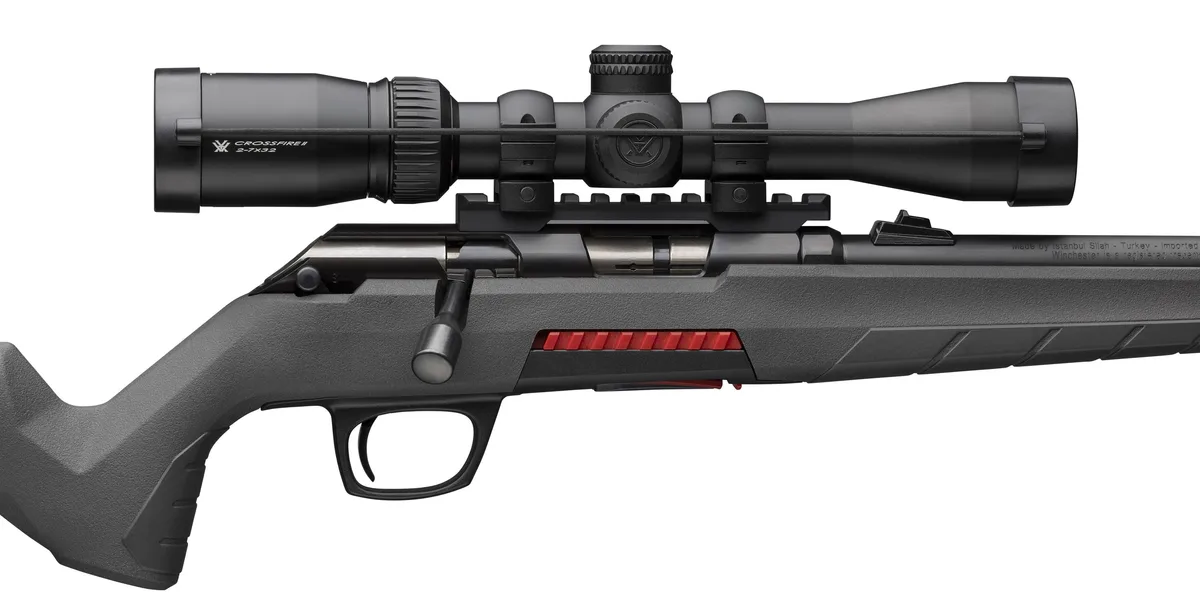
Image source: Bing (Web (fair-use with source credit))
Quick Answer
The best rifle scope for outdoor use depends on your shooting scenario. For general hunting, a 2-10x or 3-9x variable power scope works well. Open terrain and long range hunting need higher magnification and larger lenses.
First focal plane scopes suit precision shooting at varied distances. Second focal plane scopes fit hunting at known distances.
Why the Best Rifle Scope Changes With Every Shooter
The word "best" gets tossed around constantly in optics discussions. But what works for a Texas hog hunter will disappoint a Colorado elk hunter at 600 yards. Your terrain sets the baseline before you ever look at a spec sheet.
Open terrain vs. thick timber. If you hunt western plains or desert country, you'll see game at 300 to 600 yards. Higher magnification matters here. In dense eastern forest, game appears at 50 to 150 yards.
A powerful scope with tight eye relief can slow you down in that setting.
Caliber compatibility. A scope rated for .223 recoil will fail on a .300 Win Mag. The recoil impulse from a magnum cartridge can reach 4,000 to 4,500 joules. Manufacturers publish specific ratings for this reason.
Check yours before buying.
Shooting distance. Are you a 200-yard hunter or a 700-yard shooter? Most hunters never take shots beyond 300 yards in real conditions. Buying a 5-25x scope for a 200-yard hunt means carrying extra weight and paying for magnification you'll never use.
Budget reality. A $200 scope and a $2,000 scope will both put bullets on target at 100 yards. The gap shows up at longer distances, in low light, and over years of use. Know where your priority lies before spending a dime.
Your physical setup. Scope weight affects rifle balance. Eye relief needs to match your shooting position. Prescription shooters and older hunters benefit from more generous eye relief.
The National Shooting Sports Foundation publishes education resources that help new shooters match optics to their platforms.
The best scope for you is the one that matches your realistic shooting conditions, not the one with the biggest magnification number.
What Makes a Rifle Scope Perform Well Outdoors
Not all scopes are created equal. Here are the specs that separate field-ready optics from shelf pieces.
Magnification range. Variable power scopes from 2-10x or 3-12x cover most hunting scenarios. Fixed power scopes work well for budget builds. Low power variable optics in the 1-8x range suit close to mid-range work.
Light transmission. Premium glass with fully multi-coated lenses delivers 90 to 96 percent light transmission. Budget scopes often fall below 80 percent. At dawn and dusk, that difference means you can see the animal clearly or you can't.
Tube diameter. A 1-inch tube is lighter and sufficient for most hunting setups. A 30mm tube provides more internal adjustment range. A 34mm tube is reserved for precision long range optics.
Eye relief. Most hunting scopes offer 3.5 to 4.5 inches of eye relief at low magnification. This matters for recoil management and comfort with prescription glasses. Too little eye relief creates "scope bite," where the scope recoils into your brow.
Parallax adjustment. A side focus knob lets you eliminate parallax at various distances. Without it, your crosshair may shift on target if your eye position isn't perfect. For hunting, a parallax-free setting at 100 to 150 yards covers most needs.
Weatherproofing. Look for nitrogen or argon purging. This prevents internal fogging when temperatures swing. Waterproof and shock-proof ratings protect the optic through rain, snow, and repeated handling.
Turret system. Capped turrets prevent accidental adjustments in the field. Exposed turrets suit range work where frequent dialing is needed. Zero stop turrets let you return to zero quickly without counting clicks.
| Spec | Why It Matters |
|---|---|
| Light transmission | Low light visibility at dawn and dusk |
| Eye relief | Recoil comfort and prescription compatibility |
| Tube diameter | Internal adjustment range and weight |
| Parallax adjustment | Crosshair accuracy at varied distances |
| Recoil rating | Prevents scope damage from magnum cartridges |
| Weatherproofing | Internal fogging protection in temperature swings |
Budget, Mid-Tier, and Premium: A Real Comparison
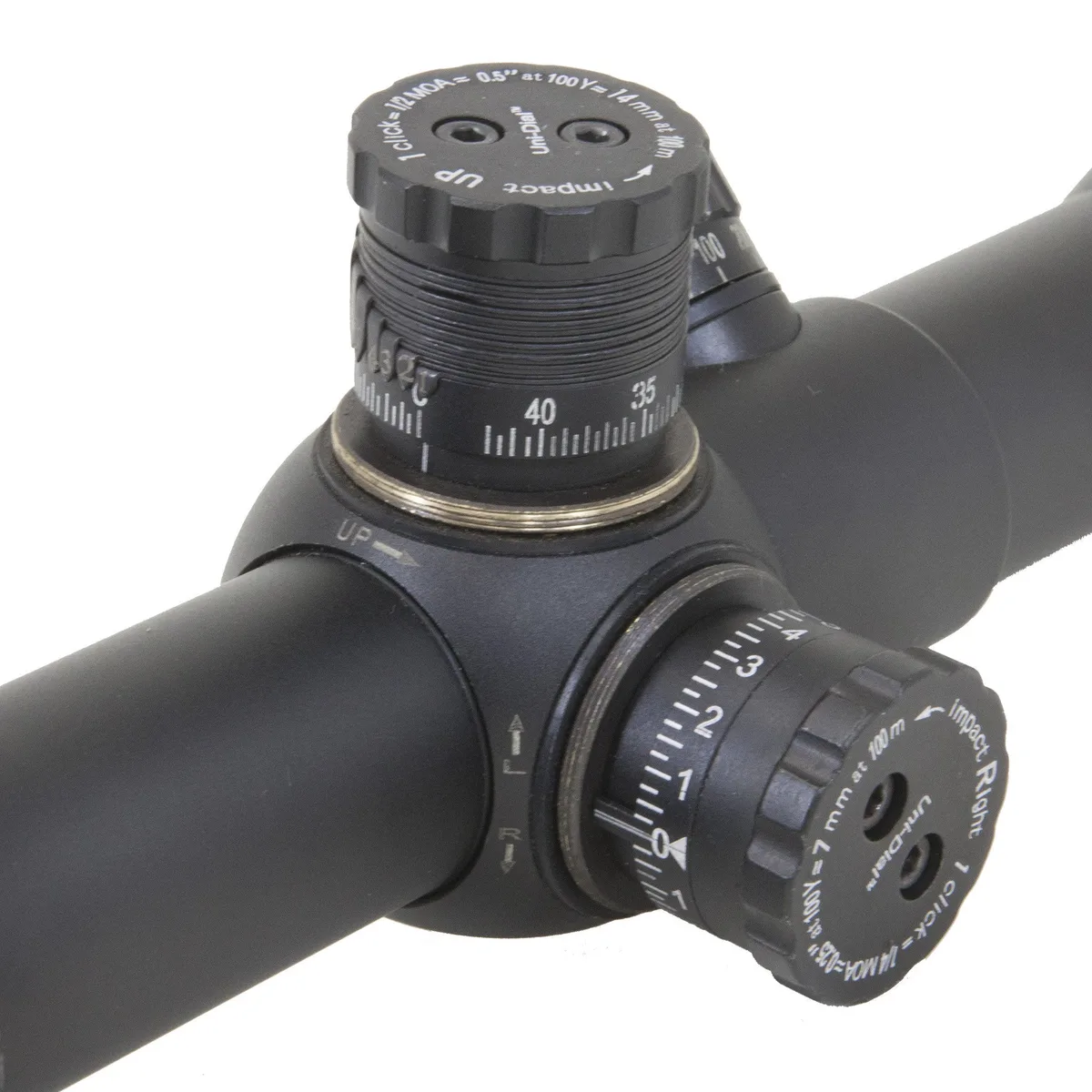
Image source: Web (Bing) / hi-luxoptics.com (Web image (fair-use with source credit))
Scopes fall into three practical price tiers as of 2026. Each tier buys you different levels of glass quality, turret reliability, and durability.
Budget tier ($150 to $400). Brands like Vortex, Primary Arms, and Bushnell dominate here. You'll get functional optics with decent glass and reasonable warranties. Turrets can feel mushy, and light transmission is average.
This tier suits new hunters and low-round-count builds.
Mid-tier ($400 to $1,000). This is where most serious hunters should shop. The Vortex Viper PST series, Leupold VX-3HD, and Nightforce SHV scopes live in this range. Glass quality jumps significantly.
Turrets track more reliably. You're getting optics that will last for decades.
Premium tier ($1,000 to $2,500+). Leupold Mark 5HD, Nightforce ATACR, and Schmidt & Bender PM II scopes set the standard. Light transmission reaches 92 to 96 percent. Turrets track within a fraction of a mil across their full range.
Glass stays sharp at maximum magnification.
Ultra-premium ($2,500+). Swarovski Z8i and Nightforce NX8 F1 optics represent the top end. You're paying for optical perfection, not just performance. These scopes make sense for competitive shooters and hunters who demand absolute reliability.
| Tier | Price Range | Glass Quality | Turret Reliability | Best For |
|---|---|---|---|---|
| Budget | $150-$400 | Average | Adequate | Beginners, casual use |
| Mid-tier | $400-$1,000 | Good to very good | Reliable | Most hunters |
| Premium | $1,000-$2,500 | Excellent | Highly precise | Serious hunters, competitors |
| Ultra-premium | $2,500+ | Exceptional | Flawless tracking | Perfectionists, pro shooters |
Aggregate user reviews consistently report that the mid-tier sweet spot delivers the best value. You get 80 to 90 percent of premium performance at half the price. Save the premium budget for the rifle, the ammo, or the quality rings and mounts that hold your scope in place.
FFP vs. SFP and LPVO vs. Hunting Scope: Choosing the Right Type
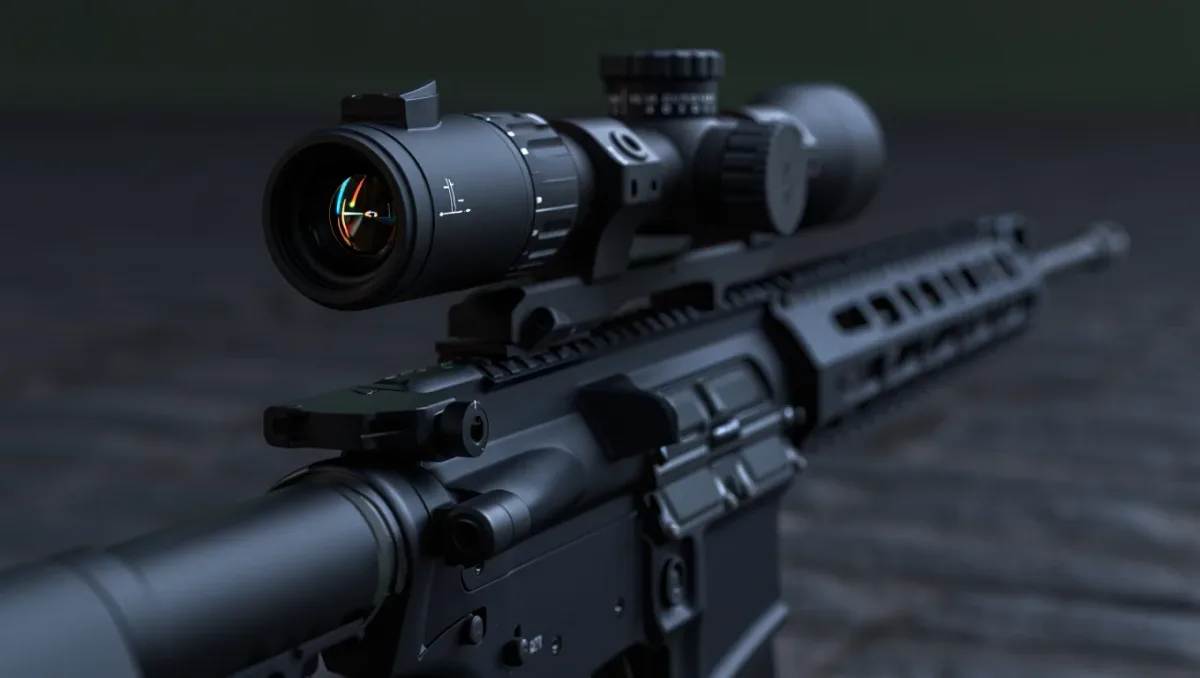
Image source: Bing (Web (fair-use with source credit))
Two scope-type decisions shape most buying conversations. Understanding both makes the rest of the process straightforward.
First focal plane (FFP) vs. second focal plane (SFP). In an FFP scope, the reticle changes size with magnification. Range markings stay accurate at any magnification setting. This suits precision shooters who dial across multiple distances.
In an SFP scope, the reticle stays the same visual size regardless of magnification.
When FFP wins. If you dial elevation for different distances and want accurate holdovers at any magnification, FFP is the way. The reticle subtensions remain correct whether you're at 5x or 20x. That's critical for long range shooting where distances change between shots.
When SFP wins. Most hunting scenarios involve known or estimable distances. If you range the animal, dial your turret, and shoot, SFP is simpler and lighter. The reticle stays crisp and visible at low magnification.
SFP scopes also tend to be cheaper for the same glass quality.
LPVO (low power variable optic) vs. traditional hunting scope. An LPVO covers 1-6x or 1-8x in a single optic. It excels at close to mid-range work, tactical shooting, and hunting in dense cover. A traditional 3-9x or 4-16x hunting scope offers more magnification for longer shots.
| Use Case | Best Scope Type | Why |
|---|---|---|
| Close range woodland hunting | LPVO (1-8x) | Fast target acquisition, wide field of view |
| General big game hunting | SFP (3-9x or 3-12x) | Simple reticle, good magnification range |
| Long range hunting and competition | FFP (5-25x) | Accurate holdovers at any magnification |
| Varmint and predator hunting | FFP (4-16x) | Precise reticle for dialing distances |
| Western open terrain | FFP or SFP (3-15x) | Magnification for 400+ yard shots |
| Tactical and duty use | LPVO (1-8x) | Versatile magnification for varied engagements |
The right type depends on your shooting style more than anything else. If you tend to range and dial, FFP gives you an edge. If you prefer a quick, point-and-shoot approach with a consistent reticle picture, SFP is the smarter pick.
Best Scope Setup for Each Outdoor Scenario
Match the scope to the job. Here's how the most common outdoor scenarios break down.
Whitetail deer in dense eastern forest. Game appears at 50 to 200 yards in thick cover. You need fast target acquisition and good low light performance. A 2-10x SFP scope or a 1-8x LPVO with an illuminated reticle works best.
Look for a 30mm tube and generous eye relief.
Mule deer and elk on western plains. Sight lines run 300 to 600 yards in open country. You need magnification and precise turret tracking. A 3-15x FFP scope with a BDC reticle or dial turret system covers this range.
A 40 to 50mm objective lens helps gather light at distance.
Mountain hunts at altitude. Weather changes fast. You'll face snow, wind, and temperature swings. Weatherproofing is non-negotiable here.
A 3-12x scope with nitrogen purging and a rugged mounting system handles the conditions. Weight matters too since you're carrying everything uphill.
Hog hunting in Texas and the south. Hogs appear at close to mid range in brush and field edges. A 2-10x SFP scope or a 1-8x LPVO works well. Illuminated reticles help in low light during evening hunts.
Recoil-rated for .308 Win or .30-06 is standard.
Varmint and predator hunting. Coyotes and prairie dogs at 200 to 500 yards demand precision. An FFP scope from 4-16x or 5-25x gives you accurate holdovers. Dial turrets suit the frequent distance changes.
A larger 50mm objective lens improves clarity at long range.
| Scenario | Recommended Type | Magnification | Key Features |
|---|---|---|---|
| Eastern woodland | LPVO or SFP | 1-8x or 2-10x | Illuminated reticle, wide field of view |
| Western open terrain | FFP or SFP | 3-15x | Turret tracking, 40mm+ objective |
| Mountain hunting | SFP or FFP | 3-12x | Weatherproofing, lightweight build |
| Hog hunting | LPVO or SFP | 2-10x or 1-8x | Illuminated reticle, close range speed |
| Varmint hunting | FFP | 4-16x | Dial turrets, precise reticle |
Your scenario determines the scope type before you even look at brands or prices. Get this right first, then shop within the correct category.
Frequently Asked Questions
What magnification do I need for deer hunting?
For most deer hunting, 3-9x covers 90 percent of real-world scenarios. Close-range forest hunts may only need 2-6x. If you hunt open western terrain, 3-12x or 4-16x gives you reach without sacrificing field of view.
Start with 3-9x and upgrade only if your hunting style demands more.
What's the difference between MOA and MIL?
MOA (minute of angle) measures roughly 1.047 inches at 100 yards. MIL (milliradian) measures roughly 3.6 inches at 100 yards. Both systems work equally well.
Choose whichever matches your existing training or preference. Most U.S. hunters use MOA because it's the familiar standard.
How do I check if a scope is compatible with my rifle?
Check the recoil rating against your cartridge. Most rifle scopes list a maximum recoil in joules or caliber. Also verify that your rifle's mount pattern matches the scope base.
Picatinny rails, Weaver rails, and dovetails all use different ring sizes.
What magnification is best for a beginner?
A 3-9x scope gives beginners the most flexibility without overwhelming them. Start at 3x for close range and dial up as needed. The variable range teaches you how magnification affects your sight picture.
Fixed power scopes also work for new shooters who want simplicity.
Are refurbished rifle scopes worth considering?
Yes, if you buy from a dealer who backs them with a warranty. Manufacturer-certified refurbished scopes often sell for 30 to 50 percent below new pricing. Check that the warranty transfers to you.
Refurbishment typically includes resealing, cleaning, and mechanical inspection before sale.
What is the most common mistake when buying a scope?
Buying magnification you'll never use is the most common and costly error. Many hunters buy 5-25x scopes for 200-yard hunting and end up frustrated with the narrow field of view at low magnification. Buy for your real shooting distances, not your imagined ones.




