A rifle scope is an optical device that mounts on top of a rifle and magnifies a distant target so you can aim with precision. Most new shooters run into it when they realize iron sights alone won't cut it past 100 yards. It's the single biggest accuracy upgrade you can bolt onto a rifle.
Most consumer scopes are built on either a 1-inch or 30mm main tube. Objective lens diameters run from 24mm on compact hunting models to 56mm on long-range precision builds. Magnification typically ranges from 1x to 35x as of 2026 depending on your platform.
Once you can read those two specs, you can already narrow down most of the market.
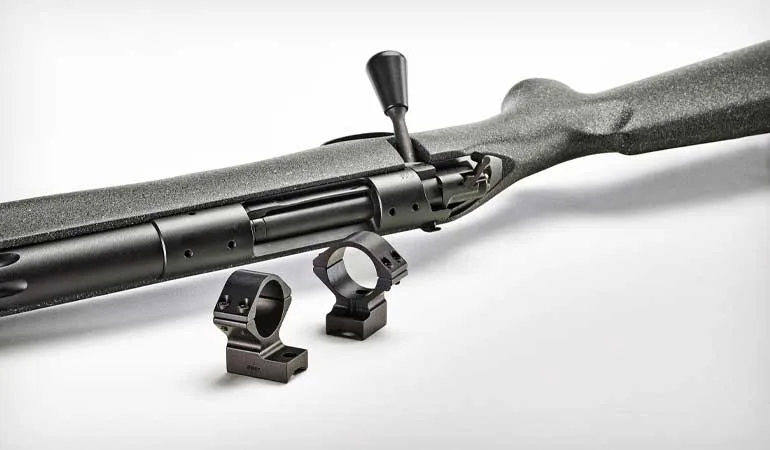
Image source: Web (Bing) / rifleshootermag.com (Web image (fair-use with source credit))
Quick Answer
A rifle scope is an optical device that magnifies distant targets. It projects a precise aiming reticle onto your line of sight. Magnification ranges from 1x to 35x on modern models.
The main tube measures 1 inch or 30 millimeters wide. Elevation and windage adjustments are made with external turrets.
What a Rifle Scope Is: Why Seeing It Beats Reading About It
A rifle scope, also called a telescopic sight, is a tube-shaped optical device that lines up exactly with the bullet's path. Think of it as a small telescope fixed permanently above the barrel. You look through it, you see a magnified target and an aiming reticle, and you place your shot.
The scope solves a specific problem. Iron sights force your eye, the rear sight, and the front sight to line up perfectly every single shot. A scope replaces that with a magnified target and a crosshair sitting in the same field of view.
Most hunting scopes sit in the 3-9x range, which means the target appears roughly nine times larger than with the naked eye at maximum power. Long-range precision builds run as high as 25-35x.
Quality varies enormously. Manufacturer specifications from companies like Vortex Optics and Leupold show that lens coating and glass type drive most of the price difference. Entry-level scopes start around $150 as of 2026, while premium precision optics run well past $2,000.
How a Rifle Scope Works: A Visual Walkthrough of Every Key Part
A rifle scope has six main parts, and each one changes what you see when you look through it. Understanding how they interact is more useful than memorizing spec sheets.
The Objective Lens, Ocular Lens, and Tube: What You See from Each End
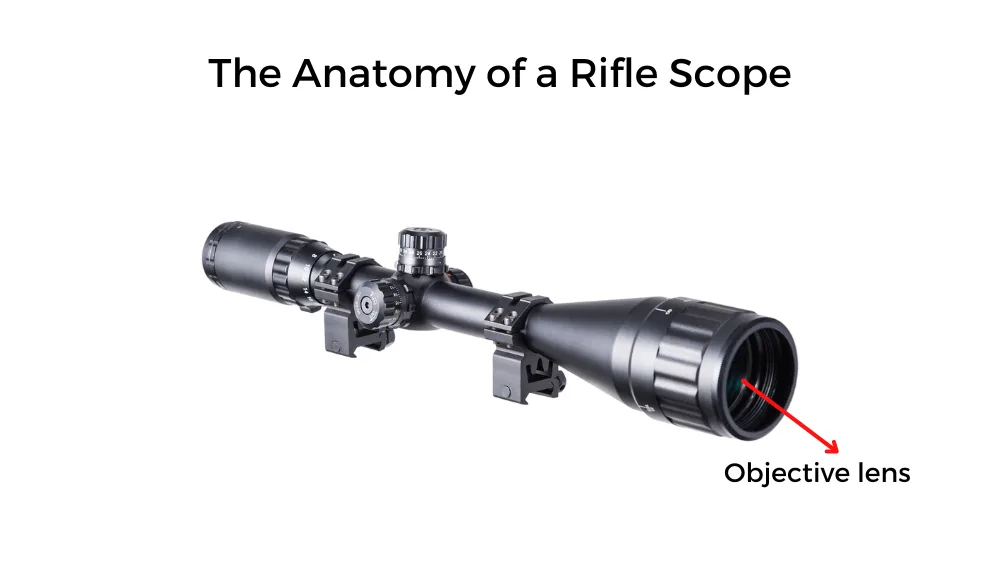
Image source: Web (Bing) / pintydevices.com (Web image (fair-use with source credit))
The objective lens is the big glass at the front. A larger lens gathers more light, so a 50mm objective outperforms a 24mm at dusk. The ocular lens is the small glass at the back, and it's where your eye actually sits.
The tube is the aluminum body connecting both ends and housing the internal adjustment mechanism.
Reticles: Crosshairs, MOA, MIL-Dot, and BDC: What Each Looks Like Downrange
The reticle is the aiming pattern projected onto your field of view. MOA reticles use minute-of-angle hash marks for holdover. MIL reticles use milliradian-based spacing.
BDC (Bullet Drop Compensating) reticles add preset drop marks matched to a specific ammunition load. The right reticle makes holdovers faster and shot placement more certain.
First Focal Plane vs. Second Focal Plane: Two Reticles, Two Very Different Experiences
First focal plane (FFP) and second focal plane (SFP) describe where the reticle sits inside the scope's internal light path. That single design difference changes how the reticle behaves at every magnification level.
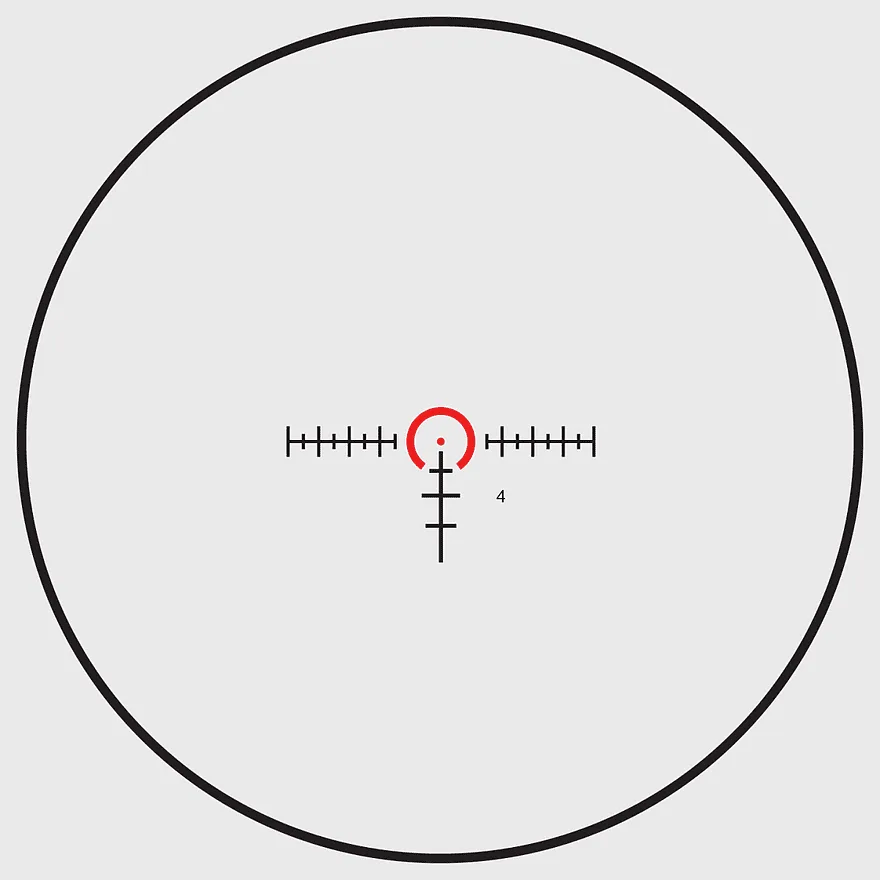
Image source: Web (Bing) / uidownload.com (Web image (fair-use with source credit))
What Actually Changes Visually
| Feature | First Focal Plane (FFP) | Second Focal Plane (SFP) |
|---|---|---|
| Reticle size | Scales with magnification | Stays constant |
| Holdover accuracy | Accurate at every magnification | Accurate only at one magnification |
| Best for | Long-range shooting | Hunting at a single magnification |
| Typical price range | Higher | Lower |
If you shoot at variable magnifications and need reliable holdovers at each power, FFP is the better choice. If you typically stay at a single setting and want a clean, easy-to-read crosshair, SFP is simpler.
MOA vs. MIL: How Scope Turret Adjustments Look and Feel in Practice
MOA and MIL are both angular measurement systems, but they're used very differently in practice. MOA stands for Minute of Angle. MIL stands for Milliradian.
Each click on a turret moves the reticle by a fixed fraction of one of these units.
Here's how the math works out at 100 yards:
| System | 1 unit at 100 yards | Typical turret click | Best for |
|---|---|---|---|
| MOA | ~1 inch | 0.25 MOA | Imperial-minded shooters |
| MIL | ~3.6 inches | 0.1 MIL | Tactical and precision shooters |
MOA is intuitive if you think in inches. One MOA is roughly one inch at 100 yards, so it scales linearly as range changes. MIL math is cleaner because you're working in base 10.
Most long-range shooters find it faster once the habit sets in.
Manufacturer specs confirm that both systems are offered on the same model lines as of 2026. Leupold publishes both MOA and MIL turret options across most of their hunting and precision platforms. Choose whichever matches your existing ammo data and the way you already do range math.
Pros and Cons: When a Rifle Scope Beats Iron Sights and When It Doesn't
A rifle scope delivers real advantages, but it also adds complexity. Here's an honest breakdown.
Pros
- Magnification makes positive target identification possible at long range
- Reticle aiming is more consistent than iron sights
- Quality glass delivers better low-light performance at dawn and dusk
- Adjustable turrets let you compensate for wind and bullet drop precisely
Cons
- Adds weight and bulk to the rifle, often several ounces per setup
- Magnification can overwhelm a beginner at close range
- Proper mounting and zeroing are non-negotiable
- Decent optical quality starts around $300 to $500
- Parallax error is real if the scope isn't adjusted for target distance
If you're hunting whitetail deer inside 150 yards in timber, iron sights or a simple red dot might serve you just as well. If you're taking shots at 400 yards and beyond, a quality scope is the only way to make those shots ethical and repeatable.
Who Actually Needs a Rifle Scope (and Who Might Not)
A rifle scope is a worthwhile investment if you shoot beyond 200 yards regularly. Hunters working open terrain, precision rifle competitors, and anyone making long shots benefit most from one.
If you hunt in dense timber inside 100 yards, a red dot or iron sights are faster to bring into action. A magnified scope can actually slow you down in that scenario.
Competition shooters in PRS and NRL events typically run 5-25x FFP scopes with MIL-based adjustments. Three-gun competitors often prefer a 1-6x LPVO for fast target transitions between close and mid-range stages.
Here's a quick breakdown by shooting style:
| Shooting Style | Suggested Magnification | Scope Type |
|---|---|---|
| Heavy woods hunting | 1-4x or red dot | LPVO / red dot |
| Mixed terrain hunting | 3-9x | Variable hunting scope |
| Open plains hunting | 6-25x | Long-range precision scope |
| Competition (PRS, NRL) | 5-25x FFP | Precision tactical scope |
Beginners should start with a 3-9x scope. It covers the widest range of real-world situations without being too much to handle.
Mistakes Beginners Make With Rifle Scopes
Buying too much magnification is the number one mistake. A 25x scope sounds impressive on paper, but most hunters rarely dial above 12x in the field. Excessive magnification narrows your field of view and makes finding a target harder, not easier.
The second big mistake is poor mounting. Over-torqued scope rings damage the internal tube. Under-torqued rings let the scope shift under recoil.
Follow the manufacturer's torque specs, usually 15 to 25 in-lbs for rings.
Zeroing at the wrong distance trips up a lot of new shooters. Zero your scope at the range you actually hunt. Don't just pick 100 yards because the range offers that lane.
Other common errors to watch for:
- Scope rings that don't match the tube diameter
- Mounting the scope too far forward or too far back for proper eye relief
- Ignoring parallax adjustment on precision rifles
- Assuming a higher price tag always means better glass
- Using capped turrets when you actually need finger-adjustable ones for field use
Rifle Scope FAQs
What magnification should a beginner start with?
Most beginners do well with a 3-9x scope. It covers close to moderate distances without being unwieldy. If you hunt in heavy timber, a 1-4x LPVO might serve you better.
Avoid going above 12x for your first scope.
How do I know what tube diameter I need?
Check the diameter of your scope rings first. Most consumer scopes use 1-inch or 30mm tubes. Your rings must match that diameter exactly, or the scope won't mount correctly.
What's the difference between first focal plane and second focal plane?
First focal plane reticles scale with magnification, so holdover values stay accurate at every power setting. Second focal plane reticles stay the same size and are only accurate at one specific magnification.
Do I need an illuminated reticle?
If you hunt at dawn or dusk, an illuminated reticle helps you see the crosshair against dark backgrounds. It's a valuable feature but not essential for most daytime shooters.
How much should I spend on a first scope?
Aggregate user reviews suggest $300 to $500 as the sweet spot for a reliable first scope. You get decent glass and real warranty coverage without overspending on features you won't use yet.
Can I mount a scope on any rifle?
You'll need the right rail and correctly sized rings. Most modern rifles come with a factory Picatinny or Weaver rail. Older rifles may need a scope base installed first before mounting anything.




