What is the best rifle scope for beginners? The short answer depends on your rifle, your shooting distance, and your budget. Most first-time buyers get overwhelmed by magnification specs, tube diameters, and reticle jargon.
The good news is that the decision is simpler than it looks.
Manufacturer specifications and aggregate buyer reviews point to one consistent sweet spot for new shooters: a 3-9×40 scope in the $150 to $400 range. The National Shooting Sports Foundation recommends that new shooters prioritize fundamentals over gear upgrades, and a properly chosen scope supports that goal. Here's what actually matters when you're picking your first optic and which models earn a look as of 2026.
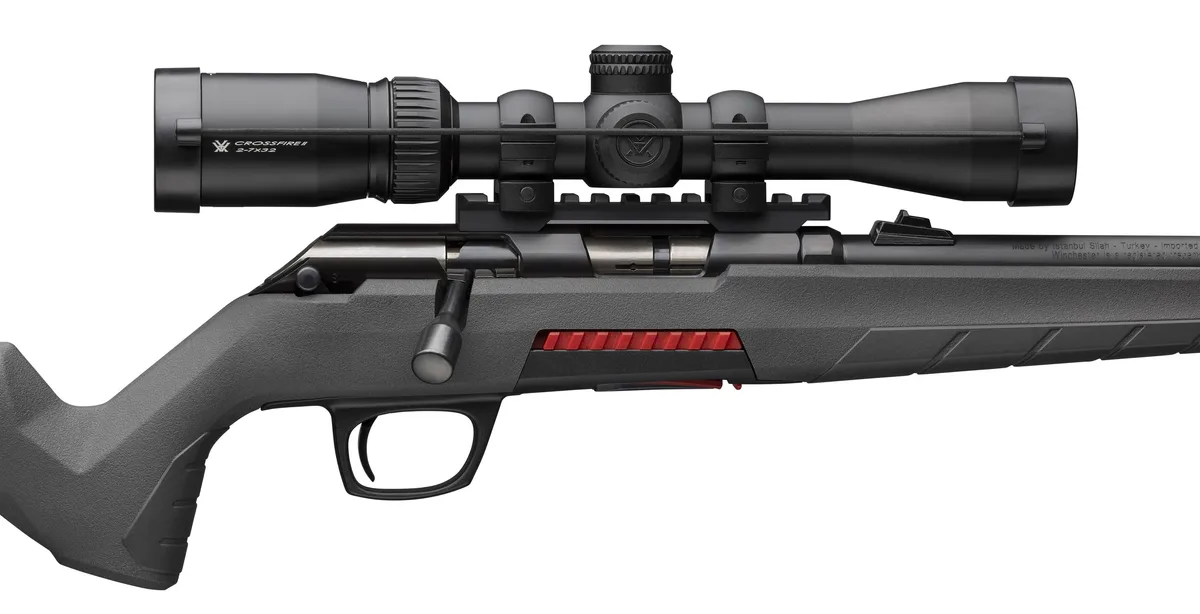
Image source: Bing (Web (fair-use with source credit))
Quick Answer: The Best Beginner Rifle Scope Right Now
The best rifle scope for beginners is the Vortex Crossfire II 3-9×40. It costs between $150 and $200 and includes a lifetime no-fault warranty. Its glass quality, eye relief, and simplicity make it ideal for first-time buyers.
For close-range hunting or tactical use, the Vortex Strike Eagle 1-6x LPVO is the stronger pick.
What Actually Matters When You're Buying Your First Rifle Scope
Magnification Range: The First Decision You Should Make
Magnification is where most beginners start, but it's not the most important factor. What matters more is the range you'll actually shoot at. If you hunt deer at 100 to 250 yards, a 3-9×40 covers you comfortably.
The 9x end gives you enough zoom to identify a target clearly at distance. The 3x end keeps your field of view wide enough for closer shots. A good rule of thumb: if you can't see your target clearly at your magnification setting, the glass quality is the limiting factor.
If you're mostly shooting on a range at 50 yards, drop to a 1-6x LPVO. You'll have faster target acquisition without fighting a magnification level that's too high for the distance.
Reticle Type and FFP vs. SFP: Why Simplicity Wins
A reticle is the aiming pattern you see through the scope. For beginners, Second Focal Plane (SFP) is the smarter choice. The reticle stays the same size regardless of magnification, which makes holdovers predictable at any zoom level.
First focal plane (FFP) scales the reticle with magnification, which is great for long-range shooters but harder to learn. As of 2026, most entry-level scopes under $400 come with SFP options for exactly this reason. Stay with SFP until you're confident you need FFP for long-range work.
For the reticle itself, stick with a duplex or BDC (bullet drop compensator) pattern. A BDC reticle marks the drop points for your specific caliber, so you can hold lower without dialing turrets. If your scope ships with a BDC marked for .308 or .223 but you shoot 6.5 Creedmoor, you'll need to re-zero or adjust your holds.
Check reticle compatibility with your caliber before buying.
Glass Quality, Eye Relief, and the Warranty Angle
Cheap glass dims your view in low light, and that's where most budget scopes fall apart. You'll see a noticeable difference between a $120 scope and a $250 one in cloudy, dawn conditions. Fully multi-coated lenses are the baseline you want.
Eye relief matters more than beginners expect. The spec typically lands between 3.3 and 4.0 inches on hunting scopes. Too short and the scope kicks your brow on recoil.
Too long and you can't get a full sight picture. Most magnifications in the 3-9x range give you comfortable relief, but test the fit if possible.
The warranty angle shouldn't be overlooked either. Vortex, Leupold, Athlon, and Burris all offer no-fault lifetime warranties as of 2026. That covers user error like drops, scratches, and even intentional damage on some brands.
A solid warranty is free insurance on your investment.
Top Beginner Rifle Scopes Compared Side by Side
Vortex Crossfire II, Bushnell Engage, Athlon Argos, Primary Arms SLx, and Leupold VX-Freedom
These five scopes dominate the beginner conversation, and for good reason. Each one holds zero, handles recoil well, and backs itself with a strong warranty. The differences come down to glass quality, reticle options, and price.
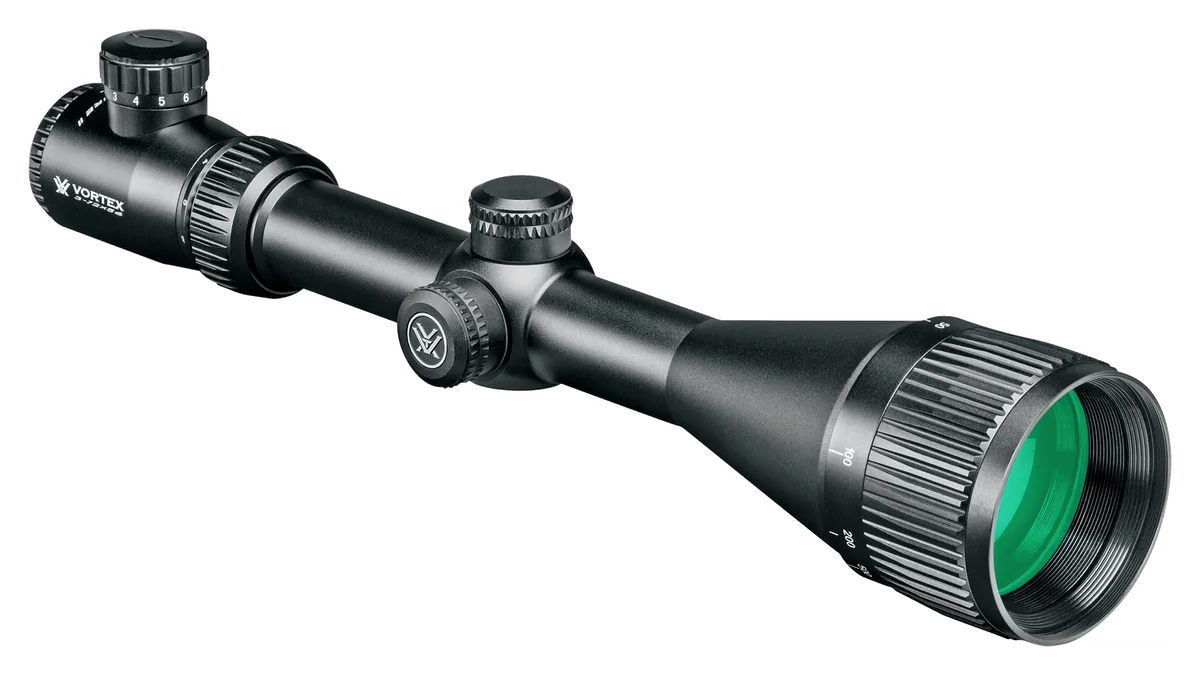
The Vortex Crossfire II 3-9×40 is the most popular beginner scope on the market. Verified buyer feedback consistently praises its clarity and ruggedness. It's the scope most new shooters end up with, and it earns that reputation.
Bushnell Engage and Athlon Argos offer comparable performance at similar price points. Primary Arms SLx stands out if you want a BDC reticle marked for popular calibers. Leupold VX-Freedom adds American-made quality but costs more.
Full Specs Comparison Table
| Scope | Magnification | Tube | Weight | FFP/SFP | Approx. Price |
|---|---|---|---|---|---|
| Vortex Crossfire II | 3-9x | 1 inch | 17.6 oz | SFP | $150-$200 |
| Bushnell Engage | 3-9x | 1 inch | 17.5 oz | SFP | $170-$220 |
| Athlon Argos BTR | 3-16x | 30mm | 24.6 oz | FFP | $200-$280 |
| Primary Arms SLx | 1-6x | 30mm | 17.9 oz | SFP | $250-$320 |
| Leupold VX-Freedom | 3-9x | 1 inch | 12.1 oz | SFP | $250-$350 |
Price ranges reflect typical retail pricing as of 2026. Actual prices vary by retailer and package deals.
Best Rifle Scope for Your Specific Shooting Situation
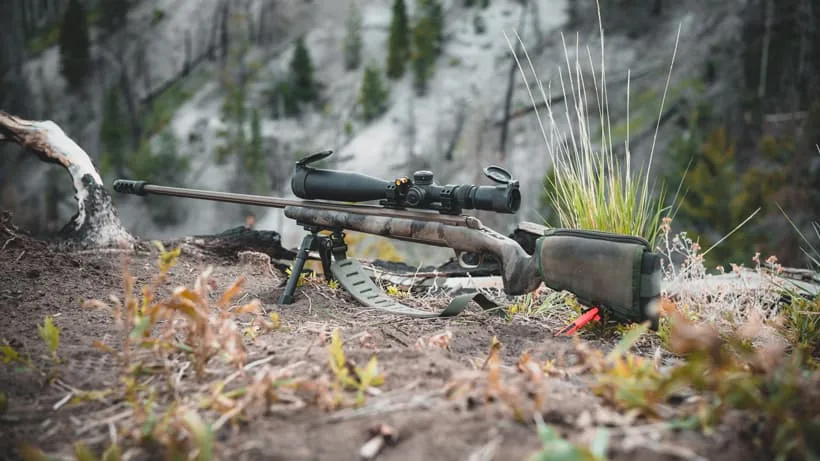
Deer Hunting, Hog Hunting, Range Shooting, and the LPVO Question
If you hunt deer, the 3-9×40 is the go-to. Manufacturer specifications confirm it handles shots out to 300 yards comfortably. The lighter weight of 12 to 17 ounces keeps your rifle balanced for all-day carry.
Pair it with a BDC reticle calibrated for your caliber and you're set.
Hog hunting favors a 1-6x LPVO. Hogs move fast, often at close range, in thick brush and low light. You want fast acquisition at 1x and enough zoom to confirm the target at 50 to 100 yards.
The Vortex Strike Eagle 1-6x is the most common recommendation here.
Pure range shooting depends on distance. If you're zeroing at 50 to 100 yards, any 3-9x scope works. For precision work at 200 plus yards, step up to a 4-12x or 4-16x.
The Athlon Argos BTR 3-16x offers FFP benefits without breaking the budget.
The LPVO question splits shooters. If you own one rifle and use it for everything, the 1-6x LPVO adapts best. If you already own a hunting rifle, a dedicated 3-9x hunting scope is lighter and simpler.
Mistakes Beginners Make When Choosing a Scope
- Buying too much magnification. A 10x scope looks impressive on paper, but at 3x to 6x most people can't tell the difference in glass quality anyway.
- Ignoring tube diameter compatibility. A 30mm tube requires 30mm rings. Most entry rifles ship with 1-inch mounting systems.
- Choosing an FFP scope they don't need. FFP costs more and is harder to learn. Start with SFP.
- Skipping the caliber check on BDC reticles. A reticle marked for .308 won't hold correctly if you shoot .270 Win.
- Buying scope rings separately without matching them to the rifle. Ruger 10/22, AR-15, and Remington 700 each need specific base and ring heights.
- Overlooking eye relief specs. Scopes with 3.3-inch relief feel short on magnum rifles.
- Choosing a scope heavier than the rifle deserves. A 30 oz scope on a 6 lb hunting rifle throws off the balance badly.
The fix is simple. Decide your shooting distance first. Pick a magnification range that matches.
Match tube diameter to your rifle's mounting system. Then compare scopes within that range.
FAQs on Choosing Your First Rifle Scope
What is the best rifle scope for beginners?
The Vortex Crossfire II 3-9×40 is the most widely recommended beginner scope. It costs $150 to $200 and includes a lifetime no-fault warranty. Its glass, eye relief, and simplicity make it ideal for first-time buyers.
What magnification do I need for deer hunting?
A 3-9×40 scope handles deer hunting out to 300 yards comfortably. The 9x end gives you clear target identification at distance. The 3x end keeps your field of view wide enough for shots in thick brush or timber.
Is a first focal plane scope better for beginners?
No. Second focal plane is the right starting point for most new shooters. FFP reticles scale with magnification, which complicates holdovers until you learn the system.
SFP keeps things predictable at every zoom level.
How much should a beginner spend on a rifle scope?
Budget $150 to $400 covers you well. That range includes the Vortex Crossfire II, Bushnell Engage, and Athlon Argos models. Spending more than $400 on a first scope adds features most beginners won't use yet.
What tube diameter do I need for my rifle?
Most beginner hunting scopes use 1-inch tubes. Tactical and LPVO models typically use 30mm. Match your scope tube to your mounting rings before buying, because mismatched rings are the most common mounting mistake beginners make.
Can I mount a scope myself?
Yes. You need a torque wrench, a scope level, and a bore sighter. Ring screw torque should sit between 15 and 25 in-lbs per manufacturer specs.
The full mounting and zeroing process takes about an hour if it's your first time.
Final Recommendation: Best Beginner Scope by Use Case
The Vortex Crossfire II 3-9×40 remains the strongest all-around pick for new shooters. Its glass clarity, reliable zero retention, and lifetime no-fault warranty make it hard to beat under $200. If you only own one rifle and want one scope that covers hunting and range work, start here.
If you hunt hogs or want tactical flexibility, step up to a 1-6x LPVO. The Vortex Strike Eagle and Primary Arms SLx both perform well in close-range work where a 3-9x feels slow. They cost more but handle fast-moving targets and brush-dense environments with ease.
For pure long-range precision on a budget, the Athlon Argos BTR 3-16x FFP gives you the zoom range without the premium price tag. Choose it only if you know you'll regularly shoot past 300 yards, because FFP adds complexity most beginners don't need yet.
Whichever option you pick, match the scope to your rifle's mounting system first. Confirm tube diameter, ring height, and base compatibility before you buy. The right scope on the wrong rings is a costly mistake beginners repeat more often than they should.




