What is the best rifle scope for long range? The honest answer is that it depends on your caliber, your shooting distance, your discipline, and your budget. There is no single winner for every shooter.
Anyone claiming otherwise is selling something. The good news is that the long-range optics market as of 2026 offers strong options at every price point.
Our research across manufacturer specifications, competition gear lists, and aggregate buyer reviews shows that certain scopes consistently outperform their price class. The key is matching the right optic to your actual shooting needs, not chasing the most expensive option on the shelf.
Quick Answer
The best rifle scope for long range depends on your shooting discipline and budget. For most shooters, a 5-25x First Focal Plane scope with MIL turrets is ideal. Popular choices range from the Vortex PST Gen II around $800 to the Nightforce ATACR around $2,800.
Budget shooters can get solid long-range performance under $500 with options like the Arken SH4.

Image source: Web (Bing) / rifleshootermag.com (Web image (fair-use with source credit))
Why "Best Long-Range Scope" Depends on Your Setup, Not a Single Answer
The word "best" means something different for every shooter. A PRS competitor dialing targets at 1,000 yards has very different needs than a deer hunter glassing timber at 400. One needs ruthless turret precision.
The other needs glass clarity and a reticle that works at moderate magnification.
Your caliber drives the decision more than most people expect. A 6.5 Creedmoor running a 140-grain bullet at 2,700 feet per second still drops roughly 40 inches at 600 yards. That's manageable with any quality FFP scope.
A .308 Win shooting heavier, slower loads has a steeper trajectory and often benefits from a larger objective lens for light gathering.
The platform matters too. A bolt-action rifle like a Ruger Precision Rifle or Bergara B-14 HMR gives you a flat Picatinny rail for cantilever mounts. An AR-10 platform may need different ring heights to clear the rail and maintain proper eye relief.
Before you spend a dollar on glass, answer three questions:
- What distance do you actually shoot most often?
- Is your primary use competition, hunting, or recreational target shooting?
- What is your realistic budget ceiling?
Those three answers narrow the field fast. They also prevent the most common mistake shooters make: buying a $3,000 scope for a rifle that never leaves 500 yards.
How Magnification, FFP/SFP, and MIL vs MOA Shape the Decision

Image source: Web (Bing) / snapklik.com (Web image (fair-use with source credit))
Three technical choices do more to shape your long-range experience than brand names ever will.
First Focal Plane vs Second Focal Plane
First Focal Plane (FFP) scopes scale the reticle with magnification. The MIL or MOA markings in your reticle stay accurate at every setting. You can dial 2.5 MILs of elevation at 12x or 25x and get the same correction.
That matters when conditions change mid-string and you're switching magnification on the fly.
Second Focal Plane (SFP) scopes keep the reticle a fixed size. The markings are only accurate at one specific magnification level, usually maximum power. For long-range work, this is a limitation most shooters don't want to manage.
If you're shooting past 400 yards and using reticle holdovers at all, FFP is the clear choice. SFP still has a role in close-range hunting scopes where you'll spend most of your time at max power.
MIL vs MOA: Which Turret System Should You Pick?
MIL turrets use 0.1 MIL clicks. One MIL equals roughly 1.047 inches at 100 yards. MOA turrets use 0.25 MOA clicks.
One MOA equals roughly the same distance at 100 yards. The math is similar. The difference comes down to habit and training.
MIL-based systems dominate PRS, NRL, and most tactical training circles. If you're running a ballistic calculator like a Kestrel 5700 or Applied Ballistics, MIL is the native output. If your background is in MOA or traditional hunting optics, there's nothing wrong with staying there.
The important thing is consistency. Switching systems mid-season without retraining your DOPE data is a recipe for wasted ammo and frustration.
Objective Size, Tube Diameter, and Eye Relief
| Spec | What It Affects | Typical Long-Range Choice |
|---|---|---|
| Objective lens (50mm vs 56mm) | Light gathering, low-light clarity | 56mm for hunting, 50mm for competition |
| Tube diameter (30mm vs 34mm) | Elevation travel, turret robustness | 34mm preferred for 800+ yard shooting |
| Eye relief (3.5 to 4.5 inches) | Comfort, recoil safety | Longer relief with magnum calibers |
A 34mm tube typically provides more elevation travel, often 30 MILs or more. That's critical when you're dialing corrections for extreme distances. A 30mm tube works fine at 600 yards but can run out of elevation sooner with flatter-shooting or heavier-recoiling cartridges.
Top Long-Range Scopes Ranked by Budget Tier
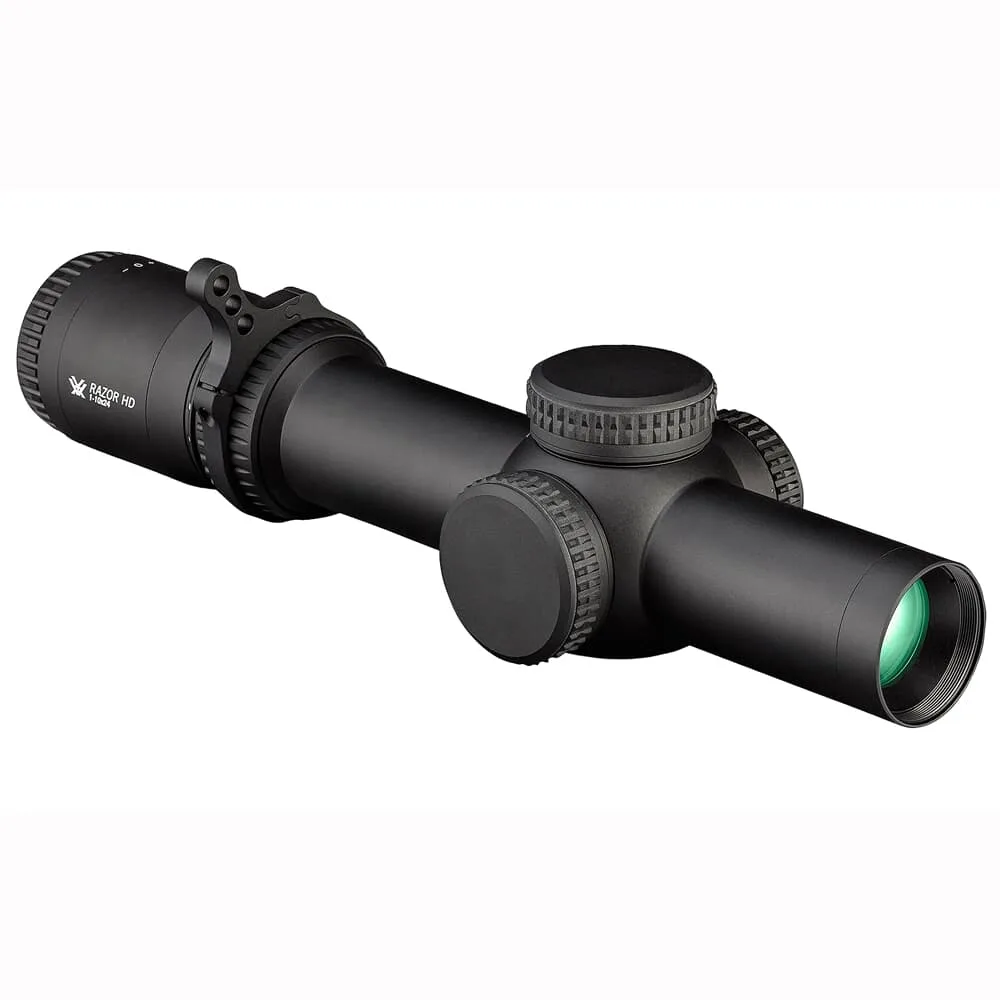
Image source: Web (Bing) / eurooptic.com (Web image (fair-use with source credit))
As of 2026, the long-range scope market breaks down cleanly into three tiers. Here's what each one realistically delivers.
Budget Tier: Under $600
This tier gets you into FFP territory without breaking the bank. The Arken SH4 6-24×50 FFP and Primary Arms PLx 4-16×44 FFP are the standouts. Both offer decent glass, functional MIL turrets, and reliable tracking for the money.
The Vortex Diamondback Tactical 6-25×50 FFP also lives in this range and benefits from Vortex Optics' VIP Lifetime Warranty, one of the best in the industry. Their official product lineup is worth reviewing if you want a budget option with strong warranty backing.
Where this tier falls short: glass clarity at 15x and above is noticeably softer than mid-range options. Turret tracking, while usable, won't match a $1,500 scope. Illuminated reticles are dimmer in bright conditions.
Mid-Range: $600 to $1,500
This is where most serious long-range shooters land. The Vortex PST Gen II 5-25×50 FFP is one of the most recommended scopes in this price range. Aggregate reviews consistently report excellent turret tracking, good glass, and a user-friendly magnification throw lever.
The Athlon Ares ETR 4.5-30×56 FFP and Burris XTR II 5.5-25×50 FFP are strong alternatives with excellent elevation travel and solid optics for the price.
Where this tier falls short: you're not getting Schmidt & Bender or Nightforce glass. But the gap narrows significantly compared to budget options.
Premium: $1,500 and Up
This is the tier for shooters who need absolute reliability and precision. The Vortex Razor HD Gen III 6-36×56 FFP, Nightforce Optics ATACR F1, and Leupold Mark 5HD 7-35×56 FFP represent the upper end.
These scopes deliver exceptional turret tracking, often sub-0.1 MIL drift across the full elevation range. Glass clarity is crystal clear. Build quality survives hard use.
The Nightforce ATACR is a common sight on PRS competitor rifles and law enforcement precision platforms.
Where this tier falls short: the price. If your rifle and discipline don't demand this level of performance, the money might be better spent on ammunition, a quality rifle, or a ballistics training course.
Quick Tier Comparison
| Feature | Budget (Under $600) | Mid-Range ($600-$1,500) | Premium ($1,500+) |
|---|---|---|---|
| Glass clarity | Adequate at 600 yds | Excellent at 800+ yds | Exceptional at 1,200+ yds |
| Turret tracking | Functional | Reliable | Sub-0.1 MIL precision |
| Reticle options | Basic MIL | MIL and MOA, varied patterns | MIL, MOA, advanced trees |
| Warranty | Good to great | Great | Lifetime VIP or similar |
| Weight | 25-30 oz | 28-35 oz | 30-40 oz |
Side-by-Side Comparison: Specs, Tracking, and Glass Quality
When you put the top contenders side by side, clear patterns emerge. Here's how the most recommended long-range scopes stack up on the specs that matter most.
| Scope | Magnification | Tube | Objective | Elevation Travel | FFP/SFP | Approx. Price |
|---|---|---|---|---|---|---|
| Arken SH4 6-24×50 | 6-24x | 30mm | 50mm | 20+ MIL | FFP | $350-$450 |
| Primary Arms PLx 4-16×44 | 4-16x | 30mm | 44mm | 20+ MIL | FFP | $400-$550 |
| Vortex PST Gen II 5-25×50 | 5-25x | 30mm | 50mm | 21 MIL | FFP | $800-$900 |
| Athlon Ares ETR 4.5-30×56 | 4.5-30x | 34mm | 56mm | 30+ MIL | FFP | $900-$1,100 |
| Leupold Mark 5HD 7-35×56 | 7-35x | 35mm | 56mm | 30+ MIL | FFP | $1,800-$2,200 |
| Nightforce ATACR F1 7-35×56 | 7-35x | 34mm | 56mm | 30+ MIL | FFP | $2,600-$2,900 |
| Vortex Razor HD Gen III 6-36×56 | 6-36x | 34mm | 56mm | 30+ MIL | FFP | $2,800-$3,200 |
Turret tracking is where these scopes really separate. Nightforce and Vortex's premium line consistently measure sub-0.1 MIL drift across the full 30 MIL elevation range in third-party tracking tests. Mid-range scopes like the PST Gen II show excellent tracking within 0.2 MIL of accuracy.
Budget scopes like the Arken SH4 are usable but can show slightly wider deviation at the extremes.
Glass quality tells a similar story. At 15x magnification, the difference between budget and mid-range is obvious. At 25x and above, the premium tier pulls further ahead.
If you regularly shoot past 800 yards and need to spot your own impacts, that glass upgrade pays for itself in confidence.
Best Long-Range Scope for Each Use Case
PRS and NRL Competition
Competitors in Precision Rifle Series and National Rifle League events typically run 5-25x or 6-36x FFP scopes on 34mm tubes. The Leupold Mark 5HD and Nightforce ATACR dominate this space. Both offer the elevation travel, turret precision, and glass quality that competition demands.
If your budget is tight, the Athlon Ares ETR delivers 30+ MIL of elevation travel in a 34mm tube at roughly half the price of a Nightforce. Aggregate competition results show it holds its own at local matches.
Long-Range Hunting
Hunters shooting past 400 yards need good glass, moderate magnification, and a reticle that works at mid-range. The Vortex PST Gen II or Leupold VX-6HD are strong choices. Weight becomes a real factor here.
A 35 oz scope on a hunting rifle gets heavy fast when you're hiking into elevation.
Magnification between 5x and 20x is the sweet spot for most long-range hunting scenarios. You don't need 35x for a mule deer at 500 yards. You do need glass clear enough to read wind indicators and judge distance.
Budget Shooters Under $1,000
If your total optic budget is under $1,000, you still have solid options. The Vortex PST Gen II sits at the top of this budget with proven performance. The Athlon Ares ETR is a close second with a 34mm tube and more elevation travel.
Spending $400 to $600 on the Arken SH4 or Primary Arms PLx leaves money for a good rifle and quality ammunition. That combination often outperforms an expensive scope on a cheap rifle.
Rimfire Long-Range and Specialized Platforms
22 LR long-range shooting at 200+ yards has grown significantly. Athlon Midas TAC and Vortex PST Gen II are popular here. The ballistic challenges are different.
Rimfire bullet drop is steeper and more wind-sensitive, so elevation travel and precise turret clicks matter a lot.
For AR-10 and similar semi-auto platforms, scope weight and eye relief take on extra importance. The recoil impulse is different from a bolt gun. Longer eye relief prevents scope bite, and a lighter optic keeps the platform more maneuverable.
Common Mistakes When Choosing a Long-Range Scope
These mistakes come up repeatedly in forum threads, match debriefs, and buyer feedback. Avoiding them saves you money and frustration.
Overpaying for magnification you won't use. If you shoot at 300 to 600 yards, a 6-36x scope is overkill. You'll rarely dial past 15x in field conditions because mirage becomes a problem at high power. A 5-25x covers almost everything you need.
Ignoring turret tracking reliability. A scope with sloppy tracking will frustrate you at every distance beyond 200 yards. Before you commit, research third-party tracking tests for any scope on your shortlist. Consistent clicks across the full elevation range are non-negotiable for long-range work.
Buying SFP when you need FFP. This is the most common technical mistake. If your shooting involves dialing elevation at variable magnification or using reticle holdovers at anything other than max power, SFP optics will mislead you.
Mismatching tube diameter with mounts and bases. A 34mm scope won't fit 30mm rings. Make sure your mounting hardware matches the tube diameter. Also confirm ring height clears your rifle's rail and action properly.
Cheap glass at 600+ yards. Budget scopes struggle to resolve impacts at extreme distances. If you can't spot your own hits, you can't correct your misses. That's a fundamental limitation of lower-tier glass, not a skill problem.
Assuming more magnification equals more accuracy. At extreme range, your limiting factors are wind reading, ballistic data quality, and ammunition consistency. Magnification just helps you see where the bullet went. It doesn't fix a bad wind call.
Expert Tips for Dialing In a Long-Range Scope Properly
Zero at 100 yards and build a DOPE card. Set your scope's elevation to zero at 100 yards confirmed on paper. Then gather Data On Previous Engagements (DOPE) at known distances. Record what your dial reads at 200, 300, 400, 500, and beyond.
A printed DOPE card or phone app keeps you honest in the field.
Use a ballistic calculator. A Kestrel 5700, Applied Ballistics engine, or Strelok Pro app will give you elevation and wind corrections for any range. Input your rifle's velocity, bullet BC, zero distance, and environmental data. The calculator does the math so you can focus on the shot.
Torque your rings and bases correctly. Ring screws typically call for 25 to 30 inch-pounds of torque. Base screws usually need 65 to 80 inch-pounds. Overtightening cracks the tube.
Undertightening shifts your zero. Use a torque wrench. The US Army marksmanship manual FM 3-22.9 covers standard rifle setup practices that apply here.
Run a turret tracking test before you trust it in the field. Set your scope at a confirmed distance. Dial 1 MIL of elevation, fire a shot group, then dial back to zero and fire another group. The point of impact shift should match the turret reading.
Repeat at 2, 5, 10, and 20 MILs. If your scope drifts outside of 0.2 MIL at any point, send it back for warranty service.
Adjust parallax before every shooting session. Side parallax adjustment (also called side focus) ensures the reticle stays on target regardless of your eye position behind the scope. Ignoring parallax is one of the most overlooked causes of consistent misses at long range.
Recheck your zero seasonally. Temperature swings, altitude changes, and even different ammunition lots can shift your point of impact. A quick zero confirmation at 100 yards before each hunting season or match block saves you from a bad surprise on the first shot of the day.
Frequently Asked Questions
How much magnification do I actually need for 1,000 yards?
You need enough magnification to identify your target and see your impacts clearly, not the maximum possible. For most shooters, 15x to 20x at 1,000 yards is sufficient. A 5-25x or 6-36x FFP scope covers this range well.
High magnification introduces mirage distortion, which hurts your ability to read wind and impacts.
Is a $500 scope good enough for long-range shooting?
Yes, for distances up to about 600 yards with practice. Scopes like the Arken SH4 and Primary Arms PLx deliver usable FFP reticles and reliable turrets at that price. Past 600 yards, glass quality limitations become noticeable.
The trade-off is buying more ammunition practice instead of premium glass.
What's the difference between MIL and MOA for beginners?
MIL uses 0.1 MIL clicks. MOA uses 0.25 MOA clicks. One MIL equals roughly one inch per 100 yards.
One MOA equals roughly one inch per 100 yards too. The math is nearly identical. Most modern competition and tactical training uses MIL.
Stick with whichever system your current gear and training use.
Do I need an illuminated reticle for long-range use?
Not strictly, but it helps in low-light conditions and with complex reticle trees. If you hunt at dawn or dusk, illumination is worth having. For bright-day competition shooting on a bench, it's less critical.
Look for scopes with at least six brightness settings that still retain some visibility in daylight.
What's the best scope mount for a long-range rifle?
A cantilever mount or Picatinny rail with quality rings is standard for long-range work. Brands like Badger Ordnance, Reptilia, and Spuhr make robust options. Match your ring height to your rifle and rail geometry.
The mount is the mechanical link between your optic and rifle. If it fails, nothing else matters.




