Image source: Bing (Web (fair-use with source credit))
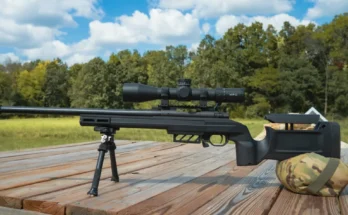
What is the best rifle scope for medium range? The honest answer depends on your shooting distance, your rifle platform, and your budget. A deer hunter taking 300-yard shots in open country needs very different glass than a PRS competitor running 500-yard stages.
The good news is the optics market has strong options for every one of those setups.
Most manufacturers define medium range as 200 to 500 yards. That puts three scope categories in direct competition: LPVOs at 1-6x, mid-range variables at 2-10x, and DMR optics at 3-18x and above. As of 2026, the mid-tier price band has gotten genuinely competitive.
Here's how to find the right one.
Quick Answer
The best rifle scope for medium range depends on your use case. For hunting, the Vortex Viper PST Gen II 2-10×42 offers the best balance. For tactical or competition shooting, the Nightforce ATACR 4-16×42 F1 delivers superior glass.
For budget buyers, the Primary Arms SLx 1-6×24 ACSS handles most medium-range needs.
Why "Best" Depends on How You Shoot at Medium Range
"Best" is a loaded word when it comes to rifle scopes. What works for a whitetail hunter in Ohio is completely wrong for a PRS shooter in Texas. The optics market is full of great products, but each one is optimized for a specific job.
Three things determine what "best" looks like for you:
- Shooting distance. A hunter comfortable at 250 yards needs different magnification than a shooter engaging targets at 500.
- Rifle platform. An AR-15 flat-top rail favors different optics than a bolt-action rifle with a 30 MOA canted base.
- Use case. Tactical shooters want fast target acquisition. Competitors want turret tracking precision. Hunters want glass quality in low light.
Here's the thing. A $350 scope can be the best option for someone's situation. A $2,000 Nightforce ATACR might be the worst choice for a deer hunter who never shoots past 300 yards.
Your zero distance and ammo matter too. A scope set up for a 500-yard zero in .223 Rem behaves differently than a 300-yard zero in .308 Win. Same optic, completely different holdovers.
Start with your use case. Then pick the scope that matches it.
What Actually Counts as Medium Range (and Why the Definition Matters)
Medium range typically means 200 to 500 yards. Some shooters stretch it to 600. Others cap it at 300.
The definition shifts depending on who you ask and what you're shooting.
Here's a practical breakdown:
| Range Band | Distance | Typical Use |
|---|---|---|
| Close range | 0 to 100 yards | Iron sights, red dots, zero confirmation |
| Medium range | 200 to 500 yards | LPVOs, mid-range variables, most hunting |
| Extended medium | 500 to 700 yards | DMR scopes, precision rifle competition |
| Long range | 700+ yards | F-Class, ELR, high-magnification setups |
Why does this matter? Because buying a 1-6x LPVO for 500-yard shots is like bringing a butter knife to a steak dinner. At 500 yards on a 10-inch target, reticle subtensions on a 1-6x get tiny.
You're straining to see detail that a 3-18x or 4-16x handles effortlessly.
On the flip side, slapping a 5-25x DMR scope on a rifle for deer hunting at 250 yards is overkill. You lose field of view. You gain nothing.
Ballistics matter too. Even at the same distance, a .223 Rem has a much flatter trajectory than a .300 Win Mag. A flat curve means fewer holdover adjustments needed.
You can get away with a simpler reticle setup.
So before you spend a dollar, pin down three things: your real-world distance, your rifle caliber, and whether you're dialing turrets or using reticle holdovers.
The Four Scope Types Competing for Medium Range and Which One You Probably Need
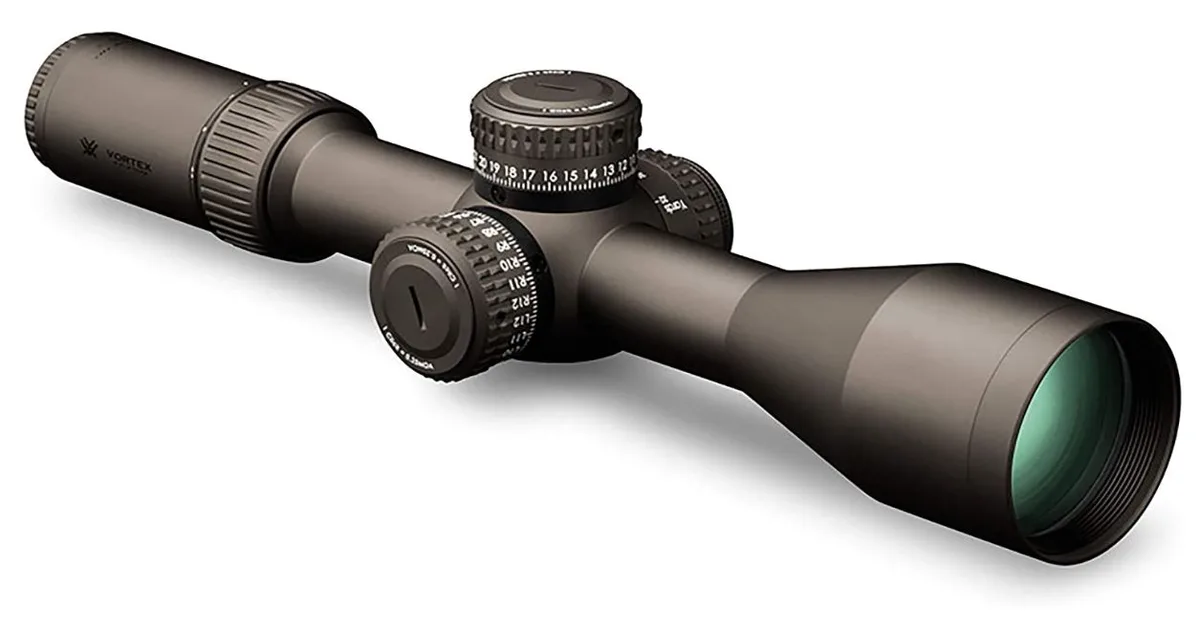
Image source: Web (Bing) / nightvisionequip.com (Web image (fair-use with source credit))
There are four distinct scope categories fighting for the medium-range buyer. Each one has a clear winner. Here's how to spot which is yours.
LPVO (1-6x, 1-8x)
Low Power Variable Optics are the go-to for AR-platform shooters. At 1x, they behave like a red dot. At 6x, they handle targets out to 300 to 400 yards comfortably.
Most serious LPVOs use 34mm tubes and FFP reticles.
Best for: AR-15 owners, 3-Gun competitors, tactical shooters who need versatility across multiple ranges.
Mid-Range Variable (2-10x, 3-9x, 3-12x)
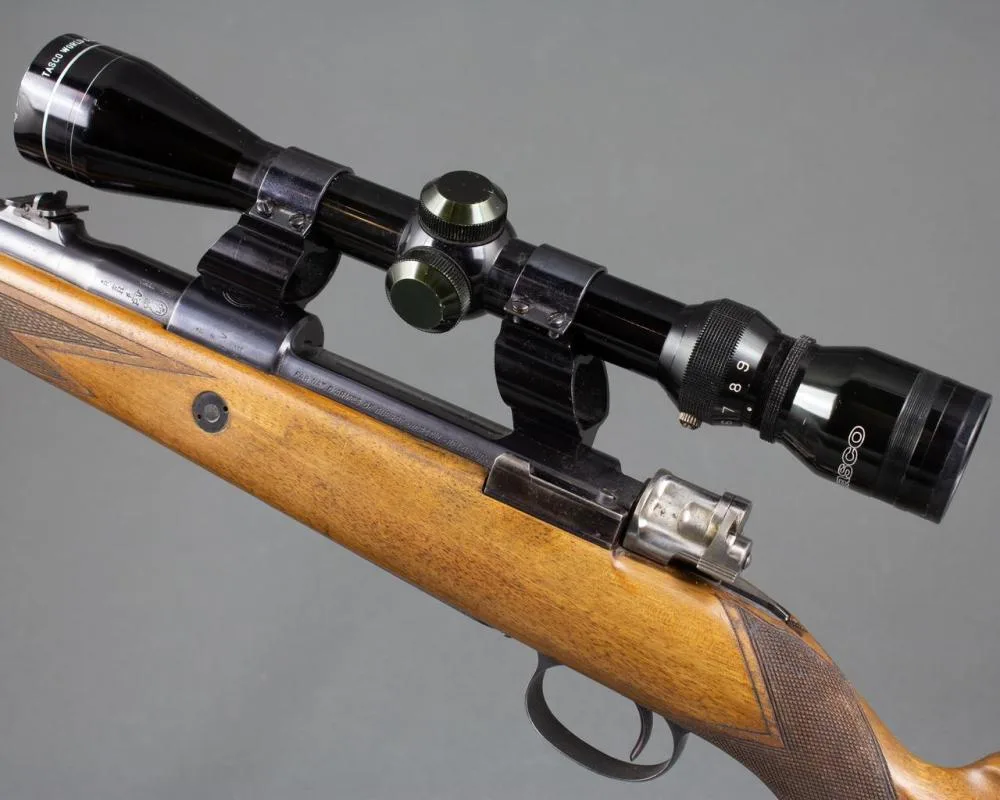
This is the traditional hunting workhorse. It covers 200 to 450 yards with ease. Most come in 30mm tubes with capped hunting turrets.
The Vortex Viper PST Gen II 2-10×42 and Leupold VX-6HD 2-12×42 sit right in this lane.
Best for: Deer, hog, and predator hunters on bolt-action or semi-auto platforms.
DMR / Precision Optic (3-18x, 4-16x, 5-25x)
Higher magnification, exposed tactical turrets, FFP reticles. Built for shooters who dial elevation for distance and need precise windage holdovers. The Nightforce ATACR 4-16×42 F1 and Leupold Mark 5HD 3.6-18×50 define this category.
Best for: PRS competitors, long-range hunters, precision rifle shooters running 300 to 800 yards.
Prismatic Optic (6x, 8x fixed)
Fixed-power prisms like the Trijicon ACOG are lighter than any variable scope. They're rugged and fast but don't offer magnification adjustment.
Best for: Shooters who value simplicity and don't want to dial turrets.
Each category has a natural ceiling. Push an LPVO past 400 yards and you're guessing. Push a prismatic past its magnification and you've got nowhere to go.
Match the scope to your realistic shooting distance and the rest falls into place.
Best Mid-Tier Rifle Scopes Under $600 for Medium Range
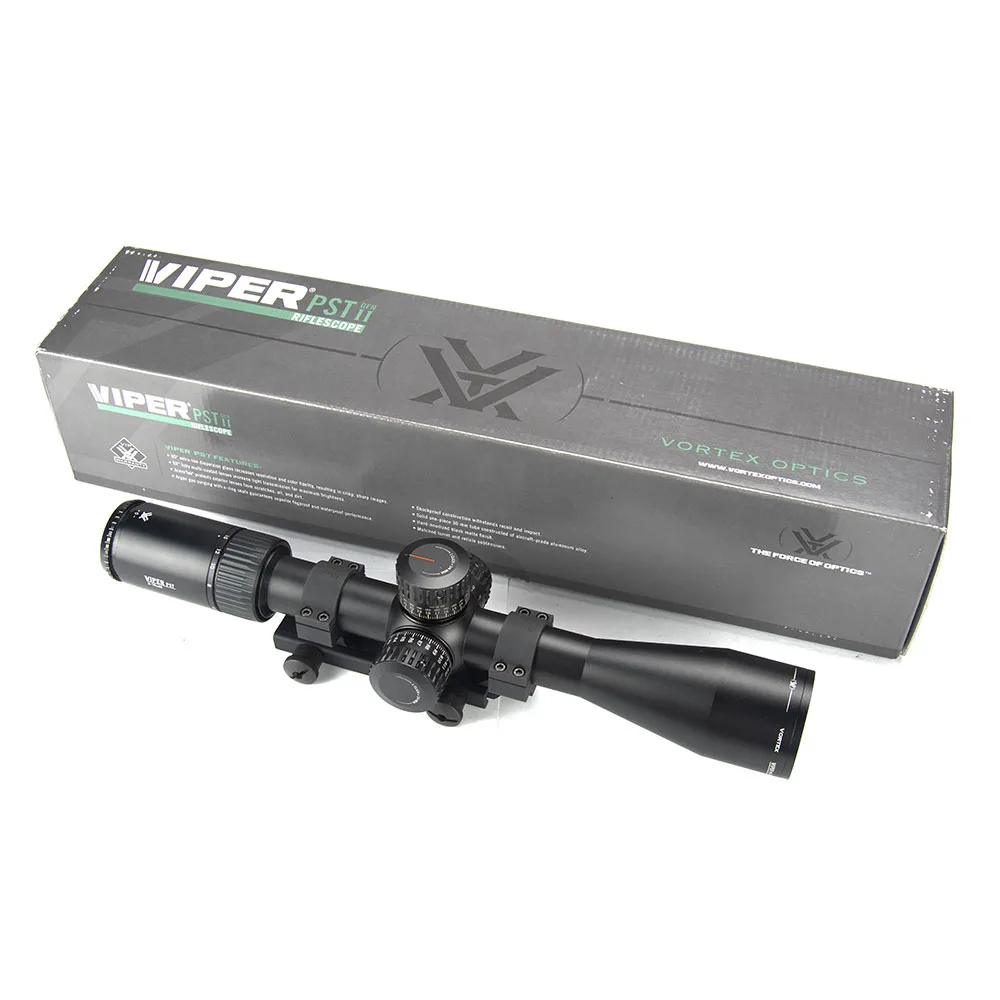
Image source: Web (Bing) / edbrown.com (Web image (fair-use with source credit))
The $300 to $600 band is where most shooters should be looking. The optics in this price range handle real-world medium-range work without asking you to finance a down payment on a car. Per manufacturer specifications and aggregate user reports, here are the standouts.
| Scope | Magnification | Tube | Key Feature | Approx. Price |
|---|---|---|---|---|
| Vortex Viper PST Gen II 2-10×42 | 2-10x | 30mm | ED glass, reliable turrets | $450 to $550 |
| Leupold VX-Freedom 3-9×40 | 3-9x | 1-inch | Lightweight, American-made | $300 to $350 |
| Primary Arms SLx 1-6×24 ACSS | 1-6x | 30mm | ACSS reticle, excellent value | $250 to $350 |
| Bushnell Engage 2-10×42 | 2-10x | 30mm | Deploy 2 BDC reticle | $350 to $450 |
| Burris Veracity 2-10×42 | 2-10x | 30mm | Ballistic reticle, quality glass | $450 to $550 |
The Vortex Viper PST Gen II 2-10×42 stands out in this group. It uses Japanese glass with ED elements, which puts image clarity close to scopes costing twice as much. Vortex backs it with their VIP lifetime warranty, no questions asked.
For AR-platform shooters, the Primary Arms SLx 1-6×24 ACSS is hard to beat for the price. The ACSS reticle does the holdover math for you, which saves time on the range.
Best Premium Rifle Scopes for Medium Range (When You're Ready to Spend)
If your shooting distance consistently hits 400 to 600 yards and you want the best glass money can buy, the premium tier delivers. These optics perform in harsh conditions, track turrets with mechanical precision, and hold zero on heavy-recoil rifles without complaint.
| Scope | Magnification | Tube | Glass Origin | Approx. Price |
|---|---|---|---|---|
| Nightforce ATACR 4-16×42 F1 | 4-16x | 34mm | Japanese | $2,200 to $2,800 |
| Vortex Razor HD Gen III 1-10×24 | 1-10x | 34mm | Japanese | $1,400 to $1,800 |
| Leupold Mark 5HD 3.6-18×50 | 3.6-18x | 34mm | American | $1,400 to $1,800 |
| Zeiss LRP S5 3-18×50 | 3-18x | 34mm | German | $1,700 to $2,300 |
The Nightforce ATACR 4-16×42 F1 is the gold standard for PRS and long-range hunting. The F1 designation means first focal plane, so reticle subtensions stay accurate at every magnification. Nightforce builds these in their Beaverton, Oregon facility with a reputation for turret tracking that competition shooters trust.
For hunters who want premium glass in a lighter package, the Vortex Razor HD Gen III 1-10×24 delivers LPVO versatility with true FFP functionality at high magnification. It's one of the few 1-10x optics that genuinely earns its magnification range.
The Leupold Mark 5HD line offers rugged durability at a slightly lower price point. It's a solid choice for shooters who want Leupold's American-made reputation without Nightforce's price tag.
Side-by-Side: LPVO vs. Mid-Range Variable vs. DMR. Which Fits Your Setup?
Here's the comparison that matters most when choosing between these three categories. Each one excels in a specific lane. Pick the wrong one and you'll feel it on your first range trip.
| Factor | LPVO (1-6x) | Mid-Range Variable (2-10x) | DMR (3-18x) |
|---|---|---|---|
| Best distance | 100 to 400 yards | 200 to 450 yards | 300 to 800 yards |
| Field of view at low power | Excellent | Good | Limited |
| Turret tracking precision | Moderate | Good | Excellent |
| Weight (typical) | 17 to 22 oz | 22 to 28 oz | 28 to 35 oz |
| Price range | $250 to $2,000 | $300 to $1,800 | $500 to $2,800 |
| Best for | AR platforms, fast transitions | Hunting, general purpose | Competition, long-range |
If you're running an AR-15 and need one optic for close and medium ranges, the LPVO wins. If you shoot a bolt-action rifle for deer or hogs at 200 to 400 yards, the mid-range variable is your sweet spot. If you're dialing turrets for 400 to 700-yard shots, the DMR optic is non-negotiable.
Tube diameter matters too. A 1-inch tube works for hunting. A 30mm tube adds rigidity.
A 34mm tube gives you more internal adjustment range, which you'll need at longer distances.
Per National Rifle Association training guidance, your optic should never be the limiting factor in your shooting accuracy. Match it to what you're actually doing.
Common Mistakes Buyers Make When Choosing a Medium-Range Scope
Most scope buying mistakes come down to the same handful of errors. Avoiding them saves you money and frustration.
Buying for distance you'll never shoot. A 3-18x scope for a deer hunter who never passes 250 yards wastes your budget and your field of view. Be honest about your real-world shooting distance.
Ignoring the reticle. FFP and SFP reticles behave completely differently. FFP reticles scale with magnification. SFP reticles stay the same size but only hold true at one specific power setting.
Pick the one that matches how you shoot.
Skipping turret quality. Budget scopes can have sloppy turrets. Clicks may not return to zero consistently. Aggregate reviews of the Vortex Viper PST Gen II and Nightforce ATACR show why shooters pay for mechanical precision.
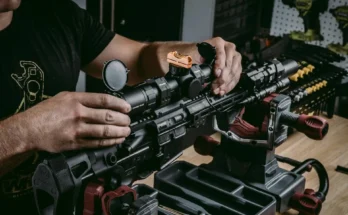
Mounting with cheap rings. A $40 scope in $400 rings outperforms a $400 scope in $40 rings every time. Over-torquing ring screws can crush the tube and damage internal optics. Use a torque wrench and follow manufacturer specifications.
Forgetting weight. A DMR scope adds 30 oz to your rifle. For field carry, that matters. Match scope weight to how you shoot, not just how far.
Not setting parallax. Fixed-parallax scopes can cause apparent target shift at different distances. Set your parallax correctly for your shooting range to eliminate this.
Frequently Asked Questions
What magnification is best for 300-yard shots?
A 3-9x or 2-10x scope covers 300-yard shooting comfortably. Most hunters find 5x to 7x gives a clear, steady image with enough detail. If you're consistently at 300 yards, skip the 1-6x LPVO and go with a mid-range variable.
What is the difference between FFP and SFP for medium range?
FFP reticles scale with magnification, so holdover values stay accurate at any power. SFP reticles stay the same size but only measure correctly at one specific magnification. For medium range hunting, SFP works fine.
For competition or precision shooting, FFP is the better choice.
Can I use a 1-6x LPVO for 400-yard shooting?
You can, but it's pushing the optic's practical limit. At 6x on a 400-yard target, reticle subtensions get small and fine detail gets hard to read. A 2-10x mid-range variable handles 400 yards more comfortably with room to spare.
What tube diameter do I need for medium range?
A 30mm tube covers most medium-range setups. It provides more internal adjustment than a 1-inch tube and pairs well with the majority of mid-tier and premium scopes. Step up to 34mm only if you need extra turret travel for extended ranges.
How much should I spend on a medium-range rifle scope?
Our research suggests $300 to $600 hits the sweet spot for most shooters. Vortex Viper PST Gen II and Leupold VX-Freedom models sit in this range. Spend more only if your shooting demands higher magnification, better glass, or FFP turret precision.
Do more expensive scopes always hold zero better?
Not necessarily. Most scopes from reputable brands like Vortex, Leupold, Nightforce, and Trijicon hold zero reliably within their intended use. Premium optics offer better glass and turret mechanics, but the biggest variable in scope reliability is proper mounting torque and ring quality.
Final Verdict: The Best Rifle Scope for Medium Range Depends on Your Shooting Distance, Platform, and Budget
There isn't one scope that wins for every shooter. The best choice comes down to three decisions you need to make before you browse.
If your rifle is an AR-15 and your range runs from 100 to 400 yards, an LPVO like the Vortex Razor HD Gen III 1-10×24 gives you the flexibility you need. If you're hunting deer on a bolt-action rifle at 200 to 450 yards, the Vortex Viper PST Gen II 2-10×42 delivers the best value for the money.
If you're running competition or long-range hunts past 400 yards, the Nightforce ATACR 4-16×42 F1 is worth every dollar. As of 2026, the optics market rewards shoppers who match their scope to their realistic shooting distance. Start there.
The right choice becomes obvious.