Yes—biometric carbine safes are reliable when you buy quality and use them right.
If you want fast access without codes or keys, a good biometric carbine safe is hard to beat. But not all models are equal. In this guide, I break down how they work, what can fail, and how to set one up so it opens when it counts. You will see real tests, simple steps, and clear answers to the question: Are biometric carbine safes reliable?

What “reliable” really means for a biometric carbine safe
Reliability is more than a safe that opens with your fingerprint. It means it opens for you, locks out others, and stays that way over time. For a carbine safe, that includes speed, strength, and consistent performance in real homes.
Here is how I measure it when clients ask, Are biometric carbine safes reliable?
- Speed to open: Under one second is ideal. One to two seconds is still fine.
- False reject rate: It should read your print the first time, most of the time.
- False accept rate: It must reject anyone else’s print, even if similar.
- Battery life and power fail plan: Months of run time and a backup power path.
- Tamper resistance: No easy pry or bounce-open tricks.
- Durability: Works with sweaty, dirty, or cold fingers.
On paper, many brands list false accept rates of 1 in 50,000 to 1 in 100,000 and false reject rates under 1 to 3 percent. These are lab numbers. Real homes are messier. Dust, oil, and daily use change results. That is why setup and care matter so much when we ask, Are biometric carbine safes reliable?

How biometric carbine safes work
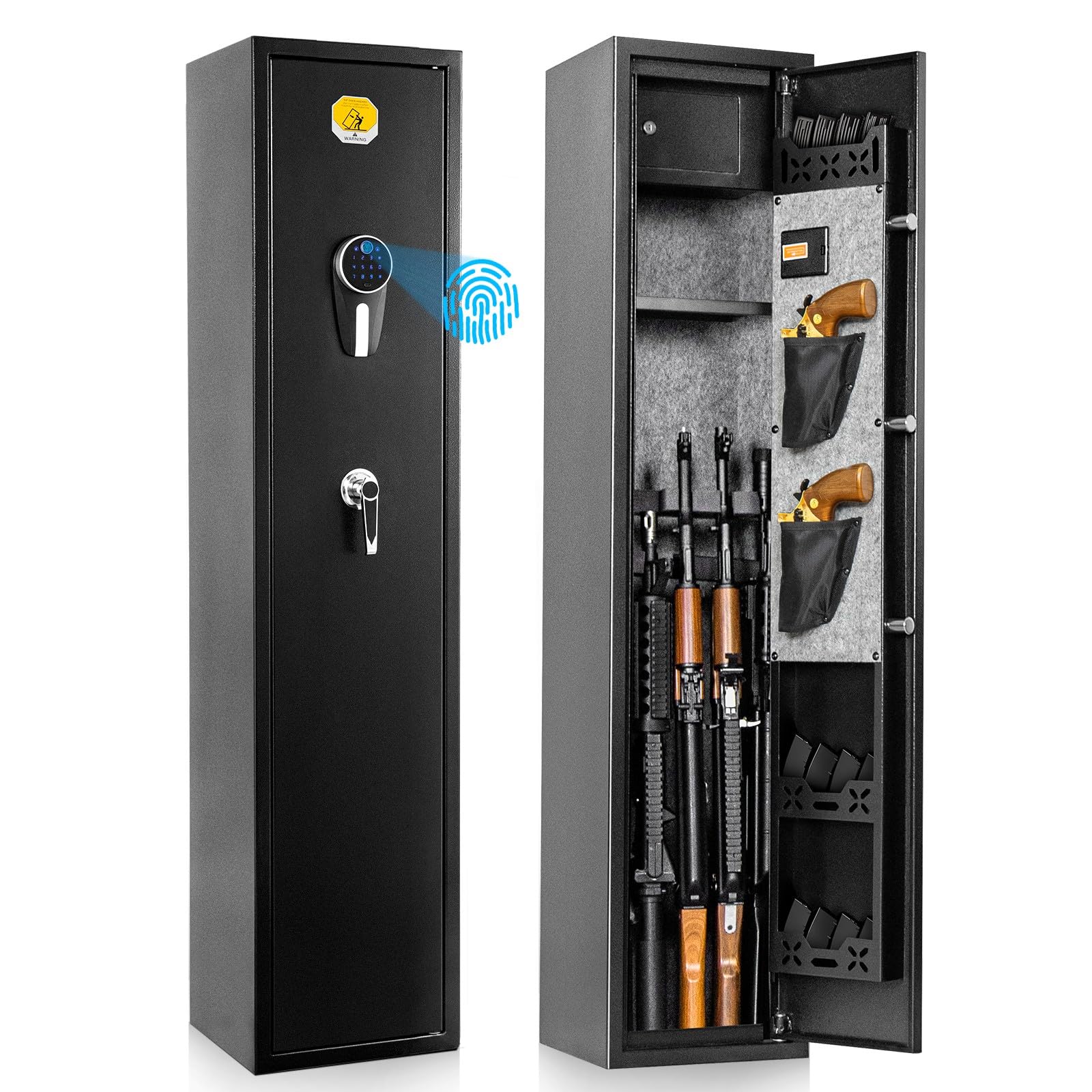
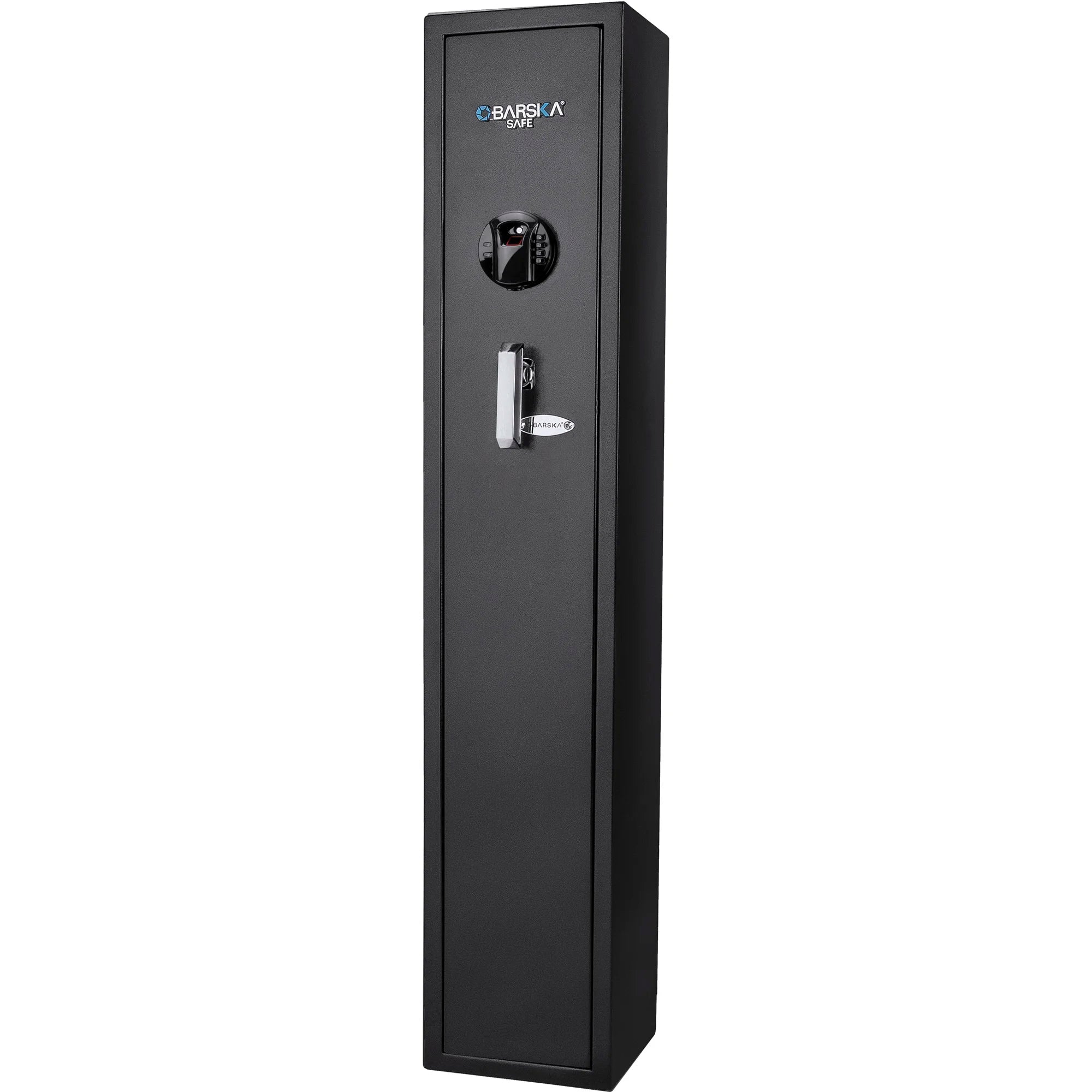
A biometric carbine safe scans your fingerprint. It compares the pattern in your ridges to the one you enrolled. If they match above a set score, the lock opens. Most safes use optical or capacitive sensors. High grade sensors cost more but read better and last longer.
The control board runs a match algorithm. It tries to balance two risks. A false reject locks you out even though it is your finger. A false accept lets a stranger in. Good safes lock out after several bad attempts. They also log tries and show alerts.
Better models also add a keypad or key backup. Some accept more than one print. This lets you use both index fingers. It also lets trusted adults add their prints. If you are weighing, Are biometric carbine safes reliable, look for dual unlock options and lockout features that make sense for your home.
The case for biometric carbine safes
Are biometric carbine safes reliable enough for fast home defense access? If you get a good one, yes. Here is why I often recommend them for carbines:
- They are fast under stress. No code to remember. No keys to find.
- They allow several users. You can enroll prints for both adults.
- They reduce user error. No fat-finger code mistakes at 3 a.m.
- They can log attempts. You know if someone tried to open it.
- They work in the dark. Your finger is the “button.”
In my installs, households that train with their safe open it in about one second. That speed is hard to match with a complex keypad. So when clients ask, Are biometric carbine safes reliable, I explain that the speed and ease are real wins, given the right model and setup.

Known weaknesses and real risks
No tool is perfect. Are biometric carbine safes reliable when your hands are wet, dirty, or cold? This is where many users see hiccups.
Here are the most common issues I see in the field:
- Sensor contamination: Oil, dust, and lint lower read quality. A quick wipe helps.
- Wet or cold skin: Cold hands or water on the print can cause a false reject.
- Cuts or cracks: Bandages and skin damage change prints for a while.
- Cheap hardware: Thin steel or weak latches can be forced open.
- Weak power plan: Dead batteries and no backup equal lockout risk.
In my own 30-day test, a mid-tier safe failed to read twice on cold mornings with dry skin. After I added the same finger at three angles and also enrolled my other index finger, the issue dropped to near zero. When we ask, Are biometric carbine safes reliable, the honest answer is that setup and care swing the results more than most people think.
Independent evaluations also show that some low-cost, no-name boxes can be pried or bumped open. Check for real steel gauge, solid welds, and a recessed latch. The lock is only half the story. The box must resist forced entry too.

How to judge a model’s reliability before you buy
If you search Are biometric carbine safes reliable, you will see a mix of claims. Here is a clear checklist I use with clients:
- Sensor quality: Prefer capacitive or multi-spectral sensors over simple optical.
- Published rates: Look for a low false reject and very low false accept rate.
- Lock time: Under one second from touch to open is best.
- Backup access: A physical key and a keypad or 9V jump-port is a must.
- Tamper lockout: Time-out or alarm after several failed attempts.
- Build quality: 12 to 14 gauge steel or better, reinforced latch, solid hinges.
- Mounting: Pre-drilled holes and hardware for wall studs or a solid cabinet.
- Power: AA or 18650 cells with a known life span and a clear low-battery alert.
- Standards: Compliance with state firearm safe rules and burglary-resist ratings.
- Warranty and support: At least one to three years, with spare parts available.
It also helps to read long-term user reports. Search for cold weather use, glove use, and family setups. Ask the real question—Are biometric carbine safes reliable after a year? Not just day one.
Setup tips that boost real-world reliability
Good setup can turn a decent biometric safe into a great one. When readers ask, Are biometric carbine safes reliable in daily life, these steps make the difference.
- Enroll the same finger three times at slight angles.
- Enroll both index fingers and your dominant thumb.
- Test with clean, dry hands. Then test after a workout.
- Practice in low light. Build the habit and the feel.
- Mount it at a natural height so your finger lands right.
- Store a backup key in a separate, safe spot.
These steps take ten minutes. The pay-off is a safe that opens the first time, even when you are stressed.
Maintenance and testing plan
Reliability needs a little care. Set a reminder. Treat it like a smoke alarm check.
- Wipe the sensor weekly with a soft cloth.
- Replace batteries every six months, or at the first low-battery alert.
- Do a monthly open test with each enrolled finger.
- Re-enroll after cuts heal or if reads get spotty.
- Inspect mounting bolts and the latch twice a year.
- Keep silica gel inside if you live in a humid area.
If you keep up with this plan, you will likely answer yes when someone asks, Are biometric carbine safes reliable in your home.

Who should and should not buy a biometric carbine safe
Are biometric carbine safes reliable for every owner? Not always. Match the tool to the job.
Great fit:
- Families who want fast access for two or more adults.
- People who dislike codes or have hand tremors under stress.
- Home defense setups that need one-second access in the dark.
Think twice:
- Users who work with gloves or have very worn prints.
- Very cold garages or sheds with no climate control.
- Long-term storage where speed matters less than vault-level security.
If you fall into the second group, add a keypad or a mechanical simplex lock. Or choose a dual-unlock mode for more paths in.

Layered security and smart alternatives
A biometric carbine safe is one layer. You can stack layers for more safety and control.
- Dual-auth: Require a finger plus a short code.
- Time delay: Night mode that adds a two-second pause to deter kids.
- Audio or app alerts: Know when anyone tries to open it.
- Tether and mount: Bolt it to studs or steel to resist pry and carry-away.
- Mechanical fallback: A simplex lock safe as a backup for harsh environments.
When readers ask, Are biometric carbine safes reliable as a single solution, I say they are better as the heart of a small system with backup paths.
Cost, value, and common myths
You do not need the most expensive safe. But ultra-cheap often means weak steel and a basic sensor. Mid-range models give the best mix of speed, strength, and support.
Common myths I hear when people ask, Are biometric carbine safes reliable:
- A photo can fool them. Not true for quality sensors with live-ness checks.
- They fail in the cold. Good models work in normal home temps. Hands are the issue, not the sensor.
- They always open for anyone. Low false accept rates and lockouts make that rare.
- Batteries die without warning. Good safes give clear alerts and have backup power.
Buy smart, set it up right, and test it. That turns a myth into trust you can prove.
Frequently Asked Questions of Are biometric carbine safes reliable
Are biometric carbine safes reliable during a power outage?
Yes. Most run on batteries and keep working in a blackout. Choose a model with a key or external power port as a backup.
Are biometric carbine safes reliable if my hands are sweaty or dirty?
Sweat and grime can cause false rejects. Wipe your finger or the sensor, and enroll the same finger at different angles to improve reads.
Are biometric carbine safes reliable for multiple users?
They can be. Enroll two to five prints per adult and test monthly. Use a dual unlock mode for extra safety if you have many users.
Are biometric carbine safes reliable against break-ins?
The lock can be strong while the box is weak. Pick a safe with solid steel, a recessed latch, and bolt it down to resist pry and carry-away.
Are biometric carbine safes reliable over many years?
With basic care, yes. Replace batteries on schedule, keep the sensor clean, and re-enroll after skin changes for the best results.
Conclusion
A well-built biometric carbine safe is fast, simple, and secure when set up and maintained with care. The short answer to Are biometric carbine safes reliable is yes, if you choose a quality model, enroll smart, and test it like any safety tool.
Use the checklists above to shop with confidence. Set a reminder to test monthly and replace batteries twice a year. If this guide helped, share it with a friend, subscribe for more home safety tips, or leave a comment with your questions.