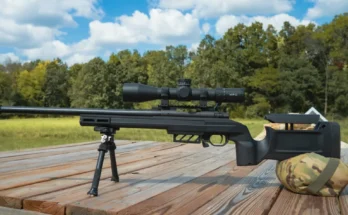
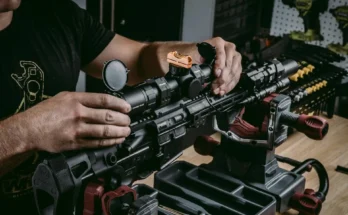
"How often should I check rifle scope mounts?" If you've ever chased a shifting zero across an entire range session, you already know why this question matters. There's no universal calendar date that applies to every rifle and setup.
The real answer depends on your caliber, mount system, and shooting habits. Manufacturer specifications indicate that ring screws typically need 15 to 30 inch-pounds of torque, and that value shifts the moment you fire a heavy magnum. Let's walk through the variables, then build a schedule that fits your actual setup.
Image source: Bing (Web (fair-use with source credit))

Image source: Bing (Web (fair-use with source credit))
Quick Answer
How often should you check rifle scope mounts? For most shooters, inspect before every range session or hunting trip. Heavy-recoil calibers like .300 Win Mag need torque checks every 200 to 500 rounds.
Low-recoil rifles can go longer, but a seasonal inspection is the minimum.
There's No Single Answer. Your Situation Determines the Schedule
There's no single number that works for every rifle out there. A bolt-action hunting rifle in .308 Winchester sits at the low end of recoil stress. A magnum bolt-action in .338 Lapua Mag sits at the very top.
Think of mount inspection like checking tire pressure. You can do it on a fixed interval, or you can adjust based on conditions. Both approaches work.
Shooters who fire high round counts and transport their rifles frequently need tighter schedules than casual range visitors.
The key point as of 2026 is that most mount failures don't happen because people never check. They happen because people check at the wrong interval for their actual shooting load.
What Happens When Scope Mounts Go Unchecked
A loose scope mount doesn't announce itself. You don't hear a crack. You don't feel anything change.
What you get instead is a creeping zero shift that you blame on wind, parallax, or a bad lot of ammunition.
In reality, screws backing out by a fraction of a millimeter can move your point of impact by several inches at 100 yards. Ring slippage compounds the problem. Once a scope starts sliding inside its rings, the damage is already done.
Other failures are more dramatic. A quick-detach mount that loses tension can let an optic completely detach under recoil. A base screw that backs out mid-hunt means you're suddenly shooting with no usable sights.
In the worst cases, a deformed scope tube from over-torqued rings ruins a $1,200 optic outright. Prevention costs nothing. Replacement costs everything.
The Variables That Change Your Inspection Frequency
Your inspection schedule isn't one-size-fits-all. Five factors change the answer significantly:
- Caliber and recoil energy
- Mount type (one-piece vs. two-piece ring sets)
- Transport method (vehicle, flight, backpack)
- Environmental conditions (temperature cycling, humidity)
- Round count since the last inspection
Each one pushes your check frequency up or down. Here's how they interact.
Recoil energy is the biggest factor. A .223 Remington produces roughly 4.6 foot-pounds of felt recoil. A .338 Lapua Mag produces over 28.
SAAMI, the industry standards body, publishes these energy values, and they hold across consistent ammunition lots. The higher your recoil, the faster screws back out.
Mount type matters too. One-piece mounts distribute recoil force more evenly than two-piece ring sets. They hold zero longer between checks.
Transport is often overlooked. Every time your rifle gets jostled in a truck bed or an airport hard case, screws take a hit. A 500-mile drive is rougher on hardware than most people realize.
Here's a quick reference table based on manufacturer torque guidelines and aggregate user reports:
| Caliber Class | Recoil Energy | Suggested Check Interval |
|---|---|---|
| Rimfire (.22 LR) | ~0.4 ft-lbs | Before each range session |
| Light centerfire (.223 Rem) | ~4.6 ft-lbs | Every 2 to 3 range sessions |
| Medium centerfire (.308 Win) | ~11 ft-lbs | Before every range session |
| Heavy magnum (.300 Win Mag) | ~18 ft-lbs | Every 200 to 500 rounds |
| Extreme magnum (.338 Lapua) | ~28 ft-lbs | Every 200 rounds or less |
Temperature swings matter as well. Thread-locking compounds like Loctite 242 lose some effectiveness above 300 degrees Fahrenheit. Desert heat cycles and cold storage both stress those bonds over time.
Decision Tree: When to Inspect Based on Your Setup
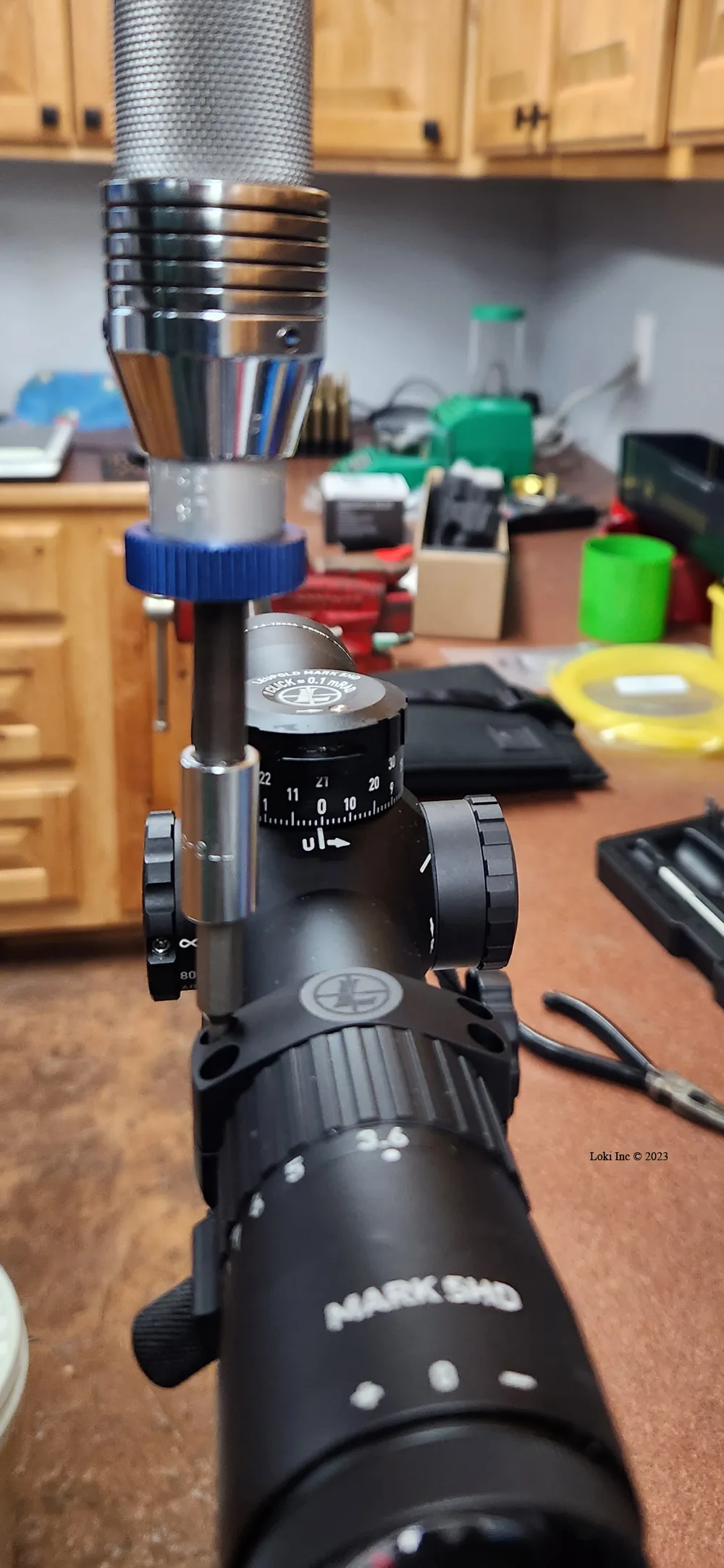
Image source: Web (Bing) / lokiconsult.com (Web image (fair-use with source credit))
Instead of guessing, run through these decision branches:
If you shoot a heavy magnum (.300 Win Mag and above):
Inspect torque values before every range session. Check ring screws and base screws with a torque wrench. Add witness marks after every re-installation.
If you shoot a medium-recoil centerfire (.308 Win, 6.5 Creedmoor):
Inspect before every range session, and always after transport. Torque values can drift between 20 and 50 rounds for most two-piece ring sets.
If you shoot a light-recoil rifle (.223 Rem.22 LR):
Inspect every two to three range sessions, and always before hunting season. These calibers put less stress on mounts, but budget ring sets can still loosen.
If you use quick-detach mounts:
Check tension every time you remove and re-attach the optic. QD systems are convenient, but the leverage arms can loosen with repeated cycling.
If the rifle has been stored for more than three months:
Do a full inspection before shooting. Re-check all torque values. Clean rail surfaces.
Verify bore alignment.
If you just transported the rifle on a long drive or flight:
Treat it like a fresh installation. Every screw needs verification. Zero shift after transport is common when base screws back out even slightly.
Match your branch to your setup, and you'll never have to wonder when to check.
How to Actually Check Your Scope Mounts
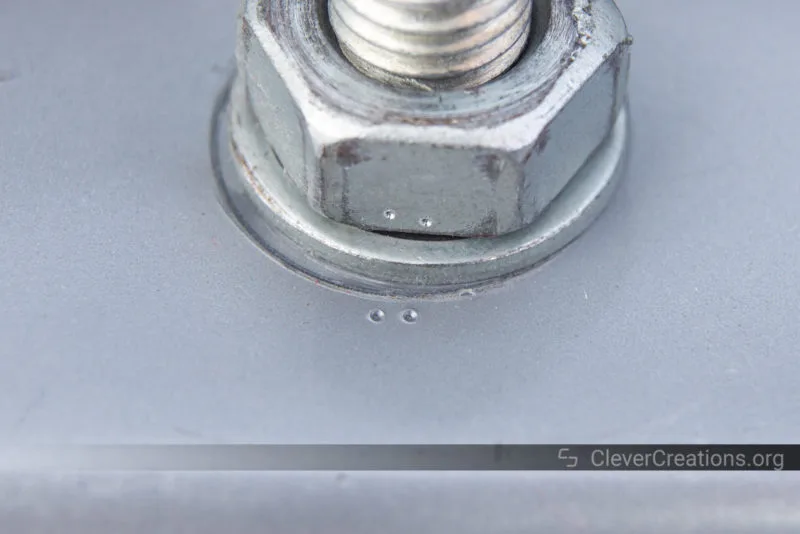
Image source: Web (Bing) / clevercreations.org (Web image (fair-use with source credit))
Knowing when to check is one thing. Knowing what to look for is another. Here's the practical workflow:
Step 1: Verify firearm safety
Make sure the rifle is unloaded. Action open. Muzzle pointed in a safe direction.
This is non-negotiable.
Step 2: Inspect the rail and base visually
Look for any gap between the rail and the action. A visible gap means the recoil lug isn't contacting the action face, which invites movement.
Step 3: Check screw torque
Use a torque wrench with the correct bit, typically hex or Torx. Manufacturer specs for ring screws range from 15 to 30 in-lbs. Base screws often call for 25 to 40 in-lbs.
Action screws vary by rifle model.
Step 4: Look for witness marks
A witness mark is a paint pen or Sharpie line drawn across the ring-to-scope interface and the base-to-action interface. If the line breaks, something moved.
Step 5: Check for recoil marks
Look for shiny streaks or scoring on the ring interior or scope tube. Slippage leaves physical evidence you can't miss.
Step 6: Clean and re-apply threadlocker
Loctite 242, which is blue and removable, works for most applications. Loctite 262, red and stronger, suits high-recoil setups. Apply to screw threads only, never the bolt shank.
Step 7: Bore-sight and range-verify
After re-torquing, bore-sight the optic at 25 to 50 yards. Then confirm at 100 yards with a group. This catches any mount-induced shift immediately.
The whole process takes about 15 to 20 minutes once you've done it a few times.
Mistakes That Shorten the Time Between Failed Mounts
Most scope mount problems trace back to preventable errors. Here are the ones we see most often:
- Over-torquing screws. This is the number one mistake. Ring screws tighter than spec deform the scope tube. Start at 15 in-lbs and work up.
- Skipping witness marks. If you don't mark the interfaces, you can't detect slippage. Five seconds of marking saves hours of re-zeroing.
- Using the wrong threadlocker. Blue Loctite is removable and appropriate for most shooters. Red Loctite requires heat to break, and not everyone carries a heat gun in the field.
- Ignoring transport damage. If the rifle rides in a truck cab or goes through baggage handling, screws need re-checking. No exceptions.
- Mixing screw grades. Not all screws are equal. Use the hardware that came with the mount system or manufacturer-specified replacements.
- Skipping action screw checks. People check ring screws but forget action screws. A loose action screw shifts the entire system, not just the optic.
Aggregate reports from precision rifle forums show that most zero-shift complaints trace back to one of these six issues.
Real-World Inspection Schedules by Shooting Scenario
Here's how we'd set a schedule for different types of shooters:
Precision competition shooter (PRS/NRL):
Full torque check before every match and every practice day. Round counts of 200 or more per session are common in this discipline.
Deer hunter in the Midwest:
Inspect before season opens. Re-check after the first hunting trip of the season. Rifles see relatively few rounds in this scenario.
Backcountry mountain hunter:
Inspect before the trip. Carry a torque driver and Loctite on the trip. Temperature swings at elevation accelerate screw loosening.
Casual plinker (.22 LR):
Inspect every two to three range sessions. Rimfire calibers produce minimal recoil, but sloppy mounting habits still cause problems.
Big-game hunter (safari, Alaska):
Full inspection before departure. Re-check after every transport leg. Many hunts involve multiple flights and vehicle rides.
Each scenario has its own rhythm. High round counts and frequent transport demand tighter schedules. Low-volume, low-recoil use allows more flexibility.
Frequently Asked Questions
How often should I check rifle scope mounts?
For most shooters, inspect before every range session or hunting trip. Heavy-recoil calibers need checks every 200 to 500 rounds. Low-recoil rifles can extend this to every 2 to 3 sessions, with a mandatory check before each hunting season.
What torque spec should scope ring screws be at?
Most manufacturers specify 15 to 30 inch-pounds for ring screws. Consult your specific mount manufacturer's chart for exact values. Vortex Optics publishes detailed torque specs on their official site for their full mount lineup.
Can I check scope mount torque without a torque wrench?
You can use a basic inch-pound driver, but a dedicated torque wrench gives consistent readings. A good inch-pound wrench costs between 20 and 40 dollars and lasts years. It's one of the best investments for any shooter who cares about holding zero.
Do witness marks really work?
Yes. Paint pen lines across ring-to-scope and base-to-action interfaces show movement immediately. Shooters report that witness marks caught problems torque wrench readings alone missed, especially when screws shift within their threads without changing overall tension.
Should I remove my scope to check the mounts?
You don't need to remove the optic for basic torque and witness mark checks. Full removal and re-installation is only needed when you see slippage marks on the scope tube or when you suspect ring damage.
How does temperature affect scope mount screws?
Extreme heat and cold can loosen threadlocker compounds and change metal expansion rates. Shooters in desert or alpine environments should check mounts more frequently, especially after temperature swings of 40 degrees Fahrenheit or more.