What is the best objective lens size for a rifle scope? It depends on what you shoot, where you shoot, and how far you shoot. Most hunters chase the biggest objective lens they can find, assuming more glass means better optics.
In reality, a bigger objective often creates more problems than it solves.
The objective lens diameter (measured in millimeters, like 32mm, 40mm, or 50mm) is only one piece of the optics puzzle. Exit pupil size, which equals objective diameter divided by your magnification setting, is the real light-gathering metric that matters in the field. That's the number to watch.
Let's break down how to find the right objective size for your setup.
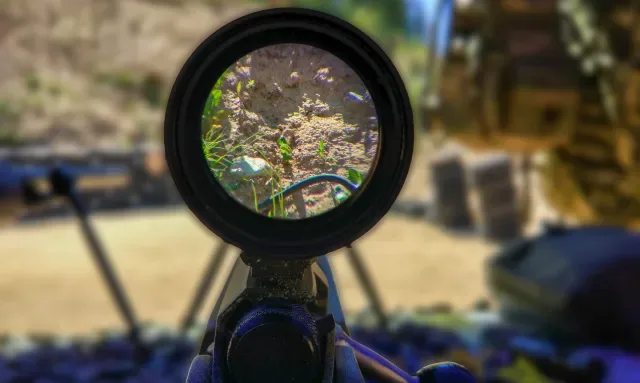
Image source: Web (Bing) / billingsoptics.com (Web image (fair-use with source credit))
Quick Answer
What is the best objective lens size for a rifle scope? It depends on your shooting distance, terrain, and rifle setup. For most hunting rifles, a 40mm objective offers the best balance.
It provides solid light-gathering without extra weight or scope height. A 50mm objective suits open-country and long-range shooting.
The Bigger Objective Lens Is Better Myth
Walk into any hunting shop and you'll see 50mm objective scopes lined up like trophies. Manufacturers market them as premium options, and many shooters assume the biggest lens means the best performance. That assumption costs you money and accuracy.
A 50mm objective adds weight. It raises scope height. It forces taller ring mounts.
On a lightweight mountain rifle, this combination throws off both your balance and your cheek weld.
Per manufacturer specification comparisons (Vortex, Leupold, Burris), the light-gathering difference between a 40mm and a 50mm objective is far smaller than most shooters expect. The real variable is exit pupil size, which depends on both objective diameter and your current magnification setting.
If your rifle is compact, your terrain is wooded, or your typical shots fall under 300 yards, a 50mm objective works against you. You're paying for glass you won't fully benefit from. You're also dealing with a scope that's harder to mount and balance correctly.
How Objective Lens Size Actually Works
The objective lens is the front glass element of your scope, and its diameter determines how much light the optic can theoretically collect. But raw objective size is a blunt metric. What actually determines how much light reaches your eye is the exit pupil.
Exit pupil equals objective diameter divided by your current magnification setting. A 50mm objective at 10x magnification produces a 5mm exit pupil. A 40mm objective at 8x also produces a 5mm exit pupil.
Same result, different objective sizes.
Tube diameter plays a supporting role too. A 30mm tube typically allows for more elevation and windage adjustment range than a 1-inch tube. Tube diameter also affects which scope rings and mounts you'll need.
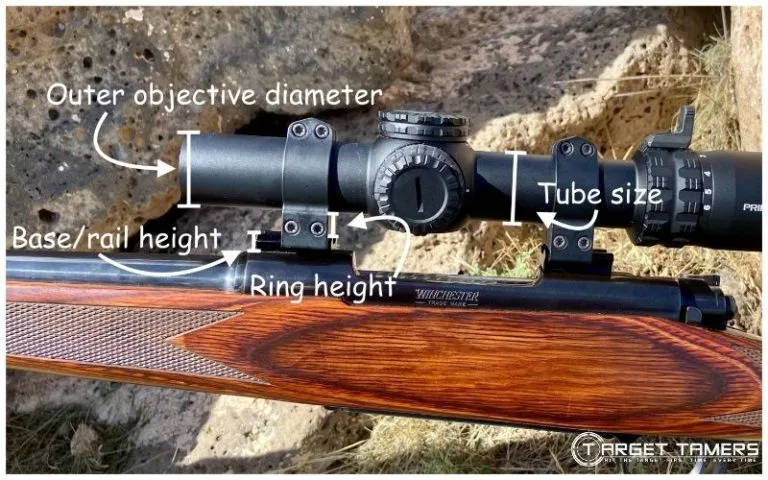
Image source: Bing (Web (fair-use with source credit))
Ring height is where objective size meets rifle reality. A 50mm objective bell usually demands medium to high ring mounts. A 40mm objective often fits with low or medium rings.
Higher rings mean a higher scope axis, which changes your cheek weld and your natural point of aim.
Also consider lens coating quality. A 50mm objective with basic coatings may transmit less usable light than a 40mm objective with fully multi-coated extra-low dispersion glass. Manufacturer data at sites like Vortex Optics shows real light transmission percentages, so check those instead of assuming bigger equals brighter.
Step-by-Step: Finding YOUR Best Objective Lens Size
Here's the workflow. Work through each step in order, and you'll land on the right objective size for your specific setup.
Step 1: Define your typical shooting distance
Timber hunters working shots under 150 yards don't need big glass. Mixed-terrain hunters working 150 to 300 yards are in the middle range. Open-country shooters regularly pushing 300 to 600+ yards need more light-gathering capability.
Step 2: Assess your terrain and lighting
Dense forests mean you're shooting in shade. Open plains mean direct light most of the day. If you hunt mostly at dawn or dusk, the objective size matters more than in bright afternoon conditions.
Step 3: Check your rifle's action profile and mounting clearance
Short-action rifles (like .308 or 6.5 Creedmoor receivers) often have less rail space than long-action rifles (.30-06.300 Win Mag). Measure available rail space before you buy, not after.
Step 4: Calculate exit pupil at your lowest magnification
Take your objective diameter. Divide by your lowest magnification setting. A result of 4mm or higher is plenty for most field conditions.
Under 4mm and you'll notice diminished performance in low light.
Step 5: Match ring height to your objective bell
Bigger objectives need taller rings. Confirm your stock and scope height combination produces a comfortable cheek weld before committing to a purchase.
Step 6: Factor in total rifle weight
If you're carrying the rifle all day, every extra ounce from a big optic adds up fast. A 50mm objective scope often runs 6 to 10 ounces heavier than its 40mm equivalent in the same magnification range.
Objective Sizes Side by Side: 32mm Through 56mm
Here's how the common objective sizes stack up as of 2026. Each row shows what that class is typically used for and where it shines.
| Objective Size | Best For | Tube Diameter | Weight Range | Light Gathering |
|---|---|---|---|---|
| 32mm | Rimfire, compact tactical builds | 1 inch | 14 to 18 oz | Adequate for bright daylight |
| 36mm | Fast deer drives, close-range hunting | 1 inch / 30mm | 16 to 22 oz | Good in normal light |
| 40mm | All-around hunting, most whitetail setups | 1 inch / 30mm | 18 to 26 oz | Strong low-light performance |
| 44mm | Mixed terrain, moderate open country | 30mm | 22 to 30 oz | Very good in low light |
| 50mm | Open plains, long-range, bench shooting | 30mm / 34mm | 26 to 38 oz | Excellent light-gathering |
| 56mm | Precision competition, magnum rifles | 30mm / 34mm | 32 to 44 oz | Maximum light transmission |
Image source: Web (Bing) / billingsoptics.com (Web image (fair-use with source credit))
The sweet spot for most hunters is 40mm. It handles low-light conditions well, fits most rifle actions without raising scope height dramatically, and keeps total rifle weight reasonable. A 44mm is the upgrade pick if you regularly hunt mixed terrain where you need extra low-light capability without going full 50mm.
For most shooters, a 40mm with high-quality coatings outperforms a 50mm with cheap glass in real-world conditions.
Best Objective Lens Size by Hunting and Shooting Scenario
Your hunting style and terrain should drive your objective size choice more than any spec sheet. Here's how they break down by real-world scenario.
Whitetail in Northeast timber: Shots rarely exceed 150 yards. A 36mm or 40mm objective gives you plenty of light for wooded cover. Scope height stays low, which helps with fast shooting at running deer.
Western mountain hunting: Elevation and open ridgelines mean longer shots and thinner air. A 44mm to 50mm objective handles the extra light-gathering needs without excessive weight.
Midwest mixed terrain: Deer stand setups with occasional field crossings. A 40mm to 44mm objective strikes the right balance for both timber shots and field-edge encounters.
Open-plains varmint hunting: Prairie dog towns and long-range coyote setups demand maximum light gathering. A 50mm objective paired with 16x to 24x magnification gives you the exit pupil you need for precise shots at 400 to 800 yards.
Precision rifle competitions: PRS and F-class shooters almost universally run 50mm or 56mm objectives with 30mm or 34mm tubes. Long dwell time at the bench means weight matters less than optical performance.
Predator hunting at dawn and dusk: Legal shooting windows are tight and light is scarce. A 44mm to 50mm objective paired with quality coatings gives you the widest usable window.
Common Mistakes When Choosing Objective Lens Size
The biggest mistake shooters make is buying the biggest objective their budget allows, without considering the rifle it's going on. That decision leads to mounting headaches, poor cheek weld, and wasted money.
Buying 50mm on a short-action rifle without checking clearance. Many short-action receivers don't have enough rail space for a large objective bell with high rings. Check your receiver profile before buying. SAAMI specifications for .308 and 6.5 Creedmoor actions show tighter dimensions than many shooters assume.
Prioritizing objective size over glass quality. A 40mm objective with fully multi-coated extra-low dispersion glass often outperforms a 50mm objective with basic coatings in real-world brightness and edge clarity.
Ignoring scope height and cheek weld. This is the most overlooked consequence. A scope mounted too high forces an awkward head position, which affects accuracy and comfort on every single shot.
Forgetting total rifle weight. If you're hiking five miles to a mountain stand, the 6 to 10 extra ounces from a big objective adds up quickly.
Not calculating exit pupil. Many shooters pick a 50mm objective but set their magnification to 14x in the field. At that magnification, a 40mm objective delivers the same exit pupil anyway. Do the math before you buy.
Frequently Asked Questions
What objective lens size do most hunters use?
The most common objective size among hunters is 40mm. It appears in popular magnification ranges like 3-9×40 and 4-12×40 across multiple brands. A 40mm objective provides solid low-light performance without the weight and mounting complexity of larger lenses.
Is a 50mm objective always better than a 40mm?
No. A 50mm objective collects more raw light, but the difference is smaller than most shooters expect. Exit pupil size (objective divided by magnification) determines how much light reaches your eye.
At identical magnification, the gap between 40mm and 50mm is often minimal.
Does objective lens size affect accuracy?
Not directly. Objective size affects light gathering, not bullet flight. Accuracy depends on your rifle, ammunition, and shooting fundamentals.
A scope mounted too high because of an oversized objective can affect your cheek weld, which indirectly impacts consistency.
What objective size is best for 3-9x magnification?
A 40mm objective pairs naturally with a 3-9x magnification range. At 3x magnification, you get a 13mm exit pupil, which exceeds what your eye can actually use. The 3-9×40 combination is one of the most popular hunting scopes for this reason.
Major manufacturers like Leupold offer this configuration across their hunting line.
Do I need a bigger objective for night hunting?
Not necessarily. Modern low-light hunting is usually legal only during civil twilight, not true darkness. A 44mm to 50mm objective helps during these windows.
Lens coating quality matters more than objective diameter once light gets truly scarce.
What ring height do I need for a 50mm scope?
A 50mm objective typically requires medium or high ring mounts to clear most rifle barrels. Medium rings usually place the scope centerline about 1.18 to 1.25 inches above the rail. Confirm your specific rifle's clearance before purchasing rings.
Final Decision Guide: How to Pick the Right Objective Lens Size for Your Rifle
You don't need to overthink this. Run through the decision tree below and let the answer reveal itself.
If your shots are mostly under 200 yards in timber or brush: Go with a 36mm to 40mm objective. Pair it with low or medium rings. Keep your rifle light and fast.
If you hunt mixed terrain with occasional field shots past 250 yards: A 40mm to 44mm objective works well. You'll get better low-light performance without going overboard on weight or height.
If you regularly shoot past 300 yards in open country: Step up to a 44mm to 50mm objective. You'll need medium or high rings. Accept the extra weight as the cost of optical performance at distance.
If you're building a precision or competition rig: A 50mm or 56mm objective with a 30mm or 34mm tube gives you maximum adjustment range and light transmission. Weight is a non-issue on a bench gun.
| Scenario | Objective Size | Tube Diameter | Typical Rings |
|---|---|---|---|
| Timber hunting (under 200 yds) | 36mm to 40mm | 1 inch or 30mm | Low to medium |
| Mixed terrain (200 to 300 yds) | 40mm to 44mm | 30mm | Medium |
| Open country (300 to 600 yds) | 44mm to 50mm | 30mm | Medium to high |
| Precision / competition | 50mm to 56mm | 30mm or 34mm | High or extra-high |
| Rimfire / compact builds | 32mm to 36mm | 1 inch | Low |
The right objective lens size for your rifle is the one that matches your shooting distance, your terrain, and your rifle's physical dimensions. Specs matter, but fit matters more. Pick the objective that lets you mount the scope comfortably, maintain a natural cheek weld, and shoot confidently in your actual hunting conditions.