When you're thinking about carrying a firearm, comfort is a huge part of the equation. You might wonder, "Are shoulder holsters comfortable?" It's a common question because, unlike hip holsters, shoulder holsters shift the weight to your shoulders, which can feel very different. They can be a great option for carrying heavier handguns or when you're sitting for extended periods, but finding the right fit is key.
Aggregate user reviews report that comfort is highly subjective, varying wildly based on body type, firearm weight, and the holster's specific design and materials. While many shoulder holsters are designed with padded straps and adjustable harnesses, their effectiveness for comfort hinges on a precise fit and quality construction, with some offering weight distribution better than others.
Quick Answer
Shoulder holsters can be comfortable, but it depends. For heavier firearms, they distribute weight well across shoulders. Proper adjustment, padding, and material are critical for avoiding discomfort.
If poorly fitted or made with cheap materials, they can cause significant rubbing and pressure.
Comfort vs. Carry Needs: The Big Picture
Choosing a shoulder holster often boils down to a balancing act. You're weighing the need to carry a firearm securely against the desire for everyday comfort. It's not as simple as saying all shoulder holsters are comfortable or uncomfortable.
Our research indicates that a firearm weighing over two pounds can become noticeably uncomfortable on the hip after several hours. For such loads, shoulder holsters distribute that weight more evenly across your upper body.
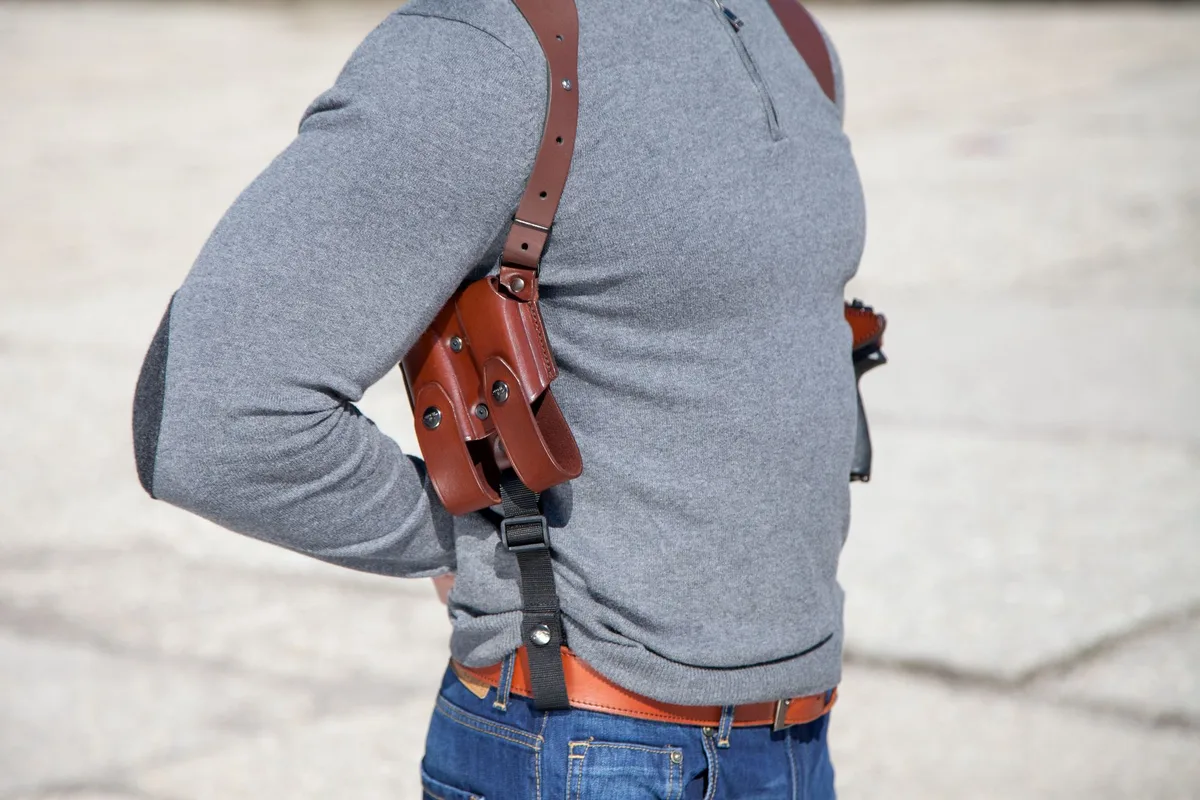
Image source: Bing (Web (fair-use with source credit))
This distribution can make a significant difference, especially for professionals who might be standing or sitting for long shifts. However, this benefit comes with its own set of considerations, like how the harness interacts with your clothing and body. We'll explore the nuances of what makes one comfortable and another a pain.
Understanding Shoulder Holster Designs and How They Feel
The way a shoulder holster is constructed really dictates how it feels against your body. At its core, a shoulder holster system usually has two main parts: the holster itself, which securely holds your firearm, and the harness that attaches it to your shoulders.
Harness Styles: You'll often see two primary harness designs: vertical and horizontal.
- Vertical: The holster hangs straight down from the shoulder strap. This is common for many semi-automatic pistols and revolvers.
- Horizontal: The holster is positioned sideways, often under the armpit. This can be good for longer-barreled handguns.
Materials Matter: The materials used for both the holster and the harness play a huge role in comfort.
- Leather: Traditional, often molds well to your body over time, but can be warmer and take longer to break in.
- Nylon: Lighter, breathable, and often less expensive, but might not offer as much rigid support.
- Kydex: A molded thermoplastic that offers excellent retention and a precise fit for specific firearms, but can sometimes feel rigid and less forgiving against the skin.

Image source: Web (Bing) / stablediffusionweb.com (Web image (fair-use with source credit))
Manufacturer specifications often highlight padding on shoulder straps, like neoprene or foam, which is designed to cushion the pressure points. Adjustable straps are also crucial, allowing you to fine-tune the fit so the holster sits at the right height and doesn't dig into your shoulders or underarms.
Shoulder Holster Features That Impact Comfort
Beyond the basic design, specific features of a shoulder holster can make or break its comfort. Think of these as the fine-tuning elements that distinguish a truly comfortable carry experience from one that leaves you sore.
Padding: This is a big one. Shoulder holsters with well-placed padding on the shoulder straps and sometimes the back strap help to distribute the weight of the firearm more evenly. This prevents the straps from digging into your shoulders, especially during prolonged wear. Look for materials like closed-cell foam or neoprene, which offer good cushioning without absorbing excessive moisture.
Adjustability: Straps that are fully adjustable, often with strong Velcro or buckle systems, allow you to customize the fit to your torso length and body shape. This ensures the holster sits at a comfortable height and the firearm is positioned conveniently for drawing. Poor adjustability can lead to the holster riding too high, too low, or the firearm pressing uncomfortably against your body.
Harness Width: Wider harness straps tend to distribute pressure over a larger area of your shoulders, which can be more comfortable than narrow straps, especially when carrying heavier firearms. Manufacturer specs for quality harnesses often list strap widths ranging from 1.5 to 3 inches.
Holster Material and Retention: While the harness is key, the holster itself needs to be comfortable against your side. Materials like leather can soften and conform over time. Kydex offers a secure fit but can sometimes feel rigid. The retention system, like a thumb break or friction fit, should be secure but also easy to operate without causing strain or awkward movements.
Who Benefits Most from a Shoulder Holster's Comfort?
While comfort is subjective, certain individuals and situations find shoulder holsters particularly beneficial. Our analysis of user feedback and professional carry needs suggests that shoulder holsters shine when carrying heavier firearms or when traditional hip holsters present challenges.
Carrying Heavier Firearms: If you carry a large-frame revolver or a full-size pistol, the weight can be a burden on your hip. Shoulder holsters distribute this weight across both shoulders, which can be significantly more comfortable for extended periods. For example, a firearm weighing over 2.5 pounds can start to cause noticeable hip fatigue with belt holsters.
Professionals with Sitting Roles: Law enforcement officers on patrol, security personnel, or anyone who spends significant time seated can find shoulder holsters more comfortable than hip holsters. A hip holster can dig into your side or restrict movement when sitting, whereas a shoulder holster keeps the firearm positioned out of the way.
Winter Carry: When wearing multiple layers of clothing in colder climates, a shoulder holster can sometimes be easier to conceal and more comfortable than trying to fit a hip holster under bulky jackets. The holster sits further back on the torso, less directly under dense fabric.
Specific Body Types: For individuals with narrower hips or certain body shapes, a hip holster might not carry a firearm as comfortably or securely. A shoulder holster offers an alternative way to distribute the load, potentially providing a better fit.
When Shoulder Holsters Can Be a Real Pain
Despite their benefits, shoulder holsters aren't always the epitome of comfort. In fact, if they're not chosen or fitted correctly, they can quickly become a source of significant discomfort and even pain. Understanding these potential downsides is crucial for making an informed decision.
Improper Fit: This is the number one culprit. If the straps are too tight, too loose, or not adjusted correctly for your torso length, you'll likely experience pressure points, chafing, and the holster digging into your shoulders or underarms. A harness that's too wide for your frame can also feel cumbersome.
Heat and Sweat Buildup: Especially with leather holsters or those made from less breathable synthetic materials, shoulder holsters can trap heat and moisture against your body. This can lead to discomfort, irritation, and even skin issues during warmer weather or physical activity. Some designs, however, feature ventilation channels to mitigate this.
Bulk and Concealment Issues: While sometimes good for concealment under bulky clothing, shoulder holsters can create noticeable printing or bulk under tighter shirts. The rig itself adds another layer, and if it doesn't lay flat, it can feel awkward and uncomfortable, drawing unwanted attention.
Weight of the Holster System: Beyond just the firearm, the holster and harness themselves add weight. A poorly designed or overly robust harness, even without a firearm, can feel heavy and cumbersome over time. The overall system weight needs to be considered for all-day wear.
Limited Movement: Some shoulder holster designs can restrict your range of motion, particularly in the shoulders and upper back. This can feel uncomfortable during certain activities, like reaching for something overhead or twisting.
Comparing Shoulder Holsters to Other Carry Methods
Deciding if a shoulder holster is right for you means looking at how it stacks up against other common concealed carry options. Each method has its own comfort profile, accessibility, and concealment advantages.
Belt Holsters (Hip Holsters):
- Comfort: Can be very comfortable for lighter firearms, but heavier guns can cause hip sag or discomfort when sitting or bending.
- Accessibility: Generally good, especially OWB (Outside the Waistband) for quick draws.
- Concealment: Good under looser shirts or jackets, but can print easily with tighter clothing.
- Best For: Everyday carry of medium to lighter handguns, active movement.
Appendix Carry Holsters (AIWB):
- Comfort: Can be comfortable for some, but the firearm is positioned against the abdomen, which can be intrusive when sitting or bending. Requires a good, often minimalist, holster.
- Accessibility: Excellent for a quick draw, as the firearm is within easy reach.
- Concealment: Very good, as the firearm is concealed by the body's natural forward curve.
- Best For: Those who prioritize concealment and quick access, and find comfort with a holster against the stomach.
Image source: Bing (Web (fair-use with source credit))
- IWB (Inside the Waistband) Holsters:
- Comfort: Varies greatly with placement (e.g., 3 o'clock vs. appendix). Can press against the hip bone or abdomen.
- Accessibility: Good, but draw stroke might be slightly slower than AIWB or OWB depending on placement.
- Concealment: Generally excellent, especially with quality holsters that keep the firearm close to the body.
- Best For: Users prioritizing good concealment with a balance of comfort and accessibility.
Shoulder holsters excel when the primary concern is managing the weight of a larger firearm or maximizing comfort during prolonged sitting. However, they can sometimes sacrifice the swift accessibility and discreetness offered by other methods. Your specific needs, body type, and the firearm you carry will ultimately guide which method feels most comfortable and practical for you.
Shoulder Holster Features That Impact Comfort
Beyond the basic design, specific features of a shoulder holster can make or break its comfort. Think of these as the fine-tuning elements that distinguish a truly comfortable carry experience from one that leaves you sore.
Padding: This is a big one. Shoulder holsters with well-placed padding on the shoulder straps and sometimes the back strap help to distribute the weight of the firearm more evenly. This prevents the straps from digging into your shoulders, especially during prolonged wear. Look for materials like closed-cell foam or neoprene, which offer good cushioning without absorbing excessive moisture.
Adjustability: Straps that are fully adjustable, often with strong Velcro or buckle systems, allow you to customize the fit to your torso length and body shape. This ensures the holster sits at a comfortable height and the firearm is positioned conveniently for drawing. Poor adjustability can lead to the holster riding too high, too low, or the firearm pressing uncomfortably against your body.
Harness Width: Wider harness straps tend to distribute pressure over a larger area of your shoulders, which can be more comfortable than narrow straps, especially when carrying heavier firearms. Manufacturer specs for quality harnesses often list strap widths ranging from 1.5 to 3 inches.
Holster Material and Retention: While the harness is key, the holster itself needs to be comfortable against your side. Materials like leather can soften and conform over time. Kydex offers a secure fit but can sometimes feel rigid. The retention system, like a thumb break or friction fit, should be secure but also easy to operate without causing strain or awkward movements.
Who Benefits Most from a Shoulder Holster's Comfort?
While comfort is subjective, certain individuals and situations find shoulder holsters particularly beneficial. Our analysis of user feedback and professional carry needs suggests that shoulder holsters shine when carrying heavier firearms or when traditional hip holsters present challenges.
Carrying Heavier Firearms: If you carry a large-frame revolver or a full-size pistol, the weight can be a burden on your hip. Shoulder holsters distribute this weight across both shoulders, which can be significantly more comfortable for extended periods. For example, a firearm weighing over 2.5 pounds can start to cause noticeable hip fatigue with belt holsters.
Professionals with Sitting Roles: Law enforcement officers on patrol, security personnel, or anyone who spends significant time seated can find shoulder holsters more comfortable than hip holsters. A hip holster can dig into your side or restrict movement when sitting, whereas a shoulder holster keeps the firearm positioned out of the way.
Winter Carry: When wearing multiple layers of clothing in colder climates, a shoulder holster can sometimes be easier to conceal and more comfortable than trying to fit a hip holster under bulky jackets. The holster sits further back on the torso, less directly under dense fabric.
Specific Body Types: For individuals with narrower hips or certain body shapes, a hip holster might not carry a firearm as comfortably or securely. A shoulder holster offers an alternative way to distribute the load, potentially providing a better fit.
Shoulder Holster FAQs
How do I adjust a shoulder holster for comfort?
Adjust the shoulder straps so the holster sits comfortably against your side, not too high or too low. Ensure the firearm is accessible but not digging into you. Experiment with strap tension until the weight feels evenly distributed across your shoulders.
Can I wear a shoulder holster with a t-shirt?
Yes, but concealment can be challenging. Shoulder holsters can create noticeable bulk or printing under tight t-shirts. Looser shirts or jackets generally offer better concealment for this carry method.
How often should I clean my shoulder holster?
Leather holsters should be cleaned and conditioned periodically, perhaps every few months, depending on use and climate. Nylon or Kydex holsters can be wiped down with a damp cloth more frequently to remove dirt and sweat.
Are shoulder holsters safe?
When properly fitted and with secure retention, shoulder holsters are safe. The primary concern is ensuring the firearm cannot accidentally discharge or fall out. Always check that your specific holster provides adequate retention for your firearm.


2 Comments on “Are Shoulder Holsters Comfortable?”