Image source: Bing (Web (fair-use with source credit))
So, you're wondering if you can sleep with a holster on. It's a fair question, especially if you're thinking about personal protection or just want your firearm close by. The short answer is, it can be done, but it's not a simple "yes" or "no." A lot depends on how you do it and what your goals are.
We're going to walk through this, like I'm just sharing what I've learned over the years.
Think of it this way: just like you wouldn't wear your hiking boots to bed, you need to consider the right setup for sleeping with a firearm. We want this to be safe, comfortable, and effective, right?
Quick Answer: Sleeping with a Holster Isn't Always Simple
Yes, you can technically sleep with a holster on, but safety and comfort are key. A properly designed holster that fully covers the trigger guard is essential. Not all holsters are suitable for sleeping, and many find bedside alternatives safer.
Is Sleeping with a Holster Right for You? A Safety Checklist
Before we get into the nitty-gritty of different holster types and how to use them, let's quickly establish if this is even a path worth exploring for your situation. It boils down to a few crucial safety and comfort checks. Think of this as a quick mental checklist to run through.
- What is your primary goal? Are you looking for immediate access for home defense, or just a sense of preparedness? Your goal will heavily influence the best method.
- Are you comfortable with potential discomfort? Sleeping with any object on your person can be awkward. You'll want to assess if the trade-off for accessibility is worth the potential sleep disruption.
- What is your home environment like? Do you have children or pets? This is a massive factor in deciding how secure your firearm needs to be, even when you're asleep.
- Do you have a holster designed for safety and retention? This is the most critical question. A flimsy holster is a risk.
If you're finding yourself nodding along with potential comfort issues or safety concerns, it's a strong signal to explore alternative methods discussed later, like bedside holsters.
Your Holster Type: Does It Work for Sleep?
Not all holsters are created equal, especially when you factor in the dynamic nature of sleep. What works fine for carrying during the day might be a real problem when you're unconscious and shifting positions. We've seen this play out with various designs; some simply aren't built for this kind of use.
- Waistband Holsters (Inside-the-Waistband, IWB, Outside-the-Waistband, OWB): These are the most common for everyday carry. While you can wear them to sleep, they often press uncomfortably against your body, especially when lying on your side. If the holster isn't perfectly fitted or secured, the firearm can shift, potentially exposing the trigger.
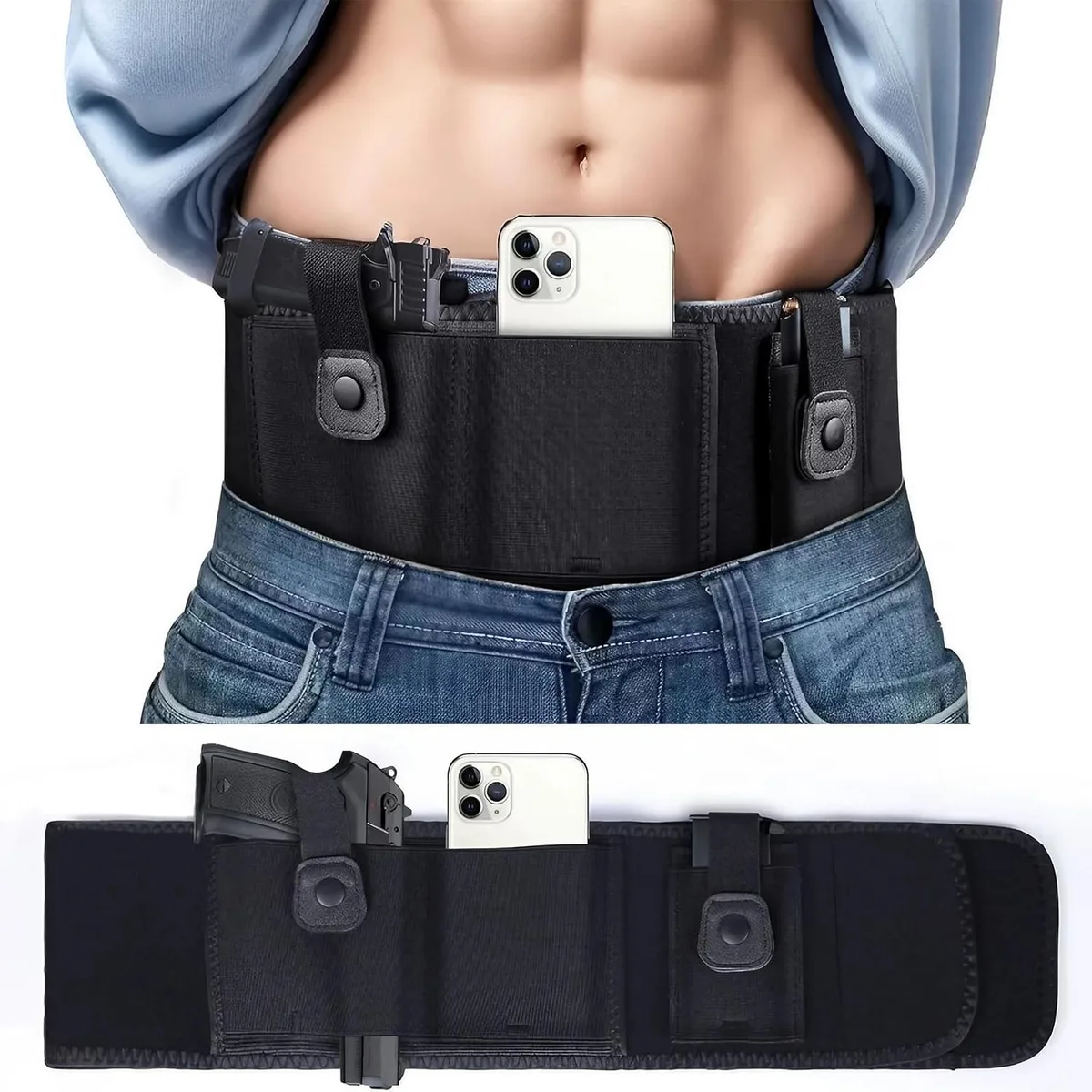
Image source: Web (Bing) / amazon.com (Web image (fair-use with source credit))
- Ankle Holsters: These are generally not recommended for sleeping. They rely on movement to keep them snug, and during sleep, your body position can change significantly, leading to looseness and potential firearm dislodging.
- Chest or Underarm Holsters: These can also be uncomfortable when lying down. The straps can dig in, and the firearm's position might not be ideal for quick, safe access when you're groggy.
- Specialty Bedside Holsters: These are designed specifically for keeping a firearm accessible while sleeping without wearing it. They often attach to the mattress, bed frame, or nightstand, offering a stable and secure solution.
The key takeaway here is that a holster worn on your body throughout the night introduces more variables for discomfort and potential safety issues compared to a fixed bedside mount.
Key Safety Features: Trigger Guard and Retention Are Non-Negotiable
When we talk about safety with firearms, the trigger guard is paramount. Its job is to prevent anything from accidentally coming into contact with the trigger, which could cause an unintended shot. This is doubly important when you're asleep and less aware of your surroundings and movements.
- Trigger Guard Coverage: Manufacturer specifications for most quality holsters confirm they must fully enclose the trigger. If your holster doesn't completely cover the trigger area, it's a significant safety hazard. A report from the U.S. Consumer Product Safety Commission highlights accidental firearm discharges as a serious risk, particularly in homes with children.
- Retention: This refers to how well the holster holds onto the firearm. A good retention holster should require a deliberate action to draw the firearm, not just gravity or a slight jostle. For sleeping, you need a holster that keeps the firearm securely in place, even if you roll over or shift positions. If the firearm can easily fall out of the holster during sleep, that's a major safety concern.
A holster that lacks full trigger guard coverage and robust retention is simply not suitable for any situation, least of all sleeping.
Comfort vs. Accessibility: Finding Your Balance
This is where the practical reality of sleeping with a holster often hits a wall. Most people prioritize comfort when they sleep. Trying to find a position that's both comfortable and allows for secure, accessible firearm carry can be a real challenge.
- The Discomfort Factor: Imagine trying to sleep with a hard object pressing into your hip, side, or back all night. Depending on your sleeping position (side-sleeper, back-sleeper, stomach-sleeper), a waistband holster can become a source of constant irritation. This can lead to fidgeting, disrupted sleep, or developing awkward sleeping postures just to avoid the pressure.
- The Accessibility Trade-off: While a holster makes a firearm accessible, that accessibility can be compromised by discomfort. If you're constantly adjusting the holster or shifting your position to alleviate pressure, you might not be able to draw quickly or safely if needed. Your ability to react under stress diminishes if you're already uncomfortable and groggy.
Many firearm owners find that the desire for constant accessibility during sleep is often outweighed by the sheer discomfort and potential for sleep disruption, leading them to seek alternatives.
Safer Alternatives: Bedside Holsters and Secure Storage
Given the comfort and safety challenges of wearing a holster to sleep, many firearm owners opt for dedicated bedside solutions. These methods aim to keep your firearm accessible while eliminating the risks and discomfort associated with wearing it all night.
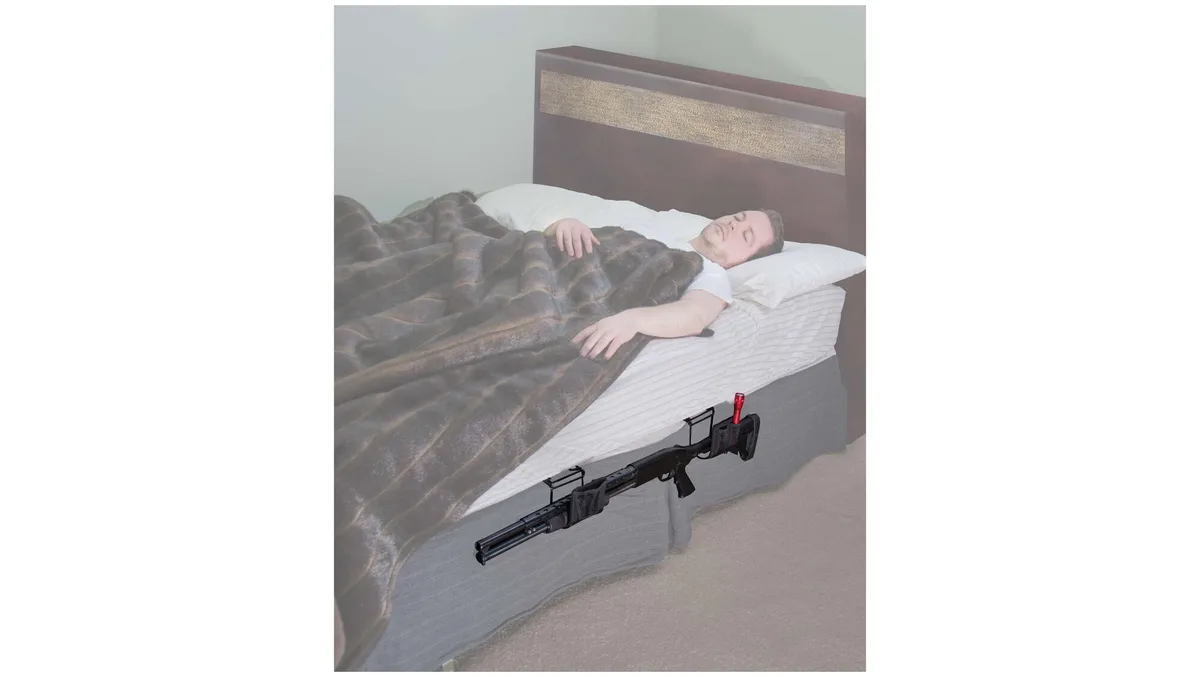
- Bedside Holsters: These are designed to attach to your mattress, bed frame, or nightstand. They offer a stable platform that holds your firearm securely and within easy reach. Some popular designs use a flexible strap that slides under the mattress, while others mount to the side of the bed frame. They keep the firearm pointed in a safe direction and, crucially, don't require you to wear anything.
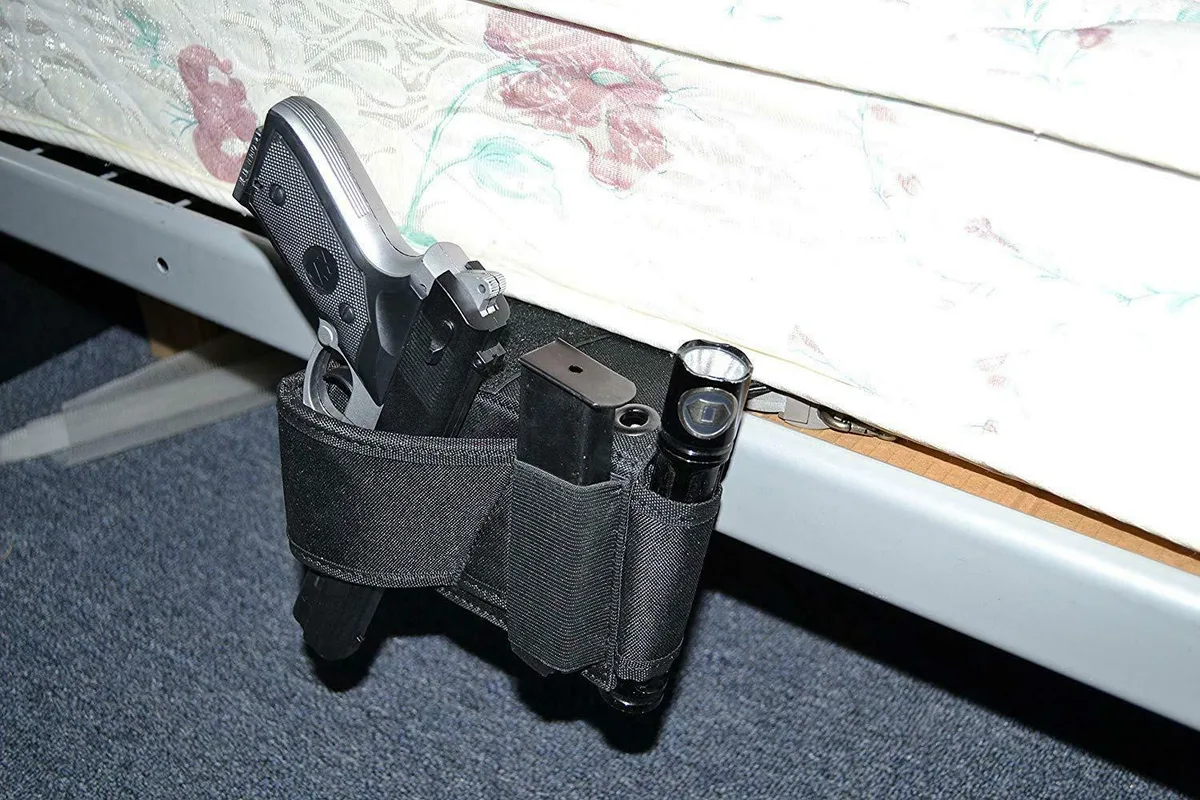
Image source: Bing (Web (fair-use with source credit))
- Quick-Access Lockboxes: For those with children or who prioritize maximum security, a bedside lockbox is an excellent choice. These small safes often have biometric (fingerprint) or quick-combination locks, allowing for rapid access by authorized individuals. They prevent accidental access by others while keeping the firearm very close.
- Nightstand Organizers: Some nightstand organizers have built-in holsters or compartments designed to hold a firearm securely. Like other bedside solutions, they keep the firearm from being worn on the body.
These alternatives often strike a better balance between security, accessibility, and peace of mind without compromising sleep quality.
Common Mistakes to Avoid When Sleeping Near Your Firearm
When people attempt to sleep with a firearm on their person, or even just near their bed, a few common mistakes tend to pop up. Avoiding these pitfalls is crucial for safety. Based on editorial analysis of user feedback and safety guidelines, these are the most frequent errors.
- Using Inadequate Holsters: This is perhaps the biggest mistake. Using a holster that doesn't fully cover the trigger guard, lacks good retention, or is simply too loose is incredibly dangerous. Even a slight shift during sleep could expose the trigger.
- Improper Firearm Placement: If not wearing a holster, simply placing a firearm on the nightstand or under the pillow is a risky practice. It can easily be knocked over, fall, or be accessed accidentally, especially in homes with children.
- Ignoring Sleep Habits: People who are very active sleepers, toss and turn frequently, or have pets that might disturb them can find their firearm becomes dislodged or uncomfortable when worn. Not accounting for your natural sleep movements is a mistake.
- Over-Reliance on Accessibility: Sometimes, the desire to have a firearm "at all times" leads to unsafe choices. Prioritizing immediate access over secure storage or comfort can backfire. There's a difference between accessible and dangerously exposed.
- Not Considering Children or Pets: This is a critical oversight. If you have young children or pets who share your sleeping space or might wander into it, any method of firearm storage or carry needs to be absolutely secure against their access.
Learning from these common errors can help you choose a safer approach to keeping a firearm accessible for home defense during sleep.
Expert Tips for Bedside Firearm Access
Beyond just selecting the right gear, there are a few smart practices that can elevate your bedside firearm access setup from merely functional to truly optimal and safe. Think of these as the little details that make a big difference in a high-stress situation. Based on feedback from various firearms training organizations, incorporating these tips can enhance both readiness and security.
- Practice Your Draw: Regularly practice drawing your firearm from its bedside position. This isn't just about speed; it's about muscle memory. You want to be able to draw smoothly and safely, even in low light or when groggy. Ensure your practice draws are dry-fire exercises, following all gun safety rules.
- Maintain Your Gear: A firearm is a tool, and like any tool, it needs maintenance. Ensure your firearm is clean and properly lubricated. Your holster should also be checked for wear and tear; a damaged holster can compromise retention. Manufacturer documentation, such as that from Glock, provides detailed maintenance schedules.
- Consider Light Access: If you anticipate needing your firearm in darkness, a small tactical flashlight mounted on your firearm or a separate handheld light kept near your holster can be invaluable. Being able to identify your target is as critical as having the firearm ready.
- Safe Direction of Aim: Always ensure your firearm, whether in a holster or on a mount, is pointed in a safe direction. This typically means towards a solid wall that won't be penetrated by a round, away from where anyone would typically be sleeping or moving.
Implementing these tips can help ensure that your bedside firearm is not just present, but also ready and safe for use when seconds count.
Comparing Your Options: Bedside Holsters vs. Lockboxes
When deciding how to keep a firearm accessible at your bedside, you'll likely encounter two primary solutions: dedicated bedside holsters and quick-access lockboxes. Each has its own set of pros and cons, making them suitable for different users and situations. Understanding these differences is crucial for making an informed choice that balances safety and accessibility.
| Feature | Bedside Holster | Quick-Access Lockbox |
|---|---|---|
| Primary Function | Secure firearm retention in a reachable position | Secure firearm storage with rapid access |
| Access Speed | Generally very fast; draw from holster | Fast, but requires unlocking (biometric/code) |
| Security Level | Moderate; relies on holster design | High; requires authorized access mechanism |
| Cost | Often more affordable | Can be more expensive, especially for electronic models |
| Ease of Use | Simple draw operation | Requires interaction with lock mechanism |
| Best For | Adults who prioritize speed and simplicity | Homes with children, or those prioritizing maximum security |
Bedside holsters are ideal for adults who want rapid, no-fuss access. They are generally simpler and can be less expensive. However, their security relies heavily on the holster's design and the absence of curious children or pets.
Quick-access lockboxes offer a higher degree of security, making them a stronger choice if children are present. While slightly slower to open, modern biometric or electronic lockboxes can still provide access in mere seconds. The trade-off is typically a higher cost and the potential for electronic failure, though mechanical override options exist.
Who Is Bedside Firearm Access Best For?
The decision to keep a firearm accessible at your bedside is a personal one, often driven by specific circumstances and perceived needs. It's most beneficial for individuals who prioritize immediate self-defense capabilities during the vulnerable hours of sleep and are committed to responsible firearm ownership.
- Homeowners Concerned with Personal Safety: For individuals who feel vulnerable in their own homes, particularly at night, having a firearm readily available can provide significant peace of mind. This is especially true for those living in areas with higher crime rates or who have reason to believe their home could be a target.
- Responsible Firearm Owners: This is not a solution for everyone. It requires a deep understanding of firearm safety, a commitment to secure storage when not in use, and a clear head about when and how to use a firearm. It’s for those who have received proper training and regularly practice safe handling.
- Adults Without Unsupervised Child Access: If you have young children who share your sleeping space or have unsupervised access to your bedroom, wearing a holster or keeping a firearm in a less secure bedside method significantly increases risk. In such cases, robustly secured options like biometric lockboxes become paramount.
It’s essential to consider your specific living situation, your comfort level with firearms, and your family's safety needs when deciding if bedside firearm access is the right choice for you.
Potential Risks and How to Mitigate Them
While keeping a firearm accessible for self-defense is a valid concern, it’s crucial to acknowledge and actively mitigate the risks involved. Without careful consideration, the very tool meant for protection can become a source of danger. Our research indicates that accidental discharges and unauthorized access are the most significant risks.
- Accidental Discharge: This can happen if a firearm is not properly holstered or stored. A trigger snagged on bedding, clothing, or an unsecured holster could lead to an unintended shot.
- Mitigation: Always use a quality holster that fully covers the trigger guard. For non-worn storage, opt for lockboxes or specialized bedside holsters that positively retain the firearm and protect the trigger. Regular dry-fire practice can also help ensure familiarity with safe handling.
- Unauthorized Access: In homes with children, a firearm left unsecured is a critical risk. Even curious adults could potentially access an improperly stored weapon.
- Mitigation: If children are present, a quick-access lockbox with biometric or electronic access is highly recommended. If using a holster, ensure it's not accessible to others, especially children, and that the firearm is always properly seated.
- Nighttime Confusion: Waking up suddenly in a stressful situation can lead to fumbling or drawing incorrectly.
- Mitigation: Practice your draw and access method in low-light conditions. Familiarize yourself with the exact location and operation of your chosen storage solution so it becomes second nature.
By understanding these risks and implementing robust mitigation strategies, you can create a much safer system for bedside firearm access.
FAQs About Sleeping with a Holster and Firearm Security
### Can I sleep with a concealed carry holster on?
While technically possible, wearing a concealed carry holster to sleep is often uncomfortable and can introduce safety risks. Holsters designed for daily wear might shift during sleep, potentially exposing the trigger or allowing the firearm to dislodge.
### Is it safe to keep a loaded gun on my nightstand?
Keeping a loaded firearm on a nightstand can be safe if it's stored in a quick-access lockbox or a secure bedside holster designed to prevent accidental discharge. Simply placing it loose is generally not recommended, especially in homes with children.
### What is the safest way to keep a gun accessible while sleeping?
The safest methods involve secure, dedicated bedside storage solutions. This includes quick-access lockboxes or specialized bedside holsters that ensure the firearm is retained and the trigger is protected, while still allowing for rapid access by authorized individuals.
### Do holster manufacturers recommend sleeping with their holsters?
Most holster manufacturers design their products for everyday carry and do not explicitly recommend or test them for use during sleep. Their primary focus is secure retention and trigger guard coverage during active movement and daily use, not the variable conditions of sleep.
### What are the risks of sleeping with a gun in a waistband holster?
The main risks include discomfort leading to poor sleep, the holster shifting and exposing the trigger, accidental discharge due to pressure or snagging, and the firearm becoming dislodged. This is particularly concerning if children are present in the home.