Ever wondered what makes one gun holster more secure than another? If you've ever looked at duty gear or talked to law enforcement, you've probably heard the term "retention holster." It's not just a fancy name; it’s a critical piece of equipment designed for one main purpose: keeping your firearm exactly where it belongs.
A retention holster is a firearm holster that incorporates specific mechanisms to prevent the firearm from being accidentally or intentionally removed by an unauthorized person. Our research shows that effective retention is often measured by standardized levels, such as those outlined by the Sporting Arms and Ammunition Manufacturers' Institute (SAAMI). This level of security is paramount for professionals and anyone prioritizing firearm safety.
Quick Answer
A retention holster is a firearm holster with built-in security features that prevent unauthorized removal. It uses mechanisms like thumb breaks or trigger guard locks to ensure the weapon stays in place unless intentionally drawn. This is often categorized by retention levels (e.g., Level I, II, III) indicating how many steps are needed to draw.
Why You'd Want More Than Just a Basic Holster
Think about a standard everyday carry (EDC) holster. Its main job is to provide a safe place to put your pistol and make it accessible when you need it. It’s designed for quick draws and comfort.
However, in certain high-stress situations, that quick accessibility can become a vulnerability. A determined attacker might be able to rip your firearm right out of a basic holster, turning your own weapon against you. That’s where the need for extra security comes in.
When you're on duty as a law enforcement officer, working security, or even just in a very volatile environment, the last thing you want is for your sidearm to end up in someone else's hands. Aggregate user reviews and law enforcement equipment standards consistently point to the necessity of enhanced retention in these scenarios. It's not about making it harder for you to draw; it's about making it nearly impossible for anyone else to do so, especially during a physical confrontation.
This level of security provides critical peace of mind.
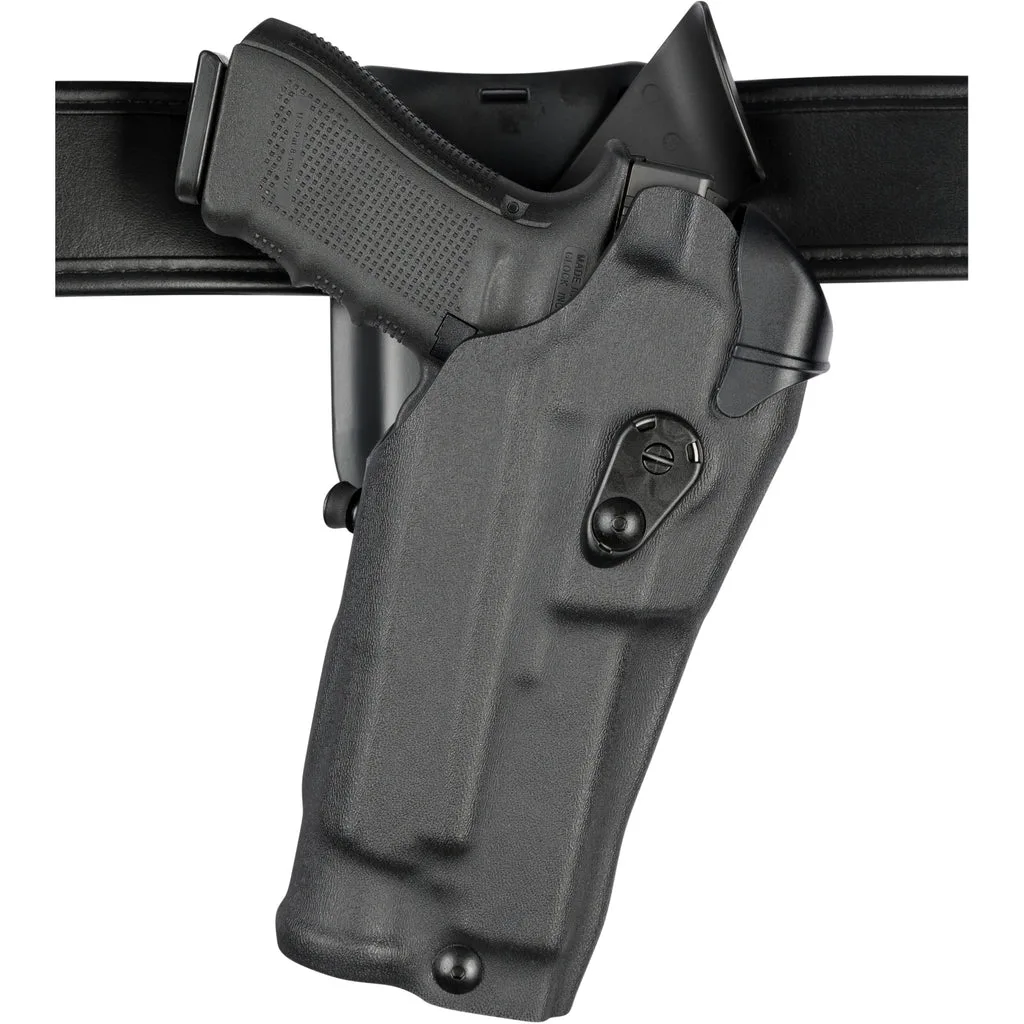
Image source: Web (Bing) / safariland.com (Web image (fair-use with source credit))
How Retention Holsters Keep Your Firearm Secure
The core concept of a retention holster is simple: it adds deliberate steps to the draw stroke. This means you can't just grab and pull; you have to consciously disengage one or more security features. Manufacturer specifications for duty-grade holsters often detail these mechanisms.
It's a layered approach to security.
The goal isn't to make drawing impossible, but rather to ensure that the draw is a controlled action. This prevents accidental dislodging if you fall or get into a physical altercation. The design forces a specific sequence of movements, which, with practice, becomes second nature for the authorized user.
Understanding Retention Levels
The security provided by these holsters is often quantified by "retention levels." These levels are standardized to indicate the number of distinct actions a user must perform to release the firearm from the holster. This system helps professionals and consumers understand the security offered by different holsters.
- Level I Retention: This is the most basic level. It typically involves one active retention device. This might be a thumb break strap that you push down with your thumb, or an internal friction system that requires a firm grip and pull to overcome. It’s designed for quick access while still offering a measure of security against accidental loss.
- Level II Retention: This level introduces a second retention device. In addition to the initial action (like releasing a thumb break), you might need to disengage a second strap, a lever, or a retention device integrated with the trigger guard. This adds a significant layer of security, requiring two deliberate motions to draw.
- Level III Retention: This is the highest common level of retention. It involves three distinct retention devices that must be disengaged in a specific order. These holsters are typically found in high-risk law enforcement or military applications where preventing weapon compromise is paramount.
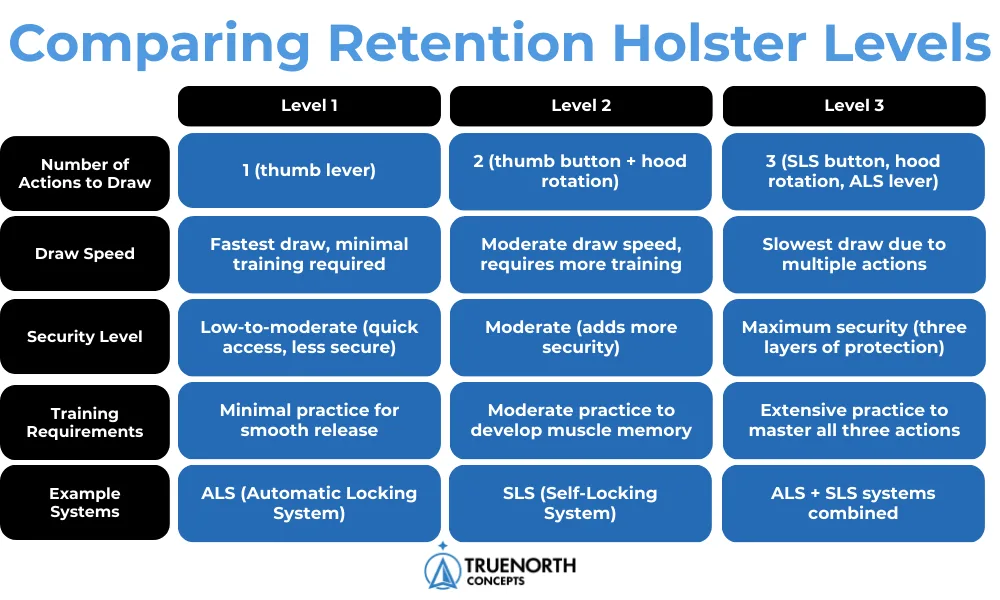
Image source: Web (Bing) / truenorth-usa.com (Web image (fair-use with source credit))
Common Retention Mechanisms Explained
Retention holsters achieve their security through various physical mechanisms. These are built directly into the holster's design and are engineered to interact with specific parts of the firearm. Each mechanism requires a specific user action to release the weapon.
- Thumb Break Straps: These are classic retention devices. A strap, often made of durable leather or polymer, wraps over the rear of the slide or the hammer. To draw, the user's thumb presses down on or levers the strap out of the way. This is a very common Level I retention feature.
- Trigger Guard Locks: Some holsters feature a locking mechanism that engages with the trigger guard of the firearm. This might be a rotating lever or a button that needs to be pressed with your finger as part of the draw. This adds a positive lock that prevents the gun from being pulled upward out of the holster.
- Active Retention Devices (often "hoods" or "levers"): These are more advanced systems. They can include hood-like structures that cover the top of the slide or sophisticated levers that engage the firearm's frame or slide. Releasing these typically requires a specific index finger or thumb press. These are common in Level II and Level III systems.
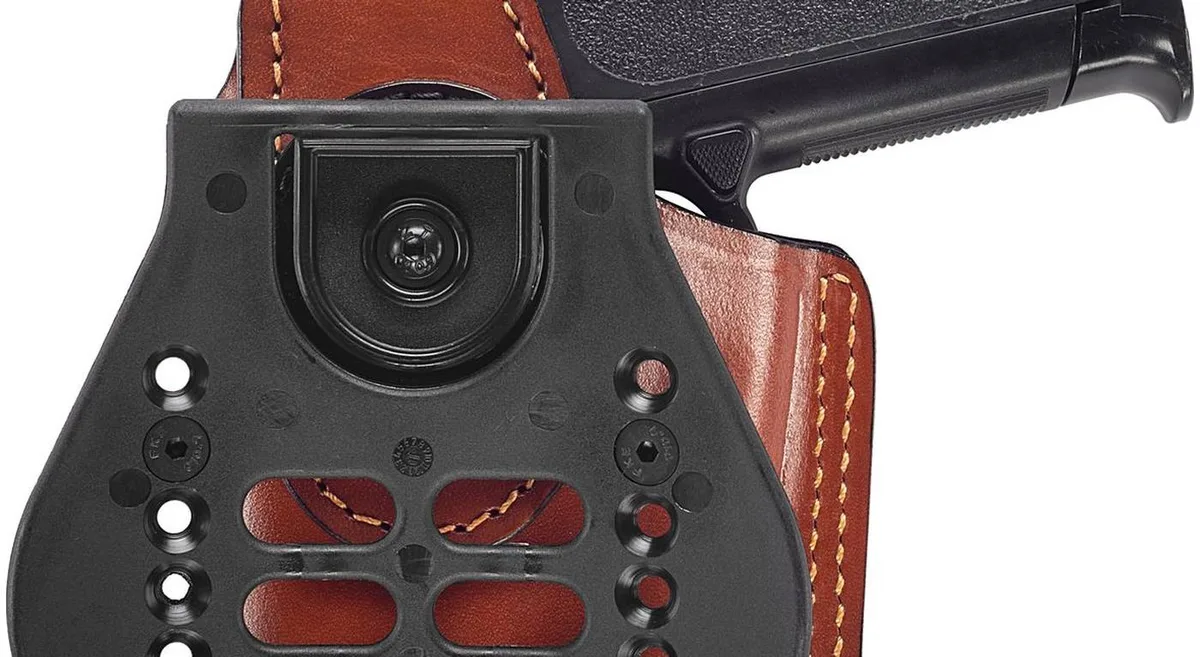
Image source: Bing (Web (fair-use with source credit))
The Trade-Off: Security vs. Speed
It's a fundamental principle in holster design: the more secure a holster is, the more deliberate and potentially slower your draw will be. This isn't a flaw; it's an engineered trade-off. For someone carrying for self-defense in a potentially chaotic environment, or for an officer on patrol, that extra second or two required to disengage a retention device can be the difference between safety and disaster.
Our editorial analysis of user feedback and product reviews indicates that while speed is desirable, especially in competitive shooting, it takes a backseat to weapon security in professional and defensive contexts. Manufacturer specifications often highlight draw stroke efficiency for their retention systems, but the inherent nature of multiple steps means it won't be as fast as a simple open-top design. Learning to master the draw stroke for your specific retention holster is key to minimizing this difference.
When is a Retention Holster the Right Choice?
Deciding if a retention holster is for you comes down to your intended use and personal risk assessment. It’s not a one-size-fits-all solution. Different users have different priorities, and what’s essential for one person might be overkill for another.
For Professionals: Law Enforcement, Military, Security
For individuals in these professions, a retention holster isn't just a preference; it's often a mandatory piece of equipment. The environments these professionals operate in carry inherent risks of physical altercations where an attacker would likely attempt to disarm them. Official agency standards and industry best practices heavily favor holsters with at least Level II or Level III retention.
This ensures that the firearm remains secured during dynamic encounters, preventing it from falling into the wrong hands. Per Department of Justice guidelines on officer safety, robust retention systems are considered a critical component of duty gear.
For Personal Defense & Everyday Carry
For civilians carrying a firearm for personal protection, the decision is more nuanced. If you live in an area with high crime rates, frequently travel through potentially dangerous neighborhoods, or simply want the absolute maximum security for your firearm, a retention holster can provide significant peace of mind. Many modern retention holsters are designed to be relatively slim and comfortable enough for concealed carry, offering a balance between security and discretion.
You’ll need to consider how the added steps of a retention draw fit into your training and comfort level for a rapid defensive response.
Mistakes to Avoid When Choosing or Using a Retention Holster
Picking the wrong retention holster or using one incorrectly can undermine its purpose. One common mistake is choosing a holster with a retention level that’s too high for your needs. For example, an officer might need Level III for patrol, but a civilian for concealed carry might find Level I or II more practical for everyday access.
Overly complex systems can lead to fumbling under stress, which is the opposite of what you want.
Another frequent error is failing to practice with your chosen holster. Even simple retention devices require muscle memory. If you haven't drilled the disengagement process repeatedly, you might hesitate or perform the steps incorrectly when seconds count.
Manufacturer specifications often recommend specific draw stroke drills for their retention systems. Neglecting this practice can render the security features a hindrance rather than a help.
Does a Higher Retention Level Always Mean Better Security?
Not necessarily. While more retention levels generally equate to more security, the best level for you depends on your specific context. A Level III holster, while incredibly secure, might be too slow for some civilian self-defense scenarios where immediate access is critical.
Conversely, a Level I holster might not offer enough protection for a law enforcement officer facing extreme threats. It's about matching the holster's security to the potential risks you face.
Can You Draw Too Slowly with a Retention Holster?
Yes, you absolutely can. If you haven't practiced the specific draw stroke required by your holster's retention mechanism, your draw will be slower than with a basic holster. This is especially true for Level II and Level III systems, which involve multiple deliberate actions.
The key is consistent, dedicated practice. Over time, the disengagement becomes muscle memory, minimizing the speed difference.
Retention Holster vs. Standard Holster: A Quick Comparison
The fundamental difference lies in security features. A standard holster primarily focuses on holding the firearm securely through friction and fit. A retention holster adds active locking mechanisms.
| Feature | Standard Holster | Retention Holster |
|---|---|---|
| Primary Function | Secure carry, accessibility | Secure carry, accessibility, preventing unauthorized removal |
| Retention | Friction-fit, molded Kydex/leather | Friction-fit plus active devices (straps, levers, locks) |
| Draw Stroke | Typically one simple motion | One or more distinct disengagement actions plus draw |
| Security Level | Basic | Enhanced (Level I, II, III common) |
| Best For | Range, casual carry, low-threat environments | Law enforcement, security, high-threat carry, training |
This table highlights that while both hold a firearm, the retention holster adds a critical layer of security against weapon grabs, albeit with a slightly more complex draw.
What About Draw Speed and Retention?
The common wisdom is that more retention means a slower draw. This is generally true, but the degree varies significantly. A well-designed Level I retention holster might only add a fraction of a second to your draw compared to a basic friction holster.
Level III systems, with their multiple steps, will naturally take longer.
Our analysis of product specifications and user feedback suggests that for many, the peace of mind offered by a Level II or III retention holster outweighs the marginal increase in draw time, especially when proper training is incorporated. The goal of training is to make the retention disengagement as fluid and fast as possible, minimizing the perceived speed difference in practice.
When Would You NOT Want a Retention Holster?
While retention holsters are invaluable for many, they aren't ideal for every situation. If your primary concern is the absolute fastest possible draw for competitive shooting sports like USPSA or IDPA (where specific rules may even disallow certain retention types), a dedicated speed rig without active retention might be preferred. These holsters are built for maximum efficiency in a controlled environment where unauthorized access is not a primary concern.
Another scenario where a basic holster might suffice is for casual range visits or purely recreational shooting. If you're simply plinking at targets and the firearm remains secured in a range bag or on your hip without risk of interference, the added complexity of a retention holster isn't necessary. It’s about matching the tool to the task and the environment.